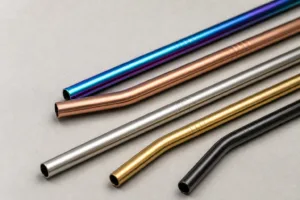
Metal pen clips and charm accessories sit at an interesting intersection of function, decoration, and brand expression. A pen clip has to hold securely, feel comfortable in daily use, and still look refined when a logo or symbol is added. A charm has more freedom for shape and storytelling, but it still depends on good metal selection, clean detailing, and reliable finishing. For buyers planning metal pen clips, charms customization projects, the key is not only choosing a style that looks appealing, but also understanding how material, process, finish, and attachment method influence durability, cost, and production consistency.
If your project needs custom metal accessory manufacturing support, it helps to work backward from the real use case: a branded pen series, a gift set, a school or club item, a retail add-on, or a limited-edition decorative charm. In our manufacturing work, we normally help buyers review material options, logo depth, plating direction, attachment structure, sample approval points, and packaging details before bulk production starts. That early planning matters because small accessories can look simple, but they often require precise mold development, finish control, and attachment testing to achieve a polished result at scale.
What metal pen clips and charms are really used for
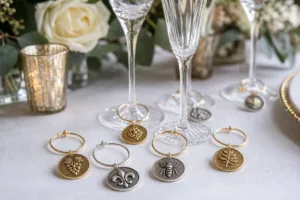
Metal pen clips are functional components attached to pens, journals, pen sleeves, or presentation sets. Some are simple spring clips with an engraved logo, while others are decorative overlays attached to a pen body. Metal charms are usually smaller hanging or fixed decorative pieces used on pens, zippers, pouches, notebooks, packaging, or gift accessories. In many projects, the two are combined: a custom clip carries the brand mark while a matching charm adds a themed icon, initials, mascot, or event symbol.
Why are they popular? From our production perspective, these accessories solve several buyer goals at once:
- Brand identity: a small metal element can make a writing instrument or accessory feel more premium and recognizable.
- Product differentiation: when the pen body itself is standard, a customized clip or charm creates a distinct look.
- Personalization: initials, symbols, or limited-edition themes work well on compact metal parts.
- Gift presentation: metal details elevate corporate gifts, school sets, commemorative items, and retail packaging.
These uses also explain why buyers should treat pen clips and charms as engineered parts, not just decorations. The clip must align with the pen body or holder. The charm needs a reliable attachment point. The finish must withstand handling, pocket contact, and repeated touching.
Key customization goals before you choose a process
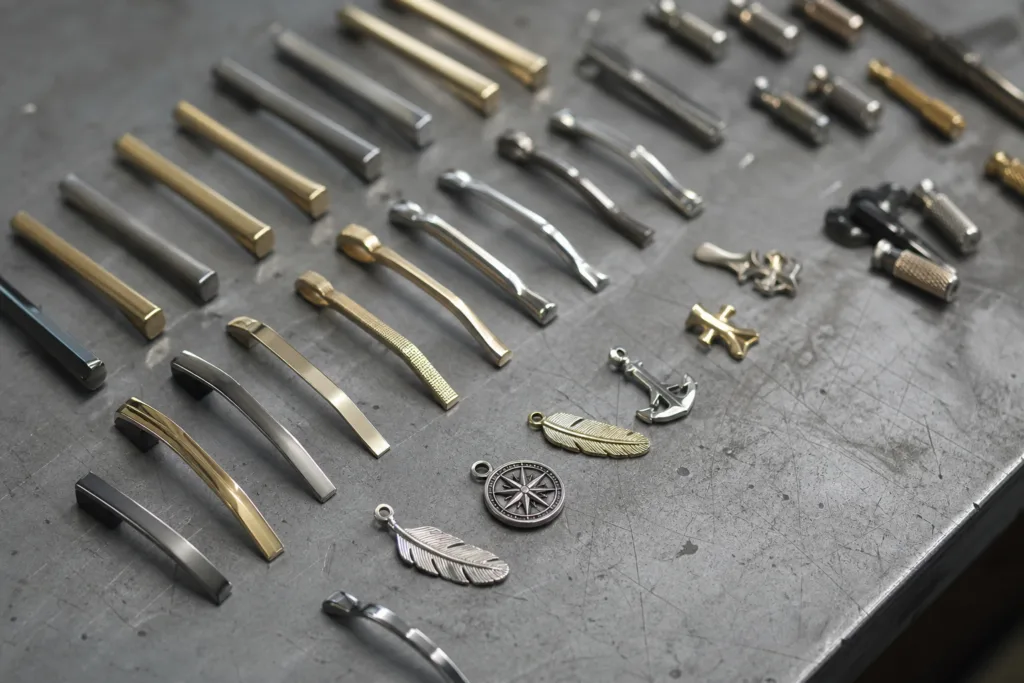
Before discussing materials or plating, we usually ask buyers a simpler question: what job should the accessory do? The answer changes almost every technical decision.
Brand-focused projects
For a company logo, school emblem, or retail brand mark, clarity matters more than shape complexity alone. If the logo has thin lines, small letters, or layered shapes, the manufacturing process should preserve that detail without making the piece fragile.
Decorative or themed projects
Seasonal collections, character-inspired charms, travel themes, and symbolic icons benefit from more expressive forms. This is where custom shape metal accessory designs become relevant, because outline freedom, layered relief, and color-filled areas can create more personality than a standard rectangle or oval.
Gift and presentation projects
For executive pens, corporate kits, or souvenir sets, finish quality often matters more than bright colors. Buyers may prefer polished nickel, brushed stainless, antique brass, or subtle engraving over a loud decorative look.
Small-batch and DIY-inspired projects
Some buyers begin with personal projects or trial runs before moving into larger production. In these cases, simple engraved blanks, stamped tags, or laser-marked pieces may be more practical than complex molded items.
Common materials for metal pen clips and charms
Material choice influences the appearance, forming method, weight, edge quality, logo sharpness, and price structure. There is no universal best material; there is only a better fit for the intended use.
| Material | Typical strengths | Common limitations | Best-fit use cases |
|---|---|---|---|
| Zinc alloy | Good for die casting, complex shapes, dimensional freedom, solid feel | Usually better for decorative parts than spring-function clips unless structure is designed carefully | Decorative clips, logo plates, themed charms |
| Brass | Premium feel, good engraving detail, plating-friendly, classic look | Higher material cost than some alternatives | Executive accessories, engraved logos, high-end gift sets |
| Stainless steel | Strong, corrosion resistant, modern appearance, suitable for etched or laser-marked details | Less ideal for very sculpted die-cast forms; harder to form in some designs | Slim clips, minimalist branding, durable tags and accents |
| Aluminum | Lightweight, clean appearance, color anodizing possible on some accessory types | Lighter feel may seem less premium for some gift projects | Light decorative accents, modern branded accessories |
| Iron or steel stamping stock | Practical for stamped flat parts, economical in some volumes | Needs proper finishing to maintain appearance | Flat clips, simple charms, budget-conscious programs |
Buyers who are early in supplier selection often benefit from a broader material comparison for custom metal accessories because the same logic used for keychains and similar metal pieces also applies to pen clips and charms: shape complexity, finish goals, and perceived quality often matter as much as raw material price.
How material choice affects look, durability, and cost
Zinc alloy is often chosen for decorative freedom. If your design includes raised borders, recessed color areas, layered relief, or an unusual silhouette, die casting zinc alloy is a practical route. Brass tends to suit refined engraving, classic polished finishes, and premium gift positioning. Stainless steel is a strong fit for modern, thin, clean-lined pieces where laser marking or etching is preferred over enamel-filled relief. Aluminum supports low weight, which matters when the accessory hangs from a small loop or is attached to a lightweight product.
Cost is influenced by more than the material itself. Buyers sometimes assume stainless steel is always more expensive or zinc alloy is always cheaper, but the real comparison depends on processing. A simple stamped steel clip may cost less than a multi-step cast zinc piece with polishing, plating, and multiple enamel fills. Likewise, a brass piece with minimal engraving can be easier to control than a highly detailed low-cost material that needs rework.
In our experience, the most efficient way to compare options is by looking at the full specification stack: material, shape, thickness, finish, attachment, packaging, and quantity. A piece that looks inexpensive on paper can become costly if it requires difficult polishing, unstable color filling, or hand assembly.
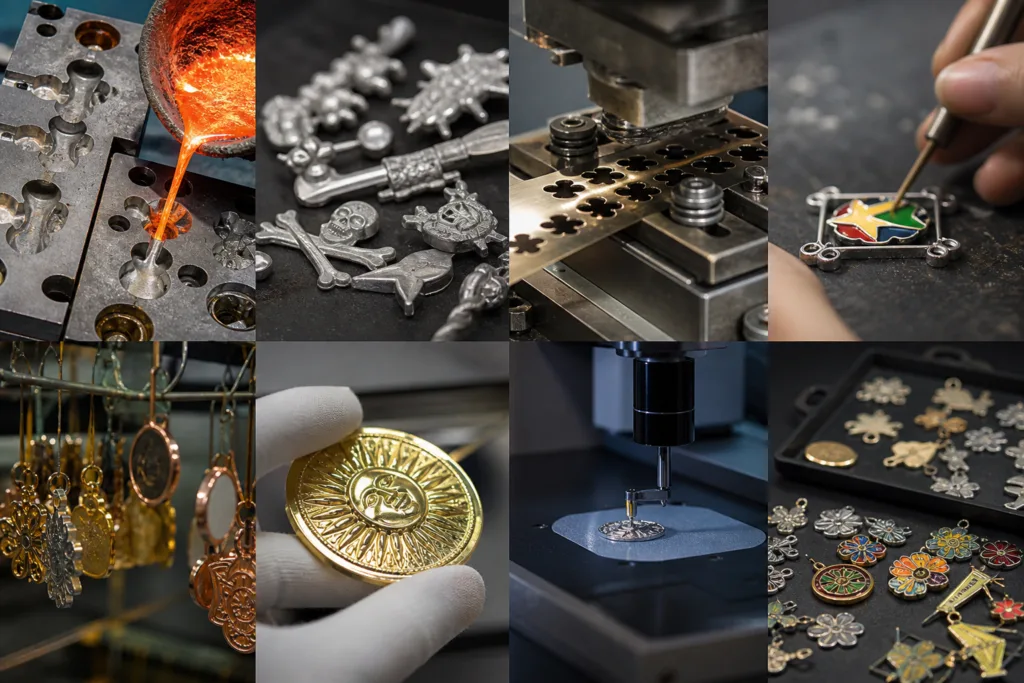
Manufacturing techniques for metal pen clips and charms customization
Die casting
Die casting is suitable for dimensional designs, sculpted logos, recessed color zones, and custom-shaped decorative parts. It works especially well for charms and rigid decorative clip emblems. Buyers choose it when they want shape freedom and a solid metal feel.
Stamping
Stamping is often used for flatter designs. It can support functional clip structures more naturally than a thick cast part, especially when spring behavior or slim profile is important. Stamped pieces can still carry strong branding through debossing, embossing, cutouts, and filled color areas.
Etching and engraving
Etching and laser engraving are strong choices for fine lines, neat typography, and understated branding. For small logos, monograms, serial marking, or elegant pattern work, these methods may outperform deeper molded relief. They are especially useful when the design needs crisp detail without heavy thickness.
Enamel filling
Soft enamel or filled color areas add visual contrast. This works well for school emblems, event mascots, retail themes, and color-coded branded collections. Enamel sections should be designed with clear metal borders when possible, so colors stay separated and easier to inspect.
Polishing, sandblasting, and textured finishing
Polishing creates a brighter and more premium look. Sandblasting or matte textures help reduce fingerprint visibility and can make engraved or raised logos stand out. Mixed textures are useful when buyers want the logo highlighted without relying on color.
Electroplating and top finishing
Plating changes both appearance and performance. Nickel-tone, chrome-like, brass-tone, black finishes, antique effects, and gold-like looks are common specification points in custom accessory briefs. The role of plating is not just decorative; it also supports wear resistance and surface consistency. For readers who want a technical explanation of electroplating options for custom clips and charms, the process is widely used to provide decorative and functional surface coatings.
Surface treatment should also be selected with realistic expectations. Bright finishes show scratches more easily. Antique finishes can hide minor wear better. Clear domes or protective coatings may also help specific decorative projects; for some use cases, buyers review protective finishing options for decorative metal pieces when deciding whether they want extra surface protection over logos or printed details.
Choosing the right size, thickness, attachment method, and finish
Small accessories succeed when the proportions feel intentional. Oversized branding can make a pen clip feel clumsy. Ultra-thin decorative charms may look elegant but bend too easily. There is usually a practical balance between appearance and survivability.
| Specification area | What to consider | Common buyer mistake |
|---|---|---|
| Size | Must match pen body scale, charm visibility, and packaging layout | Choosing a logo area too small for readable detail |
| Thickness | Affects strength, weight, and edge quality | Going too thin on decorative parts with detailed cutouts |
| Attachment | Can include rivets, adhesive backing, loops, jump rings, screws, or integrated clip structures | Specifying a decorative design before confirming how it mounts |
| Surface finish | Controls style, scratch visibility, and perceived quality | Selecting mirror polish for rough daily-use items without considering wear |
| Edge quality | Important for handheld accessories and daily touching points | Ignoring burr control and corner smoothness |
When we review drawings, we pay close attention to the attachment zone. The body of the piece may look attractive, but the actual failure point is often the ring, loop, pin, or joint. For pen clips, flex zones matter. For hanging charms, loop orientation matters. For adhesive-mounted logo plates, the bonding surface matters.
Design ideas for logos, initials, symbols, and decorative themes
Metal accessories work best when the design language matches the brand or product context. Corporate branding usually benefits from restraint: a logo plate, monogram, or small geometric icon may create a stronger result than an overloaded composition. Schools, clubs, sports teams, and creator brands often have more freedom to use mascots, crests, stars, shields, or symbolic outlines.
Popular design directions include:
- Minimalist branding: debossed logo on brushed metal
- Classic premium: polished brass-tone clip with engraved initials
- Youthful retail look: enamel-filled charm with bright color blocks
- Vintage or heritage style: antique silver or antique brass finish with textured relief
- Mixed-material look: metal piece paired with PU, leatherette, ribbon, or acrylic element
At Gairun, we often remind buyers that compact accessories need disciplined artwork. A beautiful full-size logo may not reproduce well at pen-clip scale. Reducing the number of tiny interior details often produces a cleaner and more premium result.
DIY customization basics for small-batch or personal projects
Not every project begins with bulk production. Some designers, makers, and hobby users start with prototypes or small decorative runs. DIY-level customization usually works best with blank metal tags, flat charms, or simple clip parts that can be engraved, painted, or assembled by hand.
Practical DIY methods include hand-polishing blanks, using jump rings for charm assembly, applying simple paint fills in recessed areas, or laser engraving pre-made metal pieces. However, DIY approaches have limitations. Maintaining consistent logo depth, smooth edge quality, durable plating, and repeatable color matching is much harder without production equipment. This is why many personal projects eventually move into factory-made samples once the concept is validated.
For brand teams, DIY is useful for ideation and mockups, not as a substitute for production-grade quality. If the item will be sold, gifted, or distributed widely, formal samples and controlled finishing matter.
How businesses use customized clips and charms for branding and retail
Business use cases are wider than many buyers expect. Customized pen clips can upgrade standard promotional pens, improve perceived value in executive kits, or create a signature part for stationery brands. Charms can be used on pens, packaging pulls, zip pouches, gift boxes, notebook bands, or as add-on collectible elements.
Common B2B uses include:
- Corporate gifts with logo clips and matching charm sets
- School and club merchandise with mascot or crest details
- Retail stationery collections with themed seasonal charms
- Promotional campaigns using limited-edition branded accessories
- Private label packaging where metal accents make the set feel more finished
For buyers comparing suppliers, it is important to look beyond the product photo and ask whether the factory actually has the metal crafts OEM and production capabilities needed for sampling, mold development, plating coordination, and consistent bulk output.
Artwork preparation for clean logo reproduction
Good customization starts with good files. Clean vector artwork is usually preferred for logos, outlines, and shape development. Buyers should mark which areas are raised, recessed, engraved, polished, sandblasted, or color-filled. If the item uses more than one finish, that should be separated clearly in the artwork or annotation notes.
Helpful artwork guidelines include:
- Use vector files when possible for logos and linework
- Define exact dimensions, not just visual mockups
- Indicate thickness targets and attachment position
- Show front and back requirements separately
- Mark Pantone or reference colors when enamel filling is required
- Simplify details that may disappear at small size
If the logo includes tiny text, ask the manufacturer to confirm minimum legible size before mold making. This avoids one of the most common approval problems: artwork that looks clear on screen but collapses in real metal.
Sampling, mold development, MOQ, and lead time
Custom metal accessories usually move through several stages: artwork review, quotation, mold or tooling development where needed, sample production, revision approval, and bulk production. Mold-based designs such as die-cast or stamped pieces often involve an upfront tooling step. Simple engraving on stock parts may not.
MOQ depends on the process, setup complexity, material, and packaging requirements. A buyer asking for multi-color enamel, custom backing cards, individual bagging, and mixed finishes should expect a different MOQ and planning structure than a buyer ordering a simple engraved metal tag.
Lead time is also affected by finishing queues and assembly details. A project with one metal tone and one attachment method is easier to schedule than a project combining multiple platings, hand-filled color zones, and gift-box packing. We recommend confirming three timelines separately: sample lead time, sample revision lead time, and mass production lead time.
Quality control points that matter most
Small accessories can pass a casual visual check but still fail in use. A proper QC review should include both appearance and function.
Appearance checks
- Logo clarity and line sharpness
- Color consistency in enamel-filled areas
- Plating coverage and surface uniformity
- Scratch visibility on polished surfaces
- Texture consistency on matte or sandblasted sections
Functional checks
- Attachment strength for loops, rings, screws, or bonded areas
- Clip tension and shape consistency where functional clip structure is required
- Sharp edge and burr inspection on touch points
- Dimensional matching to pen body or packaging insert
- Assembly stability after packing and transit simulation
For plated finishes, buyers should also ask how the supplier manages process control and shop practices. If a project specifies chrome-like or nickel-related surfaces, supplier communication about finishing controls is part of responsible sourcing. This is one reason some procurement teams review basic plating safety and chromium compliance expectations when evaluating finishing-intensive projects.
Trends in metal pen clips and charms customization
Several design directions are consistently requested across branded accessory programs. Minimalist branding remains strong, especially brushed or matte metal with a small engraved mark. Antique finishes are popular because they add character and hide minor wear better than mirror-bright plating. Mixed-material looks are also growing, where a metal charm is paired with leather, woven cord, resin, or soft-touch packaging elements.
Another trend is coordinated accessory sets. Instead of ordering only a clip or only a charm, buyers create a mini product family: pen clip, zipper charm, key accessory, and gift-box accent with one matching visual language. This approach improves brand recognition and makes packaging feel intentional.
Common mistakes to avoid
The most common design and sourcing mistakes are preventable:
- Overcomplicated artwork: too many tiny lines or letters for the actual part size
- Wrong process choice: selecting die casting when a flat stamped part would be cleaner and more economical
- Ignoring attachment engineering: treating the mounting point as an afterthought
- Unrealistic finish expectations: mirror polish requested for rough daily use without scratch planning
- No sample checkpoints: approving a drawing without reviewing edge quality, color fill, and assembly detail in a real sample
- Weak packaging planning: polished parts scratching each other because individual packing was not specified
We encourage buyers to think beyond the front-face design. In production, the unseen details—back structure, hole placement, ring thickness, adhesive area, or clip spring tolerance—often determine whether the project feels premium or problematic.
How to evaluate a manufacturer or supplier
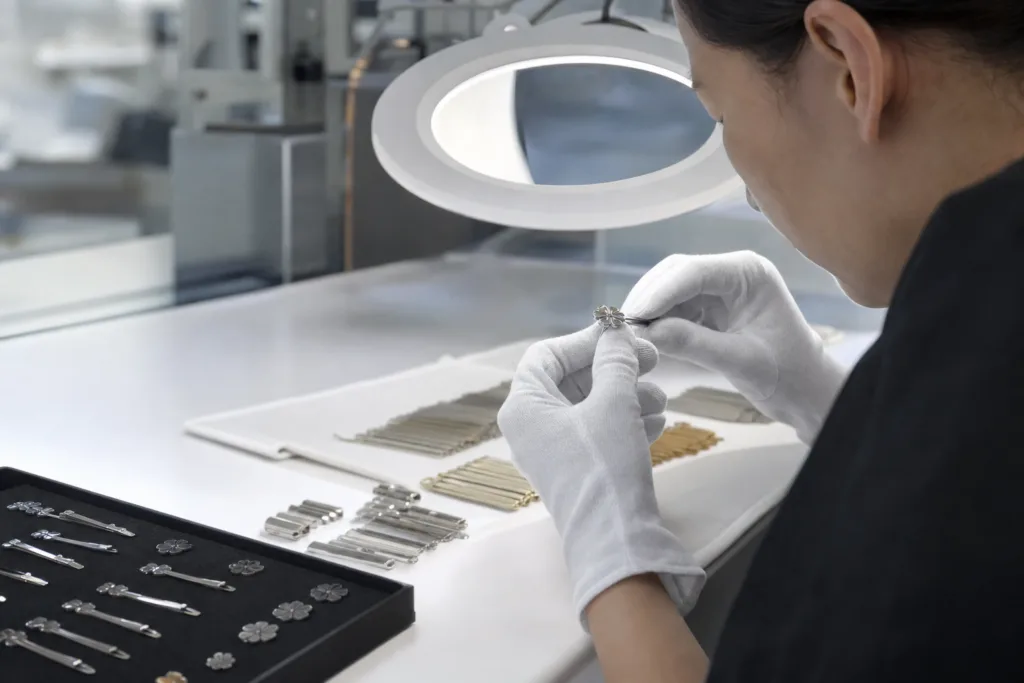
When comparing manufacturers, ask practical questions rather than relying on broad claims. Can the supplier explain which material matches your use case? Can they identify whether your design is better suited to stamping, die casting, or engraving? Can they provide clear sample approval checkpoints? Do they discuss plating, edge finishing, and packaging as part of the specification, not just as optional add-ons?
A capable custom metal factory should be able to review artwork, propose process adjustments, identify risk areas, and explain trade-offs clearly. They should also help you avoid unnecessary cost, such as overbuilding thickness or using a premium material where a different structure would achieve the same result more efficiently.
For pen clips and charms especially, strong supplier evaluation means checking detail discipline. Small parts reveal process weaknesses quickly. If the factory can show consistent logo reproduction, clean finishing, sensible process recommendations, and realistic lead-time communication, that is usually a better sign than a low quote alone.
Conclusion
Successful metal pen clips and charms customization comes from aligning visual goals with manufacturing reality. The right material, process, finish, size, and attachment method should support the actual use case, whether the project is a branded pen line, a collectible charm set, a corporate gift, or a DIY concept moving into production. Buyers who define their artwork clearly, choose processes based on detail and function, and review samples carefully are much more likely to achieve accessories that look refined and perform reliably in bulk.
From our manufacturing perspective, the most effective projects are rarely the most complicated. They are the ones where brand intent, material choice, finishing direction, and quality checkpoints are all decided early and communicated clearly.
FAQs
What is the best material for custom metal pen clips?
The best material depends on whether the clip is mainly decorative or truly functional. Stainless steel and stamped steel are often practical for slim functional clips, while zinc alloy and brass are commonly chosen for decorative logo plates or more sculpted clip elements. The right choice should consider spring behavior, thickness, finish style, and the amount of logo detail needed.
Are charms customization projects better with die casting or stamping?
Die casting is usually better for shaped, dimensional, or relief-based charms with recessed color areas, while stamping is often better for flatter pieces with cleaner edges and more economical production at certain sizes. If your design is simple and flat, stamping may be more efficient. If you want contour, layered depth, or a more sculpted appearance, die casting is often the stronger option.
How small can a logo be on a metal pen clip or charm?
Very small logos are possible, but not every logo scales well. Tiny letters, thin interior gaps, and complex patterns may blur or fill in depending on the process and finish. In practice, it is better to simplify the artwork and let the manufacturer confirm the minimum readable line width and text size before tooling or sample production begins.
Do I need a mold for every custom design?
Not always. Mold or tooling is usually required for die-cast and stamped custom shapes, but simple engraving or laser marking on stock blanks may not need custom tooling. If your design requires a unique outline, relief pattern, or dedicated structure, a mold is usually part of the development process and should be evaluated together with the expected order quantity.
How can I improve durability on metal clips and charms?
Durability improves when the design matches the use case. Choose a suitable base material, avoid overly thin weak points, use rounded or controlled edges, and select finishes that fit the handling environment. Antique or textured finishes may hide wear better than mirror-bright surfaces, and attachment strength should always be tested because loops, rings, and joints often fail before the main metal body does.
What should I confirm before approving a production sample?
Before approval, check overall size, thickness, color accuracy, logo clarity, plating appearance, edge smoothness, and attachment strength. If the accessory fits onto a pen, pouch, or packaging component, test the actual fit rather than approving from photos only. Packaging method should also be confirmed at the sample stage, especially for polished items that can scratch during bulk packing and shipping.