Gift sets built around cufflinks, tie bars, and pens sit in a useful middle ground between personal style and professional presentation. For buyers, they offer a practical way to give something polished without moving into highly subjective fashion categories. A well-composed set feels intentional because each piece serves a clear purpose: cufflinks refine shirting, a tie bar sharpens formalwear, and a pen adds daily utility. Whether the goal is branded gifting, groomsmen presentation, milestone recognition, or premium retail packaging, the value of these gift sets depends on more than appearance alone. Material quality, finish durability, personalization method, packaging, and production consistency all shape how the set will be received.
If your project is part of a broader executive or event gifting plan, reviewing premium corporate gift set inspiration can help frame how coordinated metal accessories fit into a more complete branded presentation. In our manufacturing work, we often support buyers who need consistent metal finishes, logo integration, custom box inserts, sample approval, and scalable bulk production so a refined accessory set looks cohesive from first prototype through final packed order.
What a cufflinks, tie bar, and pen gift set includes
At its simplest, this type of set combines three items that share a coordinated design language. The cufflinks are usually the visual anchor, often carrying the strongest decorative element, surface texture, engraving, or logo. The tie bar adds a clean horizontal accent and usually mirrors the same finish or motif. The pen completes the set by turning it from a dress-only gift into something that can be used in offices, meetings, or daily routines.
Some sets stay minimal, using plain polished metal and subtle geometry. Others add engraved initials, corporate marks, striped patterns, brushed finishes, or contrasting plated colors. For buyers, the question is not just what is included, but whether the pieces feel intentionally matched rather than simply packed together.
- Cufflinks: best for French cuff shirts and formal occasions
- Tie bar: useful for business attire, weddings, presentations, and ceremonies
- Pen: adds practical everyday value and extends gift relevance beyond one event
- Presentation box: strongly influences the perceived quality of the full set
When we help buyers plan accessory sets, we usually advise them to define the set’s real use case first. A wedding set may prioritize elegance and keepsake value. A corporate set may prioritize logo control, broad age appeal, and packaging consistency. A retail-oriented set may need better shelf presentation and stronger style versatility.
Why coordinated men’s accessories make a strong gift impression
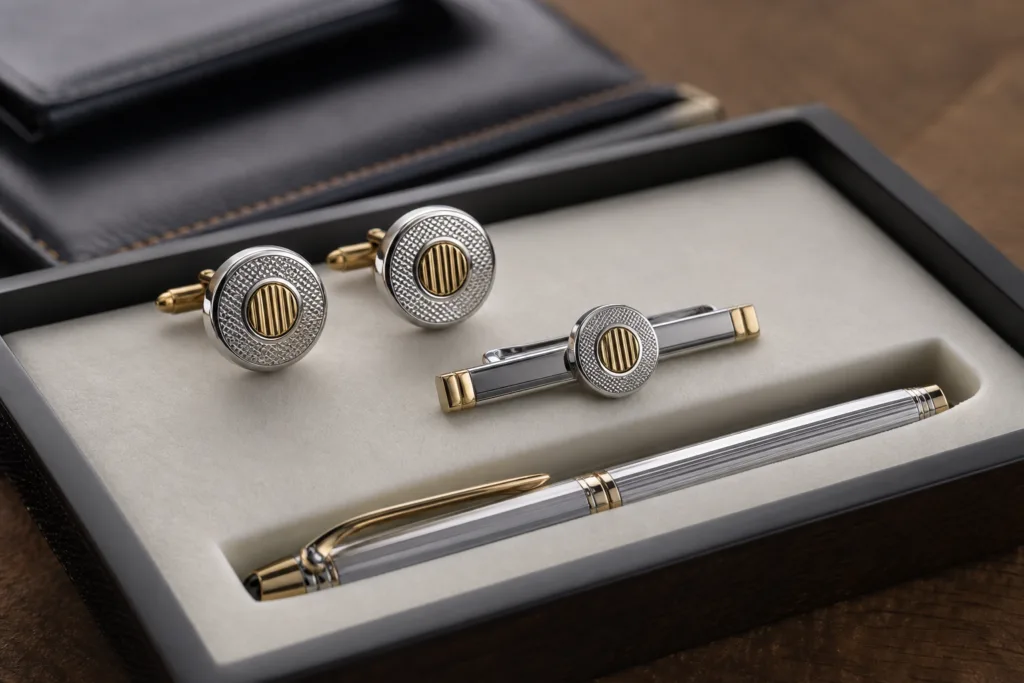
Single accessories can feel too small when given alone, especially in business or ceremonial settings. A coordinated set solves that problem by increasing perceived completeness. It signals that thought went into balance, not just item cost. This matters when the recipient may be a client, executive, team member, graduate, or member of a wedding party.
Coordinated men’s accessories also reduce styling risk. A buyer does not need to guess whether a pen finish will clash with the cufflinks or whether the tie bar feels too casual compared with the rest of the set. Matching finishes and shared detailing create order, and order often reads as premium.
From a manufacturer’s perspective, coordination is not only about aesthetics. It affects production planning. Matching polish levels, edge profiles, plating tones, logo depth, and insert positioning all help the final set feel deliberate. Small inconsistencies become more visible when three pieces are displayed side by side in the same box.
How these accessories elevate formalwear and everyday professional style
One reason gift sets remain relevant is that they support both occasional and routine use. Cufflinks are naturally associated with weddings, black-tie events, banquets, and major ceremonies. Tie bars work across a wider range, from boardroom use to business dinners. Pens extend the life of the gift by giving the recipient something functional that can stay on a desk, in a meeting folder, or in a jacket pocket.
A strong set does not need to be flashy. In fact, the most versatile designs are often restrained. Clean lines, moderate shine, comfortable weight, and discreet branding tend to age better than highly trendy styling. Buyers choosing for broad recipient groups should usually lean toward:
- silver-tone or gunmetal finishes
- simple rectangular or rounded shapes
- light engraving rather than heavy ornament
- pens with balanced grip and understated trim
For dress-focused projects, buyers can study custom cufflinks manufacturing insights to better understand how fastening structures, face shape, and finish coordination affect both look and wearability.
Best occasions for gift sets
Weddings and groomsmen gifting
These sets work well for weddings because they combine presentation value with event-day use. Cufflinks and tie bars can be worn during the ceremony, while the pen remains as a keepsake. For this scenario, names, initials, or wedding dates are common personalization choices. Packaging should feel commemorative rather than corporate.
Corporate gifting
Corporate buyers often want a gift that looks premium without being overly personal. Accessory sets suit executive welcome kits, conference gifts, client appreciation programs, and distributor recognition. The key is subtle branding. A logo that is too dominant can make the set feel like merchandise rather than a gift.
Graduations and milestones
These sets translate well to graduation awards, long-service recognition, retirement gifts, and promotion milestones. The value comes from symbolic usefulness: the set signals readiness for professional life or recognizes a polished career image.
Anniversaries and personal gifting
For personal occasions, the appeal is often emotional rather than branded. Monograms, dates, or a short message can make a standard set feel much more considered. Material quality matters more here because the recipient is likely to keep the set longer.
How to choose the right gift sets by style, age, and wardrobe
Buyers often make better decisions when they think in terms of wardrobe compatibility rather than age alone. A recipient with conservative office attire usually suits polished silver-tone pieces, clean edges, and smooth pens. Someone with a more fashion-forward wardrobe may prefer matte black, mixed textures, or geometric detailing.
| Recipient Profile | Recommended Style Direction | Best Finish Approach |
|---|---|---|
| Classic business dresser | Rectangular cufflinks, slim tie bar, smooth pen | Polished silver or brushed steel |
| Formal event wearer | Elegant cufflinks with balanced weight | High polish, subtle engraving |
| Younger professional | Minimal lines, modern shape, practical pen clip | Brushed metal or satin finish |
| Executive or VIP gift | Refined box set with coordinated hardware | Premium plating and careful edge finishing |
| Fashion-conscious recipient | Distinct texture, darker tones, sharper detailing | Gunmetal, black plating, mixed polish |
Wardrobe compatibility is especially important for bulk gifting. If a buyer is ordering for a mixed group, neutral and versatile is usually safer than highly expressive. We often recommend avoiding oversized cufflink faces, very bright gold tones, or heavy decorative motifs unless the occasion strongly supports that direction.
Material and craftsmanship comparison for men’s accessories
Material choice shapes weight, edge quality, finishing options, corrosion behavior, and total cost. Buyers comparing gift sets should ask not only what finish is visible on the surface, but also what substrate metal sits underneath. Material choice matters for corrosion resistance, especially for items handled frequently or stored for long periods in varying environments. Technical references such as material choice matters for corrosion resistance because alloy composition and surface condition influence long-term performance.
| Material | Common Use in Sets | Strengths | Watchpoints |
|---|---|---|---|
| Stainless steel | Tie bars, pen bodies, minimalist cufflinks | Good corrosion resistance, clean modern look, stable finish | More limited for very intricate casting details |
| Brass | Cufflinks, pen trim, engraved details | Good weight, premium feel, suitable for plating and engraving | Needs good finish control to maintain appearance |
| Zinc alloy | Decorative cufflink bodies, custom shapes | Flexible for die casting, cost-effective for shaped designs | Quality depends heavily on plating and finish process |
| Iron or steel base with plating | Budget-oriented set components | Economical, suitable for simple structures | Needs strong anti-corrosion finish planning |
In our production planning, stainless steel is often chosen when buyers want a crisp, contemporary look and dependable wear. Brass is useful when the set needs a denser, more premium hand feel with precise decorative finishing. Zinc alloy is often selected for custom-shaped cufflink faces because die casting supports more dimensional form.
Plating, polishing, and finish choices
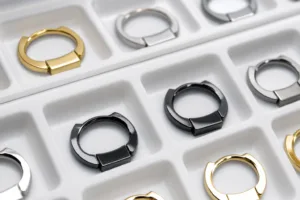
The surface finish is where many gift sets either succeed or disappoint. A good finish creates visual depth and also affects scratch visibility, edge perception, and how premium the product feels in hand. Buyers looking for dressier presentation often prefer mirror-like surfaces, while broad distribution programs may benefit from brushed or satin textures that show fingerprints less easily.
When evaluating finishing strategy, it helps to compare high-polish finish options for a refined look with lower-maintenance textures. High polish can feel luxurious, but it also makes surface imperfections, dust, and handling marks more noticeable during packing and inspection.
Design details that affect perceived quality
Many buyers focus first on decoration, but recipients often judge quality through touch. Weight balance, clasp movement, edge smoothness, hinge stability, and pen handling all influence the impression of value.
Cufflink factors
- Face thickness: too thin can feel cheap; too thick can feel bulky
- Edge finishing: smooth edges improve comfort and visual neatness
- Toggle strength: should rotate cleanly without looseness
- Back structure: must support repeated use without distortion
Tie bar factors
- Spring tension: enough grip without damaging fabric
- Length: should match modern tie widths and intended styling
- Inner contact finish: a clean inner surface helps avoid snagging
Pen factors
- Finish consistency: barrel, clip, and trim should match well
- Grip comfort: decorative value should not undermine usability
- Clip resilience: clip tension should feel secure but usable
- Refill compatibility: practical for recipients if pens are meant for long-term use
For buyers developing custom pen components or coordinated metal detailing, metal pen detailing and customization ideas can help connect decoration choices with functional pen hardware decisions.
Personalization options for gifting and branding
Personalization is often what turns a standard accessory set into a meaningful gift or a brand-supporting presentation piece. Common approaches include initials on cufflinks, a date inside the box lid, a logo on the pen cap, or a monogram on the tie bar. The most effective personalization is usually controlled and placed with restraint.
For personalization, laser engraving is a common option because it offers crisp detail and repeatability across bulk orders. Deeper mechanical engraving or aggressive etching can create stronger tactile depth, but buyers should understand that marking methods affect the metal surface differently. In technical contexts, research on laser engraving as a surface-marking method shows why surface integrity and marking depth should be considered together, especially when balancing aesthetics, permanence, and finish quality. In accessory production, that translates into a simple rule: choose the marking method that suits the substrate, coating, and desired visual effect rather than assuming every metal part should be engraved the same way.
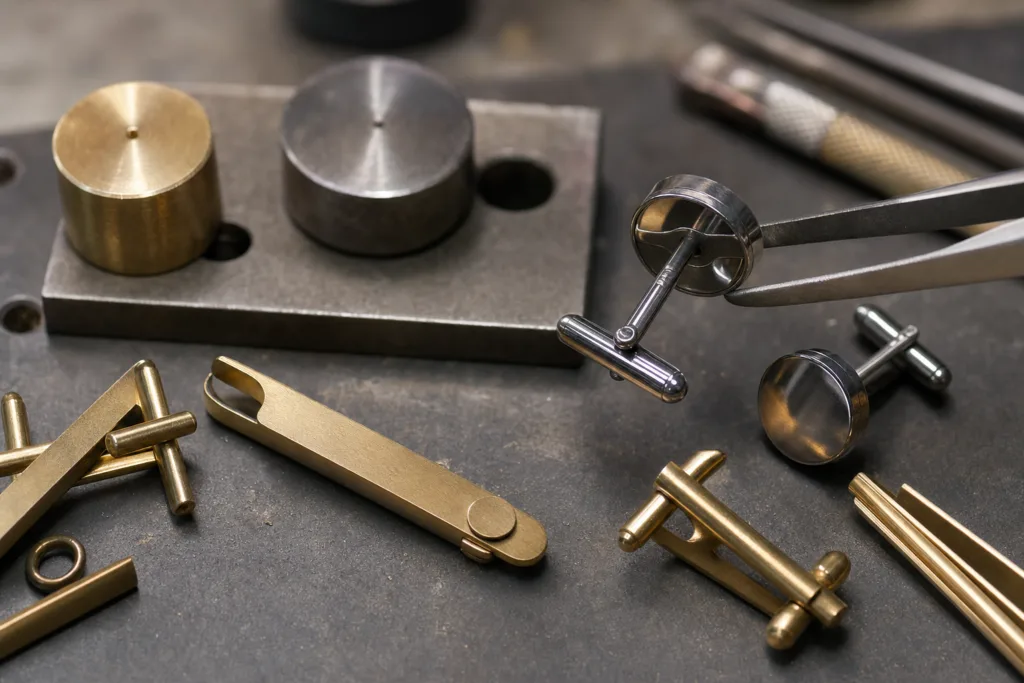
Good personalization options include:
- initials or monograms for wedding and milestone sets
- small corporate logos on pen caps or cufflink backs
- dates or recognition text inside packaging
- serial or batch coding for controlled corporate programs
- custom insert cards explaining the occasion or message
In our experience, buyers get better results when they approve artwork placement at actual scale. A logo that looks balanced on a screen can appear oversized on a cufflink face or too small on a pen clip once metal tolerances and plating are considered.
Gift set use cases for business gifts, groomsmen, employee recognition, and retail
Not every project should use the same product structure. A business gift set may need subtle logo placement, protective packaging for shipping, and broad visual neutrality. Groomsmen sets may need names, wedding dates, and stronger keepsake presentation. Employee recognition sets often need a respectful but non-flashy look that still feels distinct from ordinary merchandise. Premium retail sets may need barcode-ready packaging, insert accuracy, and stronger shelf impact.
At Gairun, we usually encourage buyers to decide early whether the set is primarily a ceremonial gift, a practical daily-use gift, a branded corporate item, or a retail product. That decision affects nearly everything else: material selection, finish tolerance, packaging layout, and even whether all three components should be personalized or only one.
What to check before buying in bulk
Bulk purchasing introduces a different set of concerns from one-off gift buying. The challenge is not simply whether the first sample looks good. It is whether the 500th or 5,000th set will still match the approved standard.
Sample approval
Ask to review not only the finished set but also close-up photos or physical samples of engraving depth, plating tone, hinge movement, pen clip alignment, and insert fit. If the set includes multiple parts from different processes, sample review should confirm they truly coordinate.
MOQ and tooling logic
MOQ depends on whether components are standard, semi-custom, or fully custom. A generic pen with custom laser marking may require less setup than a fully custom cufflink mold and tailored box insert. Buyers should ask which parts require tooling and which can be adapted from existing components.
Lead time
Lead time is shaped by artwork approval, mold development, plating schedule, packaging sourcing, and assembly time. Personalized orders often need extra review rounds, especially when each set carries individual names or different text.
QC checkpoints
Useful quality checks include:
- plating color consistency across all components
- engraving position and spelling accuracy
- cufflink toggle function and tie bar spring tension
- pen clip alignment and finish matching
- presentation box cleanliness and insert accuracy
- set-to-set consistency after final packing
Buyers planning custom structures can benefit from understanding the custom metal product design process because mold decisions, surface finishing, and component assembly all influence schedule reliability and consistency in bulk runs.
How packaging influences gifting value and brand presentation
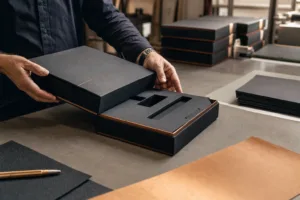
Packaging has an outsized effect on perceived value in accessory gift sets. The same metal components can feel significantly more premium when presented in a rigid box with fitted insert, protective sleeve, and clean interior layout. Packaging also helps control movement, reducing the chance of scratches during transport.
From a buyer’s perspective, packaging should be evaluated on three levels:
- visual impact: color, texture, insert alignment, and opening experience
- brand fit: logo placement, message card, and overall tone
- protection: whether components stay separated and stable during shipping
For corporate gifting, subtle external branding and stronger interior presentation usually work better than a loud outer logo. For weddings or anniversaries, personal messaging often adds more value than visible branding. For retail, packaging needs to balance shelf appeal with shipping durability and unit cost.
Common mistakes buyers make when selecting men’s accessories gift sets
Most purchasing mistakes happen when appearance is prioritized without enough attention to use scenario and production detail. Common issues include:
- choosing finishes that are too delicate for frequent handling
- using oversized logos that reduce gift appeal
- ignoring tie bar length relative to modern tie widths
- mixing metal tones that do not truly coordinate
- approving digital artwork without checking physical scale
- underestimating the value of box insert quality
- failing to define acceptable QC standards before bulk production
Another common mistake is trying to make one set suit every audience. A groomsmen gift, a distributor incentive, and a premium retail product may all use cufflinks, tie bars, and pens, but they should not be designed with the same priorities.
How a metal products manufacturer supports custom gift set development
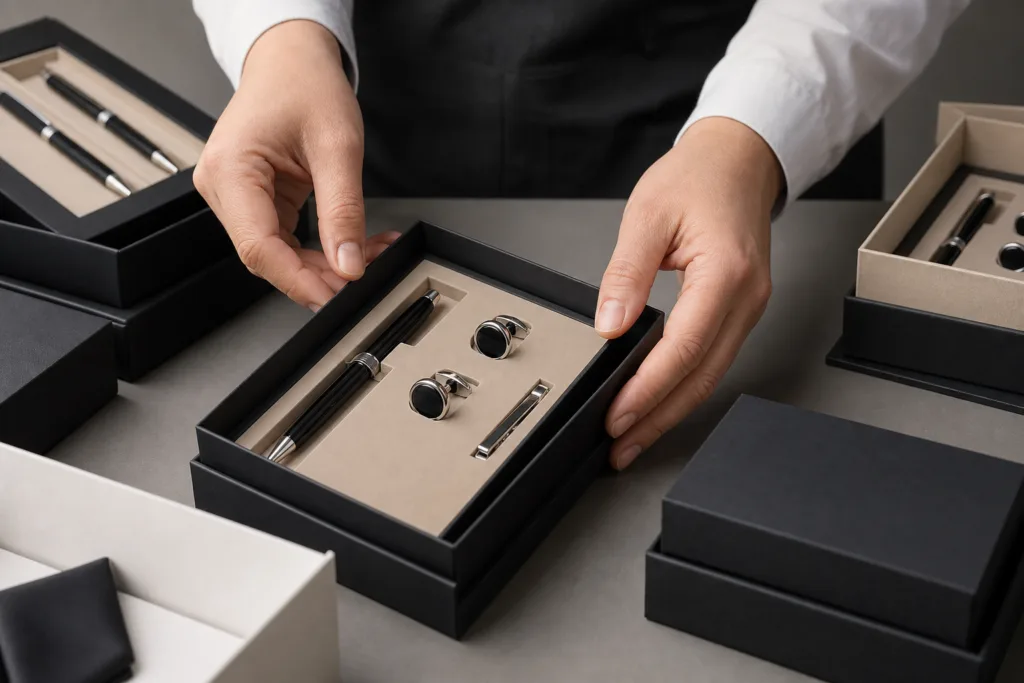
From our side as a manufacturer, the main contribution is not simply producing individual metal parts. It is coordinating substrate selection, finish compatibility, artwork adaptation, sample review, packaging fit, and production consistency across the full set. Small accessories reveal inconsistency quickly, so development discipline matters.
In practical terms, support may include reviewing whether stainless steel or brass is better for a desired finish, checking if a logo will remain legible at cufflink scale, deciding whether die casting or simpler fabrication suits the design, and confirming whether the pen trim can match the tie bar plating closely enough for a true set appearance. We also see buyers benefit when they define packaging early, because insert spacing and product orientation affect both presentation and component protection.
The most successful projects usually begin with a clear brief: occasion, recipient type, style direction, budget range, personalization method, packaging expectation, and delivery timeline. Once those points are clear, material and process decisions become far more efficient.
Conclusion
Well-designed gift sets featuring cufflinks, tie bars, and pens offer a practical way to combine style, utility, and presentation. For buyers, the strongest results usually come from coordinated design, sensible material selection, controlled personalization, and packaging that supports the intended occasion. Whether the project is for business gifting, weddings, recognition programs, or premium retail, refined men’s accessories perform best when they are planned as a complete system rather than selected as separate items. If you evaluate finish quality, fit, functionality, and production consistency early, these gift sets can deliver both visual impact and lasting value.
FAQs
Are these sets suitable for formal events?
Yes, they are especially suitable for formal events because cufflinks and tie bars naturally complement dress shirts and tailored outfits. The key is choosing restrained finishes, balanced proportions, and elegant presentation so the set feels appropriate for weddings, banquets, ceremonies, or executive occasions rather than overly casual or novelty-driven.
How do I match them with outfits?
The easiest approach is to choose neutral metal tones that work with most wardrobes, such as silver-tone, brushed steel, or subtle gunmetal. If the recipient wears conservative business attire, simple rectangular shapes and clean polished finishes are usually safest. For more fashion-forward wardrobes, matte or darker finishes can work well as long as the pen, tie bar, and cufflinks still look intentionally coordinated.
What materials last longest in men’s accessories?
Stainless steel is often favored for durability and corrosion resistance, especially for tie bars and pen bodies used frequently. Brass can also perform very well and often gives a denser premium feel, but its long-term appearance depends more on plating quality and finish control. For decorative custom shapes, zinc alloy can be useful, though buyers should pay close attention to surface treatment and overall manufacturing quality.
Can gift sets be personalized with names, logos, or dates?
Yes, personalization is one of the strongest reasons to choose this product category. Buyers can add initials, monograms, dates, short recognition text, or subtle brand marks on cufflinks, tie bars, pens, or packaging. The best results usually come from approving placement at actual size and choosing a marking method that suits the base metal and finish.
What should I check before placing a bulk order?
Before approving production, check a physical sample or detailed sample photos for plating consistency, engraving clarity, hinge and spring function, pen clip alignment, insert fit, and packaging cleanliness. It is also important to confirm MOQ, tooling requirements, lead time, approval stages, and what quality standard will be used to judge acceptable variation in the final run.
Does packaging really change the perceived value of the set?
Absolutely. Packaging strongly affects first impression, protection during transport, and how premium the set feels when opened. A rigid box with a well-fitted insert can make coordinated men’s accessories look far more intentional and gift-ready, while weak packaging can reduce perceived value even if the metal parts themselves are well made.