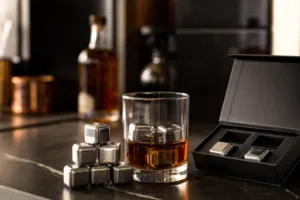
Trade show giveaways only work when the attendee can imagine using them after the booth visit. If the item is too fragile, too generic, or too easy to forget, it usually becomes dead weight in the bag and disappears after the event. Buyers who want longer brand exposure should think less about novelty and more about utility, material quality, and how the item fits a real routine.
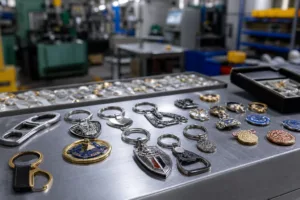
If your event team needs a compact item that can survive a crowded tote bag and still feel worth keeping, our custom keychain manufacturing options show how shape, plating, edge finishing, and attachment choice change perceived value. From sample approval to mold development and bulk production, we help turn a small giveaway into a functional reminder that fits the buyer’s daily routine.
Why Most Trade Show Giveaways Get Discarded Quickly
The fastest way for a giveaway to lose its value is to look like an afterthought. Many event items are chosen because they are cheap, light, and easy to order in a rush, but those same traits often make them forgettable. If the item does not solve a problem, mark a real occasion, or feel pleasant to carry, the attendee has little reason to keep it once they return to the hotel, office, or home.
Another common issue is brand visibility that feels too aggressive for the item. A logo that dominates the entire surface can make the product feel like a flyer with a handle instead of something the attendee wants to use. When the branding is too large, the surface finish is poor, or the edges feel rough, the giveaway sends a low-value signal before anyone has a chance to use it.
That is why we always look at the item from the user’s side first. If the object disappears into a desk drawer, breaks in transit, or looks awkward in daily life, the brand message disappears with it. The goal is not just to hand out more pieces. The goal is to select trade show giveaways that keep creating small, useful reminders long after the event floor closes.
What Makes People Keep a Giveaway: Utility, Perceived Value, and Brand Fit
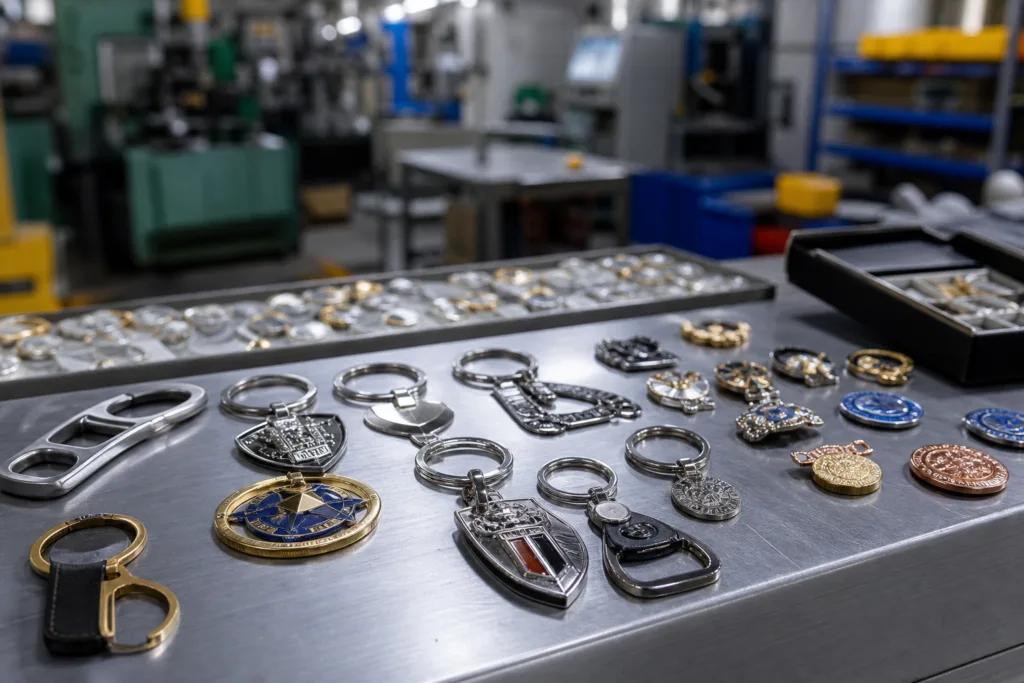
According to SBA guidance on promo product effectiveness, useful items stay in circulation because they keep generating impressions after the event. That is the simple logic behind long-term retention: if the item solves a daily need, it does not get treated like disposable swag.
PPAI consumer survey data shows recipients keep promo items when they are useful, attractive, or tied to an event or experience. For buyers, that means retention is not just about price; it is also about whether the item feels worth carrying after the booth visit.
In practice, three factors matter most:
- Utility: The item should do a real job, such as opening a bottle, holding keys, marking ownership, or sitting on a desk without wasting space.
- Perceived value: Weight, finish, edge quality, and packaging all change how expensive or gift-like the item feels.
- Brand fit: The product should match the audience, event tone, and distribution plan so it feels relevant rather than random.
When those three elements work together, the giveaway does more than carry a logo. It stays in the user’s hands, desk, pocket, or bag long enough to reinforce memory through repeated exposure.
Best Long-Lasting Giveaway Categories by Audience and Use Case
The best-performing items are usually not the biggest or most expensive. They are the ones that map cleanly to a routine the attendee already has. A buyer who travels often may appreciate a sturdy key accessory. A procurement manager may keep a compact desk item. A VIP guest may respond better to a collectible piece that feels intentional. For compact event use, bottle opener keychain giveaways are a strong example because they combine portability with a clear everyday function.
| Audience | Item types that stay longer | Why they are kept | Customization cue |
|---|---|---|---|
| Prospects and buyers | Keychains, bottle openers, metal badges | Easy to carry and easy to explain later | Simple logo placement and strong finish contrast |
| Staff and internal teams | Badges, desk accessories, nameplates | Useful in daily work and visible on site | Readable text, durable attachment, practical shape |
| Students and club members | Light metal keychains, pins, souvenir pieces | Affordable to distribute and easy to keep as reminders | Event shape, mascot silhouette, or date mark |
| VIPs and partners | Coins, premium keychains, desk gifts | Feels more collectible and intentional | Heavier material, premium plating, presentation box |
| Travel and hospitality audiences | Openers, tags, drinkware accessories | Fits repeated use during trips and events | Compact profile and finish that resists scuffing |
This table is not a strict rulebook. It is a buying cue. The more often the item touches daily life, the more chances the brand has to stay visible. That is why utility-led giveaways usually outperform decorative objects that never get a second use.
Why Metal Promotional Items Often Feel More Valuable Than Low-Cost Plastic Items
Metal changes the first impression immediately. It usually feels cooler in the hand, more solid in the pocket, and less disposable on a desk. A well-made metal item can also handle plating, polishing, engraving, or antique finishing in ways that make the logo feel integrated instead of printed on top as an afterthought.
A look at premium metal keychain styling shows how two-tone plating, polished recesses, and controlled contrast can make a small item feel intentional instead of disposable. Those details matter because attendees often decide whether to keep something within seconds of picking it up.
For metal giveaways, perceived value usually comes from a few visible cues:
- Weight: A little mass often feels more premium than a lightweight shell.
- Edge quality: Smooth edges and clean trimming make the item more comfortable to carry.
- Surface consistency: Even plating and clean color filling prevent the product from looking cheap.
- Logo integration: Engraved, embossed, or recessed branding tends to age better than weak surface printing.
That does not mean every giveaway should be metal. It means buyers should ask whether the item’s role justifies a material that signals durability and substance. If the objective is long-term retention, metal often gives a better cost-performance balance than a plastic item that will be tossed after the event.
High-Retention Examples: Metal Keychains, Bottle Openers, Pins, Coins, and Drinkware
Different product types support different retention goals. The best item is the one that makes sense for the audience and the setting, not simply the one with the lowest unit price. When the item is small enough to carry, useful enough to keep, and attractive enough to show, it has a much better chance of surviving beyond the event.
Metal keychains
Keychains are one of the most practical event gifts because they travel with the user. They also offer a wide range of shapes, plating choices, and attachment styles. When the form follows the brand story, custom-shaped keychain promotions can turn a logo, mascot, or product silhouette into something that feels designed rather than generic.
Bottle openers
Bottle openers work well because the function is obvious. People do not need instructions to understand the value. For beverage brands, hospitality businesses, or event sponsors, an opener is often kept because it is practical and easy to find again when needed.
Badges and pins
Badges and lapel pins can be highly effective when the audience enjoys collecting or wearing them. They are especially useful for clubs, schools, associations, and event communities where identity matters. If the pin or badge has enough detail, it can also become a conversation piece after the event.
Challenge coins and souvenir pieces
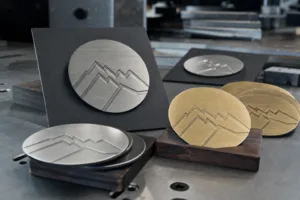
Coins and commemorative metal pieces are often kept because they feel collectible. They are a better fit for milestones, limited editions, ceremonies, and VIP gifting than for casual mass distribution. When the design carries meaning, people tend to hold on to it longer than a plain giveaway item.
Drinkware and accessories
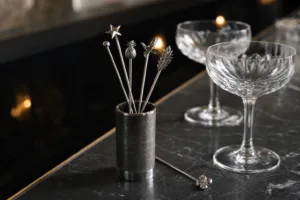
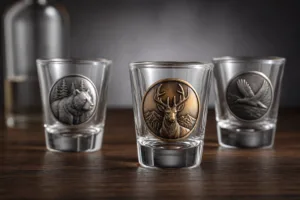
Drinkware can deliver strong retention, but only when the design is practical and the finish feels durable. Buyers should think carefully about size, lid style, coating, and how the item will be cleaned and reused. If the giveaway is meant for drinks or table use, the branding should support daily utility rather than interrupt it.
Choosing Giveaways for Different Attendee Types
Not every attendee should receive the same item. A good event plan splits the audience into a few practical groups and chooses gifts that fit each group’s likely behavior after the show. That is how buyers avoid overbuying the wrong thing and underinvesting in the people who matter most.
For prospects, the best giveaway is often small, helpful, and easy to take home. For staff and booth teams, the item may need to support identity or daily use. For students or club members, the product should feel fun but still practical. For VIPs and partners, the best pieces usually feel more like branded souvenir gifts than throwaway handouts, even when they are compact.
We often advise buyers to think in terms of retention value per audience segment:
- Prospects: Pick something that will be used within a week.
- Staff: Pick something that supports regular work or event operations.
- Students and clubs: Pick something memorable, affordable, and easy to show friends.
- VIPs: Pick something with stronger finishing, better presentation, and a more collectible feel.
This is where budget planning becomes strategic. A single well-chosen premium item for a high-value guest can deliver more brand memory than a stack of low-utility items handed to everyone.
Customization Factors That Increase Keep Rate: Logo Placement, Finish, Shape, and Packaging
Customization is not only about decoration. It changes how the attendee judges the item before the brand has had any time to earn that judgment. Good customization makes the giveaway feel specific, useful, and worth keeping. Poor customization makes even a decent product look hurried.
The first decision is logo placement. In most cases, a clear logo in one or two places is more effective than covering every visible surface. The second decision is finish. Polished, brushed, matte, antique, or two-tone surfaces each suggest a different brand personality. The third decision is shape. A shape that echoes the product, mascot, or event theme usually feels more deliberate than a generic outline. The fourth decision is packaging. A neat card, pouch, or box can make the item feel more like a small gift and less like loose stock.
That is why custom-shaped designs deserve attention early in the process. They can improve recall without making the logo louder. They also help the item stand out in a bag full of standard event handouts. If the shape is too complex, though, the design may lose clarity or become expensive to produce, so shape decisions should always be linked to the production method and target audience.
Our rule is simple: the decoration should support the item’s use, not compete with it. When the shape, finish, and packaging all reinforce the same idea, the giveaway usually feels more keep-worthy.
Material and Manufacturing Considerations for Durable Promotional Items
At Gairun, we usually match material and process to the item’s job, not just the art file. That means we look at thickness, edge quality, logo detail, and finish early, because those choices affect both perceived value and how well the item survives handling at an event.
| Material | Typical strengths | Best fit | Manufacturing cue |
|---|---|---|---|
| Zinc alloy | Good for complex shapes and detail | Die-cast keychains, coins, badges | Useful when the design needs depth and contour |
| Brass | Strong feel, clean stamping, good finish response | Premium badges, coins, tags | Works well when a sharper edge and higher weight matter |
| Stainless steel | Durable, clean look, strong corrosion resistance | Tags, plates, minimalist accessories | Better for modern looks and straightforward shapes |
| Aluminum | Lightweight and practical | Budget-friendly accessories and some tags | Useful when low weight matters more than heavy feel |
| Iron | Cost-efficient for some stamped products | Simple badges, shapes, and accessories | Best when finish and rust protection are planned carefully |
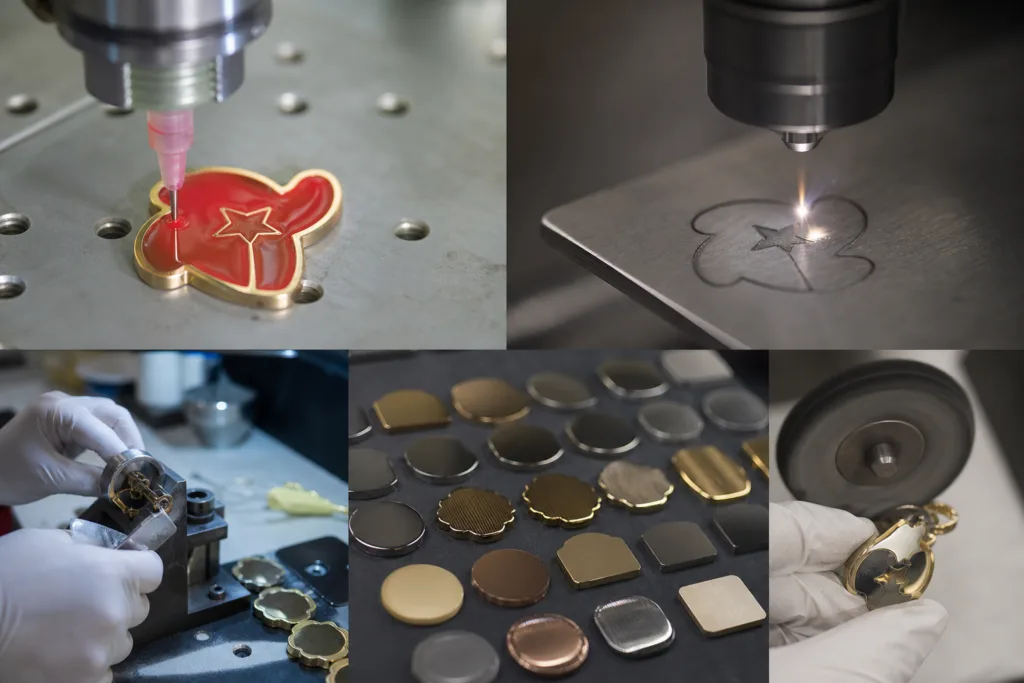
The process matters just as much as the material. Die casting supports raised and recessed detail. Stamping works well for flatter forms and sharper silhouettes. Etching helps when the artwork needs line detail on a thinner surface. Engraving can be the right fit when the message should feel permanent and subtle. After that, plating, polishing, sandblasting, color filling, or antique finishing decides how the item presents itself in hand.
Sample approval is another step buyers should not rush. A good sample lets you check thickness, attachment strength, logo legibility, edge feel, and overall balance before bulk production starts. It is much easier to adjust those details early than to discover after production that a giveaway feels too thin, too shiny, or too small to notice from a normal viewing distance.
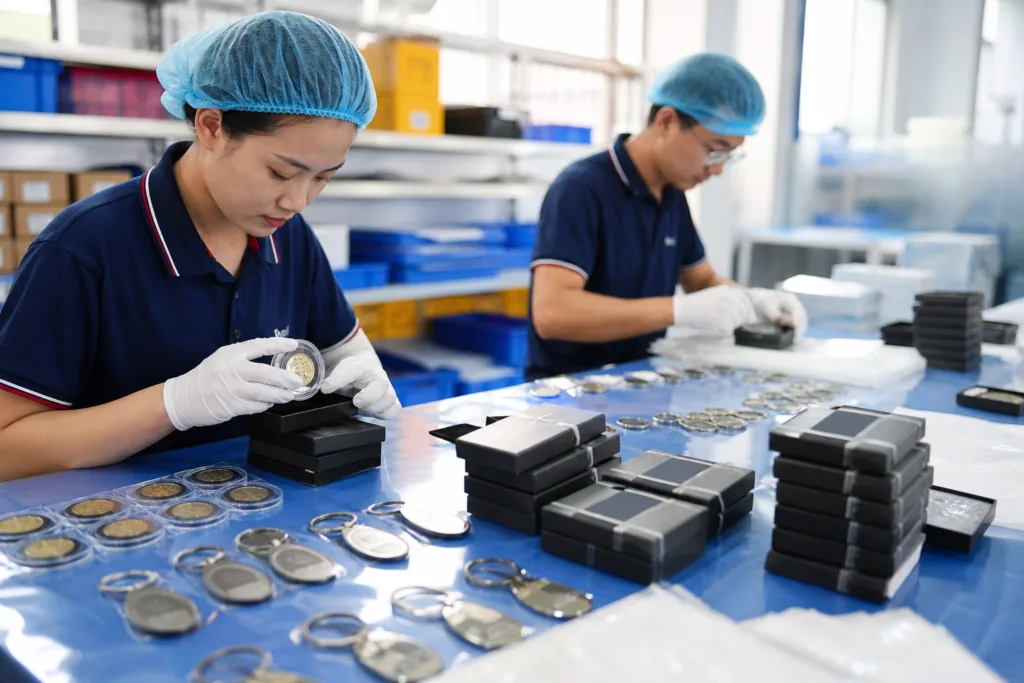
For bulk orders, consistency matters more than one perfect sample. We look at whether the plating tone holds across the run, whether the attachment feels secure, whether the polishing line is consistent, and whether the packing protects the item during transit. These small checks are what turn a promotional item into a dependable manufacturing result.
Budget vs. Longevity: How to Balance Unit Cost, Impact, and Retention
Event buyers often compare two numbers at the same time: unit cost and expected retention. A cheaper item can look attractive on paper, but if it is discarded quickly, the true cost of each meaningful impression becomes less favorable. A slightly higher-cost item can be the smarter choice when it stays in use for weeks or months.
The balance usually depends on audience value. High-volume walk-up traffic can justify simpler items, especially if the item is still practical. High-value prospects, strategic partners, and VIP attendees often justify more substantial materials, better plating, and stronger packaging because the goal is not just distribution. The goal is continued visibility.
Here is a practical way to think about it:
- Low-cost, low-retention items: Good only when the audience is broad and the event goal is simple reach.
- Mid-range, useful items: Often the best balance for most trade show giveaways because they are affordable but still carry value.
- Premium, collectible items: Best for targeted audiences where retention and brand impression matter more than volume.
If you are not sure where to spend, put the budget into the part the user feels first: material, finish, and packaging. Those are the elements that change keep rate most quickly.
Common Giveaway Mistakes That Reduce Keep Value
- Choosing novelty over utility, so the item gets a smile but no future use.
- Using a logo that is too large or too crowded for the product surface.
- Selecting a material that feels too light, weak, or cheap for the audience.
- Ignoring edge quality, which can make the product unpleasant to carry.
- Skipping sample review and discovering problems only after bulk production.
- Picking a shape that looks clever on paper but is awkward in the hand.
- Underinvesting in packaging when the item needs to feel like a gift.
Most of these mistakes are avoidable when the buyer thinks like the end user. A giveaway should be easy to understand, easy to use, and easy to keep nearby. If it fails any one of those tests, retention drops quickly.
A Practical Selection Checklist for Trade Show Giveaway Planning
Before you place an order, run the item through a simple buying checklist:
- Does the item solve a real use case for the target attendee?
- Does the material feel appropriate for the audience and event?
- Is the logo readable without overpowering the design?
- Will the item survive daily use, pocket carry, or desk handling?
- Have you reviewed sample quality, finish, and attachment strength?
- Does the packaging support the perceived value you want to create?
- Is the quantity aligned with your event audience and follow-up plan?
If the answer is yes to most of these questions, the giveaway is much more likely to stay in use. If several answers are no, it is usually better to revise the product choice before moving forward.
Conclusion
The most effective trade show giveaways are not the loudest items on the table. They are the ones that people can use, keep, and notice again after the event. When utility, perceived value, and brand fit line up, a simple item can keep working long after the booth is packed away.
From a manufacturing perspective, the winning formula is consistent: choose the right material, control the finish, keep the branding readable, and make sure the item feels durable enough to deserve a place in the user’s routine. That is how trade show giveaways move from short-term handouts to long-term brand reminders.
FAQs
What kinds of trade show giveaways do people keep longest?
People usually keep items that are useful, easy to carry, and visually clean. Metal keychains, bottle openers, desk items, and well-finished accessories tend to stay in use longer than novelty swag.
Are metal trade show giveaways worth the higher unit cost?
They can be, especially when the item will be used often or given to a valuable audience. Metal usually improves perceived value, durability, and brand visibility, which can make the cost easier to justify than a cheaper item that gets discarded.
How much logo detail should a giveaway include?
Keep the logo clear and easy to read at the item size. If the design is small, engraving, debossing, or a simple filled logo often works better than trying to force too many tiny details into a limited surface.
What finish makes a giveaway feel more premium?
Plated, polished, brushed, or antique finishes can all feel premium when they fit the design. The best choice depends on the brand style, the target audience, and whether you want a clean corporate look or a more collectible feel.
How do MOQ and lead time affect giveaway planning?
MOQ and lead time affect how early you need to lock the design, approve the sample, and confirm packaging. The earlier you plan, the easier it is to avoid rush choices that reduce quality or force you into a less suitable product.
What should I ask a supplier before placing an order?
Ask about material, process, finish, logo limits, sample timing, mold cost, packaging options, QC steps, and bulk consistency. A strong supplier should explain where the design is likely to look good, where it may need adjustment, and what will happen before production starts.