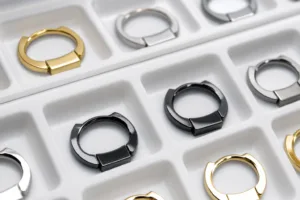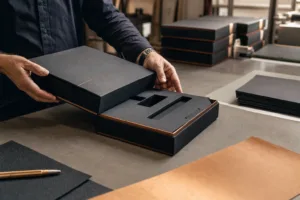
Black metal plating has become a practical design language for buyers who want a sharper, quieter, and more premium visual effect without losing the functional value of metal. In fashion hardware, interior accents, branded accessories, and custom product parts, the appeal is not just the color itself but the way the finish changes reflection, texture, and perceived weight. For B2B buyers, the real question is rarely whether black looks good; it is which process, substrate, and surface treatment will deliver the right Modern Aesthetic while still meeting durability, cost, and production requirements.
For projects that need a custom appearance, detailed logo work, or a controlled matte or satin surface, our metal craft manufacturing solutions help buyers move from concept to production with the right substrate, mold structure, finish selection, and sample approval plan. At Gairun, we often help teams compare plated, coated, and textured black finishes so they can balance visual effect with wear resistance, lead time, and order volume before committing to bulk production.
What Black Metal Plating Means in Modern Design
In practical manufacturing terms, black metal plating refers to a family of surface-finishing methods that give a metal product a dark, usually black or near-black appearance. The finish may come from electroplating, PVD, anodizing on aluminum, powder coating, paint-like coating, or antique-style dark treatment. In design language, however, buyers usually care less about the chemistry and more about the result: a controlled dark surface that looks more refined than raw metal, less flashy than bright chrome, and more contemporary than traditional gold or silver.
The modern look comes from several visual cues at once. A black surface absorbs more light, which softens glare and makes logos, relief details, and edge transitions feel cleaner. It can also make a small product appear more compact and deliberate. That is why black finishes are used so often on badges, tags, nameplates, keychains, watch-inspired hardware, luxury packaging accents, and interior components.
Why the black finish feels modern
The effect is not only color-driven. A black surface can make a product feel:
- more architectural when the finish is matte or satin
- more technical when the surface is tightly controlled and uniform
- more premium when combined with polished highlights or raised details
- more subdued when the design needs to support a brand system rather than dominate it
For this reason, black finishes work especially well when the product must communicate restraint, precision, and attention to detail.
Why Black Metal Finishes Are Resurging Across Industries
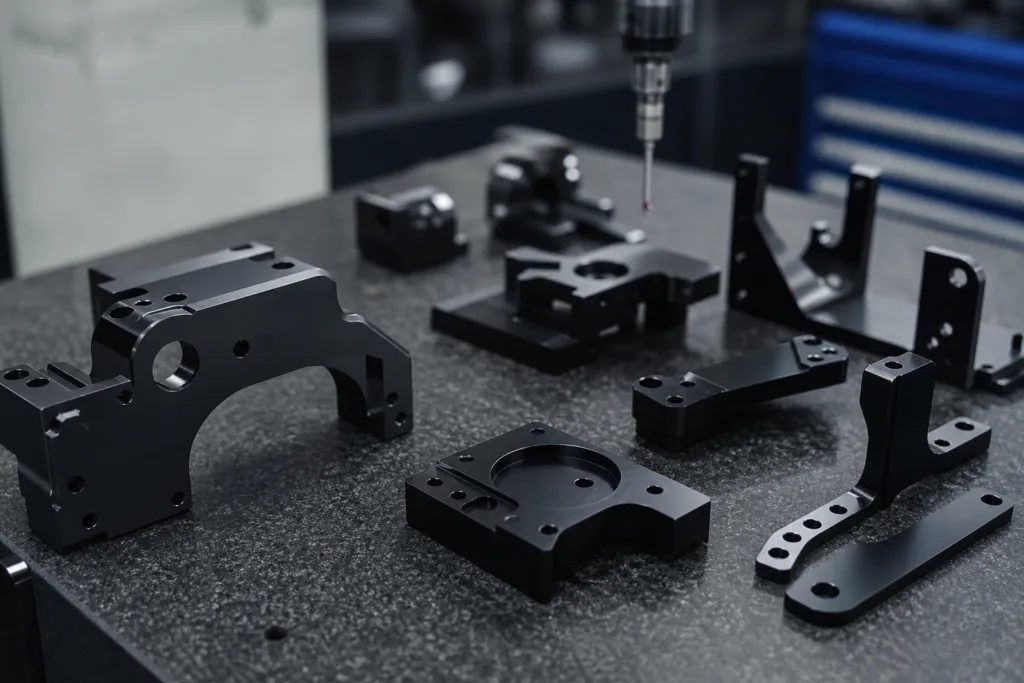
We see black finishes used more often because they solve several design and sourcing problems at the same time. They can make a product feel newer without changing the core shape, and they can create a strong brand impression even on relatively small metal items. In fashion and accessories, black metal often supports minimal, industrial, or luxury positioning. In interiors, it can coordinate with dark hardware, modern fixtures, and mixed-material environments. In promotional and collectible items, it gives buyers a darker base that helps colored accents stand out.
Another reason for the resurgence is the way modern brands use material contrast. A blackened surface paired with polished edges, recessed enamel, or brushed highlights creates depth that a plain painted surface cannot match. That depth is especially useful in small-format products where shape and finish must do most of the visual work.
Where buyers use black finishes most often
- fashion hardware such as buckles, zippers, and decorative attachments
- nameplates and tags for apparel, bags, and equipment
- interior accents such as decorative plates and branded fixtures
- custom medals, coins, pins, and corporate gifts
- premium packaging accessories and presentation components
In many of these cases, black is chosen not because it hides the metal, but because it makes form, typography, and finish transitions easier to read.
Where Black Metal Plating Is Used: Fashion, Interior Design, and Product Manufacturing
From our production perspective, the same finish can behave very differently depending on the application. A fashion accessory may need lightweight construction, fine edges, and resistance to frequent handling. An interior component may need stronger corrosion performance and a stable appearance under different lighting conditions. A branded metal product may need crisp logo definition and repeatable color consistency across a large batch.
Fashion and apparel accessories
Black hardware is common in straps, labels, decorative tabs, and brand marks because it integrates easily with dark fabrics and neutral color palettes. Buyers often want a finish that does not reflect too much light, since strong glare can make a small piece look cheaper. A matte or satin black surface usually works better than a high-gloss one when the part sits close to fabric or leather.
Interior and architectural details
Interior design buyers often want finishes that feel calm but intentional. Black plated or coated components can support modern interiors by echoing black frames, lighting fixtures, handles, or structural details. In these projects, the most important choices are usually finish uniformity, scratch tolerance, and how the color holds up under cleaning and touch.
Branding and product manufacturing
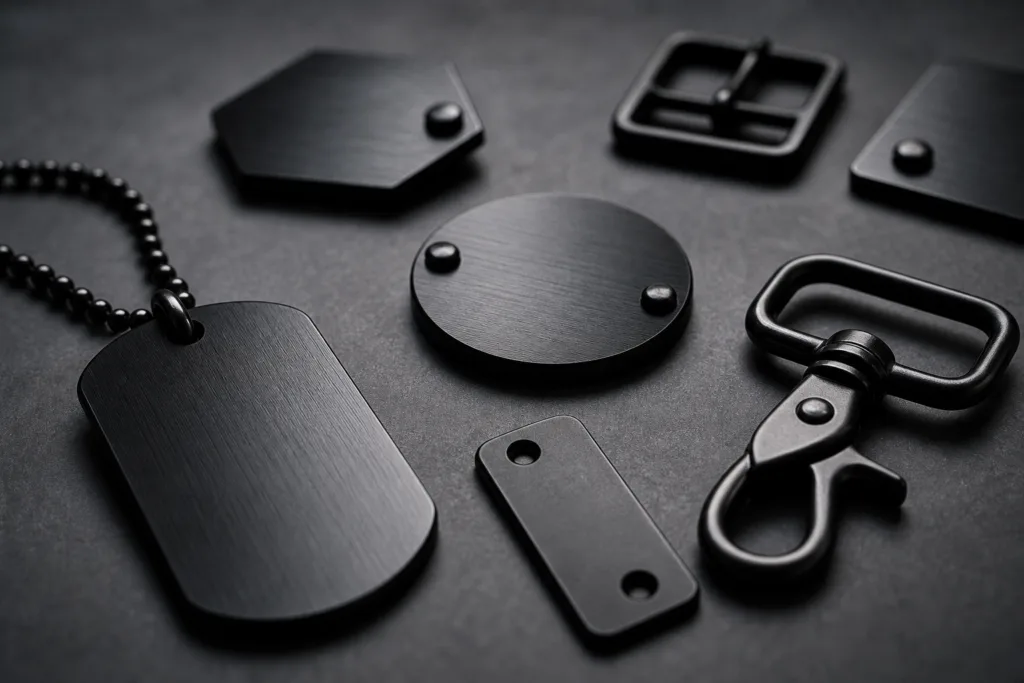
For products like medals, challenge coins, pins, keychains, tags, and nameplates, black finishes can add contrast to raised logos, enamel fills, and engraved text. The finish can also support private label packaging because the product already carries a premium visual identity before the box is even opened. For buyers sourcing these items, the finish has to be compatible with mass production, not just attractive in a render.
When buyers compare black metal options, we often recommend reviewing both the intended use and the attachment method early. A finish that looks excellent on a display sample may not perform the same way if the product is bent, clipped, stitched, or handled every day.
How Black Metal Plating Creates a Modern Aesthetic
The modern aesthetic comes from more than the color black. It depends on how the surface interacts with light, edges, and relief. A flat black surface creates a quiet, architectural effect. A brushed black surface adds directional movement. A polished black surface can look more luxurious but may also reveal fingerprints and handling marks more quickly.
In product development, this means the finish should always be designed together with the shape. Narrow bevels, raised logos, recessed backgrounds, and layered materials all change how the black surface reads. A heavy matte black on a simple flat plaque can feel understated; the same finish on a sharply defined die-cast emblem can feel more engineered and premium.
Surface texture, gloss level, and depth
Texture is one of the biggest reasons black finishes succeed or fail. If the surface is too glossy, it may reveal inconsistencies, mold marks, or scratches. If it is too flat, it can look chalky or uneven. Buyers usually choose between these general directions:
| Finish direction | Visual effect | Typical use | Buyer consideration |
|---|---|---|---|
| Matte black | Soft, low-reflection, modern | Tags, badges, nameplates | Best for understated branding and reduced glare |
| Satin black | Balanced reflection and depth | Fashion hardware, promotional items | A safe middle ground for many product categories |
| Brushed black | Directional texture with visible movement | Decorative panels, premium accessories | Works well when texture is part of the concept |
| Polished dark finish | Sharper highlights, more reflective | Luxury-style details, display pieces | Needs stricter control of surface defects |
If the project requires a specific visual tone, we often advise making the finish decision early, before mold details and thickness are finalized. That helps avoid a mismatch between the design intent and the actual production result.
For buyers who want to understand how surface texture affects the result, our surface texture and finish techniques discussion is useful because the same substrate can look quite different once sandblasting, brushing, or soft-matte treatment is introduced before plating or coating.
Common Black Finish Types: Electroplating, PVD, powder coating, and antique-style dark finishes
Not every black finish is built the same way. In sourcing conversations, buyers sometimes use “black plating” as a broad term, but the underlying process has a major impact on look, durability, and cost.
Electroplated black finishes
Electroplating is often chosen when a metal part needs a dark metallic appearance that still feels like metal, not paint. It can work well on compatible substrates and is often paired with polishing or textured pre-treatment. The final effect depends heavily on the base material and on how the surface was prepared before plating.
PVD black finishes
PVD is commonly associated with harder, more wear-resistant decorative finishes. It can produce a deep dark tone with a refined surface quality, though it usually sits in a different cost and process category than simpler decorative coatings. Buyers may choose it when the product needs stronger color stability and a sharper premium look.
Powder coating and painted black surfaces
Powder coating can be suitable when a thicker, more uniform color layer is acceptable and the design does not depend on ultra-fine metal detail showing through. It is often used when the goal is strong coverage rather than a plated metallic appearance.
Antique-style dark treatments
Antique black or darkened finishes can give the surface a deeper, older, more dimensional look. These are useful when the design benefits from shadow in the recesses and contrast on the raised areas. They are especially common on emblem-style products, medals, and decorative metal parts.
When buyers are deciding between different decorative coating routes, a standards-based approach to appearance and testing can help avoid vague specifications. For example, decorative finish testing, gloss levels, and coating thickness requirements are often defined in formal coating specifications such as the decorative finish testing, gloss levels, and coating thickness requirements used in coated metal systems. Even when a buyer is not ordering architectural material, the same discipline is useful: if the finish cannot be measured or described clearly, it is difficult to reproduce consistently in bulk.
Substrate Compatibility: Brass, zinc alloy, stainless steel, and aluminum
The substrate matters as much as the finish method. A black coating can only look as good as the base metal allows. In our manufacturing work, the choice usually depends on the part shape, thickness requirement, desired surface detail, and budget.
Brass
Brass is often selected when crisp detail and a premium feel are priorities. It is commonly used for badges, pins, nameplates, and other decorative products that benefit from cleaner edges and more precise engraving. It can support very refined surface work, though final cost may be higher than some alternatives.
Zinc alloy
Zinc alloy is a frequent choice for die-cast items with more complex three-dimensional shapes. It is useful for medals, keychains, and branded emblems that need volume, depth, or strong mold definition. Because it is highly shape-friendly, it often supports elaborate relief better than flatter metal options. For buyers comparing finish and hardware combinations, our finish choices for zinc alloy hardware overview can help clarify how black surfaces behave on this material family.
Stainless steel
Stainless steel is chosen when corrosion resistance and a modern industrial feel are important. It is often associated with clean lines and durable performance, especially for nameplates, tags, and accessory components that may face more exposure to moisture or handling.
Aluminum
Aluminum is lightweight and versatile, especially for parts where weight control matters. It is often used when the project requires a lighter finish or where the design values a clean, modern profile. Finish naming and appearance categories on aluminum can vary, so it is important to confirm exactly what process is being used. In some aluminum projects, buyers compare plated-looking dark effects with anodized black options, which are not the same process.
Because substrate and process are linked, we encourage buyers to confirm not only the color target but also the base metal before sampling. This keeps the sample review meaningful and reduces the risk of changing appearance after tooling is already made.
Design Considerations for Logos, Details, and Edge Definition
Black metal finishes can make logos look excellent, but they can also expose weak design decisions. On a dark surface, tiny flaws in edge definition, depth balance, or font size may become more noticeable than they would on a brighter finish. That is why artwork preparation and mold design matter so much.
What to check in artwork and tooling
- logo line weight should remain readable after plating or coating
- small text should not be too shallow for the chosen process
- raised and recessed areas need enough depth contrast
- sharp corners may need slight softening to improve finish adhesion and reduce chipping
- product thickness should support both structure and visual balance
For buyers planning logo-driven products, we often recommend a prototype review that focuses on both readability and surface behavior. A black finish can make the logo look more sophisticated, but only if the design has enough relief to hold its shape after production.
If the project includes printed or color-matched elements alongside the black finish, our color matching for plated metal products resource explains why color targets must be aligned with the actual production surface, not only with a digital file or screen rendering.
Durability Factors: Wear Resistance, Corrosion Resistance, and Color Stability
A good black finish should do more than look attractive in a product photo. It should stay visually stable under handling, packaging, shipping, and the expected end use. The three most common performance questions are wear resistance, corrosion resistance, and color stability.
Wear resistance
Wear resistance matters most on products that rub against fabric, skin, packaging, or other hardware. Matte finishes can hide small marks better than glossy ones, but the surface still needs to be compatible with the product’s use environment.
Corrosion resistance
If the part may be exposed to moisture, sweat, humid storage, or frequent touching, surface protection becomes especially important. Poor pretreatment or weak plating adhesion can lead to dullness, edge breakdown, or localized defects.
Color stability
Color stability means the black tone should remain close to the approved sample across the batch and throughout reasonable use. It does not mean that every piece will be absolutely identical, but variation should stay within the acceptable visual range for the project.
In production planning, inspection of coating thickness is one of the most practical ways to control finish performance. Coating thickness measurement and inspection standards, such as those described by coating thickness measurement and inspection standards, remind us that visual consistency and measurable process control belong together. If the layer is too thin, durability can suffer; if it is too heavy, fine details may be lost.
How Black Plating Affects Product Perception and Brand Positioning
Black finishes change how buyers interpret a product before they touch it. They can make simple forms feel more engineered, more restrained, or more premium. They can also shift a product away from a playful or casual look and toward a more structured brand identity. That is useful for brands that want a darker, cleaner visual system across packaging, accessories, and merchandise.
At the same time, black is not automatically premium. If the surface looks blotchy, too shiny, or too soft at the edges, the finish can create the opposite effect. So the brand benefit depends on finish control. This is why many sourcing teams treat black as a “high sensitivity” color: it looks simple, but the production tolerance is often tighter than it appears.
For buyers developing branded accessories, product labels, or premium hardware, matte black plated metal tags are a strong example of how a dark finish can support brand identity without overpowering the design. The product stays functional, but the finish gives it a more considered presence.
Cost Drivers, MOQ, Sampling, and Lead Time for Custom Production
Black metal plating can be cost-efficient or costly depending on the process choice and the product geometry. The main cost drivers usually include substrate selection, mold complexity, surface prep, finishing method, quality requirements, and packaging needs. A simple flat tag is much easier to produce than a deeply sculpted emblem with multiple relief levels and a special matte-black effect.
What typically affects price
- base material and metal thickness
- mold complexity and tooling detail
- finish type and pre-treatment steps
- logo depth and artwork complexity
- sample revisions and approval cycles
- packaging and private label requirements
MOQ and lead time also depend on process type. If a finish requires multiple steps or tighter inspection, the buyer should expect a more careful sampling cycle before mass production. That is normal and usually worth it when the product will represent a brand or be sold in a premium category.
We advise buyers to ask early whether the finish can be reproduced consistently across reorders. A visually successful sample is valuable only if the process can be repeated at scale. For that reason, proof approval should include not just color, but also gloss, texture, edge quality, and attachment fit. Our matte black nameplates page is a useful reference for buyers who want to see how a controlled dark surface works on a flat branded item with strict dimensional expectations.
Quality Control Checks for Black Metal Plated Products
Black surfaces require disciplined QC because the finish can hide some problems while making others more visible. A good inspection plan should review both appearance and structure.
Typical QC checkpoints
- color uniformity across the batch
- surface coverage at edges, recesses, and corners
- scratch marks, dents, or fingerprints after handling
- plating adhesion or coating integrity
- logo legibility and detail retention
- dimension fit, especially for attachments and assembly parts
- packaging protection before shipping
One useful habit is to approve a physical master sample under the same lighting conditions the buyer will use for inspection. Black finishes can shift visually under warm, cool, or direct lighting, and that can create confusion if the review method is not standardized. Buyers who need a stable approval workflow often benefit from proofing before mass production, which is why our proofing before mass production article is relevant to finish-heavy projects like this one.
Common Problems: Uneven Color, Scratches, Fingerprints, and Fading
Most black finish issues are not caused by the word “black” itself; they are caused by process variation. Uneven color may come from inconsistent surface prep or layer thickness. Scratches may appear if parts are packed too tightly or handled without protection. Fingerprints are common on higher-gloss surfaces. Fading can result from process mismatch, weak adhesion, or unsuitable use conditions.
How buyers can reduce these risks
- specify the finish direction clearly: matte, satin, brushed, or polished
- approve the sample under realistic light
- confirm whether the finish is plated, coated, or anodized
- use packaging that prevents rubbing during transit
- test the part in the intended handling environment when possible
Packaging deserves special attention because black finishes often show transit marks quickly. Even when the finish itself is stable, poor packing can create scratches that look like production defects. Buyers sourcing export orders should align the finish plan with transit protection so the product reaches inspection in the same condition it left the factory.
For that reason, our protecting finished metal surfaces in transit guide is especially relevant for black-plated or black-coated products that need a clean unboxing experience.
How Designers and Manufacturers Evaluate the Right Black Finish for Each Application
Choosing the right black finish is usually a matter of matching design intent to production reality. We look at the product in three layers: visual effect, physical performance, and manufacturing repeatability. A finish that looks excellent on a display badge may not be the right answer for a wearable tag or a high-touch hardware component.
A practical decision framework
| Project need | Recommended direction | Why it fits |
|---|---|---|
| Luxury or premium branding | Matte or satin black with clean relief | Balanced, modern, and easy to pair with metallic highlights |
| Frequent handling | Durable surface with controlled gloss | Helps hide wear and maintain appearance |
| Fine logo detail | Substrate and process with strong definition | Preserves small features after finishing |
| Decorative contrast | Black base with polished or filled details | Creates depth and brand emphasis |
| Lightweight accessory | Aluminum or zinc alloy depending on structure | Supports the needed weight and shape |
In our view, the most successful black products are the ones where the finish feels inevitable rather than added late in the process. That comes from aligning shape, substrate, texture, and finish method from the start.
Expert Perspective: What Designers and Manufacturers Look for in a Premium Black Finish
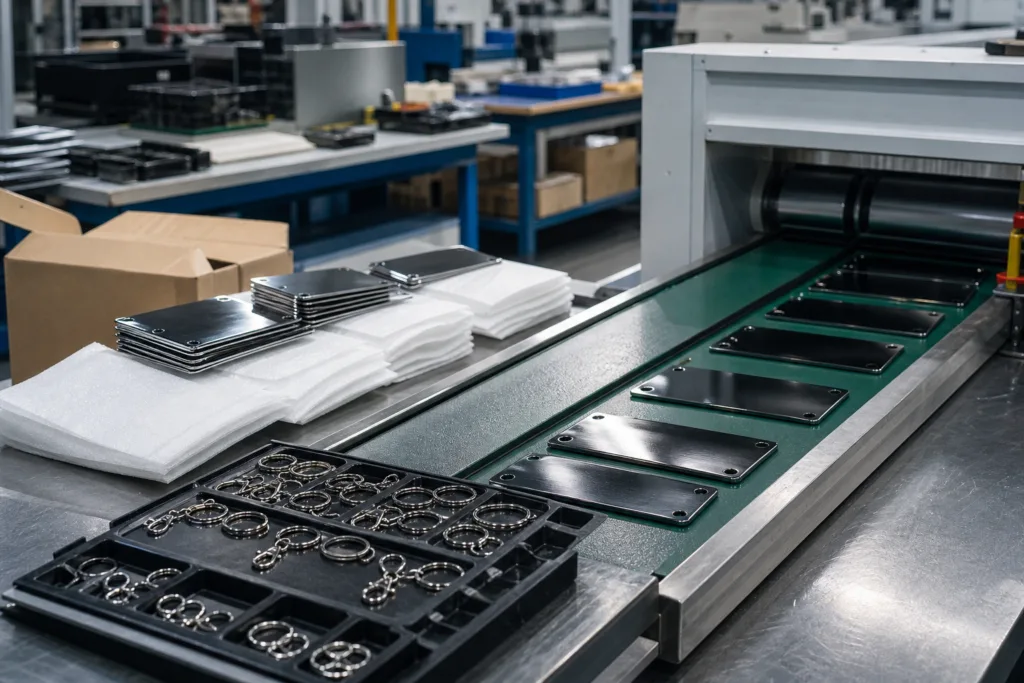
From a manufacturing perspective, a premium black finish is not defined by darkness alone. It is defined by control. The surface should appear intentional in daylight, under retail lighting, and in photography. The edges should be clean. The logo should remain readable. The batch should stay consistent. And the process should be realistic for the buyer’s target quantity, budget, and timeline.
Designers usually care most about visual harmony, while manufacturers focus on repeatability and defect control. The best results happen when both are discussed together. For example, a deep matte look may be attractive, but if the part has very sharp edges or a highly detailed relief, a slightly softer satin effect may produce a better result in bulk. Likewise, a striking black surface may be ideal, but only if the substrate and attachment method can support it without distortion.
At Gairun, we approach these projects by first clarifying the product’s purpose, then matching that purpose to the right material, finish process, and sampling path. That keeps the design vision intact while reducing avoidable production problems later.
Conclusion
Black metal plating remains one of the most effective ways to create a modern aesthetic because it combines visual restraint with strong material presence. It can support fashion hardware, interior accents, branded tags, nameplates, medals, and other custom metal products, but only when the finish is selected with the substrate, texture, logo detail, and production method in mind. Buyers who treat black as a design system rather than a single color tend to get better results in both appearance and performance.
From our manufacturing perspective, the most important decisions happen before production starts: which substrate to use, how the surface should feel, how much detail the part needs, and how the final finish will be inspected and packed. When those choices are made carefully, black finishes can deliver a clean, durable, and highly adaptable result across many product categories.
FAQs About Black Metal Plating and Modern Aesthetic Applications
Is black metal plating the same as black paint?
No. Black metal plating is a broader term that can include plated, coated, anodized, or otherwise darkened metal surfaces, while paint is just one possible approach. The difference matters because each process affects texture, durability, edge definition, and the way the metal surface reflects light.
Which substrate is best for a black finish?
There is no single best substrate. Brass is often chosen for detail, zinc alloy for shaped die-cast parts, stainless steel for corrosion resistance, and aluminum for lightweight applications. The right choice depends on the shape, budget, and the kind of visual result you want.
Why do some black metal products look matte while others look glossy?
The gloss level comes from the surface preparation and finishing process, not just the color itself. Matte surfaces reduce reflection and feel more modern or understated, while glossy surfaces create stronger highlights and can feel more polished but also show fingerprints more easily.
Can black finishes be matched consistently across repeat orders?
Yes, but consistency depends on the factory’s process control, sample approval, and quality checks. Buyers should confirm the exact finish type, approve a physical sample, and review how the product will be inspected before mass production begins.
What causes black finishes to scratch or fade?
Scratches usually come from handling, transit, or poor packaging, while fading can result from weak adhesion, unsuitable use conditions, or process mismatch. The safest approach is to align the finish method, packaging, and end-use environment from the start.
How should buyers brief a factory for a custom black metal product?
Buyers should share the product use, substrate preference, finish target, logo artwork, size, thickness, attachment method, packaging needs, and expected quantity. A clear brief helps the factory recommend the right process and reduces the chance of costly revisions.