Custom metal tags are used when identification must stay readable through abrasion, weather, cleaning, handling, and long service life. For industrial buyers, the challenge is not simply choosing a tag that looks acceptable on day one. The real decision is how the tag will perform after installation on equipment, assets, machines, valves, tools, control panels, or outdoor systems where labels can fade, peel, crack, or become unreadable. From our manufacturing perspective, a good tag specification balances material, marking method, attachment style, data format, and production control so the final part matches the environment and the way the item will actually be used.
If your project involves long-life identification, serialized marking, barcode or QR code data, or application-specific mounting requirements, our custom metal tag manufacturing solutions are built around those practical variables. At UC Tag, we help buyers compare aluminum, stainless steel, brass, and anodized options, choose between engraving, etching, stamping, and printing, confirm hole placement or adhesive backing, and review sample approval, data handling, and bulk production details before release.
What custom metal tags are and where they are used
Custom metal tags are durable identification components made to a defined size, material, thickness, finish, and marking layout. They may carry fixed information such as brand name, rating data, warning text, or equipment model details. They may also include variable data such as serial numbers, lot codes, asset numbers, QR codes, or barcodes.
We commonly see buyers use them for asset tags, machine tags, equipment labels, serial number plates, industrial nameplates, valve tags, cable tags, panel identification, locker tags, and specialty programs requiring controlled numbering. In some projects, the same manufacturing logic also extends to wearable or branded identification components such as custom bracelet tag production, where durability, legibility, and finishing quality still matter even though the application is not purely industrial.
The main benefit of a custom approach is fit. Instead of adapting your equipment or process to a generic plate, the tag is built around your mounting points, data needs, environmental exposure, and brand requirements.
Why metal tags outperform paper, plastic, and printed labels in harsh environments
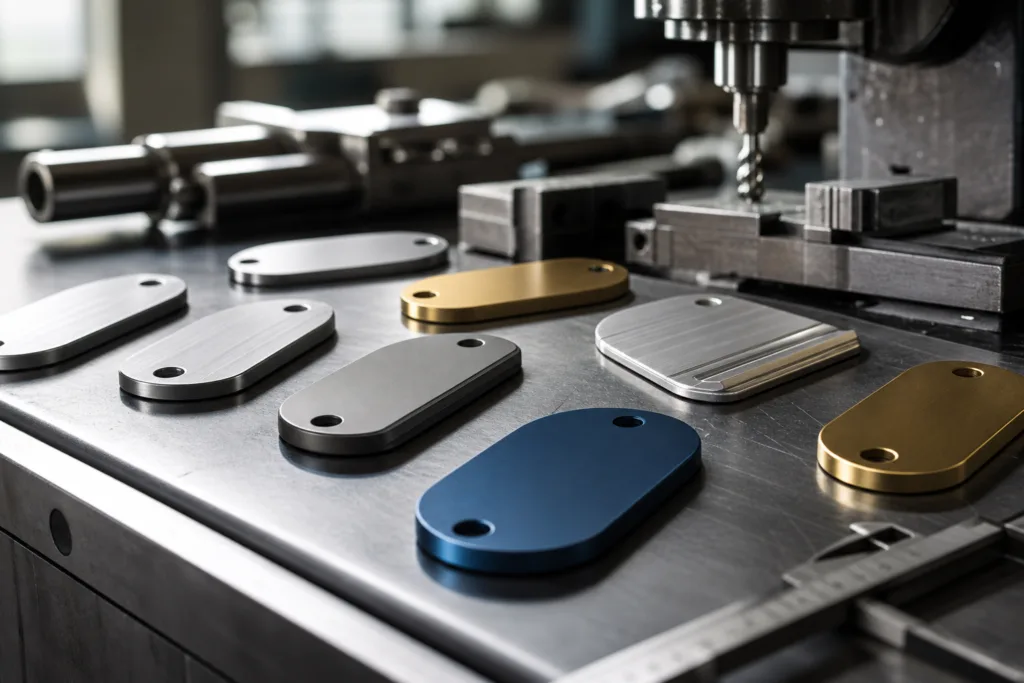
Paper labels work for short-term organization. Plastic labels can be acceptable in mild indoor use. Printed stickers are fast and low cost for temporary identification. But these options often fail when exposed to heat, moisture, solvents, friction, UV, or repeated cleaning. In those conditions, metal tags remain the more dependable choice because the base material itself resists deformation and the marking can be selected for deeper or more permanent readability.
For industrial and asset identification, failure usually happens in one of three ways: the substrate breaks down, the printed information disappears, or the attachment method fails. Metal tags reduce all three risks when correctly specified. The material can resist wear, the information can be engraved or etched rather than merely surface printed, and the attachment can be mechanical instead of fully adhesive-based when the environment is aggressive.
This is why buyers in utilities, machinery, electronics, marine, and outdoor sectors often move to metal after experiencing label loss, unreadable serial data, or asset tracking gaps.
Common use cases for industrial identification
Asset tags
Asset tags typically need a unique identifier, high legibility, and consistent placement across large volumes. They often include barcodes or QR codes and are used on tools, IT equipment, production assets, or facility equipment. The key here is not only durability, but also data accuracy and scan reliability.
Equipment tags and machine tags
These tags usually combine fixed and variable data: model, voltage, safety text, serial number, manufacturing date, and service references. They may be riveted or screwed to housings, frames, or panels, and usually require long-term readability under handling and cleaning.
Serial number plates and industrial nameplates
Serial number plates often demand controlled sequences and consistent character quality. Industrial nameplates may also require logos, structured tables, line alignment, and strong contrast for technical information. If the item supports warranty, maintenance, or compliance workflows, clear data layout matters as much as the material itself.
Valve tags and utility identification
Valve tags are often exposed to outdoor conditions, washdown, chemicals, or frequent handling. Hole size, edge quality, and attachment choice become especially important because the tag must stay attached without creating sharp edges or readability issues.
How to choose the right metal for custom metal tags
Material choice should start with environment first, appearance second, and cost third. Buyers sometimes reverse that order and create avoidable problems.
| Material | Best For | Advantages | Watch Points |
|---|---|---|---|
| Aluminum | General industrial use, asset tags, indoor and moderate outdoor applications | Lightweight, cost-effective, good workability, supports multiple finishes | May not suit the most abrasive or corrosive environments without the right finish |
| Stainless steel | Harsh outdoor, marine-adjacent, chemical, and high-wear environments | Strong corrosion resistance, durable, premium industrial feel | Higher cost and different marking visibility depending on finish |
| Brass | Decorative nameplates, heritage equipment, branded identification | Warm appearance, good engraving response, classic finish options | Chosen more for aesthetics and specific applications than lowest cost |
| Anodized aluminum | High-contrast identification, barcode and QR applications, equipment labels | Good readability, durable finish, color options, useful for variable data | Finish and process selection should align with wear and exposure needs |
Aluminum is often the practical starting point for many B2B projects because it offers a strong cost-performance balance. Stainless steel is usually the safer choice when corrosion, washdown, or outdoor exposure is a primary concern. Brass suits applications where appearance matters alongside identification. Anodized aluminum is especially useful when buyers want readable contrast and efficient handling of serials, barcodes, or QR codes.
In product development work, we also see crossover applications where the same design language used on industrial tags influences decorative components, including die-cast bracelet charm designs for branded or specialty identification programs. The material decision still depends on durability, finish, and detail definition.
Comparing marking methods
The marking method determines how information is created on the tag and how well that information survives use. Buyers should choose the process based on readability needs, expected wear, data complexity, and cost.
Laser engraving
Laser engraving is widely used for precise text, serial data, logos, and machine-readable codes. It supports flexibility, fine detail, and variable data. It is a common choice when buyers need clean repeatability and efficient data changes from one tag to the next.
Chemical etching
Chemical etching is useful for fine detail, clean line work, and industrial nameplates that require a refined appearance. It can be a strong option when the design includes small text, technical layouts, or filled contrast areas.
Stamping
Stamping creates a physical impression in the metal and can be attractive for simple permanent identification. It works well when buyers want a tactile mark and straightforward content. For some decorative or product ID applications, stamped surfaces may also be part of the visual design language, similar to some engraved bracelet tag options where the mark itself is part of the finished look.
Screen printing and UV printing
These methods are useful when color, logos, or larger visual fields are important. They can be suitable for indoor or moderate environments, especially when paired with a stable substrate and sensible application conditions. Buyers should be realistic, though: a printed surface is not the same as a physically engraved or etched mark in terms of wear resistance.
Readability and durability factors that matter in the field
A tag can be technically correct and still fail in practice if users cannot read it quickly. We advise buyers to check four things early: contrast, text size, information hierarchy, and expected wear.
- Contrast: Dark-on-light or light-on-dark contrast improves fast reading.
- Character size: Small text may look acceptable on artwork proofs but become difficult to read after installation.
- Information hierarchy: Serial number, model, and warning text should not compete equally for space.
- Wear pattern: The most exposed area of the tag should not carry the most critical information unless the marking method can support it.
Corrosion resistance also depends on the full combination of metal, finish, environment, and attachment hardware. A durable plate can still underperform if the wrong fastener, rough edge condition, or mounting surface is used. In marine-adjacent and chemical settings, stainless steel often becomes the more conservative specification. In general outdoor asset labeling, anodized aluminum can perform well when the design and process are properly matched to the use case.
How to add serial numbers, barcodes, and QR codes
Variable data requires more planning than fixed artwork. Buyers should define whether the supplier will receive a completed data file, generate the sequence from a start number, or combine static and variable fields during production. The cleaner the data structure, the lower the risk of duplication, skipped numbers, or layout mismatch.
For barcodes and QR codes, size and contrast must be designed for the actual scanner and reading distance, not just for visual appearance. If the code links to digital records, shorter destination paths and human-readable backup text improve real-world usability. Practical guidance on QR code readability and scanning best practices also supports the idea that placement, testing, and accessible linked content matter just as much as generating the symbol itself.
We recommend scan testing sample tags before full production, especially when the tag surface is reflective, curved, small, or exposed to dirt and wear. Buyers should also confirm whether the code must remain readable after coating, after installation, or after repeated handling.
Attachment options and mounting decisions
Attachment is one of the most overlooked parts of a tag specification. A durable plate with the wrong mounting method is still a weak solution.
| Attachment Method | Best Use | Advantages | Watch Points |
|---|---|---|---|
| Holes with rivets | Machines, panels, equipment frames | Strong mechanical retention | Hole position must match real installation points |
| Holes with screws | Serviceable equipment, removable panels | Easy replacement or maintenance access | Screw type and head clearance should be confirmed |
| Wire or chain | Valves, hanging ID tags, temporary or service-linked use | Flexible and visible | Movement may increase wear on edges and holes |
| Adhesive backing | Smooth surfaces, no-drill installations, cleaner aesthetics | Fast application, no hardware required | Surface condition and environment strongly affect bond |
For adhesive-backed tags, surface preparation is critical. Oil, dust, oxidation, texture, and low-energy surfaces can reduce bond strength significantly. Technical guidance on adhesive-backed tag attachment and surface preparation reinforces a point we often make to buyers: the adhesive choice alone does not guarantee retention if the mounting surface is not properly prepared.

Hole diameter, edge distance, slot location, and corner radius should also be confirmed before tooling or bulk production. Small drawing errors in these areas can make installation slow or impossible.
Design and artwork preparation
Most production delays come from incomplete artwork or unclear data instructions rather than from metal processing itself. Buyers can reduce revision cycles by preparing a clean file with defined dimensions, margins, hole positions, fonts converted properly when required, and a clear separation between fixed content and variable fields.
Good artwork planning includes:
- Final size and thickness
- Material and finish selection
- Exact hole location and diameter
- Readable text hierarchy
- Logo clarity at actual size
- Barcode or QR code placement with safe margins
- Variable data source file format
- Packaging instructions if tags must be sorted by sequence or set
If a design includes decorative finishing, polished surfaces, or premium branding elements, buyers should also consider whether reflection may affect code scanning or visual readability. That issue appears in some specialty products, including premium mirror-finish bracelet tags, and the same lesson applies to industrial identification: a beautiful finish should not reduce functional clarity.
Environmental and application checks before release
Before approving production, buyers should review the real environment instead of relying on a generic “outdoor” or “industrial” description. Useful questions include:
- Will the tag face direct sun, rain, salt air, or spray?
- Will cleaners, oils, acids, or solvents contact the surface?
- Will users handle the tag frequently?
- Will the item operate near heat sources?
- Will the tag be mounted on a curved, painted, rough, or oily surface?
- Does the code need to scan from a specific angle or distance?
These checks help determine whether the project needs stainless steel instead of aluminum, mechanical fixing instead of adhesive, deeper marking instead of surface printing, or a larger tag for safer code performance.
Typical manufacturing specs to confirm before production
At UC Tag, we encourage buyers to freeze the full specification before mass production starts. That usually includes material grade or type, thickness, overall dimensions, corner treatment, finish, marking method, color treatment if any, hole or slot details, adhesive type if used, numbering logic, packaging method, and acceptance expectations for readability and cosmetic variation.
Even simple projects benefit from a specification sheet. It reduces misunderstandings between purchasing, engineering, and the production team, especially when repeat orders happen months later and different team members are involved.
Sampling, approval, MOQ, and lead time planning
Sampling is where many preventable issues are solved. A prototype or pre-production sample allows buyers to check readability, mounting fit, edge feel, code scanning, finish appearance, and data logic before full quantity is committed. We generally advise buyers not to treat samples as a formality. A serious sample review often saves much more time than it adds.
MOQ and lead time depend on process choice, complexity, data handling, finishing steps, and packaging needs. A simple engraved aluminum tag with standard mounting may move differently from a stainless steel etched plate with custom numbering, sorted packaging, and multiple inspections. Cost drivers usually include material, thickness, tag size, process route, variable data complexity, finish quality expectations, tooling if required, and packaging labor.
For OEM, ODM, and private label projects, packaging and presentation may need to be confirmed alongside the tag itself. Bulk production is not only about making the part; it is also about delivering it in a format that your assembly line, warehouse, or distribution team can use efficiently.
Quality control points in bulk orders
Bulk consistency matters more than one perfect sample. In production planning, we focus on whether the same standard can be maintained across the whole order.
Key QC checkpoints include:
- Legibility of text and variable data
- Correct serial sequence and no duplication
- Barcode or QR scan verification
- Material and thickness confirmation
- Hole placement accuracy
- Edge finish and burr control
- Color or contrast consistency where applicable
- Adhesive application quality if required
- Packaging count and sorting accuracy
For larger orders, it is worth confirming whether inspection will be first-article only, in-process, or final packed-goods review. Buyers with regulated workflows or strict asset control should also ask how data files are handled and checked before production begins.
Common mistakes buyers make when ordering custom metal tags
- Choosing material by price before checking the environment
- Using printed marking where engraved or etched marking is needed
- Making the tag too small for readable technical data or scannable codes
- Sending artwork without confirming real mounting dimensions
- Assuming adhesive will work on any surface without testing
- Providing variable data in an inconsistent format
- Skipping sample review for repeat-looking but functionally critical parts
- Ignoring packaging needs for installation order or sequence control
Most of these issues are easy to prevent with an early specification discussion and one practical sample cycle.
How to evaluate a manufacturer for OEM, ODM, and private label work
B2B buyers should evaluate more than unit price. A capable manufacturer should be able to discuss material trade-offs, marking suitability, code readability, hole and backing details, data handling, sampling logic, packaging, and production consistency in plain terms.
Useful evaluation questions include:
- Can the supplier explain why one material or process suits the application better than another?
- Can they manage variable data accurately?
- Do they offer sample review before bulk release?
- Can they support custom packaging, sorting, or labeling for your workflow?
- Do they understand the difference between decorative and industrial durability requirements?
- Can they adapt for OEM or private label presentation without losing production control?
A manufacturer-informed conversation is usually a good sign. If the discussion stays at the level of generic options only, important fit and durability details may be getting missed.
Final buyer checklist for selecting the right solution
Before placing an order, confirm the following:
- Application and environment are clearly defined
- Material matches corrosion, wear, and appearance needs
- Marking method matches durability and readability needs
- Variable data format is clean and approved
- Tag size supports text and code clarity
- Hole placement or adhesive method is installation-ready
- Sample has been reviewed for fit, finish, and function
- MOQ, lead time, and packaging expectations are understood
- QC checkpoints are aligned with your internal requirements
When these items are decided early, custom metal tags become a straightforward and reliable part of industrial identification rather than a recurring sourcing problem.
Conclusion

Choosing custom metal tags well means looking beyond the plate itself. The right result comes from matching material, marking, data, attachment, and production control to the actual job the tag must do. From our manufacturing experience, the most successful projects are the ones where buyers define the environment clearly, prepare data carefully, review samples seriously, and work with a supplier that can explain trade-offs before production begins. That approach leads to better readability, fewer installation issues, stronger long-term identification, and more consistent bulk results.
Frequently Asked Questions
What material is usually best for custom metal tags?
The best material depends on the environment and the purpose of the tag. Aluminum is often a strong general choice for cost-effective industrial identification, stainless steel is preferred for harsher corrosion or wear conditions, brass suits applications where appearance matters, and anodized aluminum is useful when high contrast and variable data readability are important.
Is engraving better than printing for industrial tags?
Engraving is usually better when the tag must stay readable through abrasion, handling, and longer service life, because the information is created more permanently than a surface print. Printing can still be useful for color-heavy designs or milder environments, but buyers should match the process to expected wear rather than choosing only on appearance.
Can metal tags include serial numbers, barcodes, and QR codes?
Yes, metal tags can include fixed and variable data such as serial numbers, sequential numbering, barcodes, and QR codes, but the code size, contrast, and layout must be designed for actual scanning conditions. It is good practice to test sample tags with the intended scanner or mobile device before mass production.
When should I choose adhesive backing instead of holes?
Adhesive backing works well when the mounting surface is smooth, clean, and suitable for bonding, and when drilling or visible hardware is not preferred. Holes with screws or rivets are usually safer for rough surfaces, high vibration, outdoor exposure, or applications where long-term mechanical retention matters more than installation speed.
What should I send to a manufacturer before sampling?
You should ideally provide the tag size, material preference, thickness if known, artwork file, logo, text content, hole or mounting details, finish expectations, and any variable data file for serial numbers or codes. The more clearly fixed artwork and changing data are separated, the easier it is to create an accurate sample and avoid production errors.
How do I evaluate a supplier for a large custom metal tag order?
Look for a manufacturer that can explain material and marking trade-offs clearly, manage variable data accurately, provide practical sample review, discuss attachment and packaging needs, and define QC checkpoints for bulk consistency. Price matters, but repeatability, communication, and technical fit usually have a bigger effect on the success of a long-running identification program.