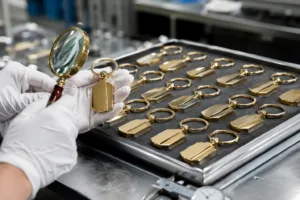
Donor recognition metal tags can do far more than identify a seat at a charity gala. When planned well, they become part of the guest experience, a visible expression of gratitude, and a refined design element that supports the tone of the evening. For nonprofit teams, event agencies, and gala planners, the goal is not simply to place a name on a table. It is to create a recognition moment that feels personal, elegant, and consistent with the value of the donor relationship.
If your event needs place-setting pieces that feel more lasting than paper cards, custom metal tag manufacturing solutions can help bridge branding, recognition, and production practicality. We often support projects that need material guidance, engraved or printed personalization, attachment or display decisions, proofing for donor-name accuracy, and packaging plans that make ballroom setup easier for event teams working under tight deadlines.
At gala tables, small details influence perception. A well-made metal tag can make a donor feel deliberately welcomed before the program even begins. It can also unify the place setting with menus, floral arrangements, table numbers, and sponsor recognition pieces. From our manufacturing perspective, the strongest results come when recognition strategy and production planning are handled together early, rather than treating the tag as a last-minute accessory.
Why donor recognition at charity galas matters beyond table decor
Recognition at a fundraising event is not only about appearance. It communicates care, memory, and professionalism. Guests notice when an organization has thought through how it welcomes supporters, especially major donors, sponsors, honorees, and table captains. A custom metal tag at each place setting can reinforce that the event team sees the guest as an individual, not just a seat count.
That matters because recognition works best when it is intentional and connected to long-term relationships. In donor communications, a gala is just one touchpoint inside a broader donor stewardship plan. A place-setting tag can support that plan by turning appreciation into something visible, tactile, and memorable rather than generic.
For some organizations, these tags are also retained after the event. Guests may take them home as keepsakes, reuse them as bookmarks or desk tokens, or keep them with event materials. That extended life gives the recognition value beyond the ballroom, which is one reason many planners choose metal over paper for higher-tier experiences.
What donor recognition metal tags are and how they work at place settings
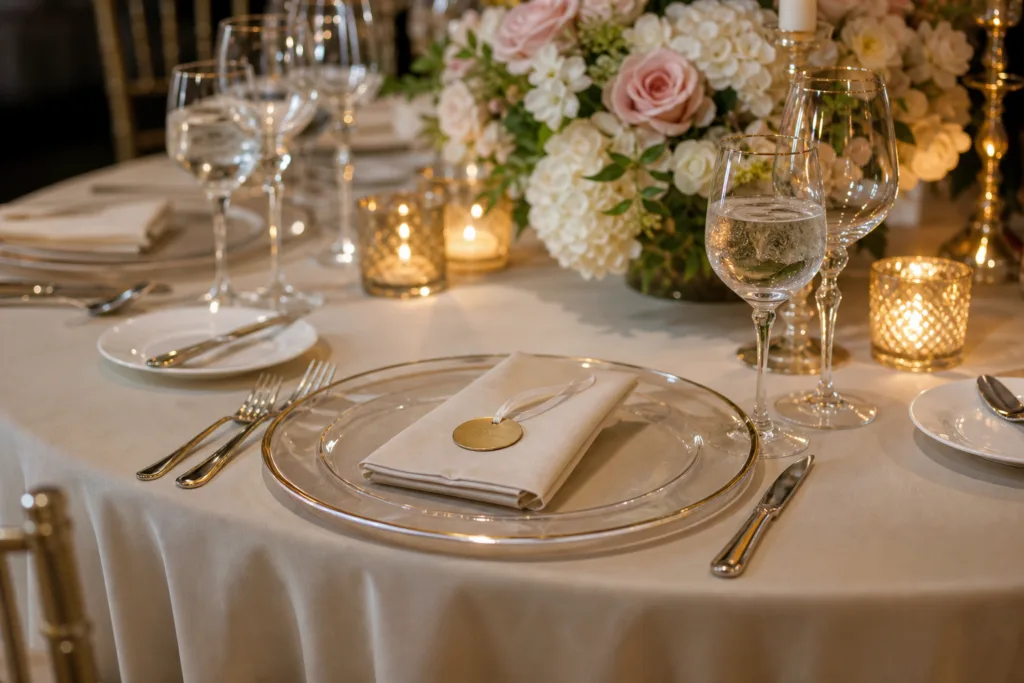
In gala use, donor recognition metal tags are customized metal pieces produced with guest names, donor levels, sponsor categories, tribute messages, or event branding. They are commonly placed on top of a folded napkin, tied to a menu card, laid across a charger plate, attached to a favor box, or integrated with a wine bottle or gift presentation at the table.
Depending on the event concept, the tag may function as:
- a premium place card replacement
- a donor-tier marker for seating sections or hosted tables
- a commemorative keepsake
- a branded accessory tied to the gala theme
- a scannable item with a QR code linking to a tribute page, impact story, or post-event thank-you
At UC Tag, we usually help planners think about the tag as both a design object and a production item. That means discussing material, finish, marking method, size, edge feel, and personalization data at the same time. For upscale events, even small choices such as rounded corners, brushed texture, or a satin finish can strongly affect whether the piece feels understated and elegant or overly industrial.
How metal tags improve guest experience and perceived event value
Paper escort cards and printed place cards still have their place, but metal creates a different impression. It has weight, sound, texture, and permanence. Those qualities signal that the organization invested thought into the donor experience. A guest may not analyze the manufacturing details, but they will sense whether the piece feels deliberate.
Metal tags also help events avoid some common visual problems. They resist curling, softening from humidity, and edge wear from handling during setup. They can remain readable under candlelight or ballroom lighting when the finish and contrast are chosen correctly. And because they are more durable, they are less likely to look compromised by the time doors open.
From a planning standpoint, they can also simplify visual consistency. Through carefully chosen custom metal tag customization options, planners can standardize shape, finish, naming format, and tier coding across the event while still personalizing each tag. That balance is useful when there are multiple donor levels, hosted tables, sponsors, and VIP guests in one room.
Choosing the right metal tag material, finish, and thickness for a gala setting
The best material depends on the event style, budget range, and desired tone. In most gala projects, the objective is not maximum industrial durability but a refined appearance, pleasant hand feel, and reliable readability.
| Material | Best Use at Galas | Visual Character | Planning Notes |
|---|---|---|---|
| Aluminum | Large guest counts, color-rich branding, lighter tags | Clean, modern, versatile | Good for anodized or printed finishes and easier weight management |
| Stainless steel | Luxury minimalist themes, sharp engraved detail | Crisp, premium, contemporary | Works well for brushed or matte looks; avoid overly reflective finishes if lighting is strong |
| Brass | Classic, formal, heritage-style galas | Warm, traditional, distinguished | Often chosen for donor circles, anniversary events, or historic institutions |
Finish is just as important as base metal. In upscale dining environments, a mirror-like effect can look dramatic, but too much glare can reduce readability under spotlights and candles. For that reason, many planners prefer brushed, satin, matte, or softly polished surfaces. The emphasis should be elegance without visual strain.
For readability on small-format tags, guidance related to legibility and finish standards is still useful even though gala tags are not architectural signage. High contrast, simple character forms, and non-glare surfaces generally improve how quickly guests can read names and recognition details at the table.
Thickness affects both feel and cost. Very thin tags may feel more like decorative inserts, while heavier gauges feel more substantial but increase material cost, shipping weight, and table handling considerations. We usually advise planners to decide first whether the tag should feel like a keepsake, a place marker, or a hybrid of both. That clarifies the right thickness faster than choosing by price alone.
Designing donor recognition metal tags around theme, brand, and donor tier
The strongest gala tags look like they belong to the event, not like they were borrowed from another application. Design choices should connect with the nonprofit’s identity, the evening’s visual language, and the purpose of recognition.
Useful design inputs include:
- the gala theme, such as black tie, botanical, modern art, maritime, or heritage
- the nonprofit brand palette and logo style
- the donor tier structure, if visible differentiation is needed
- the placement method at the table
- whether the tag is intended as a take-home keepsake
Tier differentiation does not need to be loud. It can be handled through subtle size changes, edge shapes, finish shifts, metallic tones, or one small accent detail. For example, sponsor tables might use one finish while leadership donors receive a warmer metal tone or a slightly deeper engraving. Restraint usually performs better than overt hierarchy, especially in refined event settings.
When organizations need very specific visual control, planning for brand color matching on metal finishes can help align tags with invitation suites, menu cards, stage graphics, and signage. That is particularly helpful when a gala has a mature identity system and the event team wants the recognition item to feel integrated rather than decorative.
Typography, engraving, color, and logo choices that keep tags elegant and readable
Name readability is the first job of the tag. Even a beautiful piece fails if guests or servers struggle to identify the seat. We recommend keeping typography simple, with enough stroke weight to stay clear at the chosen tag size. Highly ornate scripts may fit a theme, but they often become difficult to read when names vary in length.
As a practical structure, many gala tags work well with:
- guest name as the primary line
- donor circle, sponsor level, or tribute text as a smaller secondary line
- logo or event mark placed modestly so it does not compete with the name
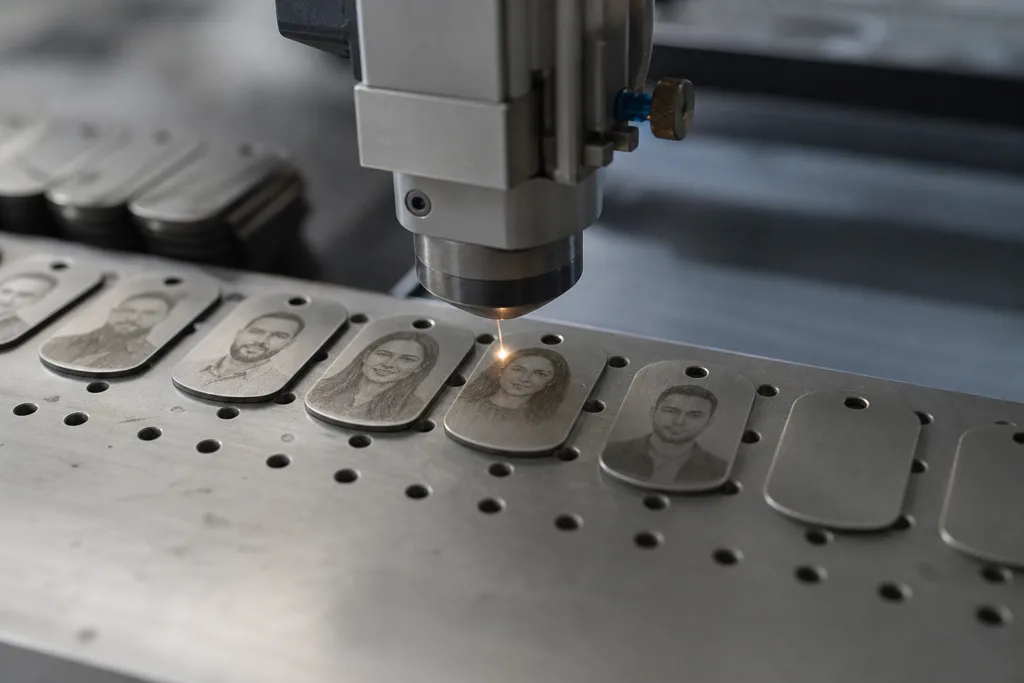
Marking method matters here. Engraving provides a crisp, tactile result and is often preferred for understated luxury. When event teams are evaluating finishing details, our experience with laser engraving options for metal tags is that the method works especially well for names, short messages, and controlled personalization where consistency and edge definition matter. Printed color can be added when branding needs stronger visual presence, but it should not overpower the purpose of recognition.
Logo treatment should be scaled carefully. A donor tag is not the place for oversized branding. The more upscale approach is usually subtle branding paired with confident material choices. Let the craftsmanship and the donor’s name carry most of the attention.
Sizing and shape considerations for place settings and escort integration
At gala tables, size must be coordinated with the full setting. A tag that looks ideal in a proof can appear too large on a folded napkin or too small on a charger plate. Event planners should mock up one complete table setting before approving production.
Questions worth settling early include:
- Will the tag sit flat, stand, hang, or tie to another object?
- Will guests read it from above, from the side, or when lifting it by hand?
- Does it need one hole, two holes, or no hole at all?
- Should corners be square, rounded, arched, oval, or custom-shaped?
- Will long donor names require a wider format?
For escort-card integration, a slimmer shape may work well. For charger-plate presentation, a slightly broader shape often looks more balanced. If the tag attaches to a bottle, favor, or napkin wrap, hole placement and edge smoothness become especially important so the piece feels polished and does not snag fabric.
We also advise planners to think about setup labor. A beautiful hanging tag design can become inefficient if hundreds of pieces must be tied by hand during final ballroom staging. In those cases, simpler placement methods may preserve elegance while reducing pre-event stress.
Personalization options for names, levels, messages, and QR codes
Personalization is where donor recognition metal tags become most meaningful. At minimum, most events personalize the guest name. Beyond that, planners may add table host names, donor circles, memorial text, anniversary messaging, or a line tied to the evening’s mission.
Common data fields include:
- guest full name
- donor level or giving society
- sponsor category
- short appreciation message
- table number or seating group
- unique QR code for a tribute, impact story, or digital thank-you
QR codes can be effective if used sparingly and designed cleanly. In a gala setting, the code should support the experience rather than dominate the layout. We usually suggest placing it on the reverse side or in a discreet area so the front remains elegant. Testing is important because codes that are too small, too low-contrast, or placed on reflective surfaces may scan poorly under event lighting.
Data accuracy becomes critical as personalization increases. One typo in a donor’s name can undermine the goodwill the tag was meant to create. That is why we encourage structured spreadsheets, locked approval rounds, and clear naming conventions before production begins.
Coordinating metal tags with linens, florals, menus, and the overall table story
A donor recognition tag should not feel isolated from the rest of the table. The best results come when event designers treat it as part of the tablescape composition. Metal tone, finish, and shape should interact well with linen texture, flatware color, glassware, florals, candles, and printed pieces.
For example, brushed silver-toned tags often suit modern cool palettes, while warm brass tones pair naturally with ivory linens, deep florals, and heritage interiors. Matte black or darker finishes can look sophisticated in evening settings, but only if text contrast remains strong enough for practical reading.
Event teams with bottle gifting or hosted wine service sometimes also extend the look across accessory pieces. In those situations, production coordination benefits from the same thinking used in premium event tag production support, where attachment style, surface finish, and visual balance all affect the final presentation.
When tags are part of a complete place setting, consistency usually matters more than complexity. Repeating one or two design signals across menus, favor packaging, and recognition tags can create a composed table story without making the table feel busy.
Production and planning tips for artwork, proofing, quantity, and lead time
From a manufacturer’s perspective, gala projects run most smoothly when event teams finalize the concept before personalization files are prepared. Frequent changes to names, donor levels, or artwork near the deadline create avoidable risks.
A practical planning sequence looks like this:
- approve the tag purpose and placement method
- confirm material, finish, shape, and size
- set the artwork layout and text hierarchy
- prepare the variable data file for names and recognition fields
- review digital proofs and, when timing allows, a physical sample
- lock final quantities with a small overage for contingencies
- confirm packaging by table, alphabet, or donor tier for setup efficiency
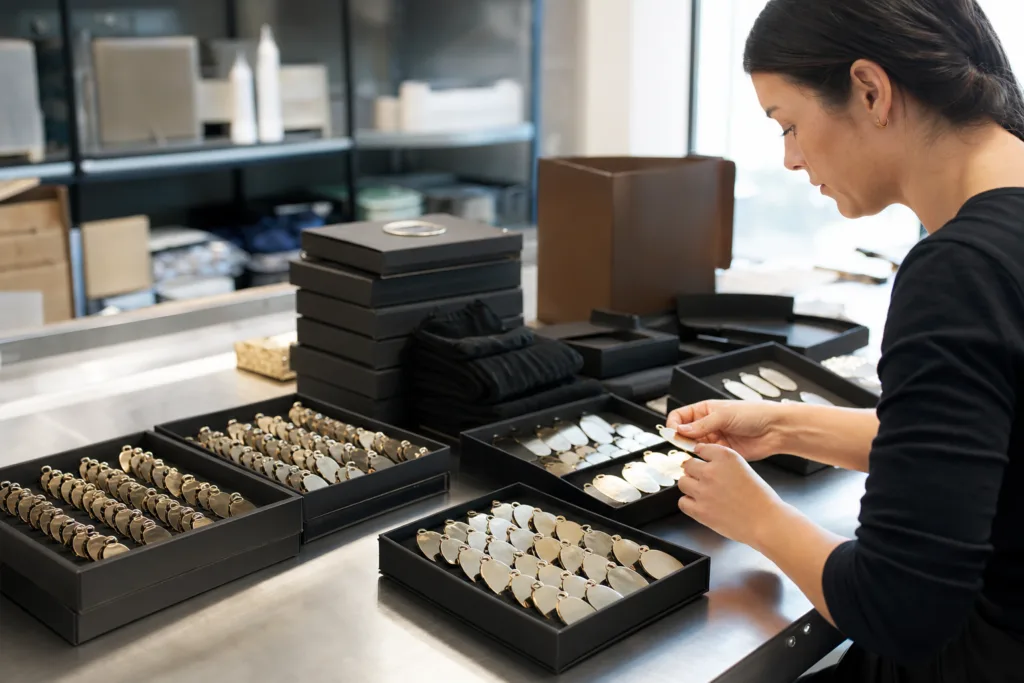
At UC Tag, we often remind buyers that packaging is not a minor detail. If tags arrive sorted by table or clearly grouped for ballroom deployment, setup becomes much easier for planners and venue staff. For large charity events, that can save meaningful time during a narrow installation window.
Lead time depends on quantity, personalization complexity, finishing method, and whether samples are required. Engraved tags with individualized names generally need more disciplined data handling than one-design bulk pieces. If there are multiple donor categories, reverse-side messages, or QR codes, planners should build in extra approval time.
What effective donor recognition looks like in practice
The most successful gala tags usually share a few traits. First, they fit the event style. Second, they make the donor’s name easy to read. Third, they feel substantial enough to be remembered. And fourth, they are operationally realistic for the event team to deploy.
In practice, strong concepts often include:
- a classic brass tag with engraved guest name and small event crest for heritage-focused institutions
- a brushed stainless tag with minimalist typography for modern museum or corporate-benefit galas
- an anodized aluminum piece with subtle color coordination for large fundraising dinners that need consistent branding across many tables
- a two-sided tag with a name on one side and a short mission statement or thank-you on the other
What makes these examples work is not just the material. It is the alignment between recognition intent, event aesthetics, and production discipline. When those three factors support each other, the tag feels thoughtful rather than ornamental.
How thoughtful recognition supports stewardship and future giving
Donor appreciation should feel sincere, not formulaic. A personalized place-setting tag can contribute to that by showing that the organization invested effort into welcoming supporters with care. It is a small object, but it signals attention.
Recognition can also shape memory. Guests often remember how an event made them feel more than the exact wording of the program. Personal touches at arrival and seating create emotional context before speeches and asks begin. That emotional context is one reason recognition is connected to donor retention and recognition conversations in the nonprofit sector.
For that reason, we suggest viewing donor recognition metal tags as part of stewardship design, not just event decor. When the object is elegant, accurate, and meaningfully personalized, it can strengthen the sense that the donor relationship is valued over time.
Common mistakes to avoid with gala place-setting tags
Even attractive concepts can fail in execution. The most common issues are usually preventable with better planning.
- Choosing a finish that is too reflective. If guests cannot read the tag under ballroom lighting, the visual effect works against the purpose.
- Overcrowding the layout. Too much text makes a small premium piece feel busy and less elegant.
- Using weak contrast. Soft gold text on a shiny gold background may look sophisticated in isolation but can disappear on the table.
- Approving data too late. Name changes, inconsistent title formats, and spreadsheet errors create avoidable production risk.
- Ignoring setup logistics. An intricate attachment concept may be beautiful but unrealistic when hundreds of covers must be placed quickly.
- Branding too aggressively. If the logo overwhelms the donor’s name, the recognition moment feels less personal.
Checklist for event planners working with a custom metal tag manufacturer
Before sending a project to production, we recommend that planners confirm the following:
- purpose of the tag: place card, keepsake, tier marker, or hybrid
- final event theme and brand direction
- material and finish preferences
- target size and shape based on a full table mockup
- front and back content hierarchy
- personalization file format and name standardization
- whether QR codes, logos, or donor levels are included
- hole, slot, adhesive, or flat-lay presentation needs
- proof approval process and final sign-off owner
- quantity with extra units for late additions or replacements
- packing method by table, alphabet, or tier
- delivery date aligned to venue setup schedule
Early clarity on these points reduces revisions and helps manufacturers produce more consistent results. It also helps event teams compare suppliers more intelligently, because they can evaluate not only price but also proofing discipline, customization capability, and packaging support.
Conclusion
Donor recognition metal tags bring together appreciation, design, and execution in one compact element. For charity galas, they can elevate place settings, honor contributors with more permanence than paper, and support a stronger sense of stewardship when they are thoughtfully personalized. The most effective projects balance aesthetics with readability, material quality with budget, and elegant design with practical event setup. When those decisions are made early and produced carefully, donor recognition metal tags become more than decor; they become a small but memorable expression of gratitude.
FAQs
Are donor recognition metal tags better than paper place cards for charity galas?
They can be a better choice when the event wants a more elevated and lasting recognition experience. Metal tags offer greater visual weight, better durability during setup, and stronger keepsake value for donors, while paper cards usually suit shorter-term or more budget-sensitive events.
What material works best for donor recognition metal tags at upscale events?
The right material depends on the event style. Aluminum is versatile and efficient for larger quantities, stainless steel fits modern premium aesthetics, and brass works well for classic or heritage-driven galas. The finish and contrast are just as important as the base metal because they affect both elegance and readability.
Should donor tags be engraved or printed?
Engraving is often preferred when planners want a refined, tactile result and long-lasting legibility, especially for names and short recognition text. Printing can be useful when color branding is important, but the design should stay restrained so the tag still feels elegant rather than overly promotional.
Can donor recognition metal tags include QR codes?
Yes, as long as the QR code is sized and tested properly. Many planners place the code on the reverse side or in a discreet area so the front remains visually clean. The code can link to a tribute page, mission story, thank-you message, or post-event engagement content.
How far in advance should gala planners order personalized metal tags?
It is wise to begin as soon as the event theme, seating format, and recognition structure are clear. Personalized projects need time for layout approval, data review, proofing, and production, and additional time may be needed if the order includes samples, multiple donor tiers, or special packaging by table.
What information should be sent to a manufacturer for a smooth order?
Planners should provide the intended use, preferred material and finish, approximate size, artwork or logo files, personalization spreadsheet, quantity, desired packaging method, and event deadline. A complete brief makes it easier to confirm the marking method, review proofs accurately, and reduce the chance of name or layout errors.