Custom Zinc Die Casting Samples and First Article Approval
Choose zinc casting samples by the decision they must support. Compare models, trial castings, finish samples and assembly approval requirements.
Discuss your requirements
A sample is useful when it answers a defined question about the product. An appearance model, fit prototype and production-intent casting can each provide valuable evidence, but they do not prove the same things. Select the sample stage according to the decision that must be made before the project moves forward.
Gairun can discuss sampling requirements within a custom metal manufacturing enquiry. The proposed route, scope and timing should be confirmed for the actual design. A sample schedule from another product family should not be treated as a guarantee for a new component.
Which sample should you request first?
Choose the sample by the question it needs to answer:
| Current uncertainty | Useful sample purpose | What remains unresolved |
|---|---|---|
| Shape or hand feel | A model for size and handling | Production material and process behavior |
| Casting geometry and fit | A trial from the proposed tool and route | Stability across ongoing production |
| Finished appearance | A representative decorated part | Unperformed exposure or durability tests |
| Assembly operation | The specified mating components together | Conditions outside the agreed trial |
Custom zinc die casting samples should have an agreed configuration and acceptance purpose. Ask Gairun to distinguish the proposed sample work from production tooling and recurring parts. A first article is useful when its inspection relates to the released drawing and its construction is clearly identified.
Select a sample that answers the question
Identify the unresolved issue first.
You may need to confirm the size in the hand, evaluate a mounting interface, approve a plated effect or demonstrate a working attachment. Each question can require a different sample construction and evaluation method.
State what decision will follow the result.
A visual approval may allow the relief model to proceed, while a functional trial may determine whether the material or joint needs redesign. This makes the sampling investment more focused and the approval record easier to interpret.
Avoid requesting a general sample without defining what it should represent.
A stock example can show workmanship or a finish direction but does not reproduce the customer's geometry. A custom sample provides different information and may require tooling or other development work.
If several questions remain open, plan the sequence so expensive work follows useful evidence.
An early fit check can reveal an interface problem before a fully decorated sample is made. The correct sequence depends on the project's risks and design maturity.
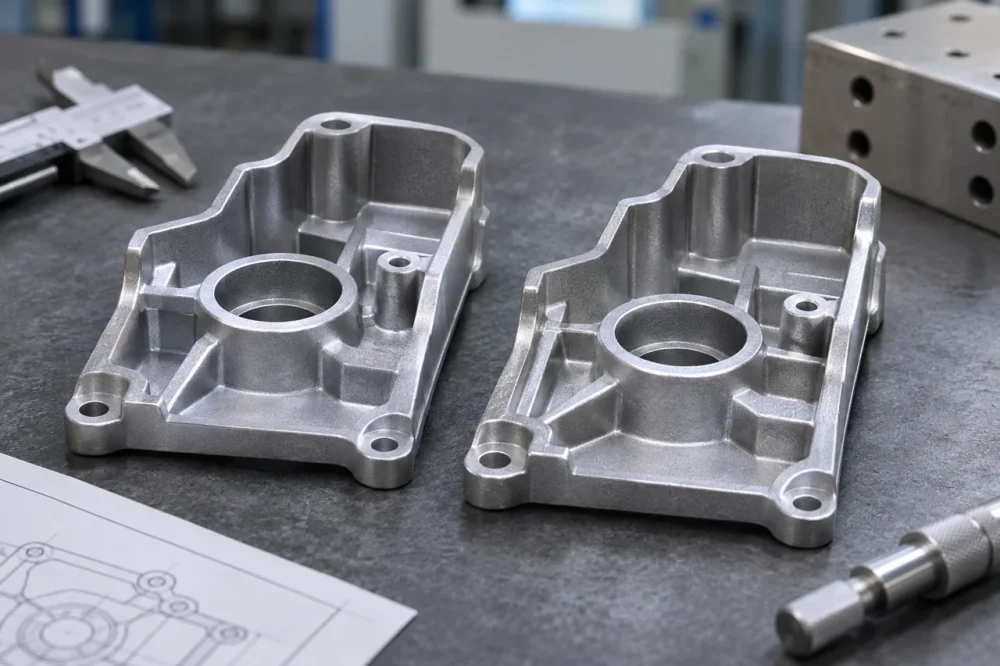
Separate appearance models from cast trials
A printed or machined model can help communicate shape and assembly space.
Its material and production route may differ from the final casting. Do not use it to claim casting quality, coating performance or long-term behavior that it cannot represent.
A trial casting provides evidence about filling, release, detail and the transition into secondary operations.
It may still require adjustment before it represents the intended production process. Record its purpose and any known differences from the final configuration.
An appearance sample should include the relevant preparation and decoration.
A raw metal part cannot establish the final plated color, enamel level or print quality. Likewise, a flat finish swatch may not reveal how the coating looks on a complex curved surface.
The tooling page explains how trial parts relate to the approved geometry.
The sample record should identify which tool and design revision produced the part being evaluated.
Build the approval sample configuration
List the material, finish, attachments and mating components included in the sample.
The approval should apply to a defined construction. If the liner, spring or fastener is temporary, make that difference visible in the internal record.
Use representative mating parts where fit matters.
A perfume cap needs the intended bottle and pump, a housing needs its internal assembly and a hinge needs the relevant pin and mounting arrangement. An isolated part can conceal an interface issue.
Identify which production requirements the sample must demonstrate.
These may include dimensions, appearance, function and external tests. The buyer and manufacturer should agree who evaluates each item and what evidence is needed for acceptance.
If testing consumes or damages samples, account for that in the sample plan.
Do not assume one item can serve every destructive test and remain as an appearance reference. Quantities should follow the actual program rather than an arbitrary standard sample count.
Measure, assemble and evaluate
Dimensional checks should use the drawing's references and finished-condition requirements.
Record results for the characteristics needed to support the decision. A photograph can document appearance but cannot replace the required measurement evidence.
Assembly trials should follow the intended process and use representative components.
Note interference, excessive force, loose fit or unexpected movement. The cause may lie in a tolerance relationship or assembly method rather than a single dimension.
Appearance review should use consistent conditions and an agreed reference.
Identify the main visible surfaces and the defects or variations that matter. Enlarged photographs can help communicate an issue, but they should be interpreted in the context of normal viewing.
The quality page distinguishes these checks from laboratory testing and certification.
A sample approval should not be described as complete product compliance unless the relevant assessment actually supports that conclusion.
Record changes and repeat affected checks
When a sample requires correction, describe the change precisely.
Link it to a drawing, artwork or process revision. Vague instructions such as make it stronger or improve the finish do not establish a clear acceptance basis for the next trial.
Assess the effect of the change on earlier results.
Moving a mounting boss can alter alignment; changing a coating can alter fit; replacing an adhesive can affect retention and substance testing. Repeat the checks that depend on the changed condition.
Keep superseded samples identifiable.
They can remain useful for understanding the development history, but they should not be confused with the current approval reference. The production team needs one unambiguous released configuration.
Authorize production from evidence
The release decision should identify the approved sample, revision and any accepted deviations.
Confirm that the quotation and purchase order refer to the same construction. A commercial order should not silently introduce changes that were never evaluated.
Agree how the reference will be retained and used during production.
For appearance-sensitive work, the sample should remain protected from damage or aging that makes comparison unreliable. For functional parts, retain the relevant reports and configuration records.
Send your sampling objectives with the product files and the decisions still open.
A focused plan helps the project move from concept to production using evidence appropriate to each stage.
