Custom Zinc Hinge Bodies for Furniture Mechanisms
Define a custom zinc hinge body or pivot component enquiry. Identify mating parts, machining, assembly scope and the evidence needed to approve the joint.
Discuss your requirements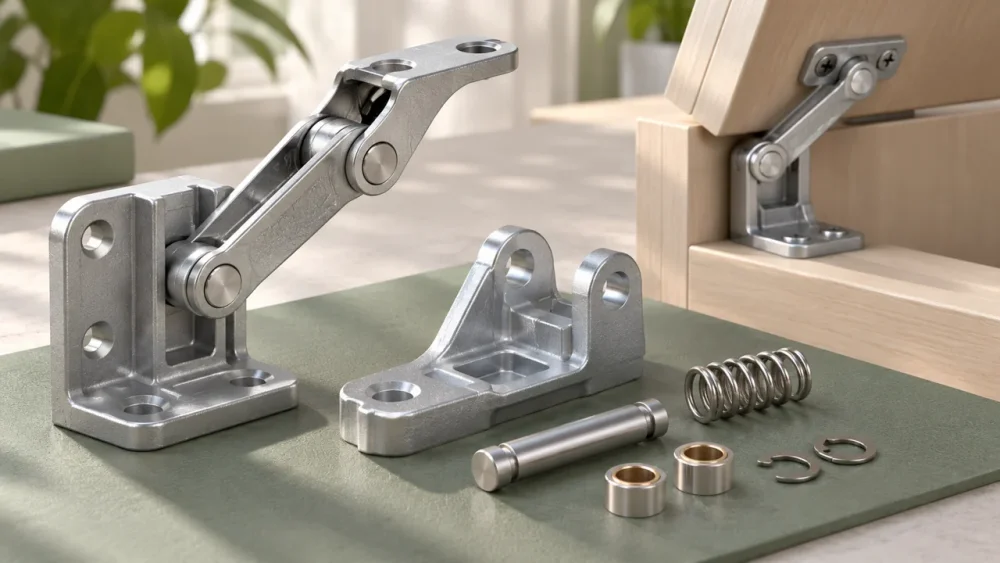
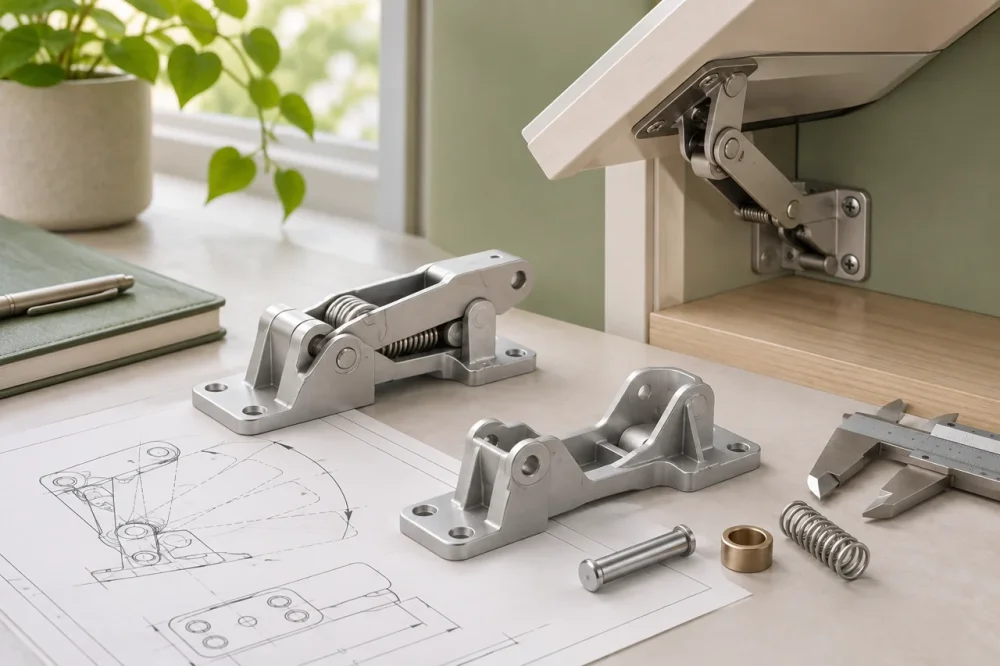
Request a review of zinc hinge bodies or pivot brackets with the full moving-joint drawing. Gairun's proposed scope needs to identify the cast component, any machined pivot features and any agreed assembly work. Pins, bearings and springs should remain separately identified in the bill of materials.
The body alone does not establish the hinge's load capacity or cycle life. Furniture and mechanism buyers need a sample configuration that represents the real fasteners, moving parts and installation. A decorative cover and a loaded concealed hinge component require different approval evidence.
Keep moving parts visible in the quotation
State whether the order covers a casting, a machined body or an assembled mechanism.
If a pin or bushing comes from another supplier, identify its revision and the responsibility for incoming checks. This prevents a fit problem being attributed to the wrong component after assembly.
For a replacement-source project, provide the approved drawing as well as a sample.
A worn sample can show how the hinge is used but may no longer represent its intended clearance. Resolve the drawing-to-sample relationship before asking for an equivalent part.
Define the moving joint
State what the hinge supports, how far it moves and where forces enter the assembly.
Door or lid mass is only one input. The distance from the hinge axis, number of hinges and mounting arrangement determine how that mass loads the components.
Include normal operation and foreseeable end conditions.
Stops, slamming, overtravel or a user leaning on the supported member can create different loads. The responsible product engineer should define which conditions the design must tolerate and how they will be tested.
The movement envelope also matters for manufacturing.
A rib or fastening boss that appears acceptable in a static model may interfere when the hinge opens. Review the complete range before releasing the component geometry.

Pin, bearing and housing roles
The pivot pin and the surrounding cast body do not necessarily need the same material.
A separate pin, bushing or bearing element may provide the required wear behavior. The material selection should follow the actual contact and movement conditions.
Define how the pin is retained and whether it must be removable.
Retention features can affect both assembly access and the inspection method. A pin that fits initially may still need evaluation for migration or loosening during repeated operation.
Lubrication and contamination should be included where relevant.
Dust, moisture or cleaning products can alter the behavior of the contact pair. A free-moving sample on a clean bench does not represent every installed environment.
Cast geometry around the pivot
Alignment of the pivot features is central to smooth movement.
Relate bores and supporting faces to functional datums. If machining is needed, establish how the casting will be held so the finished features remain correctly located.
Section transitions near the pivot should support the intended loads without creating impractical casting geometry.
Ribs can provide support, but their position must allow tool extraction and later assembly. Avoid solving a local issue by adding uncontrolled mass throughout the part.
Parting lines, flash removal and surface preparation should not interfere with the moving interface.
The tooling review page explains how these production features are considered before the die is made.
Stops, clearances and fasteners
If a cast feature acts as a stop, define the contact condition and load.
A stop may experience impact rather than the smoother forces present during ordinary movement. Its role should be explicit in the drawing and validation plan.
Clearance is required where parts move past one another, but excessive play can affect alignment and perceived quality.
Establish the tolerance relationship across the full assembly. Coatings should be included where they change the finished clearance.
Mounting screws and the furniture substrate can govern the installed result.
A sound hinge body does not compensate for inadequate retention in the panel. Include the actual substrate, hole preparation and fastening method in the qualification arrangement.
Test the loaded assembly
The test should represent the supported member, mounting geometry, movement range and expected duty.
Record load, cycle conditions and acceptance criteria. Check for looseness, interference, permanent deformation and changes in operation as appropriate to the product.
Component inspection and assembly testing serve different purposes.
Measurements can establish bore locations and mounting geometry, while cycling evaluates how the joint behaves over time. Neither should be presented as a substitute for the other.
Changes to a pin, bushing, finish or fastener can affect an approved hinge.
Maintain the validated bill of materials and determine when retesting is needed. The quality page helps connect each change with the relevant evidence.
Send hinge component requirements
Provide the cast-part drawing, complete hinge arrangement, mounting substrate and intended movement.
Add load and life requirements, finish references, quantities and required records. Identify which parts are included in the requested supply.
Submit the hinge body and assembly drawings to define the metalwork, mating parts and approval sample.
The aim is a component scope that can be evaluated within your actual hinge mechanism.