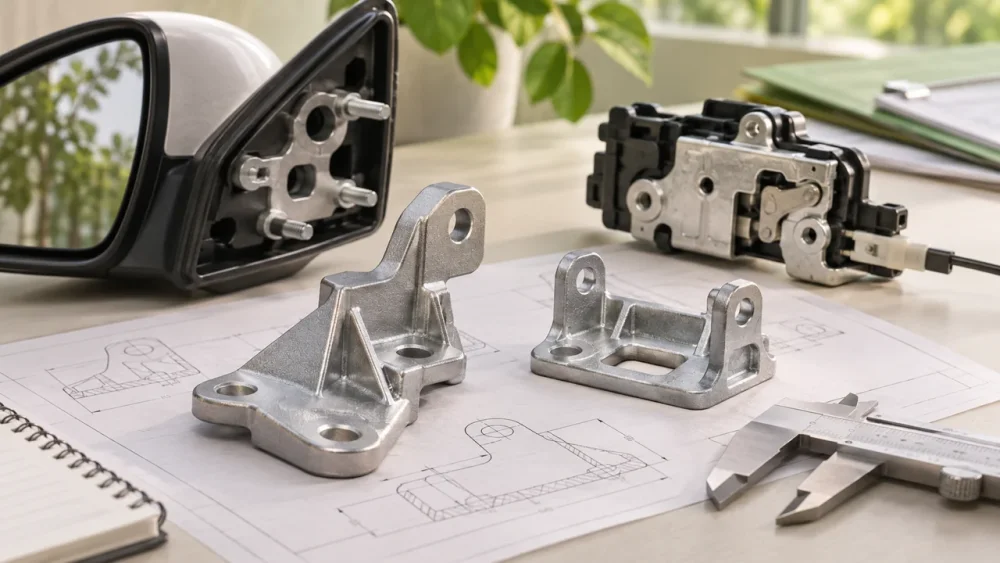
Custom Zinc Automotive Brackets and Mounting Components
Review a zinc automotive bracket with its vehicle function and supplier requirements. Confirm eligibility, qualification scope and tooling responsibilities.
Discuss your requirements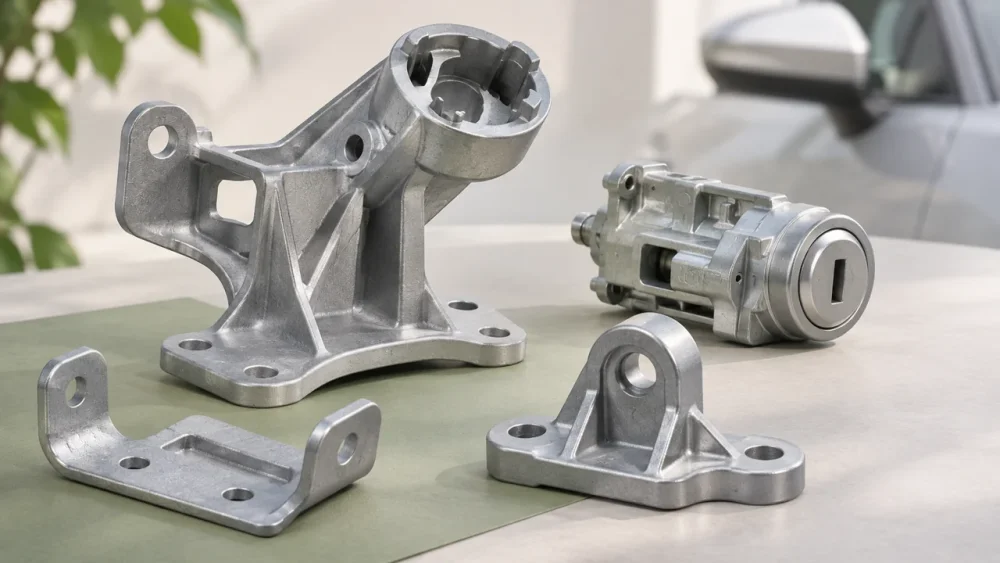
A custom zinc automotive bracket enquiry needs the vehicle function, mounting interfaces and customer approval requirements from the outset. Gairun can review the proposed metal component against that package. Supplier eligibility and any required quality-system qualifications must be checked before the project proceeds.
Mirror mounting brackets and automotive lock components can have very different loads and consequences of failure. Identify the actual part rather than relying on the automotive label. No IATF certification, customer approval or production-part approval is implied by a manufacturing enquiry.
Check the customer entry requirements before tool spending
Provide the required supplier documentation and approval deliverables with the drawing.
If a production part approval process, often called PPAP, is specified, identify the applicable customer requirements rather than assuming a standard report package will suffice.
For a source-transfer project, clarify tooling ownership, revision history and any restrictions on process changes.
Samples should be evaluated under the approved configuration. The commercial proposal needs to distinguish tool work, qualification costs and recurring parts so the sourcing decision reflects the full program.
Identify the vehicle function
State where the component is installed and what it supports or locates.
Explain whether it is decorative, functional or safety-related. The same external shape can serve different duties depending on its location in the vehicle assembly.
For a lock-related part, separate the housing or bracket from the moving and high-wear elements.
For a mirror mounting part, describe the load path and surrounding structure. These distinctions determine which material and process questions need attention.
Identify the controlling customer drawing and specification revision.
If the component is a replacement for an existing part, explain which interfaces must remain interchangeable. A physical sample can supplement the drawing but should not become the only definition of a controlled production part.

Mounting loads and installed geometry
Provide the fixing arrangement, fastener type and installation conditions.
Assembly forces can damage a part before it experiences service loading. Thread engagement, clamping surfaces and support around mounting bosses should be reviewed as a connected system.
Vehicle vibration and occasional impact can produce loading that differs from a simple static force.
The engineer responsible for the application should identify the relevant load cases and validation criteria. No universal bracket rating follows from choosing a zinc alloy.
Position and orientation may be more important than isolated dimensions.
Relate mounting features to the functional datums used in the assembly. The tolerance guide explains how to make those relationships measurable without over-specifying unrelated surfaces.
Environment and coating interfaces
Describe temperature exposure, moisture, road contamination and any fluids or cleaning agents likely to contact the part.
Conditions differ substantially between an interior trim location and an exposed exterior assembly. The coating and substrate need to suit the identified environment.
Contact with other metals can create additional corrosion considerations.
Fasteners, washers and adjacent structures should be included in the review where their interaction matters. A plated sample that looks acceptable initially does not establish performance at a stressed joint over time.
Coating can also affect fit, grounding or fastening.
Specify surfaces requiring controlled treatment or masking. Test the final intended construction rather than relying on a report for another coating system or a flat specimen with different geometry.
Customer approval documents
Ask the customer to identify the submission requirements before tooling or sampling is quoted.
Depending on the program, these may include drawing-based results, material evidence, process documentation or a formal production part approval submission. The required level and content must come from the customer.
A general first-article report is not automatically equivalent to a customer-specific approval package.
Confirm who prepares, reviews and approves each document. The supplier must also confirm that the proposed production and inspection route can support the requested evidence.
Where particular certifications are mandatory for supplier eligibility, verify their actual scope and validity.
Do not substitute a general statement about quality control. Commercial discussions should remain conditional until required qualifications and responsibilities have been resolved.
Control changes and traceability
The approved configuration should connect the material, tool, secondary operations and finish.
Identify how parts and records will be traced to the relevant production lot where required. Traceability is useful only when the records remain connected through subcontracted and assembly stages.
Material substitutions, tooling changes and process transfers may trigger customer notification or reapproval.
Establish that route before production. A change described as equivalent by one organization may still affect the customer's acceptance basis.
Define how nonconforming parts are identified and separated.
If a deviation is proposed, obtain the appropriate approval before shipment. The quality page distinguishes inspection evidence from the commercial and engineering decision to accept a deviation.
Prepare an automotive component enquiry
Send the drawing, model, intended vehicle location, mating parts and required quantities.
Include environmental and mechanical requirements, documentation expectations and any supplier qualification conditions. State whether the requested scope is a casting, finished component or subassembly.
Submit the automotive component and supplier requirements for an initial scope review.
Confirm eligibility and approval responsibilities before requesting a production schedule or committing to tooling.