
FACTORY-DIRECT OEM / ODM MANUFACTURING
Choose Materials for Custom Metal Products by Form and Design
Gairun is an OEM and ODM metal crafts manufacturer that processes zinc alloy, brass, iron, stainless steel and aluminum. We supply custom medals, challenge coins, pins and badges, metal trophies and plaques, keychains and bottle openers for business buyers.
The right base metal depends on how the product must be formed. Shape, dimensions, relief, openings and connected parts all affect the decision. Engineers, designers and procurement teams can use this guide to narrow the options, then request an engineering review for a project-specific recommendation.
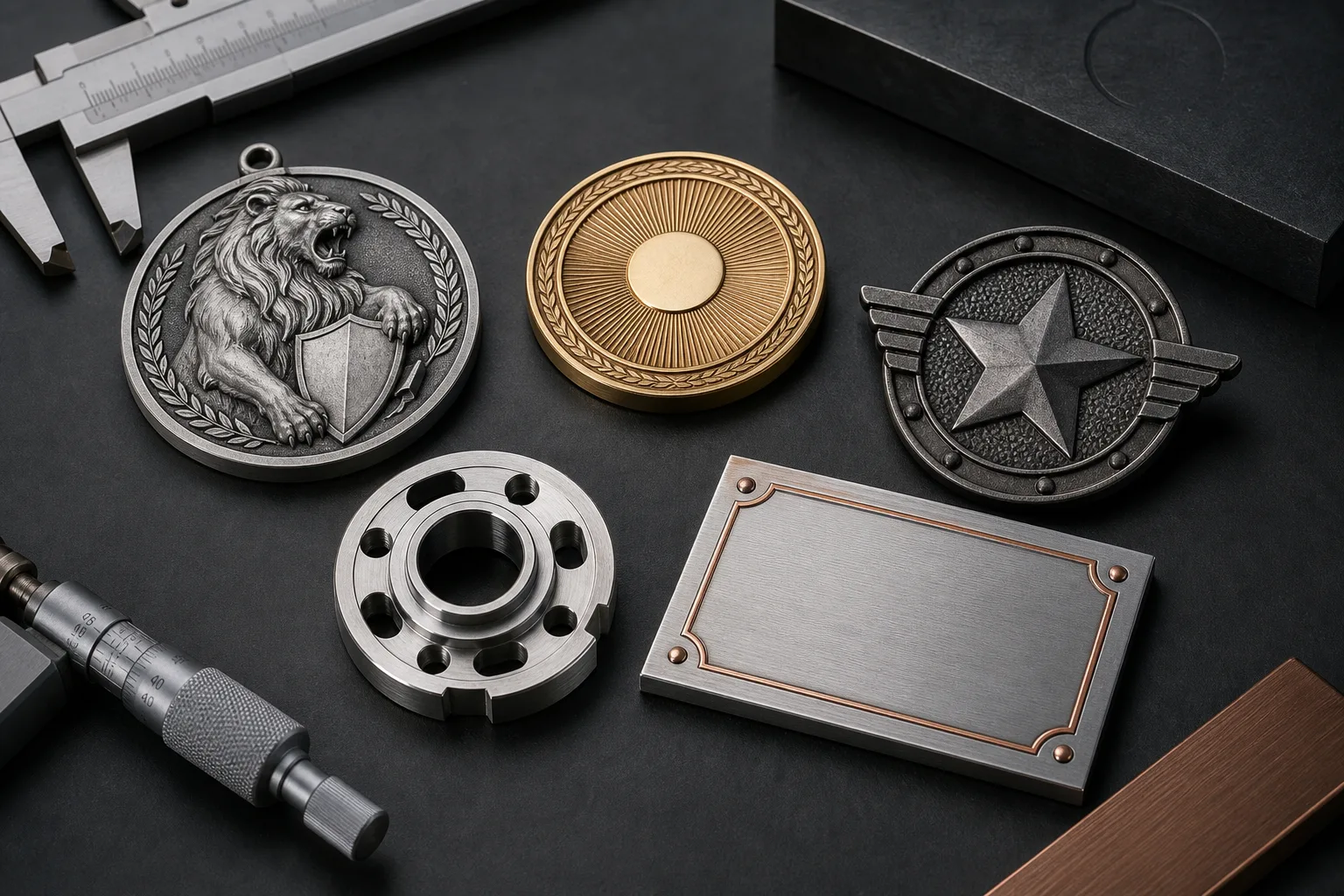
Match the Base Metal to the Product Structure
Material selection should begin with the intended product form, not with the metal name alone. A flat badge with line art presents different production questions from a medal with sculpted relief, an opener with a functional opening or a keychain made from several connected parts.
The forming route is the method used to create the main metal shape. Gairun’s verified forming capabilities include zinc alloy die-casting, stamping or die-struck forming, photo etching and hydraulic high-relief forming. Each route places different demands on the artwork and geometry.
Review these relationships together:
- Product format: Define whether the item is a medal, coin, pin, badge, trophy component, plaque component, keychain or bottle opener.
- Overall form: Identify flat areas, formed contours, deep relief, openings and separate components.
- Dimensions: State the intended length, width and thickness target so the structure can be assessed.
- Front and back design: Show which surfaces carry relief, text, logos or functional details.
- Decoration: Note visible metal areas and the intended use of plating, enamel or printing. These treatments must coordinate with the base material and forming method.
Our broader buyer resource library covers separate decisions such as finishes, enamel and packaging. This guide stays focused on base metals and their relationship to product form.
Compare Five Metals by Geometry and Forming Route
No single metal is the default choice for every custom product. The table below shows the production questions that should guide a technical review. It does not assign fixed performance ratings or universal product uses.
| Base metal | Forming route to evaluate | Design direction | Questions for technical review |
|---|---|---|---|
| Zinc alloy | Die-casting | Dimensional forms, relief and integrated structural details | Does the design include formed contours, openings, deep surfaces or built-in attachment features? |
| Brass | Stamping, die-struck forming or hydraulic relief | Flat or relief-led designs formed from metal stock | What are the edge shape, dimensions, front and back relief, and visible metal areas? |
| Iron | Stamping, die-struck forming or hydraulic relief | Flat or relief-led designs that may suit a pressed route | Does the artwork rely on raised and recessed areas, color cells or a defined outer profile? |
| Stainless steel | Project-specific engineering review | Flat or formed parts assessed against the proposed geometry | Are there openings, relief areas, attached parts or surfaces that will remain visible? |
| Aluminum | Project-specific engineering review | Flat or formed parts assessed for the specific product | What are the dimensions, component structure, relief direction and decoration requirements? |
Photo etching may also be considered where the design and selected material support that route. The final combination must be confirmed from the actual artwork, dimensions and component structure.
Use Zinc Alloy When the Design Calls for a Cast Form
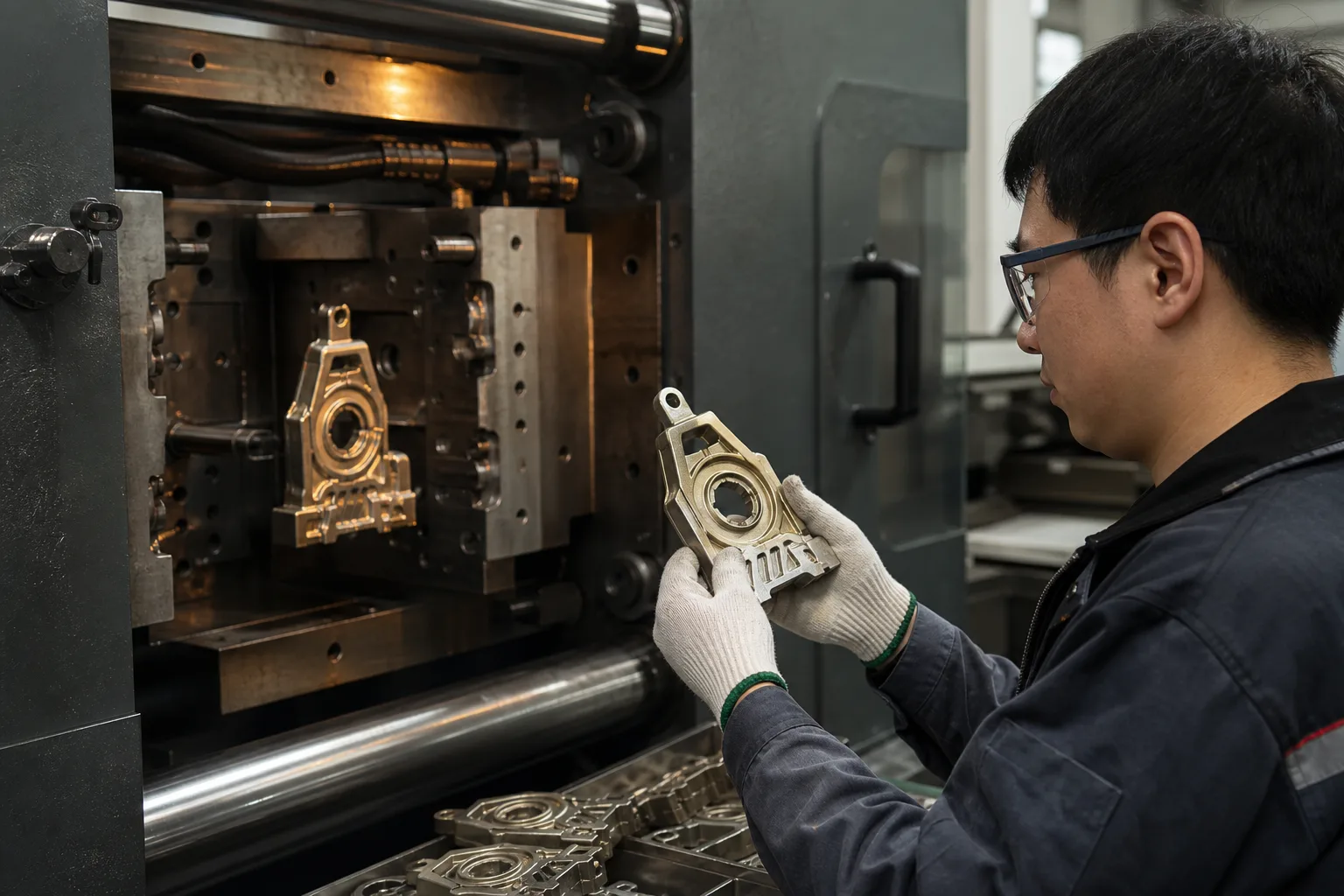
Zinc alloy is the material to evaluate when a product may suit die-casting. In die-casting, metal is formed in a mold to create the main product shape. This route can support dimensional outlines, raised and recessed relief, openings and structural details that are part of the cast body.
A zinc alloy review is useful for concepts such as a shaped medal, a dimensional keychain body or a formed component with integrated features. Suitability still depends on the full geometry. A cast appearance alone does not confirm that every line, recess or opening can be produced as drawn.
Gairun operates verified 88T and 160T zinc alloy die-casting machines. Our team reviews the product dimensions, relief direction, edge form, openings and attachment points before confirming the production route. More detailed equipment and casting information is available on our zinc alloy die-casting capability page.
Zinc alloy should not be selected only because a product belongs to a certain category. For example, one medal may use a dimensional cast structure while another medal may be based on a flatter die-struck design.
Compare Brass and Iron for Pressed Metal Designs
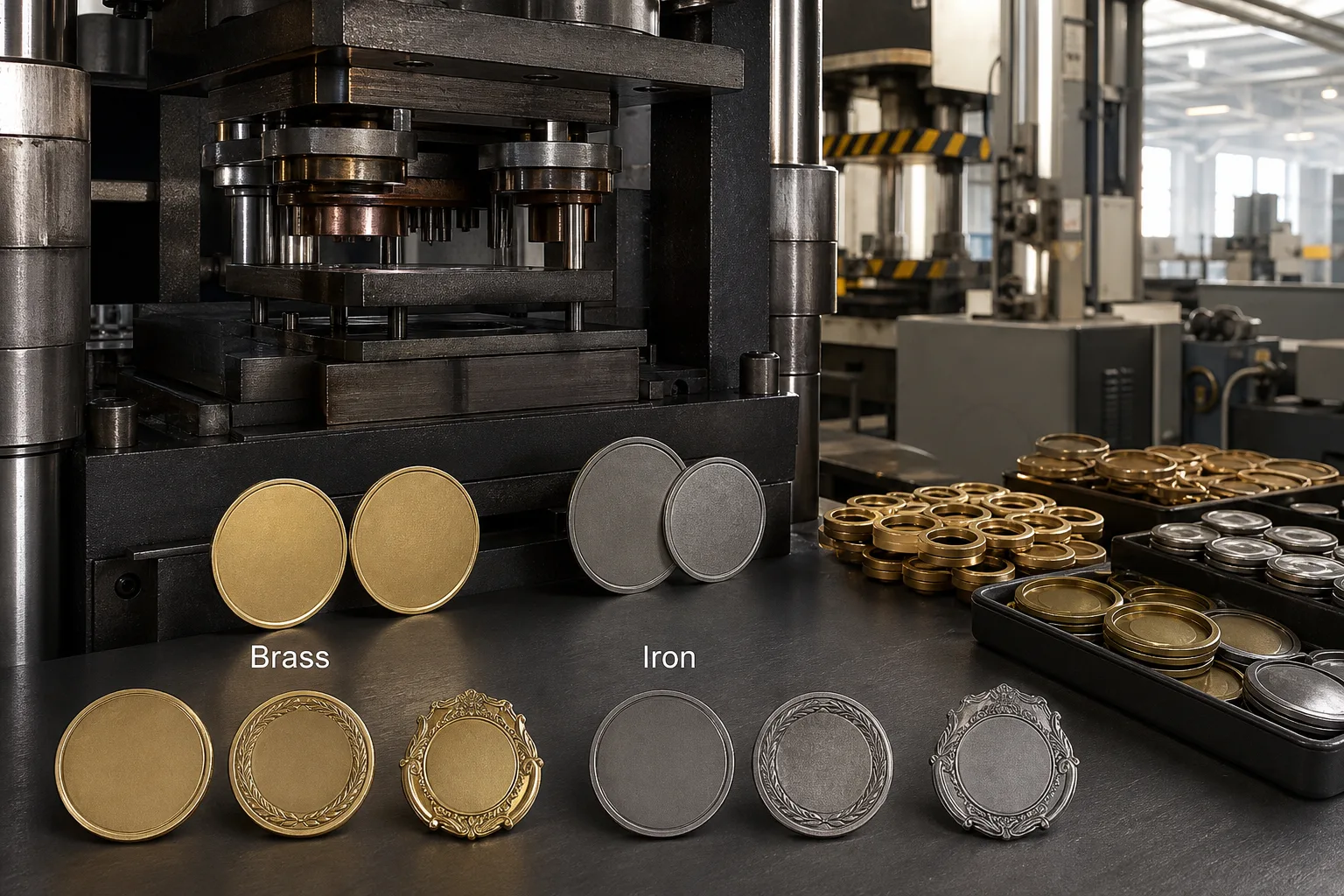
Brass and iron are both materials that buyers can consider when artwork may suit stamping, die-struck forming or hydraulic relief. These routes use tooling and pressure to create the outline and surface design. The choice still requires engineering review because product size, thickness target, relief and edge geometry affect the route.
For a brass or iron concept, examine how the artwork uses the metal surface. A line-led coin or badge may depend on clear raised and recessed areas. A medal with more pronounced relief may require hydraulic high-relief review. An unusual outline or reverse-side structure may change the recommendation.
Gairun’s forming equipment includes precision stamping machines and 200T and 500T hydraulic presses. These equipment facts show the available production routes, but they do not establish a universal rule for choosing brass or iron. We assess each design using the same core questions:
- Is the main face flat, shallow-relief or high-relief?
- Does the back carry a second design or structural feature?
- How complex is the outer edge?
- Are there holes, cut areas or attached components?
- Which metal areas will remain visible after decoration?
Price, strength, corrosion behavior and other performance comparisons require project-specific evidence. They should not be assumed from the material name alone.
Review Stainless Steel and Aluminum as Project-Specific Options
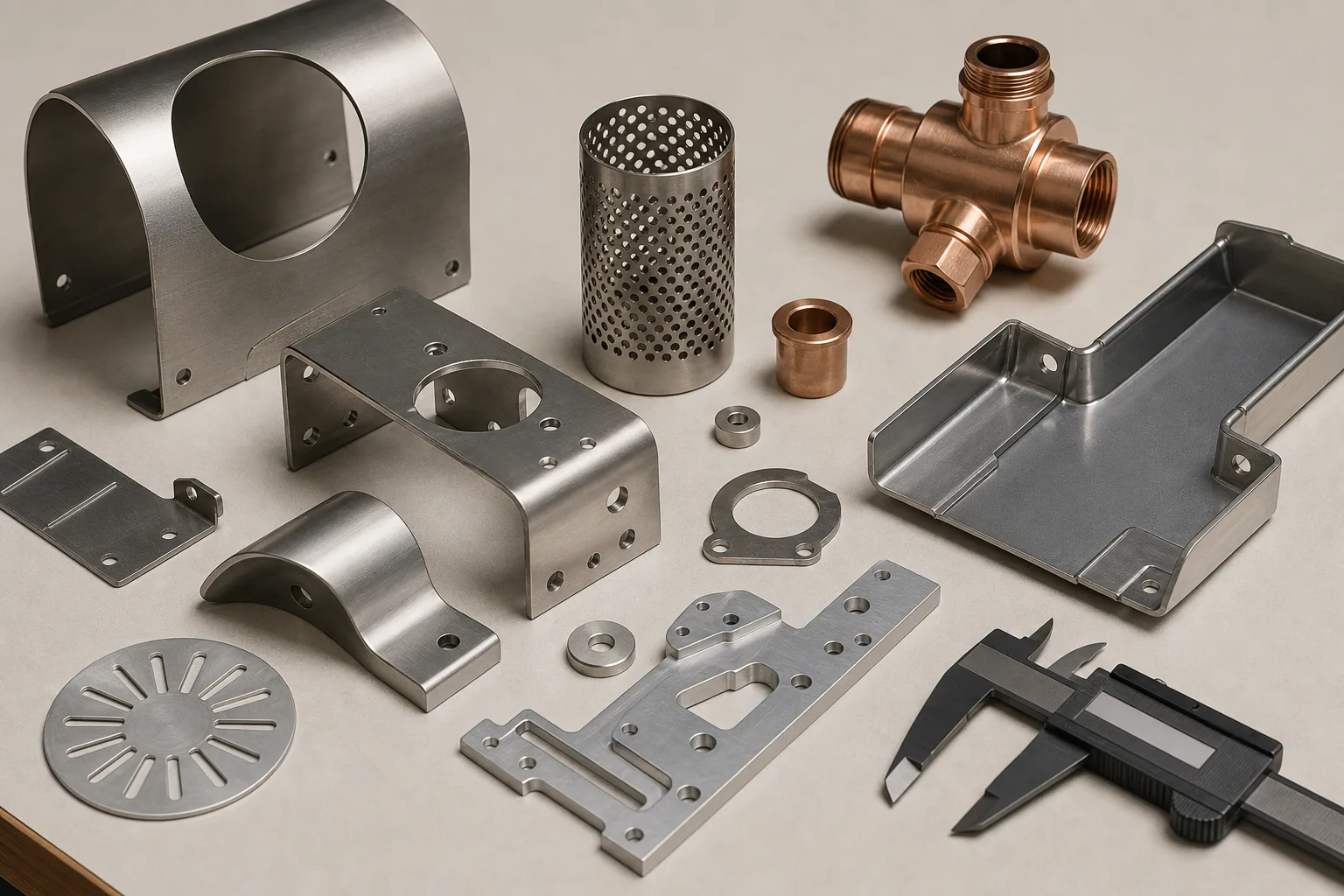
Stainless steel and aluminum are part of Gairun’s metal processing range. Their suitability for a custom product must be reviewed against the intended part rather than inferred from another project.
Start by separating flat parts from formed parts. A flat metal component with printed detail presents a different manufacturing problem from a shaped accessory with relief, an opening or an attached fitting. The team must also know which surfaces stay as visible metal and which areas receive another treatment.
For stainless steel or aluminum, provide answers to these questions:
- Is the part flat, curved, formed or assembled with another component?
- Does it require raised or recessed relief?
- Are there openings, functional edges or connection points?
- Will the front and back have different geometry?
- Does the design include enamel, screen printing or UV printing?
- Which areas must remain exposed as metal?
We do not assign an alloy grade, fixed forming route or performance value until the project has been reviewed. This prevents a broad material assumption from controlling a design that has different structural needs.
Let the Product Format Define the Material Questions
The same product family can use different materials when its construction changes. Buyers can first compare formats in our custom metal products range, then bring the selected structure into the material review.
These are decision contexts, not fixed material assignments. Final selection follows the geometry and the proposed production route.
Custom medals
Compare a flatter die-struck face with a dimensional cast form. Include the ribbon connection and any moving or combined parts in the review.
Challenge coins
Show the front and reverse relief, edge shape and any areas intended for high-relief treatment.
Pins and badges
Define whether the design is line-led, dimensional or based on printed graphics. Include the attachment position because it affects the back structure.
Metal trophies and plaques
Review each metal component within the full award. A logo plate, formed body and attached emblem may not require the same material or process.
Keychains
Identify the metal body, ring connection, openings and any separate leather or metal parts.
Bottle openers
Mark functional openings and edges clearly so branding and relief do not conflict with the intended structure.
Check Geometry, Relief and Decoration as One System
A useful material recommendation requires enough design evidence to connect the base metal with forming and later decoration. Plating, enamel and printing do not replace the structural review. They add surface requirements that must work with the chosen metal form.
Submit the product type, quantity, overall dimensions, thickness target, front and back geometry, relief direction, openings, moving or attached parts, visible metal areas and intended color treatment. Artwork can be a developed design or an early concept, but the structural features should be clear.
Our team can compare the project against zinc alloy die-casting, stamping, die-struck forming, photo etching and hydraulic high-relief forming. The result is a recommended material and process direction for further review, not a guaranteed choice made without examining the design.
Frequently Asked Questions About Custom Metal Materials
Request a Material and Process Review
We will review the information and recommend a material and forming direction based on the submitted design.
Ask for a material recommendation