3D mascot keychains can turn a brand character into a practical metal product that people carry, touch, and notice repeatedly in daily life. For brand buyers and procurement teams, the challenge is not only making the mascot look appealing, but also converting it into a manufacturable item with stable detail, durable finishing, reasonable cost, and consistent bulk production quality. From our manufacturing perspective, the strongest projects balance visual personality with metal process logic from the beginning.
If your project needs custom keychain manufacturing support, it helps to plan the mascot structure, metal material, finish, attachment style, sampling path, and packaging at the same time rather than treating them as separate decisions. We regularly help buyers align artwork with mold development, enamel and plating choices, retail or event packaging, and bulk production planning so the final keychain supports both brand presentation and practical sourcing goals.
What 3D mascot keychains are and why brands use them
A 3D mascot keychain is a custom metal keychain built around a brand character, symbol, or creature that has recognizable shape and personality. Unlike a simple printed tag or flat logo piece, a mascot keychain often uses molded form, raised layers, sculpted surfaces, or dimensional details to create stronger presence. This can make the item feel more collectible and more closely tied to the brand story.
Brands use mascot keychains for product launches, event promotions, membership programs, retail merchandise, sports communities, tourism souvenirs, school identity items, and fan engagement campaigns. A well-developed mascot can work across multiple product formats, and a keychain is often one of the most practical starting points because it combines everyday function with repeat brand exposure.
There is also a promotional reason behind this format. Physical branded items remain visible over time and can support memory through repeated use. The American Marketing Association discusses why branded merchandise supports brand awareness, which aligns with why many buyers choose mascot-based keychains instead of one-time printed handouts.
How mascot branding strengthens recognition and emotional connection
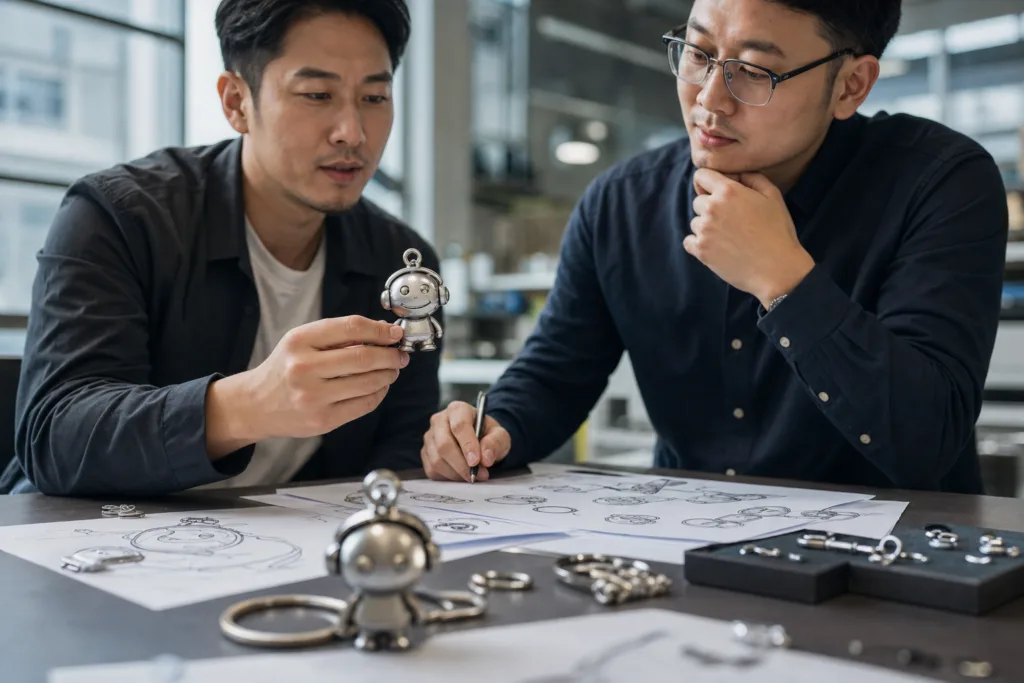
A mascot does more than decorate a product. It gives the brand a face, attitude, and emotional tone. For children’s programs, it may communicate friendliness. For sports events, it can convey energy and team identity. For tourism and city branding, it can embody local culture. For consumer brands, it can improve memorability in crowded categories.
When we review keychain concepts with buyers, we usually focus on whether the mascot is recognizable in a small physical format. A mascot may look great in a full digital illustration, but keychains have real limits in size, depth, color separation, and edge durability. The design has to keep the features that matter most: silhouette, facial expression, signature accessory, and one or two brand identifiers.
The best mascot keychains usually create recognition through three layers:
- Shape recognition: the outline should still be identifiable from a distance.
- Character recognition: face, pose, and proportions should match the brand personality.
- Brand recognition: logo, brand colors, slogan fragment, or icon should be integrated without clutter.
If these three layers are clear, the product tends to perform better as a promotional item and as a repeatable product in future campaigns.
Choosing the right structure for 3D mascot keychains
Not every mascot keychain needs the same build. One of the biggest mistakes buyers make is assuming “3D” always means a fully sculpted figure. In reality, the right structure depends on the drawing style, budget, weight target, and intended use.
Flat stamped style
This is best for simple mascots, bold outlines, and graphic brand language. It is usually cleaner, thinner, and more cost-controlled, but less dimensional.
Layered relief style
This approach uses raised and recessed levels to create depth while keeping the back relatively flat. It often works well when the mascot has clothing, accessories, or a logo area that needs hierarchy.
Full 3D molded or die-cast style
This is the strongest fit when the mascot depends on sculpted features such as rounded heads, limbs, facial contour, or object interaction. Buyers exploring die-cast logo keychain options often choose this route because die casting can capture more dimensional volume and support richer surface transitions than simpler flat methods.
Front-3D with back branding style
This structure is common for promotional orders. The front shows the mascot in dimensional form, while the back stays flatter for logo text, campaign information, serial marking, or a cleaner retail finish.
In many cases, the ideal solution is not maximum depth but balanced depth. If the piece is too bulky, it may feel heavy, snag on pockets, or increase plating and polishing complexity. If it is too flat, the mascot loses presence.
Translating a mascot into a manufacturable metal keychain design
Turning illustration into production requires simplification without losing identity. At Gairun, we usually guide buyers through the transition from concept art to manufacturing artwork by identifying which features must stay, which can be reduced, and which should be converted into metal texture, relief, or enamel areas.
Useful questions at this stage include:
- What is the smallest size at which the mascot still reads clearly?
- Which facial details are essential and which will disappear in metal?
- Should color be used for expression, or can relief and polishing do some of the work?
- Will the outline remain strong after adding the keyring hole or attachment loop?
- Does the pose create fragile protruding parts?
Many buyers come with highly detailed digital art. That is helpful for brand direction, but production usually benefits from a cleaner technical version. We recommend building the design around silhouette first, major raised levels second, and color zones third. If the structure works in black-and-white line form, it is much more likely to succeed as metal.
For brands seeking inspiration beyond flat souvenirs, reviewing 3D souvenir keychain design ideas can help clarify how volume, pose, and themed shaping translate into durable products.
Key design elements that affect brand identity
Shape and silhouette
The outer shape is often the first thing users notice. A strong silhouette can make the mascot recognizable even before someone sees color or logo details. Round characters feel softer and more playful, while angular outlines often feel more energetic or technical.
Proportions
Some mascots rely on oversized heads, short limbs, or exaggerated accessories. These proportions should be preserved carefully, but they may need adjustment for casting strength. Extremely thin arms, tails, or antennae may require thickening to avoid weak points.
Logo placement
Logo placement needs restraint. If the logo is too large, it competes with the mascot. If it is too small, it becomes unreadable. Common placements include a shirt area, a base plaque, a back stamp, or a hanging tag integrated into the keychain set.
Facial details
Eyes, mouth lines, eyebrows, and nose shapes are usually the most sensitive details in mascot production. Too much line detail can blur during mold making, plating, or polishing. It is better to preserve expression with fewer, stronger features than to force every drawn line into the mold.
Pose and motion
Action poses create energy, but they also affect balance and durability. A jumping mascot with wide-spread limbs may look exciting in artwork, yet cause weak connection points in metal. We often suggest subtle pose refinement so the product still feels alive while remaining practical for daily use.
Material options for custom mascot keychains
Material choice affects weight, surface quality, detail definition, and cost. Buyers comparing materials often focus only on price, but the better question is whether the chosen metal suits the design structure and finish plan. Our keychain material comparison guide is useful when procurement teams need a quick starting framework.
| Material | Typical strengths | Best use cases | Points to watch |
|---|---|---|---|
| Zinc alloy | Good for complex 3D forms, stable die casting, versatile finishing | Mascots with rounded features, layered relief, medium-to-high volume orders | Tooling quality and alloy consistency matter for finish results |
| Brass | Solid feel, attractive premium appearance, good engraving response | Higher-end keychains, classic branding, refined surface details | May not be the first choice for highly sculpted 3D geometry in every project |
| Stainless steel | Durable, modern look, corrosion resistance | Sleek graphic styles, etched or laser-detailed designs | Less suited to deep sculpted casting forms than zinc alloy |
| Aluminum | Lightweight, easy to carry, good for color applications | Light promotional programs, larger size with lower weight | Different feel from heavier premium metal keychains |
Zinc alloy is often the practical choice for 3D mascot keychains because it supports dimensional casting and a wide range of plating and antique finishes. When repeatable bulk production matters, buyers should pay attention to alloy control as well as mold quality. References such as zinc alloy specifications for die-cast keychains are useful reminders that ingot composition and casting material consistency affect surface stability and production repeatability.
Why metal is often the best choice for mascot keychains
Metal gives a mascot keychain a level of permanence that printed acrylic, rubber, or lightweight plastic may not deliver in the same way. For brand promotion, that matters because the item is meant to stay in circulation. It should survive keys rubbing together, bags being dropped, and repeated handling over time.
From our production experience, metal is especially valuable when buyers need:
- Dimensional detail: raised levels, sculpted edges, and defined surfaces.
- Premium weight: a more substantial feel in hand.
- Finish variety: bright plating, matte textures, antique tones, sandblasting, or polished highlights.
- Longer service life: better resistance to daily wear than many temporary promotional materials.
That does not mean every brand needs the heaviest or most expensive construction. The goal is to match product experience to campaign purpose. A souvenir shop may want collectible feel. A large event giveaway may prioritize balanced cost and moderate weight. A retail gift line may need more refined finishing and packaging presentation.
Surface finishes and effects that change the final look
Finish selection strongly affects whether the mascot feels playful, premium, nostalgic, or sporty. The same mold can look very different depending on plating tone, polish level, and texture contrast.
Bright plating
Nickel, gold-tone, black nickel, and other bright platings create a clean, reflective appearance. These are common when the brand image is modern or high contrast.
Antique finishing
Antique brass, antique silver, or antique copper can highlight recessed areas and make sculpted detail easier to read. This is useful for mascots with clothing folds, fur texture, or vintage branding language.
Polishing
Polished raised areas can bring attention to the face, hands, or logo while recessed areas remain darker or matte. Good polishing control helps separate visual layers without changing the mold itself.
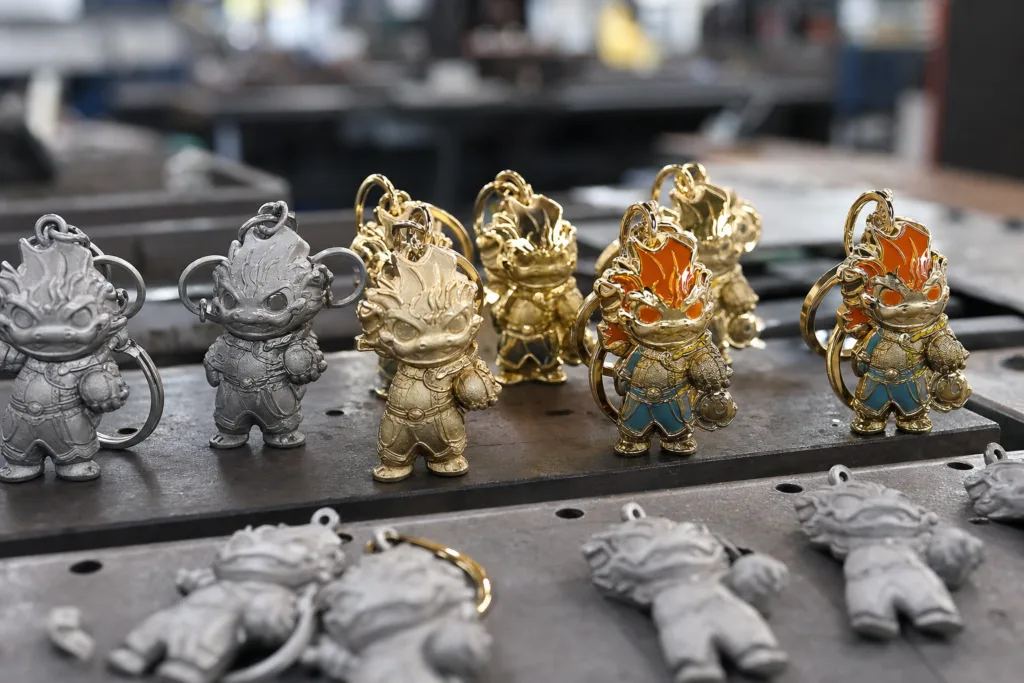
Sandblasting or matte texture
Subtle background texture helps prevent large flat surfaces from looking empty. It also improves contrast between polished highlights and surrounding areas.
Color filling and enamel
Color can be used to preserve mascot identity, but too many small filled areas may complicate production. Clean color zoning usually performs better than trying to reproduce full illustration shading.
How to choose brand colors and enamel styles
Color decisions should reflect both brand guidelines and production reality. In mascot keychains, color usually works best when used strategically rather than everywhere. Eyes, clothing, emblem areas, or a signature accessory often carry most of the recognition.
Buyers should consider these points:
- Use the core brand colors first; secondary shades can be reduced if necessary.
- Avoid splitting tiny spaces into too many adjacent colors.
- Decide whether raised metal lines should separate colors for clarity.
- Confirm whether the finish should feel glossy, classic, soft, or high contrast.
For many projects, fewer colors produce stronger results. One reason is that metal already contributes visual value through depth and finish. Another is that color consistency becomes easier to control in bulk production when the palette is simplified.
Working with a designer or manufacturer on artwork and samples
The handoff from creative team to factory is a critical stage. Clean artwork saves time, reduces misunderstandings, and improves sample accuracy. Buyers who prepare production-ready files earlier usually experience smoother mold review and fewer revisions. We often recommend starting with artwork preparation for production before final quotation approval, especially when the mascot includes layered elements, logo text, or multiple finish zones.
Useful file and review stages often include:
- 2D vector artwork with clear outlines and separated color areas
- Reference illustration showing intended expression and pose
- Notes on size, thickness, and attachment location
- Optional 3D rendering for complex sculpted forms
- Pre-production sample approval before bulk manufacturing
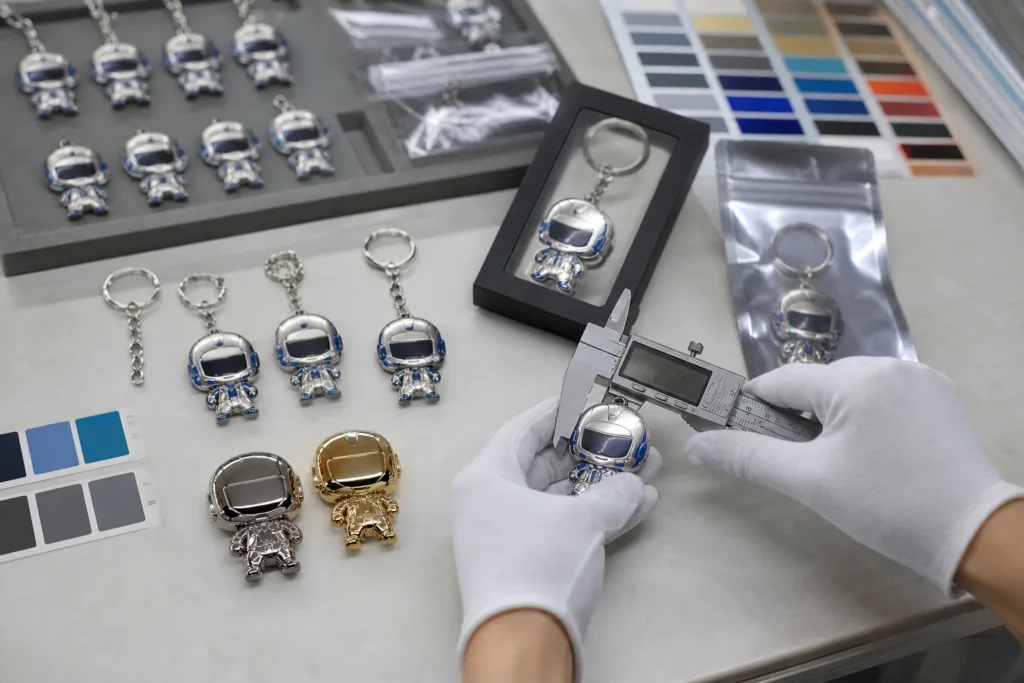
A sample should not be treated as a formality. It is the stage where buyers can confirm line clarity, depth balance, plating color, enamel appearance, attachment strength, and overall feel in hand.
Mold development, tooling, and cost impact
Tooling cost is influenced by shape complexity, relief depth, undercut risk, number of levels, and whether the design needs front-only or more developed two-sided structure. A simple rounded mascot head with moderate relief is easier to tool than a full-body character with separated limbs, layered props, and text integrated into small areas.
What increases tooling and production complexity most often?
- Many tiny raised and recessed zones
- Fragile narrow protrusions
- Deep cavities requiring careful metal flow and release planning
- Multiple attachment parts or moving elements
- Two-sided design with high-detail sculpting on both faces
From a cost-performance perspective, the smartest path is usually not reducing all detail, but prioritizing the right detail. Preserve the features that create recognition and simplify the features that only add mold burden without improving the user’s impression.
MOQ, unit price, and lead time for bulk orders
Procurement teams usually need realistic expectations on order planning. MOQ depends on design type, process route, finish combination, and packaging needs. A standard keychain order may be relatively accessible, but complexity can affect both sample timing and production rhythm.
Typical cost drivers include:
- Size and thickness
- Weight of metal used
- 3D complexity and tooling requirements
- Number of colors and filling areas
- Plating type and finish combination
- Custom packaging and private label requirements
- Order quantity and packing method
Lead time should be discussed in stages: artwork confirmation, mold making, sample review, sample revision if needed, bulk production, finishing, packing, and shipment preparation. For campaigns tied to events or product launches, it is wise to build in buffer time for sample adjustment instead of assuming the first sample will always be final.
Quality control points for 3D mascot keychains
Quality control should match the product’s actual risk points. In our custom metal product production work, we do not evaluate a mascot keychain only by whether it looks good in photos. We check whether the result is consistent across the lot and durable in normal use. Buyers can also improve supplier communication by defining inspection priorities clearly before production begins.
| QC point | What to check | Why it matters |
|---|---|---|
| Detail clarity | Face lines, logo edges, key shape features | Protects recognition and brand identity |
| Plating consistency | Color uniformity, coverage, no obvious patchiness | Affects perceived quality across bulk units |
| Color matching | Enamel tone alignment with approved sample | Important for brand consistency |
| Edge quality | Smooth touch, no sharp burrs | Improves safety and user experience |
| Attachment strength | Ring, chain, or connector stability | Critical for daily-use durability |
| Finish durability | Reasonable resistance to handling wear | Supports longer promotional life |
This is also where supplier transparency matters. A reliable production discussion should cover approved sample standard, acceptable color variation, plating appearance expectations, packing method, and defect sorting logic before shipment.
When buyers want a manufacturer-oriented view of sampling, production control, and sourcing communication, Gairun can support the process from concept review through mold development, finish selection, packaging planning, and bulk QC coordination.
Functional design tips for daily use
A beautiful mascot keychain can still fail if it is awkward to use. Daily-use practicality should be part of the design brief, especially for promotional distribution where the item must be easy to carry and durable over time.
Key functional decisions include:
- Attachment method: split ring, swivel, short chain, or custom connector.
- Size: large enough for visibility, small enough for pocket comfort.
- Thickness: enough to support structure without becoming too heavy.
- Balance: the center of gravity should feel stable when hanging.
- Surface protection: avoid overly delicate protruding details that wear first.
As a general design principle, compact forms with controlled depth often perform better in real life than oversized sculptural pieces. The product should feel premium, not inconvenient.
Packaging ideas for promotional distribution and retail use
Packaging affects how the keychain is perceived and how efficiently it moves through distribution. For events, simple individual polybags or backing cards may be enough. For retail, collector, or gift use, presentation becomes more important.
Common packaging directions include:
- Backing card with brand story or mascot bio
- Window box for retail display
- Paper card and sealed bag for event distribution
- Branded pouch for premium editions
- Private label outer carton for distributor or importer programs
We advise buyers to confirm packaging at the same time as product structure because packaging affects packing volume, unit presentation, barcode placement, and final landed cost.
Common mistakes to avoid when making custom mascot keychains
- Keeping too much illustration detail: fine textures and tiny lines may not translate cleanly.
- Ignoring silhouette strength: without a clear outline, the mascot loses recognition.
- Using too many colors: this can complicate production without improving impact.
- Choosing material only by lowest price: the wrong material can weaken detail and finish quality.
- Overbuilding the piece: excessive thickness or depth can reduce comfort and increase cost.
- Skipping practical attachment review: weak loops or unbalanced forms hurt usability.
- Approving samples too quickly: small issues in facial detail or plating become large issues in bulk.
A practical checklist before placing a bulk order
Before approving a production order, we recommend that buyers confirm the following:
- The mascot silhouette is clear at actual production size.
- Critical brand elements have been prioritized over decorative details.
- Material and finish match the intended product experience.
- Attachment style supports daily use.
- Sample has been reviewed for face clarity, color, plating, and weight feel.
- Packaging method is confirmed.
- MOQ, lead time, and shipping timeline align with campaign needs.
- QC expectations are documented against the approved sample.
That checklist may seem basic, but it prevents many avoidable revisions and helps create smoother communication between brand, designer, and manufacturer.
Conclusion
Designing effective 3D mascot keychains for brand promotion is really a process of translating identity into a durable object. The most successful projects do not start with decoration alone. They start with a clear mascot role, a strong silhouette, practical structure, suitable metal choice, controlled finishes, and disciplined sample review. When those decisions are made early, the final keychain is more likely to support recognition, feel consistent with the brand, and perform well in bulk production.
For procurement teams and brand owners, the key is to evaluate the product as both a marketing item and a manufactured metal product. If the mascot is memorable, the structure is production-friendly, and quality expectations are defined clearly, a custom keychain can become a useful long-term brand asset rather than a short-lived giveaway.
FAQs
Can any mascot be turned into a 3D keychain?
Most mascots can be adapted into a 3D keychain, but not every illustration should be copied exactly as drawn. The design usually needs adjustment for metal thickness, mold release, edge strength, and readable detail at small size. A good manufacturing approach keeps the character’s most recognizable features while simplifying fragile or overcrowded elements.
How detailed should a mascot keychain design be?
The design should be detailed enough to preserve recognition, but simple enough to remain clear after casting, plating, and finishing. In practice, bold outlines, controlled facial features, and a few strong raised levels work better than many tiny lines or color zones. If a feature cannot be seen clearly at actual product size, it is usually better to remove or simplify it.
What affects the cost of 3D mascot keychains the most?
The biggest cost factors are size, thickness, metal weight, mold complexity, number of colors, plating choice, attachment parts, packaging, and order quantity. Full 3D shaping and many fine details can increase tooling and finishing work. The most cost-efficient design is usually the one that protects the mascot’s identity without adding unnecessary structural complexity.
Which metal is usually best for custom mascot keychains?
Zinc alloy is often a strong choice for 3D mascot keychains because it supports die-cast shaping, dimensional detail, and a wide range of surface finishes. Brass, stainless steel, or aluminum may also be suitable depending on the look, weight target, and design style. The best choice depends on the mascot structure and the product’s intended use rather than on price alone.
How important is sample approval before bulk production?
Sample approval is one of the most important steps because it confirms whether the mascot reads correctly in real metal form. Buyers should use the sample to check facial detail, proportions, plating appearance, color balance, attachment strength, and overall feel in hand. A carefully reviewed sample reduces the risk of repeating small design problems across the full order.
What packaging works best for promotional mascot keychains?
The best packaging depends on how the keychain will be distributed. Event programs may prefer simple and efficient bagged packing, while retail and souvenir use often benefit from a backing card, box, or branded pouch. If the keychain supports private label or resale, packaging should be planned early so it fits the brand story, shipping method, and final presentation requirements.