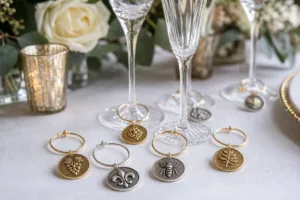
Choosing a custom metal product manufacturer is not only about getting a logo onto a medal, badge, keychain, or nameplate. For B2B buyers, the real decision is whether the supplier can translate artwork, material requirements, finish expectations, packaging needs, and delivery timing into a repeatable production plan. In our manufacturing work, we see that the best outcomes come when buyers understand how product structure, base metal, process selection, and quality checkpoints fit together before tooling starts.
If your project includes branded giveaway items, retail accessories, automotive tags, or event merchandise, strong custom keychain manufacturing support can solve more than shape and logo issues. It helps buyers compare zinc alloy and stamped constructions, confirm plating and enamel choices, review attachment methods, plan barcode or serial applications, and align sample approval with bulk packaging needs. At Gairun, we often support this kind of development from artwork review and mold planning through sample confirmation, production consistency, and shipment preparation.
What custom metal products are and where they are used in B2B sourcing
Custom metal products are logo-driven or function-driven items made from metal materials and produced to a buyer’s size, shape, finish, and branding requirements. In B2B sourcing, these products are rarely generic. They are usually tied to a specific use case such as a sports medal for an event, a lapel pin for an association, a challenge coin for a unit or club, a keychain for dealership branding, a nameplate for equipment identification, or a metal accessory for apparel or packaging.
The buying logic changes by application. Event organizers often prioritize appearance, date-driven lead time, and packaging efficiency. Corporate buyers may focus on consistency across multiple branches or campaigns. Importers and distributors usually need wider customization flexibility, clear quoting structure, and dependable bulk repeatability. Apparel and packaging brands tend to care more about attachment method, edge quality, plating durability, and how the metal part integrates with leather, fabric, cardboard, or rigid box structures.
From a manufacturer perspective, it is useful to define the product by three layers: decorative goal, functional requirement, and production method. A medal may be decorative but still needs safe edges and stable ribbon attachment. A nameplate may look simple but may require exact dimensions, adhesive strength, or serial marking. A key tag may seem inexpensive, yet a poor hole position, weak ring structure, or inconsistent plating can create high complaint rates in bulk orders.
Common product categories in custom metal manufacturing
Medals, badges, and lapel pins
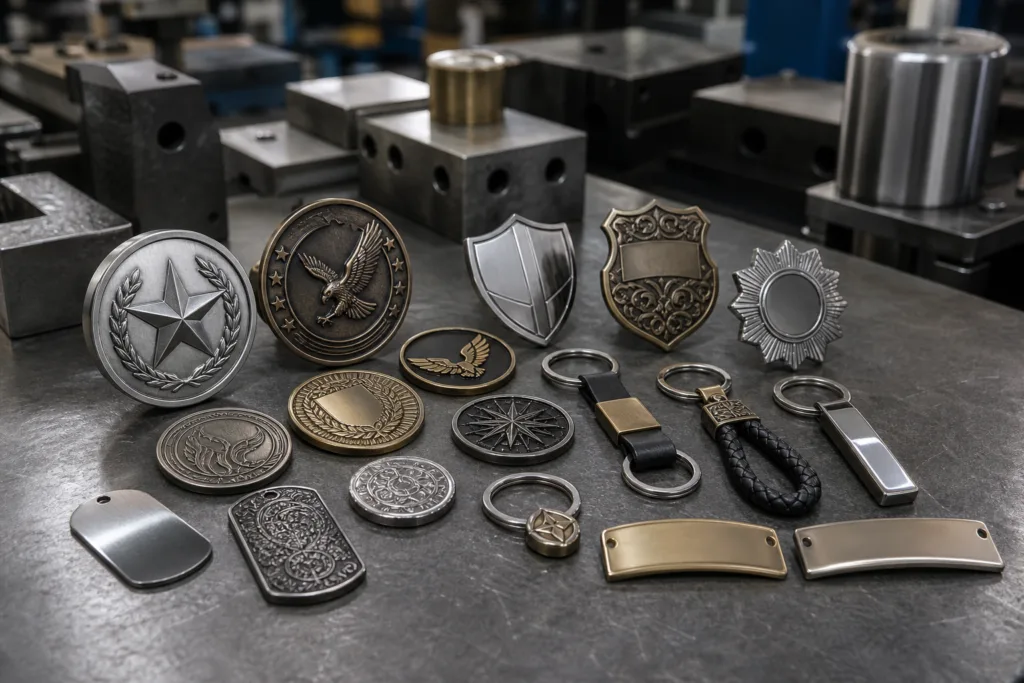
These products are common in sports events, schools, clubs, associations, and commemorative programs. Buyers typically compare shape complexity, enamel areas, border definition, plating tone, and attachment style. Stamped brass or iron can work well for clean relief and traditional pin structures, while zinc alloy die casting is often preferred for more irregular outlines, hollow areas, and thicker sculpted forms.
Challenge coins and souvenir pieces
Challenge coins usually require more weight, edge detail, and double-sided design balance. Thickness matters more here than on a standard badge. Antique finishes, sandblasted backgrounds, and high-polish raised areas are frequently used to create contrast. Buyers should confirm whether the design needs 2D relief, 3D sculpting, cut-out windows, or sequential numbering before tooling is approved.
Keychains, tags, and nameplates
This category spans promotional gifts, membership tags, dealership key tags, hospitality identification, industrial labels, and retail accessories. The design can be logo-centered or functional. For example, buyers reviewing die-cast logo keychain options usually need to compare custom shape freedom, thickness, and integrated logo depth against stamped alternatives. Nameplates and equipment tags often prioritize readability, dimensional accuracy, and durable marking over decorative effects.
Apparel and packaging metal accessories
Zipper pulls, logo plates, bag ornaments, box emblems, and tag hardware often involve tighter fit requirements with other materials. In these cases, the metal piece is only one part of a larger assembled product, so hole spacing, rivet structure, backing type, and plating compatibility become more important than standalone appearance.
Choosing the right base material
Material choice affects cost, weight, detail sharpness, plating behavior, strength, and process compatibility. There is no single best metal for all custom products. The right choice depends on geometry, finish expectations, budget, and end use.
| Material | Common strengths | Typical trade-offs | Good fit |
|---|---|---|---|
| Zinc alloy | Excellent for die casting, custom shapes, thickness, and 3D relief | Tooling and plating prep must be handled carefully | Keychains, medals, coins, souvenir items |
| Brass | Good detail, premium feel, suitable for stamping and polishing | Material cost is usually higher | Lapel pins, badges, coins, refined nameplates |
| Stainless steel | Corrosion resistance, clean modern look, strong for thin tags | Harder material, less suited to some relief styles | Nameplates, tags, industrial labels |
| Aluminum | Lightweight, economical for some tag and plate uses | Lighter feel may not suit premium souvenirs | Light tags, labels, some promotional accessories |
| Iron | Practical for stamped products and cost-sensitive runs | Needs proper finish protection | Badges, medals, entry-level pins |
Zinc alloy is one of the most flexible choices when a design has cut-outs, curved borders, recessed fills, or substantial thickness. It is widely used in die-cast products because it can reproduce more complex forms than many flat stamped parts. That said, plating results depend heavily on surface preparation. Requirements around zinc alloy electroplating preparation and finish selection help explain why cleaning, smoothing, and coating sequence matter so much when buyers expect an even decorative finish.
Brass remains a strong option for buyers who want crisp stamped details, a traditional premium impression, and polished plated surfaces. Stainless steel works well where the product needs a more technical appearance or better corrosion resistance, especially for plates and tags with engraved or etched information. Aluminum can be useful when low weight is desirable, but buyers should check whether the lightness supports the intended market position.
Manufacturing methods explained
Die casting
Die casting is often used when the design includes custom outer shapes, strong relief, recessed areas, or more sculptural form. Molten metal is injected into a mold cavity, creating a near-finished part that can then be trimmed, polished, plated, and filled with color if required. This method is especially practical for keychains, bottle openers, challenge coins with heavier structure, and irregular souvenir designs.
For buyers, the main advantages are design freedom and dimensional consistency once tooling is stable. The main questions should be about draft angles, parting lines, polishable areas, and whether the mold design protects fine logo features from becoming too soft after finishing.
Stamping
Stamping is a strong choice for flatter products with clear raised and recessed detail. It is often used for medals, badges, and lapel pins where a crisp edge line and controlled relief are important. Compared with die casting, stamped parts can look cleaner on designs that are less sculptural and more graphic. Buyers should check whether the metal thickness and relief depth are enough to make the logo visible after plating and color filling.
Etching and laser engraving
Etching is useful for fine lines, text-heavy designs, and flatter nameplate-style products. Laser engraving is often selected for personalization, serial numbers, or variable information. Buyers exploring engraved logo personalization methods should distinguish between decorative engraving, deep identification marking, and high-volume variable data work, because each one affects speed, readability, and cost differently.
No process is universally superior. Die casting usually wins on shape complexity, stamping often wins on classic relief clarity, and etching or engraving is often better for fine information-driven surfaces.
Surface finishes and decorative effects
Finishing is where many buyer expectations either come together or break down. Two products made from the same mold can look very different depending on plating thickness control, polish level, background texture, enamel quality, and antique treatment.
Plating choices
Common decorative plating options include gold tone, silver tone, nickel, black nickel, copper tone, and antique versions of these looks. Plating affects both appearance and perceived value. A bright polished silver-tone finish can highlight sharp raised borders, while antique plating creates contrast by darkening recessed areas and emphasizing relief.
Polishing and texture
Mirror-polished raised areas create a premium visual effect, but they also reveal surface defects more easily. Sandblasted or textured backgrounds help create contrast and can reduce the visual sensitivity of minor background marks. Buyers should specify where high polish is required and where texture is acceptable, rather than approving a design only by color reference.
Enamel and color filling
Soft enamel creates visible metal borders between color areas and offers a dimensional feel. Hard enamel or polished resin-like finishes create a smoother top surface, depending on the construction. Color selection should be supported by artwork references, and small filled areas must be checked carefully. Very narrow lines or tiny isolated color cells can become unstable or visually uneven in production.
Decorative combinations can also define the product style. For example, buyers considering two-tone metal keychain finishes should review plating boundary control, masking feasibility, and where contrasting tones will emphasize or weaken logo readability. In our experience, finish decisions work best when they are evaluated together with relief height and polishing direction, not as separate styling choices.
How artwork quality affects production quality
Many sourcing problems start before manufacturing begins. If the artwork is incomplete, low resolution, or not adapted to metal production, the supplier may have to interpret missing details. That creates risk.
Buyers should ideally provide vector artwork, clear dimension targets, Pantone references for colors where relevant, and an explanation of which details are critical. In metal production, line thickness matters. A line that looks acceptable on a screen may disappear after mold machining, polishing, or plating if it is too thin. Tiny text may also lose readability depending on product size and process.
We usually advise buyers to prioritize the hierarchy of information in the design. Ask which details are essential from normal viewing distance. A good production drawing is not simply the brand artwork copied onto a metal surface. It is an adapted version that respects relief depth, edge spacing, fill area size, and manufacturing tolerances.
Mold development, sample approval, and what to confirm before mass production
Tooling is the point where a design becomes a physical process. Once the mold is cut, changes can affect cost and schedule, so sample review should be treated as a technical checkpoint, not just a visual formality.
Before approving a sample, buyers should confirm:
- overall dimensions and thickness
- logo readability and line clarity
- material and weight feel
- surface finish and plating tone
- color placement and fill quality
- attachment structure, such as pin, ring, clutch, or adhesive
- packaging format and count method
- carton marking or private label requirements
For projects with dimensional or fit-sensitive requirements, first article approval is especially important. Guidance around first article inspection, dimensional tolerances, and approval criteria is useful because it shows why buyers should define critical dimensions and acceptance points before full production starts. This is particularly relevant for nameplates, hardware accessories, and products that must align with another component.
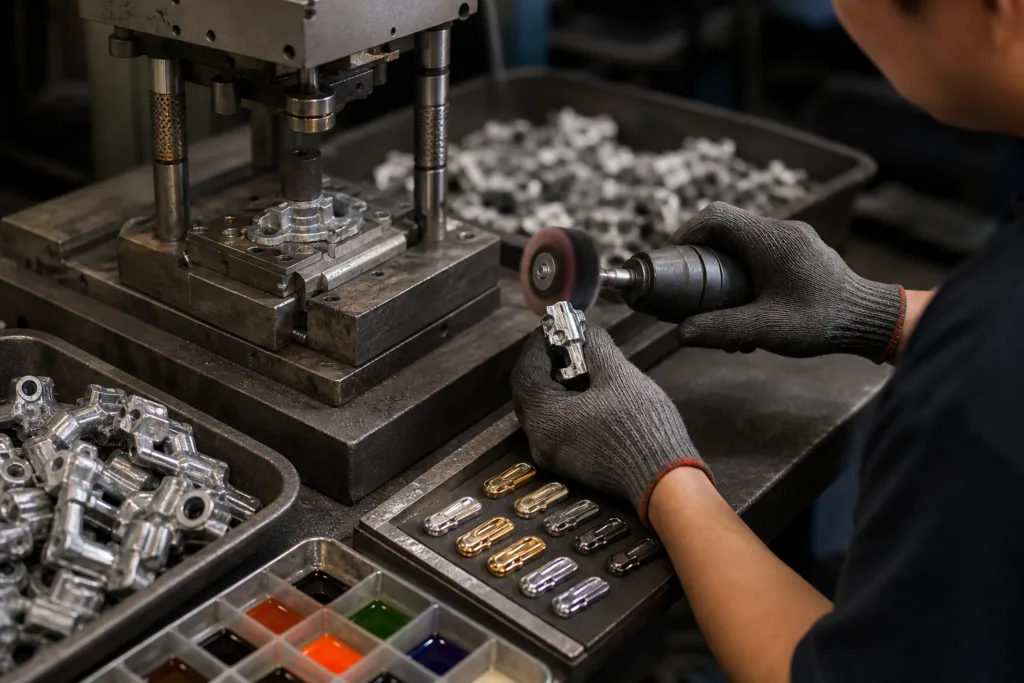
At this stage, it is also smart to lock in a golden sample or approved reference set. That reference becomes the benchmark for production consistency, especially when orders may be repeated later.
MOQ, unit cost, tooling cost, and what changes pricing
Pricing in custom metal manufacturing is influenced by more than quantity. Buyers often focus on unit price first, but the structure behind the quote matters just as much.
| Cost factor | Why it matters |
|---|---|
| Tooling or mold cost | New custom shapes and relief structures require dedicated tooling |
| Material choice | Brass, stainless steel, zinc alloy, and aluminum carry different cost profiles |
| Size and thickness | Larger and heavier products consume more material and finishing time |
| Finish complexity | Multiple plating tones, antique effects, and high polish add processing steps |
| Color filling | More colors and smaller fill areas can increase labor and reject risk |
| Attachment and assembly | Extra parts such as rings, clutches, magnets, or screws affect labor |
| Packaging | Individual polybags, cards, gift boxes, or retail packs add cost |
MOQ depends on product type, tooling setup, and process practicality. Some projects can work at relatively low quantities, while others become inefficient if the order is too small to absorb mold and setup costs. Buyers should ask for a quote structure that separates tooling, sample cost if any, unit price by volume, and packaging add-ons. That makes comparison easier across suppliers.
Lead time planning for sampling, production, and shipping
Lead time should be planned backwards from the in-hand date, not from the order date. Sample development, mold creation, revision cycles, bulk production, packaging, and shipping all affect the final schedule.
A typical project timeline may include artwork confirmation, mold production, sample review, sample revision if needed, mass production, final inspection, and export packing. International buyers also need to reserve time for freight booking, customs handling, and seasonal delays. If the order is tied to a marathon, annual event, launch campaign, or promotional season, the cost of late delivery can be much greater than the cost of better planning.
In our production planning work, we encourage buyers to separate “factory lead time” from “usable delivery date.” That means checking whether the goods need retail packing, barcode application, assortment sorting, or destination-specific carton labels before shipment.
Quality control checkpoints that matter in bulk orders
Quality control in metal products is partly visual and partly measurable. Buyers should define which points are cosmetic and which are critical function requirements.
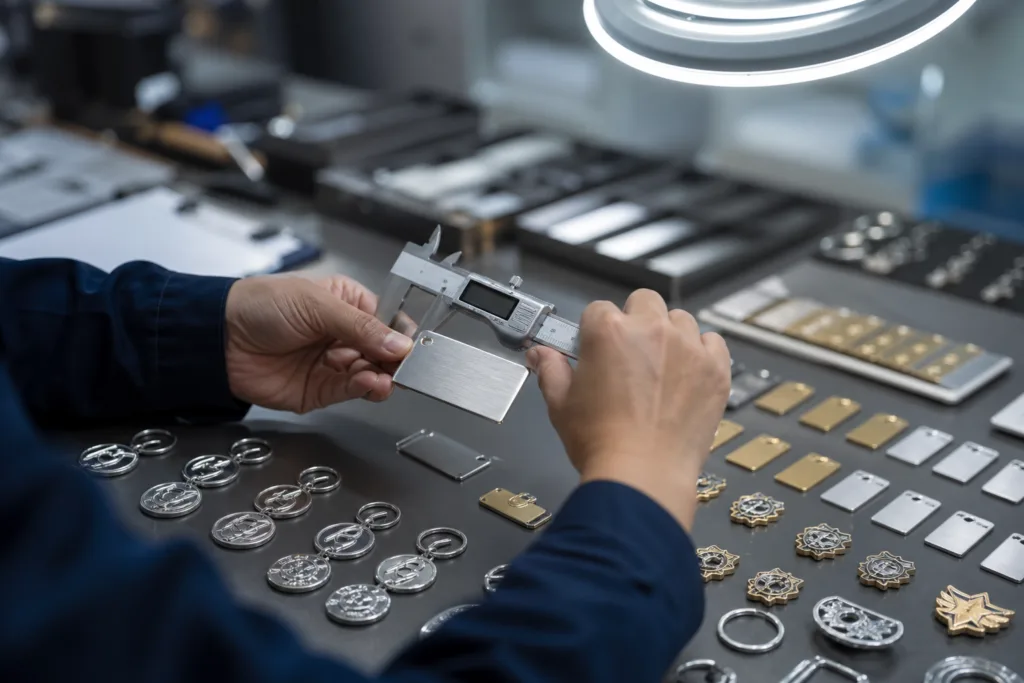
Dimensional accuracy
This matters most for nameplates, tags, accessories that fit another product, and items with strict packaging inserts. Hole position, thickness, width, and backing area should be checked against approved drawings.
Plating consistency
Color tone variation can happen between lots if process control is weak. Buyers should confirm whether plating appearance is judged under natural light, office light, or a defined inspection standard. Minor variation may be acceptable for antique finishes, but less acceptable for mirror-polished bright plating.
Color matching and fill quality
Filled colors should be checked for bleed, pinholes, underfill, contamination, and edge cleanliness. Very small color cells often need extra review because they are more sensitive to inconsistency.
Surface and assembly defects
Scratches, pits, rough edges, plating burns, attachment looseness, and incorrect accessories are common defect categories. For dealership and fleet-related identification items, buyers often review car dealer key tag solutions with extra attention to hole durability, numbering readability, and ring assembly consistency because these are heavily handled products.
When discussing QC support and repeat orders, Gairun typically treats approved samples, inspection criteria, and packaging standards as part of the production file, not just as pre-sales discussion points. That approach helps reduce avoidable variation in future runs.
Packaging options for retail, gifting, events, and private label orders
Packaging changes both cost and product perception. Bulk-packed medals for event distribution need a different approach than individually packed keychains for retail shelves or presentation boxes for commemorative challenge coins.
Common options include bulk bagging, individual polybags, backing cards, barcoded retail cards, velvet pouches, paper boxes, rigid gift boxes, and branded private label packaging. Buyers should also specify whether desiccants, inner partitions, carton labels, master carton limits, or mixed-SKU sorting are required.
For private label orders, the packaging review should happen during sample planning, not after bulk production starts. Otherwise, insert size, barcode location, or folded card dimensions can force late changes.
How to evaluate a custom metal product manufacturer and reduce sourcing risk
A good supplier evaluation goes beyond checking product photos. Buyers should look for evidence that the manufacturer can explain process fit, tooling logic, finish limitations, and inspection control in practical terms.
Useful evaluation questions include:
- Which process do you recommend for this design, and why?
- What details in the artwork are risky or too fine for the chosen size?
- What material alternatives could reduce cost or improve appearance?
- What will be confirmed in the sample before bulk production?
- Which defects are screened during inspection?
- How are packaging requirements documented?
- How are repeat orders matched to the approved sample?
Experienced buyers also compare responsiveness and clarity. If a supplier avoids discussing line thickness, plating limitations, or tolerance issues, the risk is usually not lower; it is just less visible at the quoting stage.
Common buyer mistakes and how to avoid them
One common mistake is approving artwork that looks attractive digitally but is not optimized for metal production. Another is comparing quotations without matching material, thickness, plating, packaging, and accessory details. A lower quote may reflect a thinner product, lighter material usage, simpler finish, or less protective packaging.
Another frequent issue is underestimating sample review. If buyers approve based only on a single front photo, they may miss edge quality, backside marks, attachment alignment, or weight feel. It is also risky to leave variable elements like serial numbers, packaging labels, or color references undecided after tooling begins.
The most effective way to reduce sourcing risk is to convert expectations into checkable specifications. Size, thickness, finish, attachment, packaging, and acceptance standards should be written clearly enough that both teams can inspect against the same reference.
Conclusion
A successful project with a custom metal product manufacturer depends on how well design intent is translated into material choice, process planning, finish control, sample approval, and bulk inspection. Whether the product is a medal, badge, challenge coin, keychain, nameplate, or accessory, buyers usually get better results when they evaluate not only price, but also production fit, communication quality, and repeatability. From our manufacturing perspective, the strongest B2B programs are built on clear drawings, realistic finish choices, thoughtful sampling, and documented QC standards that protect the order from avoidable surprises.
FAQs
Which material is usually better for custom metal products: zinc alloy, brass, or stainless steel?
It depends on the product structure and use. Zinc alloy is often a practical choice for die-cast items with custom shapes, thicker profiles, and 3D relief. Brass is commonly selected for stamped badges, pins, and coins that need crisp detail and a more traditional premium feel. Stainless steel works well for tags and nameplates where corrosion resistance, clean edges, and technical appearance matter more than sculpted relief.
How do I choose between die casting, stamping, and engraving?
Choose die casting when the design needs complex outer shapes, cut-outs, thicker structure, or more sculptural relief. Stamping is usually better for flatter products with sharp raised and recessed detail, such as medals, badges, and lapel pins. Engraving is a strong option for personalization, serial marking, and information-focused nameplates. The right choice depends on design complexity, detail type, quantity, and finish expectations.
What should I check on a pre-production sample before approving mass production?
You should review dimensions, thickness, logo clarity, line sharpness, color placement, plating tone, edge quality, attachment strength, backside finish, and packaging format. If the product must fit another component, confirm hole position or mounting dimensions as well. A sample approval should work as a technical signoff, not only a visual confirmation.
Does MOQ always mean the supplier is inflexible?
No. MOQ often reflects tooling setup, plating batch practicality, labor efficiency, and packaging arrangement rather than simple unwillingness to support smaller orders. Some custom projects can be produced in modest quantities, while others become expensive if the order volume is too low to absorb mold and setup costs. Buyers should ask how MOQ relates to process choice and whether different packaging or finish options could improve cost efficiency.
Why can the same design look different after plating or enamel filling?
Surface appearance is affected by base material, polishing level, recessed depth, plating preparation, color area size, and texture contrast. Small logo lines may soften after polishing, and narrow color cells may fill less evenly than large areas. That is why finish approval should include not only color and plating references, but also relief height, background texture, and viewing distance expectations.
How can I reduce risk when placing a repeat order for custom metal products?
Keep an approved reference sample, a confirmed production drawing, finish notes, accessory specifications, packaging standards, and inspection criteria on file. Repeat orders are more stable when the manufacturer works from the same mold record and approval benchmark rather than from a new verbal description. It also helps to confirm whether any material, plating, or packaging changes have been introduced since the original order.