Custom Hardware Manufacturing for Brand Collections
Develop hardware collections with consistent interfaces, finish references and variant control. Assign testing and supplier responsibilities before launch.
Discuss your requirements
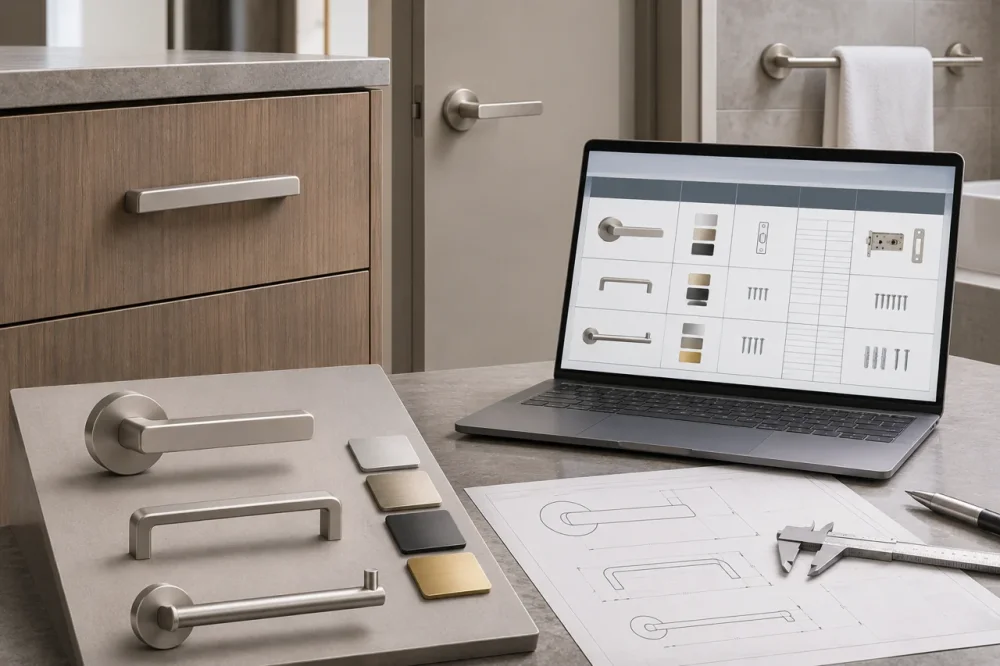
A hardware brand program needs consistency across products, finishes and installation variants. A door lever, cabinet pull and bathroom accessory may share a design language while using different interfaces and qualification requirements. Manufacturing planning should preserve that shared identity without treating every component as the same engineering task.
Gairun can review defined custom metal components within a hardware collection. Provide the product range, installation requirements and intended supply scope. This page addresses collection development and supplier coordination; individual component considerations are covered in the architectural hardware sector.
Build a purchasing schedule for the collection
List products against finish, installation variant, quantities and required accessories.
Keep the approved appearance family visible while retaining separate mechanical specifications. A shared bronze-tone reference does not make a door lever and a bathroom mount interchangeable qualification tasks.
For a supplier change, identify which items must match retained stock or installed products.
Decide whether the first approval concerns the whole collection or selected representative items. The quotation should make those sample and variant assumptions explicit so a brand can compare the proposal with its actual launch and replenishment plan.
Organize a hardware collection
Create a product matrix that identifies each component, size, finish and market variant.
Separate visible design differences from functional differences. Two handles may look alike while requiring different spindles or fixing arrangements.
Identify common elements that can genuinely be shared.
A decorative motif or finish reference may be common across the range, while mounting geometry remains product-specific. Shared tooling or parts should be evaluated against those actual relationships rather than assumed from visual similarity.
Establish the role of each supplier in the collection.
One source may provide cast bodies, another fasteners and another final packaging. The brand needs a controlled specification that keeps the combined product consistent through these handoffs.
Product naming should help buyers and assembly teams distinguish variants.
A clear internal identifier is particularly useful when finish names are reused across several materials or constructions. The order should not depend on interpreting informal descriptions correctly.

Freeze installation interfaces across variants
Installation dimensions are central to interchangeability.
Define spindle geometry, fixing centers, panel thickness ranges and other relevant interfaces for each product. A visual redesign should not silently change a dimension that customers depend on.
If several sizes share an installation system, test the complete range or establish a justified representative evaluation.
The largest or most heavily loaded version may behave differently from the sample selected for appearance approval. Compatibility should follow evidence.
Consider replacement and retrofit needs.
Existing holes or mounting components can constrain the new design. Provide those requirements early so manufacturing suggestions do not compromise the intended fit.
The door handle page and cabinet pull page explain why these two common product types need different interface definitions.
A brand-level collection should retain those distinctions.
Match appearance across materials
A collection may combine zinc castings with steel, brass, plastic or other materials.
The same nominal finish can look different on different shapes and substrates. Approve representative assembled sets using a defined viewing method and reference.
Specify color, gloss and texture separately where useful.
A single photograph may not communicate all three reliably. Keep the approved physical references protected and identify which products they apply to.
Polishing and preparation can change design details.
Decide which edges, relief and transitions are important to the brand identity. A finish improvement should not erase the form that distinguishes the collection.
Use the surface finishing guidance to connect appearance with manufacturing.
Performance requirements, such as cleaning resistance or corrosion assessment, should remain separate from the aesthetic match.
Assign product and installation testing
The brand should identify the requirements associated with each product and market.
Door operation, furniture joint loading, moisture exposure and glass retention are different test tasks. A general quality statement does not cover them all.
Determine which evidence is supplied by the component manufacturer and which is generated on the complete hardware assembly.
Component dimensions can support an installed-system test, but they do not replace it. The approval record should make that relationship clear.
Where a certification or regulated claim is required, verify the applicable scheme and product scope.
A factory management-system certificate cannot be substituted for a product assessment. The quality page distinguishes these documents and their limitations.
Changes across a collection should be reviewed for their testing consequences.
A new coating, fastener or mounting substrate can affect a result even when the front design is unchanged. The release process should identify the checks that must be repeated.
Manage regional variants and spare parts
Different markets may use different installation conventions or product requirements.
Identify those differences in the product matrix rather than treating them as late packaging changes. Functional variation can affect tooling, samples and inventory.
Spare parts should remain linked to the product revision they support.
A replacement cover may need only appearance compatibility, while a replacement working component may need dimensional and functional compatibility. Both should be identified clearly for service teams.
Packaging and labeling should support correct selection and installation.
Similar-looking components can be mixed easily if their identifiers are unclear. Include the appropriate accessories and instructions within the agreed supply scope.
The project process page explains how revisions and repeat orders can be managed through approval.
A collection benefits from one controlled change route rather than independent updates by several suppliers.
Keep retained samples identified by both finish and component version.
A replacement sample should not silently become the reference for earlier products still being sold. When a finish changes deliberately, decide how mixed inventory and future spare parts will be described so customers receive a consistent and understandable offer.
Prepare a brand manufacturing brief
Provide the collection matrix, component drawings, installation interfaces and finish references.
Include quantities by variant, market requirements, packaging and the evidence needed before launch. Identify which products are established and which are still in development.
Submit the hardware brand program so Gairun can review the proposed metalwork with its collection-level responsibilities clearly defined, while each component retains its own functional and qualification requirements.