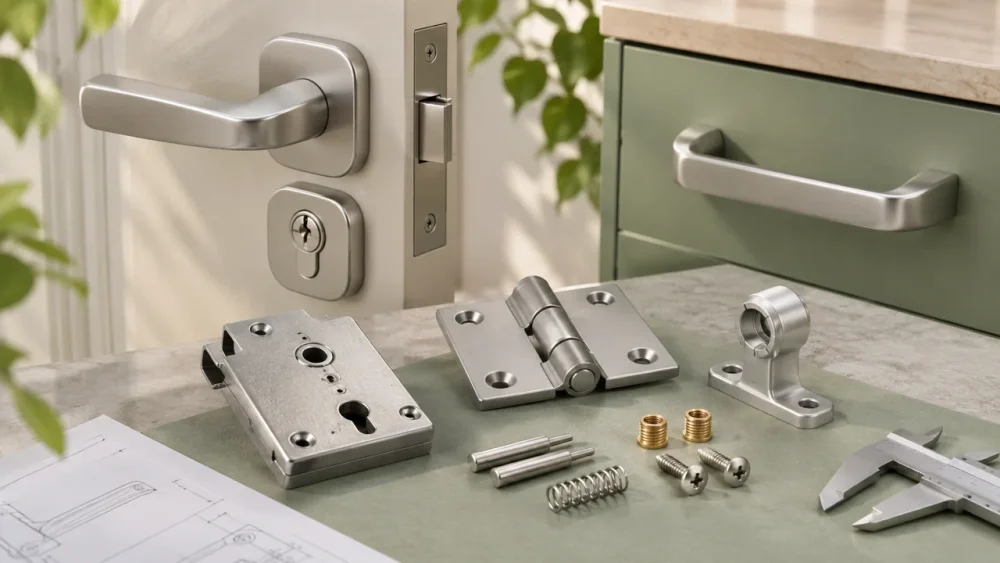
Custom Zinc Alloy Hardware for Doors and Furniture
Explore zinc hardware project requirements for locks, handles, hinges, furniture joints and bathroom fittings, including installation and finish review.
Discuss your requirements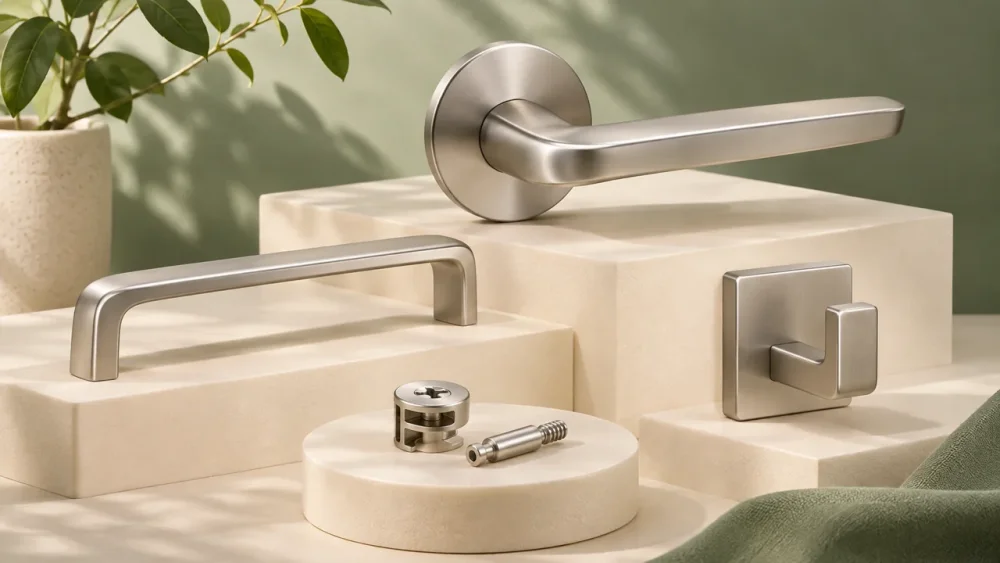
Architectural and furniture hardware combines visible design with repeated mechanical use. Zinc alloy can be considered for formed handles, lock housings, selected hinge components, connectors and accessory mounts, but the correct construction depends on the duty of each part. A decorative surface and a safety-related fixing should never share an acceptance plan merely because both are described as hardware.
This page helps brands and component buyers prepare custom hardware enquiries for Gairun. Define the complete assembly, installation environment and required tests before selecting a casting route. The manufacturing scope must be confirmed for the particular design, including any machined interfaces, inserts, fasteners or outsourced operations.
Start with the installation and the supplied assembly
Hardware buyers can use three distinct enquiry routes.
For a new collection, begin with the visible design and common finish references. For an established mechanism, begin with fixed mating dimensions and identify the metal parts being sourced. For a replacement supplier, include the controlled specification and the acceptance issues the new route must address.
Separate metal bodies from springs, pins, fasteners and installation accessories in the requested package.
This helps prevent a price for a decorated part being mistaken for a price for a complete functional fitting. Product pages below explain the interfaces that make each family different.
Product families and project requirements
| Product direction | Main purchasing decision |
|---|---|
| Bathroom Hardware Components | Exterior fittings under moisture and cleaning exposure |
| Cabinet Pulls and Furniture Knobs | Hole centers, screw engagement and finish collections |
| Zinc Door Handles and Knobs | Spindle torque, return mechanism and grip |
| Furniture Brackets and Connectors | Joint behavior in panel substrates |
| Glass Clamps and Mounting Brackets | Engineered grip and glass-contact system |
| Zinc Hinge Bodies | Pivot alignment and complete mechanism cycling |
| Lock Bodies and Cylinder Housings | Housing alignment without claiming complete lock security |
Separate decorative surfaces from working interfaces
A drawing should distinguish the surfaces people see from the features that locate, rotate, clamp or fasten.
A polished exterior may need tight visual control while an internal boss needs positional accuracy. Applying one blanket requirement to both can add cost without improving the product.
Identify the normal user action and foreseeable misuse.
Repeated pulling, door slamming, over-tightening and exposure to cleaners can reveal weaknesses that an initial visual sample does not show. Where failure could injure a user, the qualification plan must address that consequence explicitly.
Also specify the substrate or mating assembly.
A connector fixed to particleboard behaves differently from one mounted to a metal frame. A hardware component cannot be evaluated meaningfully without the screws, mounting details and surrounding materials that transfer the load.
Lock bodies and cylinder housings
Lock-related zinc components may serve as outer bodies, housings, covers or other shaped elements.
Their role must be distinguished from pins, keys, springs and high-wear precision parts that may require different materials and manufacturing methods.
For a cylinder housing, identify the bores, locating surfaces and attachment features that control alignment.
The tolerance relationship between the housing and internal mechanism matters more than the general label “lock cylinder.” The complete mechanism also needs assessment of wear, contamination and operating force.
Smart-lock covers add electronics packaging and possible antenna considerations.
Metal near a wireless module can affect signal performance, while fasteners and seals affect service access. These requirements should be resolved with the lock's product engineering team before the housing geometry is frozen.
Security claims belong to the tested lock system.
A supplier should not describe a cast housing as burglar-resistant, fire-rated or certified merely because it is intended for a lock. Define the applicable product standard and assembly test where such performance is required.
Door levers, knobs and cabinet pulls
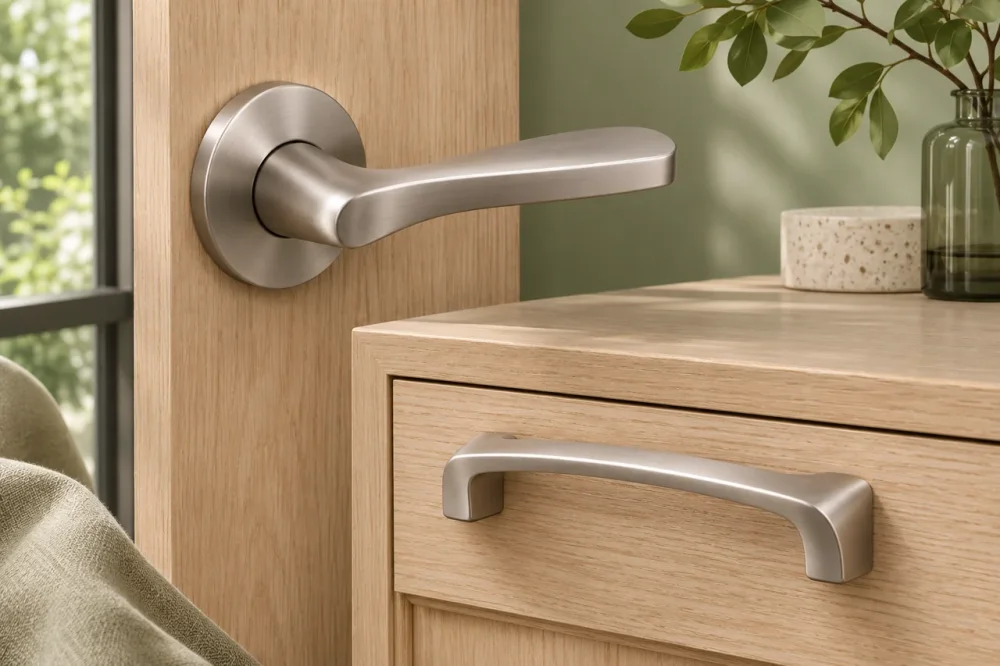
Door hardware and cabinet hardware share some appearance considerations but have different installation and loading requirements.
A lever must fit its spindle, return mechanism and mounting assembly. A cabinet pull usually depends on fixing centers, thread engagement and clearance for the user's hand.
Specify spindle or fixing interfaces using dimensions and tolerances.
Include the mounting plate, screw type and intended panel or door thickness. A photograph of an assembled handle is insufficient to establish interchangeability with a customer's existing hardware.
Ergonomics also affects the casting design.
Review edges touched by the hand, grip transitions and clearance near the mounting surface. Decorative recesses can collect residue or become difficult to polish; the design should balance the desired appearance with practical finishing and cleaning.
Finish matching across levers, roses, escutcheons and pulls needs an approved reference.
Parts with different shapes can reflect light differently even when they receive the same coating. Evaluate representative assembled sets rather than judging each part against a small flat swatch alone.
Hinges and furniture connectors
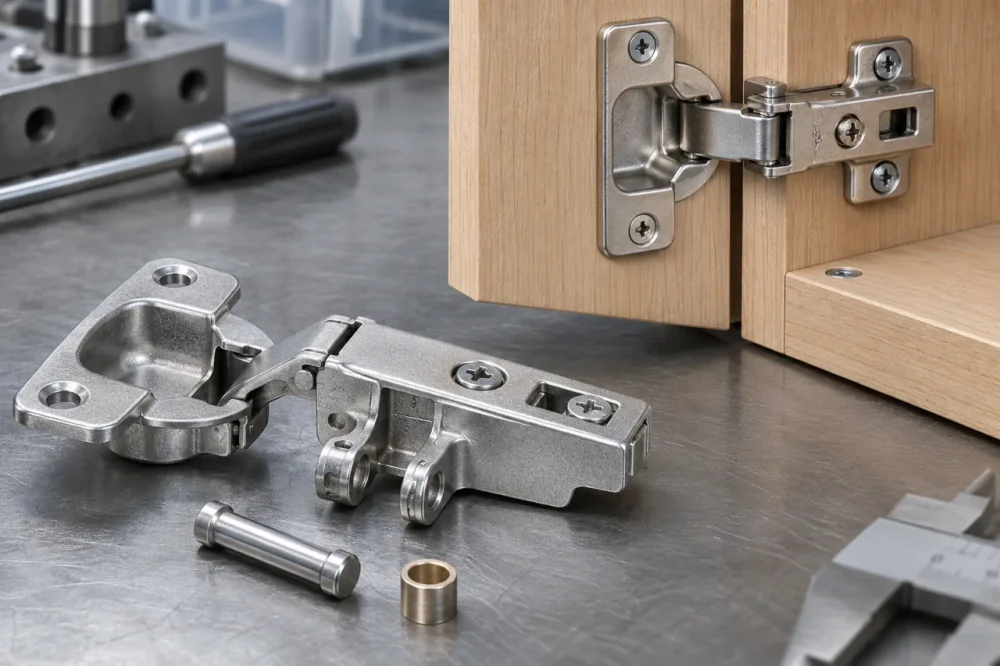
A hinge requires more than a cast body.
Pins, bearing surfaces, alignment and fastener retention determine movement and load transfer. Zinc may be suitable for selected bodies or decorative elements, while the working pivot may require a different material or a separate bearing arrangement.
Provide the opening angle, motion envelope, expected cycles and load direction.
Specify whether the hinge supports a door, lid or another moving member. A statement of door weight alone does not establish the moment applied to each hinge or the performance of the mounting system.
Furniture corner brackets and connectors should be reviewed with the intended joint.
Screw pull-out from a panel, local crushing or joint movement can govern performance before the metal component itself fails. Assembly instructions and tightening requirements are therefore part of the design definition.
For concealed connectors, installation access matters.
Tool clearance, insertion direction and the order of assembly may constrain the part more strongly than its visible outline. Share the furniture joint model where available so these practical issues can be reviewed before tooling.
Bathroom handles and accessory mounts
Bathroom hardware often combines humidity, water droplets and cleaning products.
The substrate, surface preparation and coating system must suit that exposure. A decorative metallic color does not establish corrosion resistance or compatibility with every household cleaner.
Faucet handles are distinct from wetted valve bodies.
A zinc handle used outside the water path should not be described as proof that the same alloy is suitable for potable-water contact. Identify which surfaces contact water, skin or cleaning chemicals and select the corresponding materials and tests.
Towel-bar bases, shower brackets and similar accessory mounts require a complete fastening definition.
The wall substrate, anchors, screws and contact geometry influence the installed result. Concealing the fixing under an attractive cover does not remove the need to qualify the joint.
Consider drainage and trapped moisture around cavities.
Assembly details should avoid unnecessarily holding liquid against vulnerable interfaces. Protective packaging should also keep finished surfaces separated so the visual standard survives transport to the installation site.
Glass clamps and safety-critical fixtures
Glass clamps require particular care because the complete fixing must retain the glass without creating damaging local stresses.
Specify glass type, thickness, edge condition, gasket material, installation geometry and load conditions. A nominal clamp size alone is not enough.
The tightening method and contact distribution affect performance.
Excessive local force can damage glass, while insufficient retention can allow movement. The assessment must include the actual glass and interface materials, with tests appropriate to the installation and consequences of failure.
Do not infer a structural load rating from a material name or a catalog photograph.
Guarding, overhead, balcony and other safety-related applications require qualified engineering and applicable product or installation requirements. Alternative materials may be more appropriate for the intended duty or environment.
Finish families and repeat orders
Keep the finish reference tied to a controlled sample and specification.
Record color, gloss, texture and which surfaces are appearance-critical. If corrosion or adhesion testing is required, state the method and acceptance criterion separately from the visual description.
Different hardware families may use different substrates or production routes.
A brand-wide color name should therefore be supported by component-specific approval. Review the finishing guidance before treating a visual match as a complete coating specification.
Define the hardware qualification package
Send drawings, mating parts, installation details and expected demand.
Include appearance references, environmental exposure, operating cycles and load requirements where applicable. Identify the person responsible for approving the complete hardware assembly.
The quality review page explains how inspection and testing can be defined without confusing them with certification.
Submit a hardware enquiry with the complete assembly context so the casting, finish and qualification route can be considered together.