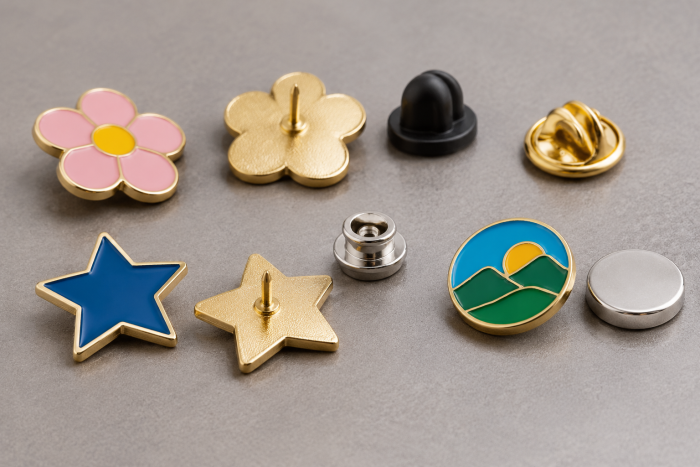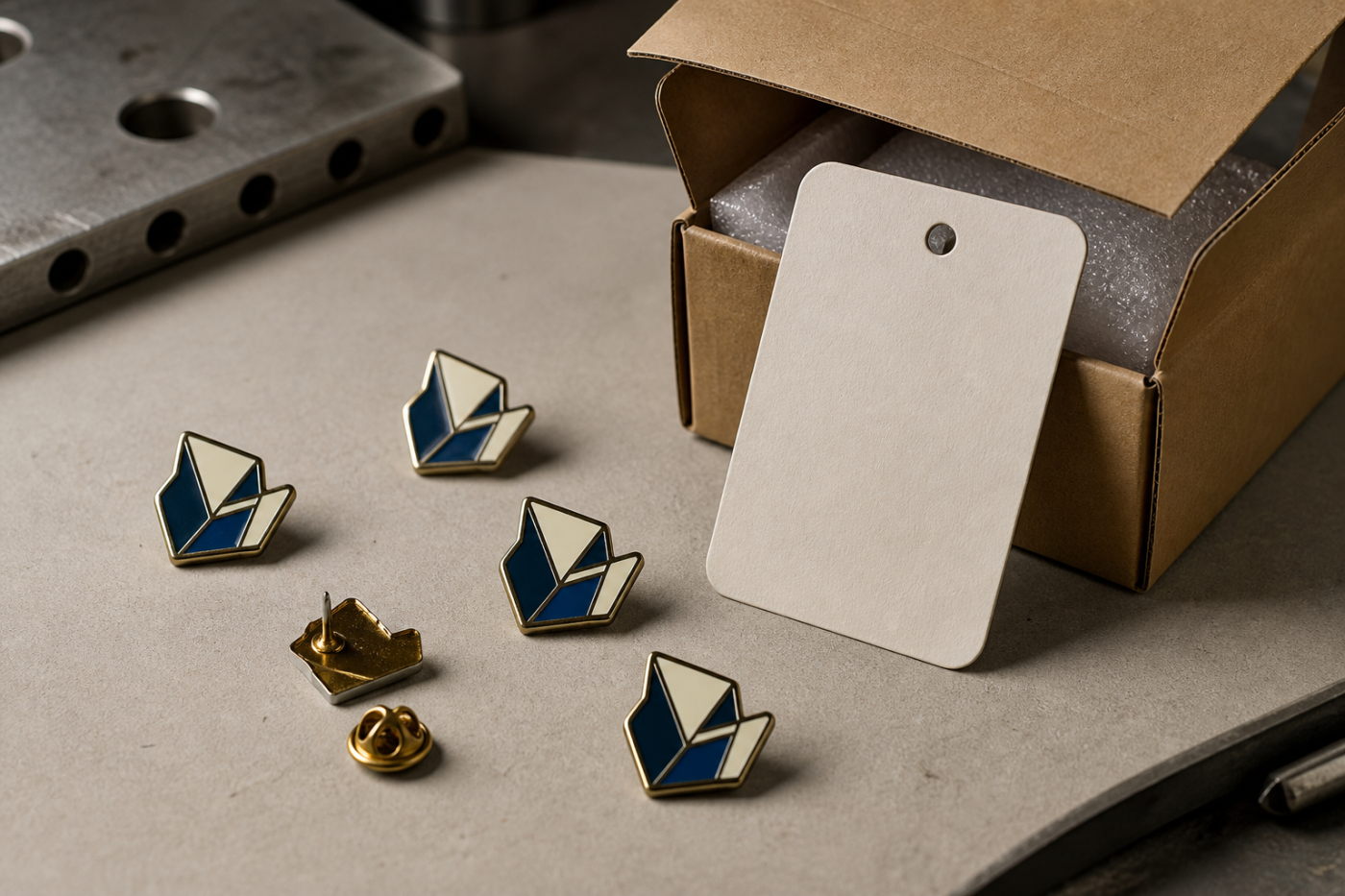
How much does it cost to make enamel pins? For a made-to-order run, add the setup charges, finished pin price, packing, inspection and delivery, then divide by the number of pins you expect to receive and accept. Start with the same drawing, quantity per design and destination for every vendor. A lower production price can lead to a higher delivered cost once you include a separate die charge, backing-card insertion or freight.
Separate Tooling, Unit Price and Delivery
One-off charges cover work tied to a particular design or order, such as making a die or mold or producing a physical sample. Recurring charges usually follow the number of pieces, such as the finished pin, its clutch and individual packaging. Other charges apply to the order or shipment as a whole, such as a separately booked inspection or freight. Vendors may bundle these costs differently, so record what each line includes before adding it to your worksheet.
Copyable quote worksheet
- Die or mold. Record the charge per design and which variants it covers. Confirm whether the amount is billed separately, included in the unit price or credited later under a stated condition.
- Artwork proof. Record any proof or revision charge and what the proof will show, including the front, back, color areas and attachment positions where relevant.
- Physical sample. Record the sample charge and sample courier cost. Confirm whether the sample represents the specified material, process and finish and whether any sample charge will be credited against the order.
- Production. Record the quantity and unit price per design, plus whether enamel, plating, posts, clutches and assembly are included.
- Packing. Record the price for bags, backing cards or boxes, then check whether inserting each pin into its card and packing it into the carton are included.
- Inspection. Record any separately billed inspection and who pays for a reinspection if the lot needs corrective work.
- Delivery. Record the shipping method, destination, quoted trade term and named place, and any separately billed transport or handling.
- Taxes and duties. State which import duties, brokerage fees and taxes are included, excluded or still unknown.
Give each line an amount or mark it as included, excluded or pending. If a supplier bundles card insertion with production, count it once. If a quote lists a sample credit, apply it only where the order meets the stated condition. Keep a deposit column if cash is due before the balance. The payment schedule affects when you pay, while the included charges determine the total.
Compare quotes in one currency and to the same receiving point using the quoted commercial terms. A freight line by itself gives you little information about who pays import clearance, duties or the last leg of delivery. If those charges fall to you, add them to both comparisons on the same basis. State how you handle recoverable taxes, and keep them visible in the cash requirement if you need to pay them upfront. Leave unknown charges open until you have a figure or a defensible estimate.
See Which Artwork and Finish Choices Change the Quote
Quote from a dimensioned drawing as well as the source artwork. Give the finished width and height, body thickness if specified, and the location of any internal cut-outs. The pin’s longest dimension alone leaves the vendor to infer how much material the shape uses, how narrow its connecting sections are and how the opening should be formed. Ask the vendor to identify the proposed base metal and forming route. A flat logo may be reviewed for die striking, while an irregular shape or deeper relief may warrant a zinc-alloy die-cast proposal. Record each proposed route as part of the offer.
Mark the color references and the boundaries between colors. Small isolated enamel cells, narrow metal dividers and fine lettering may prompt a vendor to request artwork changes or propose a different decoration method. Specify the plating color and sheen, including which faces or edges must match the reference. On the back, specify the type, count and location of posts and clutches. For a uniform pin, identify the garment material and where the pin sits so the vendor can review the backing against the way it will be worn.
Quote two finishes from the same drawing
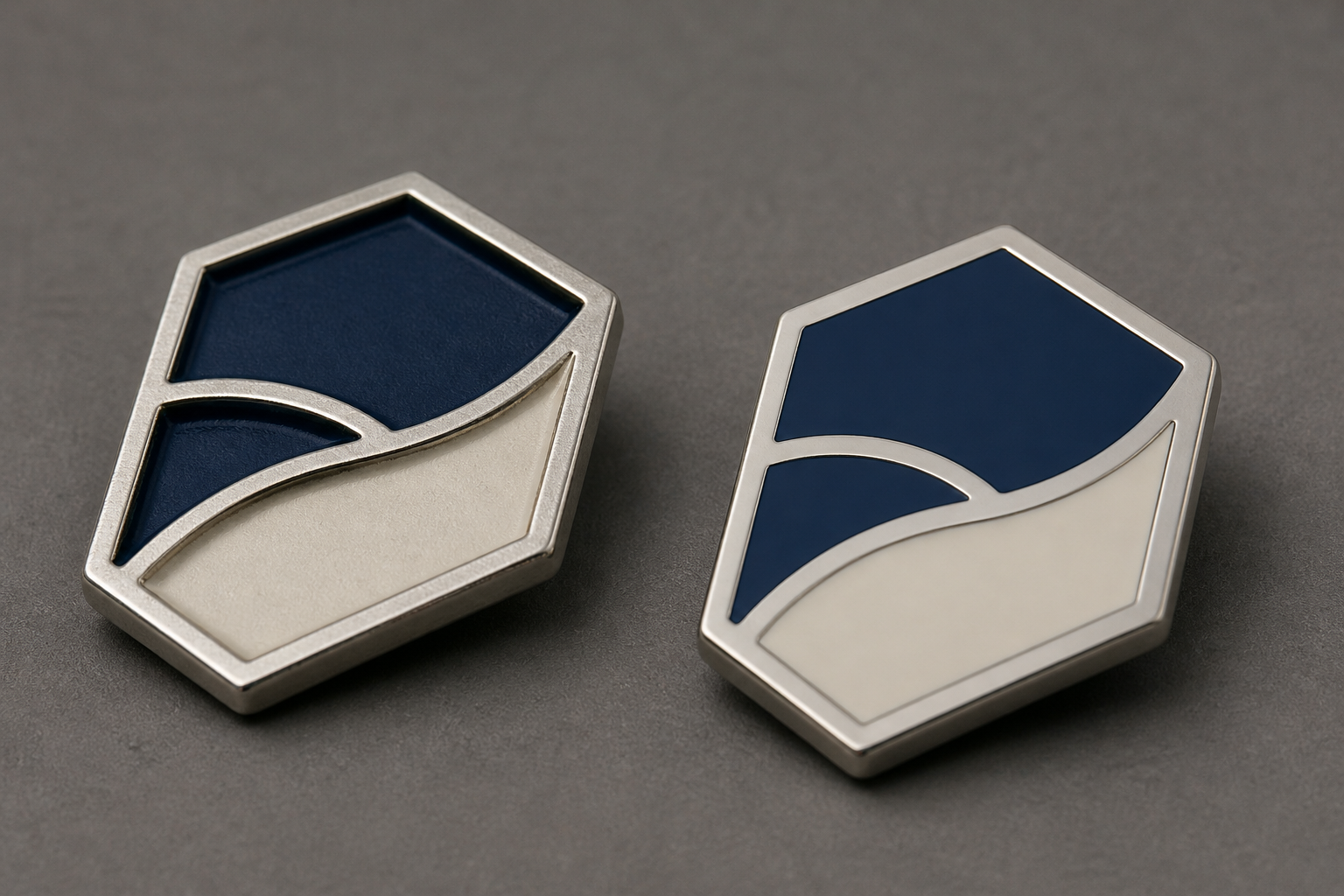
Take a corporate lapel pin with a two-color graphic, a single post and a butterfly clutch. Send one artwork revision with the finished dimensions, outline, color map, plating appearance and packing fixed. Ask for Option A in soft enamel, with recessed color and raised metal borders, and Option B in imitation hard enamel, with color finished flush with the borders. Ask the vendor to identify any changes in tooling, base metal or finishing needed for either option. If both can use the proposed construction, the two prices show the finish choice on a comparable basis.
Ask for the price of a physical finish sample for each option if you need to judge the surface before approval. Use the samples to check whether the smallest detail stays legible, how the plating looks in ordinary light and whether you prefer raised borders or a flush face. A digital proof can settle layout questions before you pay for a sample. For a closer look at these surface differences, see the finish tradeoffs behind a hard or soft enamel quote.
Keep any redesign on its own quote line. Removing an internal opening, merging small enamel cells or switching from a mounted backing card to an individual bag changes what you buy. If you request a price concession, ask for it against the original specification and confirm that the supplier has held the artwork, construction and packing constant. There is no percentage difference that applies to every soft versus imitation hard enamel order. The effect depends on the artwork, manufacturing route, finishing work and what the quoted unit price includes.
Compare Quantity Breaks on the Same Specification
Ask each supplier to price the same quantities per design using the same approved or proposed specification. Fix the finish, attachment, card insertion, destination and shipping service for the comparison. If a vendor proposes a different carton arrangement or a slower shipping service at the higher quantity, ask for that change to be identified so you can see how much of the difference comes from the quantity break.
Hypothetical enamel pin pricing worksheet
The figures below are hypothetical USD inputs for illustrating the calculation. Both options use the same finished pin and include the same clutch. Every pin is inserted into an individual backing card. Proof approval is included, and the example assumes no separate sample or inspection charges. Freight is included in the subtotal below. Duties and taxes are excluded and would be added where applicable.
| Cost line | 300 pins | 600 pins |
|---|---|---|
| Tooling | $120 | $120 |
| Production including clutch | 300 × $1.80 = $540 | 600 × $1.40 = $840 |
| Backing card and insertion | 300 × $0.25 = $75 | 600 × $0.25 = $150 |
| Transport | $90 | $130 |
| Order total before duties and taxes | $825 | $1,240 |
| Cost per delivered pin if all are accepted | $2.75 | $2.07 |
The 600-pin order costs $415 more before duties and taxes. Its unit cost is lower because the production price drops and the same tooling charge is spread across twice as many pins. Use the total to decide whether the higher purchase fits the budget and whether you have a use for the extra stock. If your program needs only 300 pins and has no planned use for the rest, the 300-pin option uses less cash.
If freight is pending, compare the confirmed subtotals first. Then add a low and high estimate for the same route and service using the available carton count, dimensions and weights. Keep the freight assumptions visible and update the cost per unit before approval. If you budget separately for third-party inspection, add that expense once. If you also model a shortfall in usable pins, show the assumed accepted quantity separately and state whether you expect replacements or credits. Use an agreed remedy or a documented planning assumption for this calculation.
For the order review after delivery, divide actual comparable spend, net of any applicable credits, by the number of pins received and accepted against the agreed criteria. For the purchase decision before delivery, use the agreed delivery quantity as your baseline and show any shortfall scenario alongside it. That distinction lets you compare written offers without treating a planning allowance as a measured defect rate.
Send a Quote Brief Vendors Can Price Consistently
Send the same written brief and attachments to every vendor. Label the drawing revision and list separate quantities for each design or colorway. If you need a recommendation on the base metal, forming route or attachment, ask vendors to state what they priced and identify any alternative as a separate option. Have them carry the revision and option name through to the quote and approval sample.
Equivalent-basis RFQ checklist
- Attach the editable artwork and a dimensioned front and back drawing. Identify the revision, finished width and height, body thickness if specified, relief, cut-outs and any important edge details.
- Give the quantity for each design or colorway and the quantity breaks you want quoted. Ask the supplier to identify which variants would require their own tooling or setup charges.
- Call out the enamel finish, color references, plating and visible wear surfaces. Describe where the pin will be worn, the garment or other mounting surface, and the post and clutch requirements.
- Request a proof and specify whether you need a physical preproduction sample. Identify the sample revision to hold as the inspection reference and the checks that matter, such as dimensions, color placement, finish appearance and backing function.
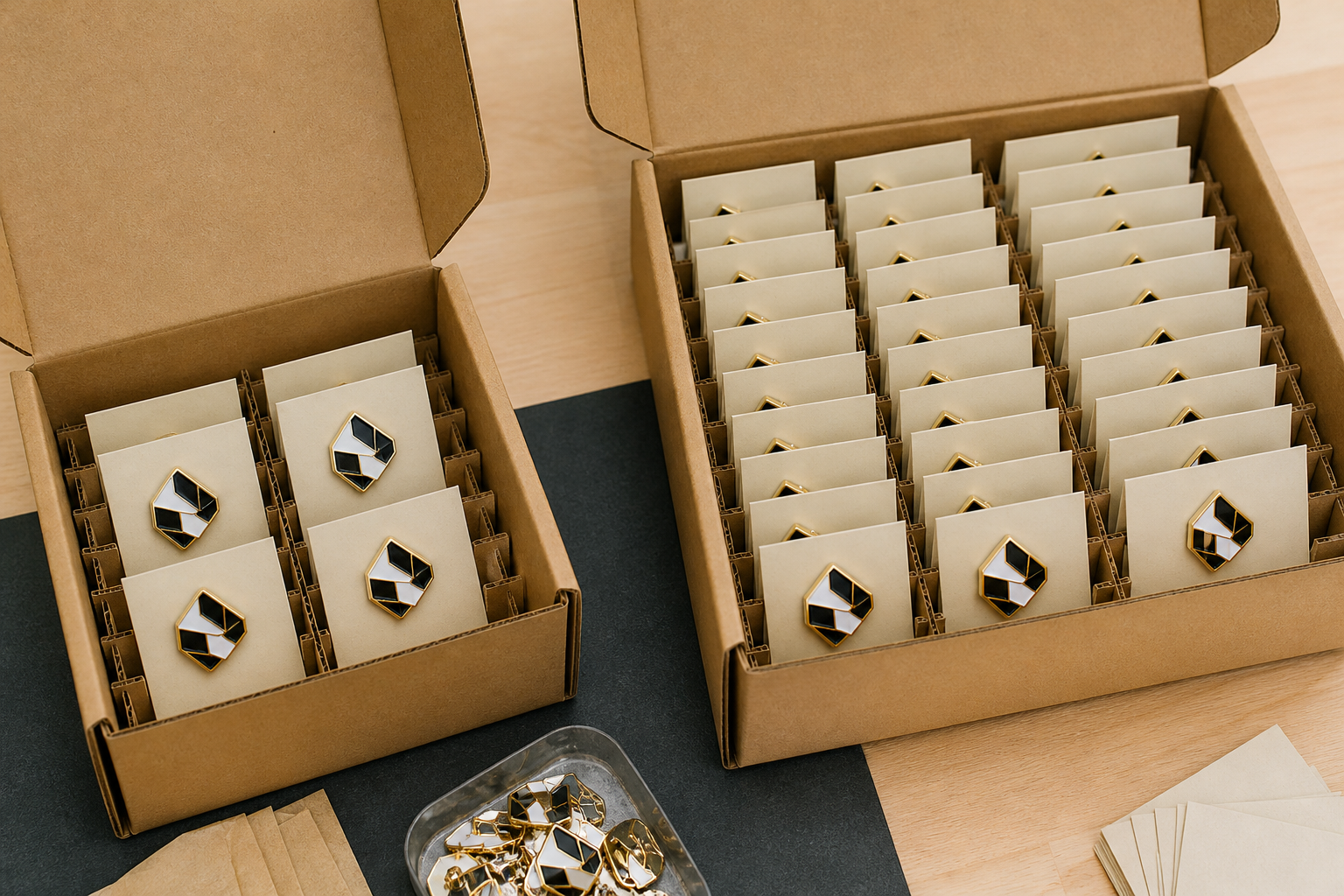
- Specify the packing format, including individual bags, mounted cards or boxes, and whether card artwork and insertion are within scope.
- Give the destination, postal code and needed-in-hand date. Ask for the quoted trade term and named place, the shipping method and the artwork, sample and dispatch milestones that support the requested date.
Before authorizing tooling, confirm who owns it, who keeps it, and whether a repeat order can use it without a new tooling, setup or refurbishment charge. Ask what happens if you change a color, add a cut-out or move an attachment. Confirm who approves the physical sample and what the parties will do if the finished lot differs from the agreed reference. Close out exclusions such as sample freight, card insertion, inspection, duties and final delivery before approving the purchase order.
For a broader checklist, review the information to include in a metal manufacturing enquiry. Once you have the revision, quantities and delivery requirements ready, you can send your design and quantity for a project quote.
Frequently Asked Questions
Can several enamel colorways share one die?
They may be able to share it if the outline, relief, color-cell boundaries and tooling-dependent back details stay the same. Ask the vendor to confirm reuse in writing and itemize any separate color setup for each variant.
What should I do if a vendor offers a price with tooling included?
Record tooling as included and use the quoted total as it stands. Ask for a repeat-order quote for the same revision and quantity so you can see whether the price changes when the existing tool is reused.
Can I get a useful estimate before the artwork is final?
Yes. Send the current concept, approximate finished dimensions, intended finish, quantity and packing needs. Ask for an estimate tied to those assumptions, then request an updated quote once the vendor has reviewed the final artwork and confirmed the production route.
Can I use the proof to approve enamel color and plating?
Use the digital proof to approve color placement and the written finish callouts. If the actual shade, sheen or surface texture matters, approve a physical sample and identify it as the reference for production inspection.