
Introduction: The Power of Hang Tags and Barcoding for Retailers
In today’s competitive retail environment, hang tags and barcoding for retailers have evolved far beyond simple price identifiers. They are essential tools that not only streamline inventory processes but also boost brand recognition and customer trust. Whether you’re managing a boutique, a franchise, or an e-commerce store, mastering these tools can transform your operations and customer experience. Understanding the latest trends in hang tag design and barcode technology helps your brand stand out while keeping logistical headaches at bay.
What Are Hang Tags? Definition and Retail Significance

Hang tags are small information cards attached to products, especially in fashion or luxury settings. Traditionally used for pricing, they’ve become a pivotal touchpoint for brand storytelling, product care instructions, and even authentication. In product-packed environments, eye-catching, well-crafted hang tags help products stand out and communicate essential information swiftly.
Brand Identity and Storytelling Through Hang Tags
A compelling hang tag introduces customers to your brand narrative at a glance. Elements like logo placement, typography, and brand colors influence perceptions before a product is even handled. Brands that craft a memorable visual presence on tags help shoppers emotionally connect, supporting premium positioning, customer loyalty, and even word-of-mouth referrals.
Key Functions of Hang Tags in Retail
- Product Identification: Shows style, size, or collection for quick sorting.
- Communicating Value: Explains materials, eco-credentials, or special features.
- Instructions & Compliance: Offers care directions or legal disclosures.
- Security: Some hang tags integrate anti-theft or authentication tech.
Creative Hang Tag Design Options for Every Brand
Retailers today balance functionality with creativity. Options range from minimalist matte tags for haute couture, to vibrant, foil-stamped versions for children’s products. Materials span recyclable kraft board, textured papers, faux leather, and even metal. Die-cast metal hang tags are gaining popularity for luxury brands, adding perceived value and resilience in the process.
Material Choices: Why Quality Matters
Choice of tag material affects customer impressions and sustainability goals. Thick, virgin cardstock signals luxury, while recycled papers show eco-consciousness. For high-end and durable tags, manufacturers like Gairun recommend premium metals or specialty alloys—especially where the tag doubles as a collectible or brand marker.
Printing Methods: Standout Techniques for Modern Hang Tags
Modern techniques go beyond standard digital printing. Embossing, foil-stamping, UV spot gloss, letterpress, and custom die-cutting add tactility and detail that distinguish your brand. For example, rack-plated metal tags provide mirror finishes and remarkable weight, ideal for premium placements.
Regulatory and Care Information: Getting Compliance Right
In regions with strict consumer safety laws, hang tags must supply accurate fiber content, care instructions, and country of origin. Failing to meet these standards can lead to costly recalls. Integrated barcodes reduce labeling errors, while printing in multiple languages supports global distribution.
Hang Tags as a Marketing Tool
Beyond information, hang tags encourage further engagement. QR codes can redirect shoppers to exclusive videos, online shops, or loyalty programs. Seasonal promotions, limited edition labeling, or social media handles placed on tags help drive ongoing brand interaction.
Barcoding: The Engine Behind Retail Efficiency
Barcodes encode vital product data in a compact, scannable format. In retail, they’re central to inventory, point-of-sale, and logistics. The seamless synergy between physical tags and digital inventory ensures you never lose track, even during hectic sales seasons.
Types of Barcodes Commonly Used in Retail
- UPC (Universal Product Code): Most common for consumer goods.
- EAN (European Article Number): Standard across Europe and global e-commerce.
- QR Codes: Multi-dimensional; can store web links and marketing data.
- Code 128: Used for logistics and warehousing due to density.
How Barcoding Improves Inventory Management
Barcoding allows real-time, accurate inventory control. Sales, returns, and restocking events update instantly, minimizing errors from manual entry and reducing shrinkage. Systems can trigger automatic reorders, or alert you to fast- or slow-moving stock, saving both money and time.
Barcoding and Sales Analysis: Unlocking Actionable Insights
Scannable barcodes yield a trove of data points. Retailers can assess which products drive the most revenue, track sales by region, time, or channel, and forecast trends. Integrating barcode data with CRM and ERP systems enables smarter, data-driven decision making.
Operational Efficiency: Barcode Scanning in the Retail Ecosystem
Barcode scanners speed up checkout, decrease human error, and free up sales staff for customer support. Integration with mobile apps, hand-held scanners, and omnichannel POS systems is now standard, allowing for seamless in-store and online synchronization. Barcoded returns and exchanges make reverse logistics a breeze.
Innovative Barcode Technologies: What’s Next?
2D barcodes (like QR codes) can now carry marketing content, warranty details, or unique product authentication. RFID hang tags—a hybrid of visible tags and wireless technology—allow batch scanning, which is indispensable in fast-moving environments like fashion or footwear. For high-value products, metal serial number tags offer tamper-resistance and anti-counterfeit benefits.
Integrating Hang Tags and Barcoding: A Unified Brand and Inventory Solution
Combining striking hang tags with discreet barcode integration avoids clutter and maintains design integrity. Some brands hide barcodes on the reverse, or feature custom QR code tags as a focal point, blending function and style. This dual-use transforms each product into a portable billboard—trackable, beautiful, and memorable.
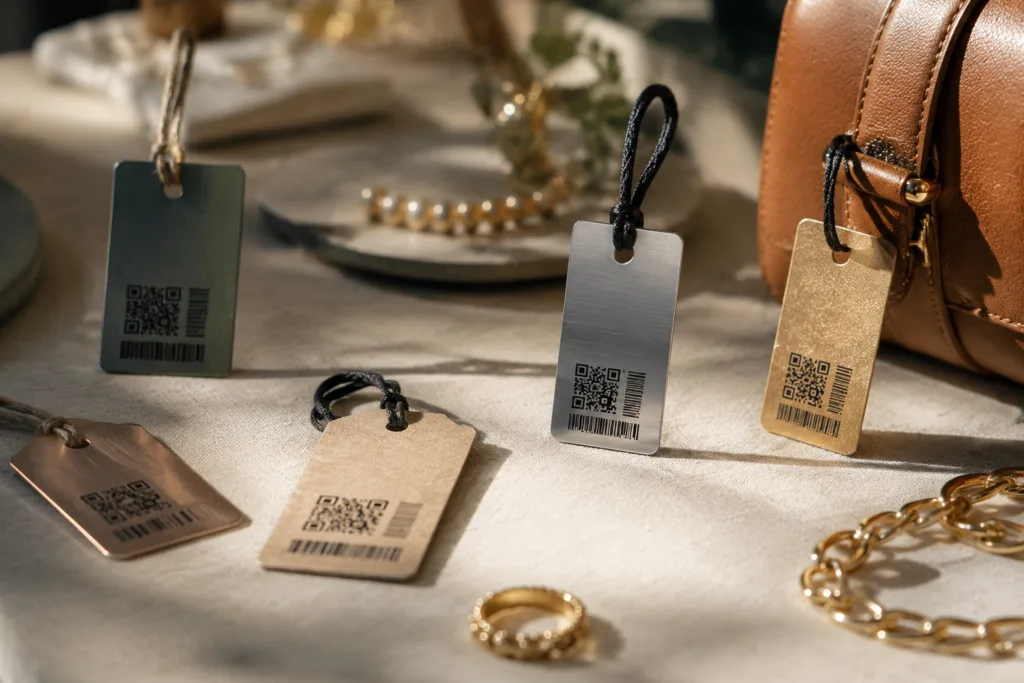
Examples of Creative Hang Tag & Barcode Solutions
- Apparel: Minimalist white tags with gold-embossed branding and small UPC stickers on the reverse.
- Accessories: Laser-engraved metal hang tags with QR codes for authenticity checks.
- Giftware: Folded, eco-friendly kraft paper tags featuring care symbols, barcodes, and inspirational quotes.
- Jewelry: Discreet micro-tags with unique serial numbers etched for security.
Why Brand Consistency Matters in Hang Tags and Barcoding
Every tag, sticker, and barcode should support your overarching brand message. From color palettes and layout to logo positioning, maintaining visual and informational consistency nurtures trust—especially vital for luxury and mid-premium sectors. Even barcodes can align with your brand tones, using custom-printed backgrounds or subtle effects.
Choosing the Right Hang Tag and Barcode Supplier
For retailers aiming for high standards, supplier choice matters. Look for partners with expertise in advanced materials, precise printing, and tight quality controls. Manufacturers like Gairun push the industry forward with rigorous testing, including salt spray and pull-force tests, ensuring every tag performs flawlessly and looks spectacular.
Implementing Barcode Systems: Practical Retail Steps
- Review Your Inventory Needs: Choose a barcode type (UPC, EAN, custom QR) that fits your sales channels.
- Integrate with POS Software: Ensure barcode data flows from store floor to backend within your chosen system.
- Train Your Team: Educate staff on tag handling, scanner use, and system troubleshooting.
Maintaining Visual Appeal and Functionality
Your hang tags can showcase both beauty and utility. Use clear visual hierarchy: brand elements lead, and technical data—like barcodes or serial numbers—play supportive roles. Transparent sticker overlays or elegantly folded tags let you separate key information, preserving a clean, appealing look.
Environmental Considerations: Sustainable Tagging and Barcoding
Eco-focused retailers use FSC-certified papers, soy-based inks, or recycled metals for their tags. Water-soluble adhesives and compostable strings ensure hang tags minimize landfill impact. For barcoding, digital solutions like e-labeling replace traditional stickers, further reducing waste. Want more ideas? See brilliant eco-friendly packaging tips for metal gifts that protect both product and environment.
Enhancing Customer Experience With Hang Tags and Barcoding
Thoughtfully designed tags and fast, accurate barcoding create a seamless shopping journey. Customers find product size, composition, and care data instantly. They can scan a QR code for more information or promotions on the spot, increasing engagement and satisfaction levels.
Future Trends: Smart Tagging, NFC, and Beyond
Smart tags embed NFC chips to enable interactive brand experiences or product registration with a simple tap. Dynamic barcodes update in real-time, adapting to promotional pricing or campaign launches. As technology evolves, expect tags to become both data-rich and more visually adaptable.
Case Study: Elevating Brand Value Through Tag Quality

A high-end fashion retailer upgraded from paper to engraved metal hang tags with integrated QR codes. The weight and feel of each tag lifted customer perceptions, while embedded barcodes powered smooth operations. The result: higher conversion rates and reduced inventory errors—a win-win for branding and logistics.
Hang Tags, Barcoding for Retailers: Essential Takeaways
For modern retailers, hang tags and barcoding aren’t merely packaging afterthoughts—they’re strategic assets. When brand identity and operational efficiency converge, customers notice the difference and operational friction melts away. Retailers gain sharper inventory insight, stronger brand recall, and smoother omnichannel performance.
Frequently Asked Questions
What are the benefits of using hang tags for my retail brand?
Hang tags enhance your brand identity, provide essential product details, and create a professional, memorable impression that customers associate with quality and reliability.
How does barcoding help manage retail inventory?
Barcoding automates inventory tracking by recording each sale and return instantly. This improves stock accuracy, reduces shrinkage, and helps with forecasting and automatic reordering.
Can I combine creative hang tag designs with functional barcoding?
Yes! Clever design places barcodes discreetly on the reverse, integrates QR codes for engagement, or uses custom materials that blend beauty with function without sacrificing scan accuracy.
What materials are recommended for luxury hang tags?
Premium metals, engraved alloys, and heavy cardstocks are ideal for luxury tags, offering tactile quality, lasting durability, and space for crisp branding elements.
Are there eco-friendly options for hang tags and barcodes?
Absolutely. Choose recycled or FSC-certified papers, water-based inks, compostable fasteners, and digital e-labeling instead of stickers for a greener, sustainable approach.
Do hang tags and barcodes affect customer experience?
Well-designed tags and efficient barcoding speed up shopping, improve information clarity, and strengthen brand trust—all contributing to a positive and memorable customer journey.
Related Reading
- 8 Genius Ways to Make Your Metal Gifts More Eco-Friendly
- 25+ Backing Card Ideas to Elevate Your Pin Branding
- How to Choose the Best Polybags for Retail Packaging
- Retail-Ready Packaging Strategies That Boost Keychain & Pin Sales
- 7 Crucial Mistakes to Avoid When Ordering Pins for Retail
- 7 Benefits of Gift Boxing for Corporate Awards That Transform Recognition