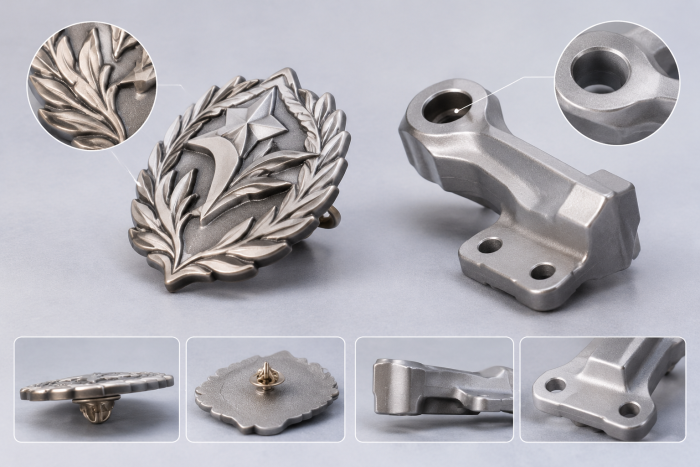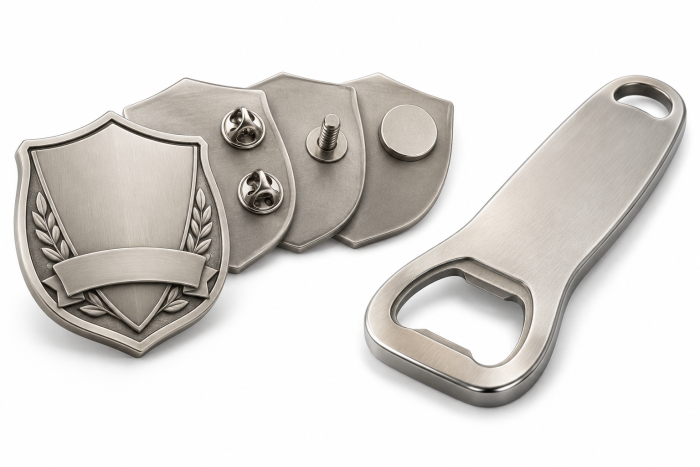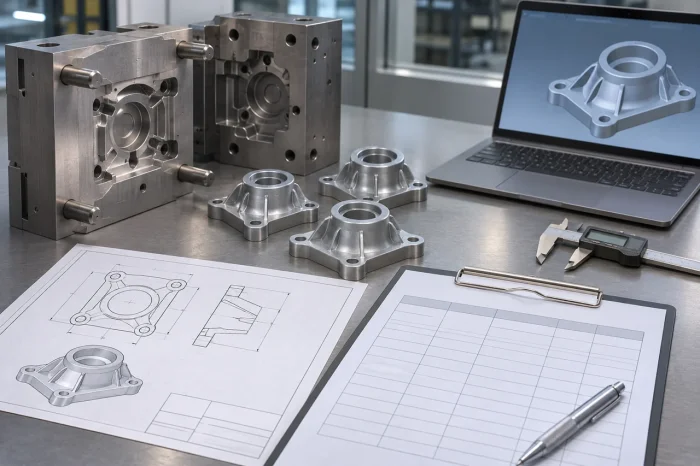
Choose an early machined or printed model for concept, proportion, and selected fit questions. Choose a production-tool sample when the decision depends on the intended zinc die-casting geometry, relief, decoration, or construction. A Custom Metal Sampling and Approval process should identify the question each sample is meant to answer; the word “prototype” alone does not define its evidence.
A zinc die casting prototype is useful only for the features and questions represented by its process and actually examined. A sample that looks acceptable may still leave attachment fit, assembly, use conditions, finish criteria, or later changes unresolved. The practical task is to select the route, agree on a reference, and record the limits of the decision.
What a zinc die casting prototype can prove
An early model can help a team discuss overall silhouette, visual balance, approximate proportions, and selected fit questions. Those checks can clarify the concept before the buyer commits to a production-intent route. They do not, by themselves, show how the intended zinc die-casting construction will represent its geometry or decoration.
A production-tool sample is more relevant when approval depends on the proposed casting route. It can let the buyer assess a buyer-specific part made from the proposed artwork and construction, including its outline, relief relationships, and decoration on the intended part. Its value comes from what it represents—not from the label “production sample.”
In either case, define the evidence boundary before approving anything. A visual comparison is not automatically a dimensional decision; a fit check does not necessarily assess the complete assembly; and an accepted sample is not blanket authorization for bulk production or later changes. Gairun describes custom samples as reviews of buyer-specific proposed appearance and construction, separate from bulk-production authorization.
Before selecting a route, identify the details that matter: dimensions, thickness, relief, metal borders, color areas, attachments, component positions, and proposed production method. The relevant questions vary with the part. If the decision concerns an attachment, include its position and structure in the reference rather than judging only the front appearance.
Match the sample route to the buyer's question
Start with the decision, then match the sample to the evidence needed. An early model can support concept discussion and selected fit review. When the answer depends on the intended zinc route, request evidence from that route rather than assuming another process represents it. Gairun lists zinc-alloy die-casting, stamping or die-struck forming, photo etching, and hydraulic high-relief forming; route choice depends on material, shape, relief structure, and decoration plan.
| Buyer question | Observable input | Initial sample choice | What the result can support | Variable that could change the choice |
|---|---|---|---|---|
| Does the silhouette and proportion read as intended? | Overall outline, major elements, front and back views | Early model | Concept discussion and proportion decisions | Whether relief, surface, or production-route appearance is also being judged |
| Does the part fit a selected attachment or mating position? | Attachment location, adjoining component, relevant dimensions | Early model for a limited fit question | Selected position or interface discussion | Whether the final construction, moving parts, or actual attachment must be assessed |
| Are fine recessed details legible in the intended construction? | Small text, close spacing, shallow or fine recessed artwork | Production-tool sample if the decision concerns the intended casting | Review of relief and decoration on the proposed part | Artwork scale, relief design, and finish requirements |
| Does broad raised or irregular geometry suit the design? | Large raised forms, formed outline, irregular body | Production-tool sample for casting-dependent shape | Review of the proposed outline and relief hierarchy | Attachment structure, component position, and confirmed route |
| Does decoration work on the intended part? | Color areas, plating appearance, borders, relief transitions | Production-tool sample when the casting and finish are central | Comparison with agreed artwork and finish criteria | Whether the sample uses the specified finish and controlled artwork |
For artwork with fine recessed details, small text, or closely spaced elements, begin with an early model if stakeholders need to settle layout or selected fit. Move to a production-tool sample if approval depends on relief representation, edge definition, or decoration on the intended casting. Artwork scale, relief design, and finish requirements may change that recommendation.
For a broad raised feature or irregular outline, an early model can still help stakeholders discuss proportion. A production-tool sample is the more relevant choice when the decision depends on the casting-specific shape or relief. Attachment structure, component position, and the proposed production method could alter the route. Gairun identifies formed outlines, irregular bodies, and dimensional relief as reasons zinc-alloy die-casting may merit consideration for pins, not as a universal suitability rule.
A production-tool sample is not, by itself, functional, compliance, shipment, or bulk-production approval. Keep those decisions separate unless the relevant requirements were represented and explicitly examined.

What a production-tool sample adds
A production-tool sample connects a buyer’s artwork and proposed construction to a trial article made through the intended route. Gairun states that relevant production artwork is reviewed and accepted before tooling begins. That artwork control point is distinct from reviewing the resulting sample: one establishes the reference, while the other allows comparison with the article.
Gairun describes its mold-making and CNC engraving work as defining shape, dimensions, thickness, and relief. After trial forming, its first article is compared with the approved drawing. Gairun’s stated comparison includes dimensions, thickness, and relief detail against the approved 1:1 drawing; project tolerances must be specified separately. Do not infer a tolerance or measurement capability from that description.
For the buyer, the useful observations may include the formed outline, relief hierarchy, thickness decisions, borders, attachment area, component position, and the relationship between shape and decoration. The sample can help resolve those questions when its artwork and construction match the controlled reference. It does not establish a threshold that the buyer never specified, nor does it prove features that were absent from the sample.
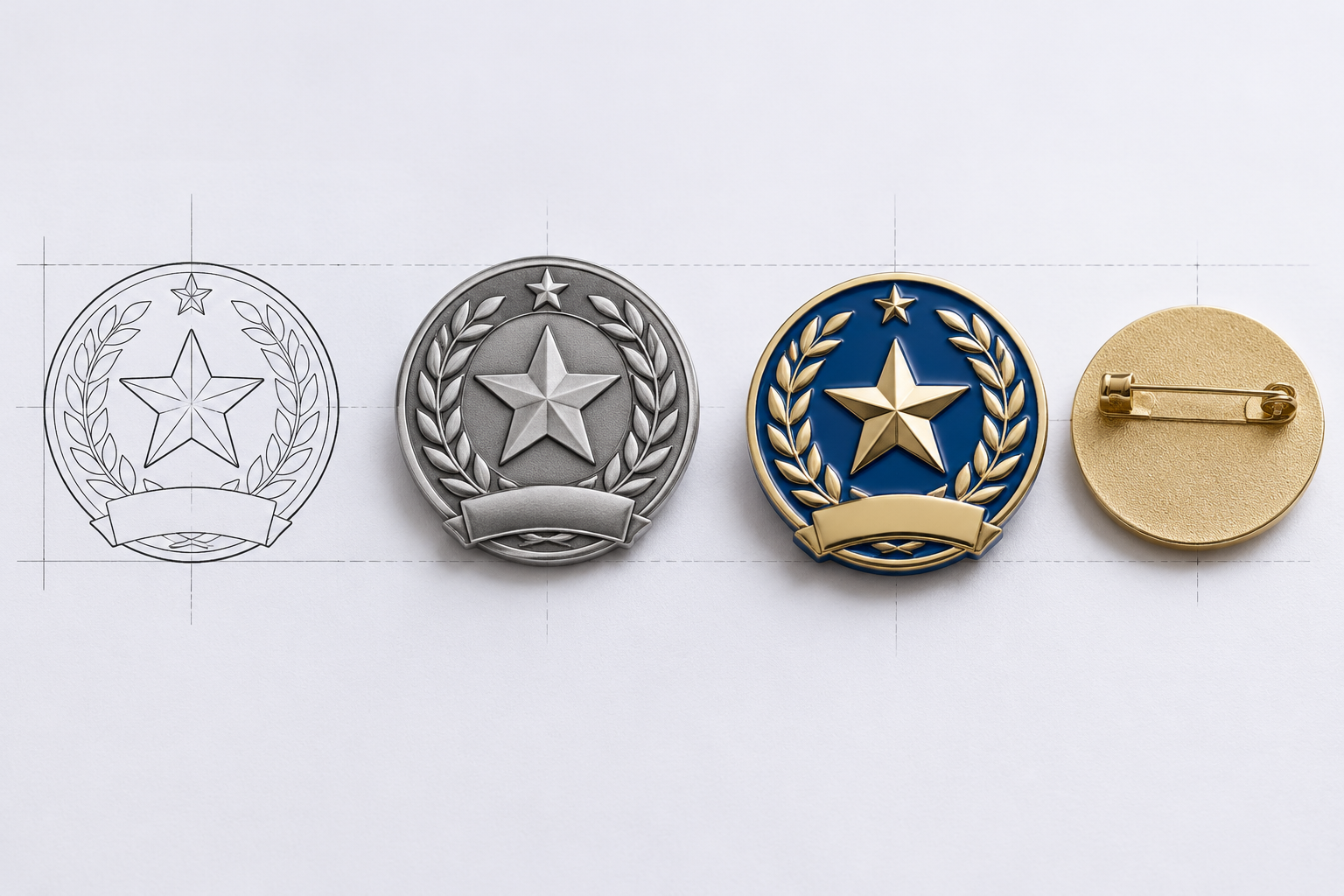
Distinguish this buyer-specific sample from a visual render or a stock sample. A custom sample can represent the proposed buyer artwork and construction. A stock sample can demonstrate general workmanship, finishes, construction, or packaging, but not the buyer’s custom design. A drawing or render can communicate a design direction, but the buyer should not treat it as evidence from a physical part made by the intended route.
Bound approval to the reference examined. If the artwork, construction, finish, or another relevant specification changes, the earlier decision may no longer answer the same question. Likewise, one first article does not establish that every later unit will match unless the parties define the applicable acceptance criteria and production controls. For process context, see Zinc Die Casting Manufacturing; the proposed route still needs confirmation for the actual design.
Keep appearance and fit separate from other validation
Use separate evidence questions rather than treating “approved sample” as a single universal status:
- Geometry and relief: Compare the outline, thickness decisions, borders, and raised or recessed hierarchy with the controlled drawing.
- Decoration and surface: Compare color placement and plating appearance with the approved artwork and finish criteria. Gairun states that plated parts are checked for color difference and plating adhesion, and colored parts for overflow and insufficient color. These are process checks, not universal acceptance guarantees; define the applicable criteria and methods for the order.
- Attachment and assembly: For a pin or badge, examine attachment area and position as well as the front. For connected or moving parts, state the movement, alignment, connection points, and visible clearances that matter.
- Use or destination requirements: Specify any relevant use condition or destination requirement separately. Include testing or documentation only when it applies to the product and buyer’s specification.
A front view that looks right does not establish that a rear attachment is correctly positioned. Similarly, a static sample does not establish the performance of an assembled system. Gairun’s pre-tooling engineering review may cover attachments and component positions; supply those details before tooling when they affect the decision. The buyer should identify the particular fit or assembly question and what would count as an acceptable result.
For decoration, agree on the reference and the acceptance criteria before treating an appearance decision as final. The sample can be compared with specified artwork, color areas, and finish expectations. Avoid relying on broad terms such as “good color” or “correct plating” when the decision requires a defined reference or method. If a destination-specific test or document is required, identify it explicitly rather than assuming that appearance approval covers it.
Record exactly what the sample approval covers
Make the approval record concise enough to use, but precise enough to identify what the sample represents. Include:
- Sample route and purpose: concept, selected fit, appearance, or production-tool review.
- Controlled artwork or drawing, plus the relevant dimensions, thickness, and relief details.
- Material and process assumptions, finish, color areas, attachments, and component positions.
- The specific questions examined and the result for each question.
- Open items or changes not represented, such as revised artwork, finish, attachment, packaging, destination, or required testing.
Use status labels only when they match the evidence examined. “Fit review” should name the interface checked; “appearance review” should name the artwork and finish reference; “production-tool review” should identify the proposed construction. Keep bulk-production authorization separate. Gairun describes buyer approvals as distinct control points along its service path, from requirements and artwork review through sample planning when selected and later production coordination.
For a request for quotation, provide product type, quantity, dimensions, artwork, design variants, finish, color treatment, attachments, packaging, destination, and required schedule. Add material or process preferences when known. Unresolved technical choices can be marked for review rather than presented as final specifications. Gairun accepts vector artwork, a usable PDF, or a hand-drawn concept for artwork review; include dimensions, wording, color references, front and back instructions, attachments, and intended product format where available. A file is not automatically production-ready simply because it can be opened.
When the sample is meant to answer a narrow question, state what remains outside it. A sample that checks proportion may not represent finish. A sample that represents front decoration may not represent attachment construction. A stock sample may be useful for discussing general workmanship or finish, but it cannot prove the buyer’s custom design. For an inquiry, Request a Manufacturing Quote with the artwork, specifications, and unresolved decisions clearly identified.
Choose the sample that answers the decision
An early model is appropriate for concept, proportion, and selected fit questions. A production-tool sample is the more relevant choice when a decision depends on intended zinc die-casting geometry, relief, decoration, or construction. Send the artwork, intended process, key dimensions, relief, attachments, finish, and the exact question the sample must answer. Record what was examined and what remains unresolved. For material and design context, see Zinc Die Casting Design and Alloy Selection.
Frequently asked questions
When is a machined prototype more useful than a zinc die casting prototype?
It is useful for early concept, proportion, or selected fit questions when those can be assessed on the model. Use a sample made by the intended route when the decision depends on zinc die-casting geometry, relief, decoration, or construction.
Can a 3D-printed model prove that a zinc part will cast as intended?
No. It can support selected visual or fit discussions, but it does not represent a sample made through the intended zinc die-casting route. Choose the route according to the evidence the decision requires.
What should a production-tool sample be compared with?
Compare it with the controlled artwork or drawing and the agreed construction details, including relevant dimensions, thickness, relief, finish, attachments, and component positions. Define any acceptance criteria separately.
Does approving a production-tool sample authorize bulk production?
No. Sample review and authorization for bulk production are separate decisions. State exactly what the sample approval covers and obtain the required production authorization separately.
Can a stock sample prove the appearance of a custom zinc part?
No. A stock sample may demonstrate general workmanship, finishes, construction, or packaging, but it does not represent the buyer’s custom design. Use a buyer-specific sample when the custom artwork or construction is the decision in question.
Which design details should be agreed before requesting a production-tool sample?
Identify the controlled artwork or drawing, dimensions, thickness, relief, material and process assumptions, finish, color areas, attachments, component positions, and the specific questions to examine. Mark unresolved choices clearly.