Custom Zinc Die Cast Industrial Components
Review zinc component projects for housings, gears, connectors and thermal structures, with clear guidance on loads, interfaces and qualification needs.
Discuss your requirements
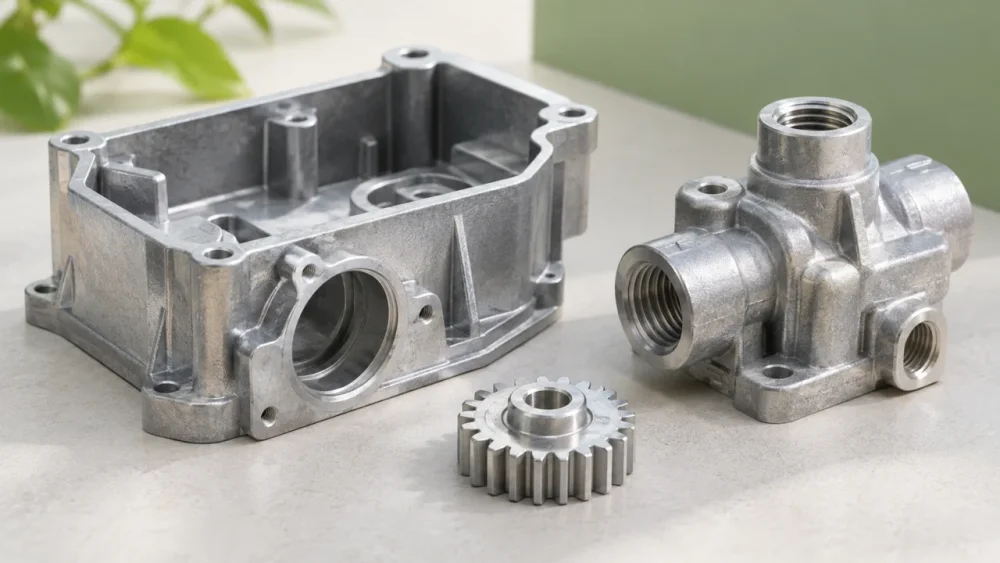
Zinc die casting is an option for industrial components when the geometry, operating environment and production requirement suit the material and process. A housing, small gear and valve body may all be cast shapes, but they have very different acceptance criteria. Begin with the component's duty in the assembly, then decide whether a zinc alloy casting is a sensible manufacturing candidate.
Gairun welcomes project information for a manufacturing suitability review. The product directions below describe engineering considerations for custom enquiries. A finished component requires an agreed drawing, production route and validation plan; the presence of an application in this overview does not establish a pressure rating, service life or automotive approval.
Separate feasibility questions from quotation-ready orders
If your component already has a released drawing and qualified material, identify the required casting, machining, finish and inspection scope.
If you are considering zinc as an alternative, explain the reason for the change and the conditions it must withstand. The second enquiry needs a material-and-route decision before a meaningful production comparison.
Pressure bodies, loaded gears and thermal structures need particularly clear qualification requirements.
A cover or mounting shell may follow a different review route. The product families below help purchasing and engineering teams select the relevant questions rather than applying one general casting specification to every industrial part.
Product families and project requirements
| Product direction | Main purchasing decision |
|---|---|
| Automotive Brackets and Lock Components | Bracket interface and customer approval requirements |
| Cable Connector Shells | Insert retention, shielding and strain-relief interfaces |
| Industrial Fluid Fittings | Connection geometry and media-qualified fittings |
| Zinc Gears and Pinions | Tooth engagement, backlash and wear qualification |
| Zinc Heat Sinks and Thermal Structures | Geometry and measured thermal path |
| Custom Zinc Die Cast Housings | Housing fit, sealing interfaces and electronics packaging |
| Hydraulic Valve Housings | Distinguish pressure body from external housing |
| Pneumatic Valve Bodies | Compressed-air ports, sealing and actuator interfaces |
Define the operating conditions
State the loads, temperatures, environmental exposure and expected movement before selecting an alloy.
Include unusual conditions such as sustained clamping, repeated impact, cleaning chemicals or contact with dissimilar metals. The most important operating condition may be absent from the external shape of the part.
Identify whether the component carries a load, locates another component, protects electronics or simply provides a decorative cover.
These duties can overlap, but they should not be confused. A cover that withstands ordinary handling is not automatically suitable as a structural support or pressure boundary.
The design review also needs an assembly definition.
Provide mating parts, fastening methods and the dimensions that control function. Where the final product is subject to a customer qualification program, make the required records and tests part of the initial enquiry rather than adding them after the sample is made.
Housings and mounting interfaces
Sensor housings, instrument covers and camera-related bodies can benefit from a formed metal structure with integrated bosses, mounting features and a controlled exterior.
The design must account for the parting line, internal access and the way the casting is removed from the tool.
Sealing faces deserve separate attention.
The gasket type, compression, surface condition and fastener arrangement determine how the complete enclosure behaves. An attractive casting or a material choice alone does not establish an ingress-protection rating.
For electronics, identify grounding contact areas and any radio-frequency requirements.
Conductive metal can be useful in shielding designs, but seams, openings and coatings influence the performance of the assembled enclosure. Antenna placement may require a nonmetallic window or another housing strategy.
Our housing project guide addresses datums, interfaces and sample verification in more detail.
Keep housing procurement focused on the metal component specification while assigning final electronics qualification to the appropriate product owner.
Small gears and pinions
Zinc alloy can be considered for selected small transmission and instrument components where the required load, speed and wear behavior are compatible with the design.
Tooth geometry, bore location and engagement with the mating gear are central to that assessment.
A small gear is not automatically a low-demand gear.
Repeated reversals, shock loading or a high duty cycle may make wear and fatigue decisive. The material and manufacturing route should be assessed against the actual mechanism, including lubrication and the mating material.
Define the tooth form and the tolerances that govern engagement.
If the application requires a particular gear accuracy grade, provide that requirement explicitly and establish how it will be measured. No accuracy class or operating life should be inferred from the phrase “die cast gear.”
Steel, engineering polymers or another metal may be preferable where the load, temperature, noise or wear requirement is better served by those materials.
The first decision is whether the proposed zinc part can satisfy the mechanism, not whether it can be given a gear-shaped outline.
Automotive brackets and lock components
Automotive enquiries require the exact component function and qualification expectations.
A decorative bracket, mirror-related fitting and door-lock component can have different consequences of failure. Environmental exposure and long-term loading also vary considerably with installation location.
Provide customer drawings, critical characteristics, traceability requirements and the required submission package.
If a production part approval process or customer-specific quality requirement applies, identify it at the beginning. Automotive use does not follow automatically from a supplier's experience with other zinc products.
The proposed production and inspection route must be able to support the required evidence.
A general dimensional report is not a substitute for a specified automotive approval package. Material changes, tooling revisions and subcontracted processes also need the customer's agreed change-control route.

Valve bodies and fluid fittings
Distinguish an external valve cover from a body that contains pressurized fluid.
The latter needs assessment of pressure, temperature, fluid chemistry, sealing, porosity and long-term loading. The use of zinc in some established fluid-control products does not make every zinc casting suitable for every hydraulic application.
Port geometry and threads may require secondary operations.
Machining can expose internal porosity, which matters where leakage is unacceptable. The review should connect the casting route, machining allowance and leak or pressure test instead of treating them as independent purchasing decisions.
Pneumatic and hydraulic fittings belong to a fluid system with defined media and service conditions.
Specify connection standards, sealing method and expected installation torque. Do not substitute a visually similar cable connector or decorative threaded fitting.
Where the conditions are incompatible with the proposed alloy or process, another material or manufacturing route should be evaluated.
A quotation must not imply a pressure class until the component design and qualification basis have been established.
Thermal structures and heat sinks
Zinc can be considered for compact thermal structures where geometry, mechanical integration and heat transfer requirements support the choice.
Its suitability depends on the complete heat path, available airflow, contact interfaces and component temperature limits.
Compare zinc with aluminum and other candidates using the actual alloy properties and part geometry.
Density matters when a product has a strict weight limit. A material's thermal conductivity alone does not predict the operating temperature of a finished assembly.
Thin fins, deep channels and local thick sections also create tooling and filling questions.
Thermal simulations should use realistic interfaces and be followed by representative assembly testing. A zinc housing that spreads modest heat is a different task from a dedicated heat sink for a high-power device.
Electrical connector shells
Cable connector shells locate contacts or inserts, protect the connection and may contribute to strain relief or shielding.
Those duties differ from carrying fluid. Define the insert envelope, mating interface, cable entry and mounting arrangement before reviewing the casting.
Contact surfaces may need coating restrictions to preserve electrical continuity.
Threads and latching features require sufficient dimensional control after finishing. The complete connector still needs electrical and environmental evaluation with the intended contacts, seals and cable assembly.
For a USB-related enquiry, distinguish a connector backshell from a flash-drive outer case.
The former is part of the connection system; the latter packages a device. The consumer component overview covers device cases and other consumer assemblies.
Build a component qualification brief
Provide the part drawing, mating geometry, required alloy, estimated demand and finish definition.
Add operating conditions, critical characteristics and the evidence required for approval. Separate dimensions needed on every shipment from tests performed during initial qualification or after changes.
Use the design and material guide to identify questions before tooling and the quality page to define inspection scope.
Send an industrial component enquiry with these requirements so manufacturing suitability can be assessed on the actual engineering task.
