
FACTORY-DIRECT OEM / ODM MANUFACTURING
Custom Lapel Pins and Badges Made to Match Your Artwork
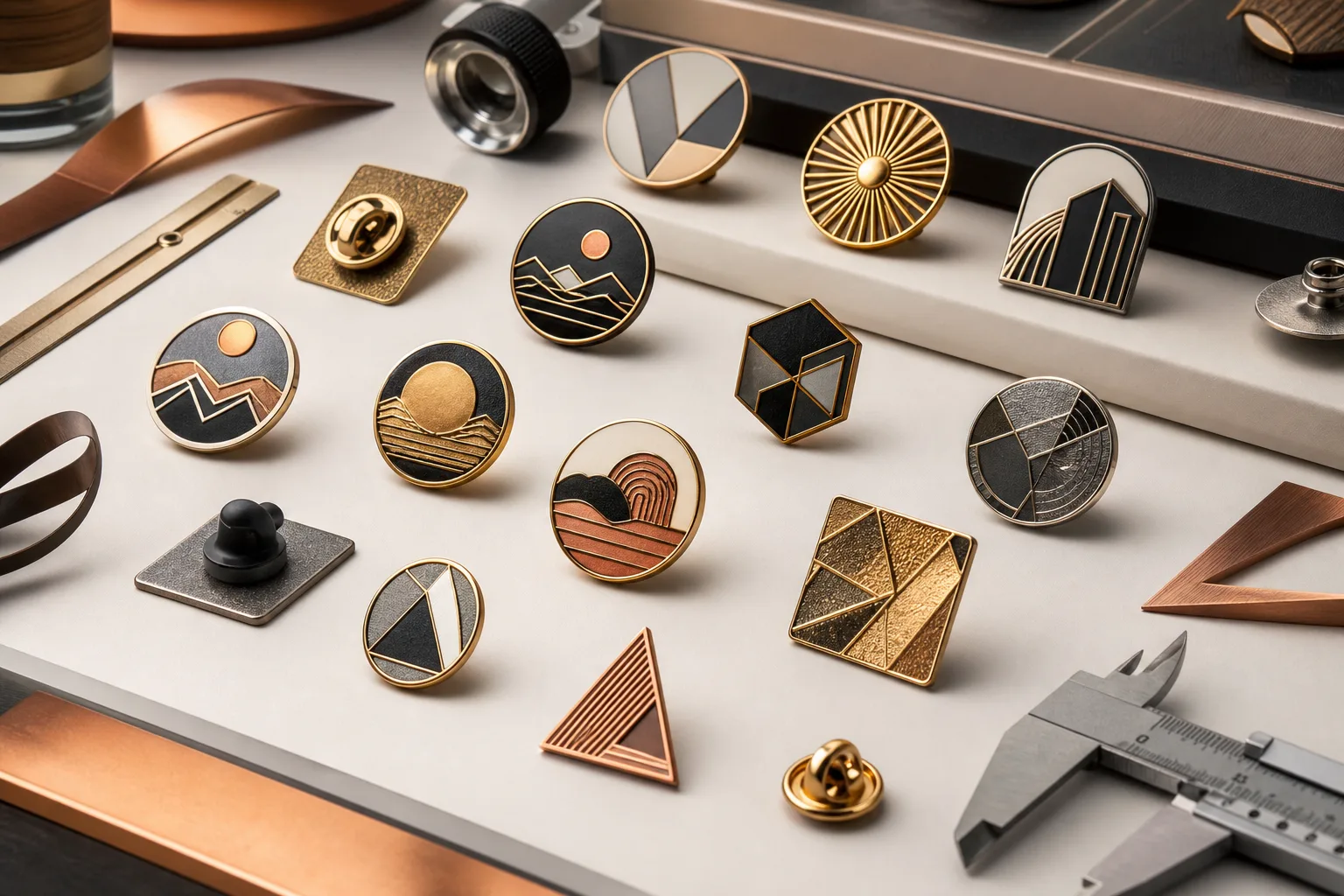
Compare Pin and Badge Manufacturing Methods
Pin construction affects how lines, colors, relief and the outer shape appear in metal. These methods are distinct production routes rather than different names for the same product.
| Construction route | Visible result | Key artwork question |
|---|---|---|
| Soft enamel | Color sits below the surrounding metal borders | Can the colors be divided into clear enamel areas? |
| Imitation hard enamel | Enamel and metal create a smoother face | Does the design need a smooth colored presentation? |
| Die-struck or stamped | Defined raised and recessed metal areas | Can the logo or message be built around metal lines and relief? |
| Zinc alloy die-cast | Formed shapes and more dimensional relief | Does the concept require geometry beyond a flatter stamped design? |
| Photo etched | Etched metal areas prepared for the selected decoration | How should the graphic be divided across the metal face? |
| Screen or UV printed | Artwork appears as a printed graphic on the badge surface | Should the design remain printed instead of being divided into enamel cells? |
The final route is selected after we review the dimensions, shape, relief, color layout, text and attachment. You can also browse the wider custom metal product range if your program includes products beyond pins and badges.
Choose Soft or Imitation Hard Enamel by Surface Style
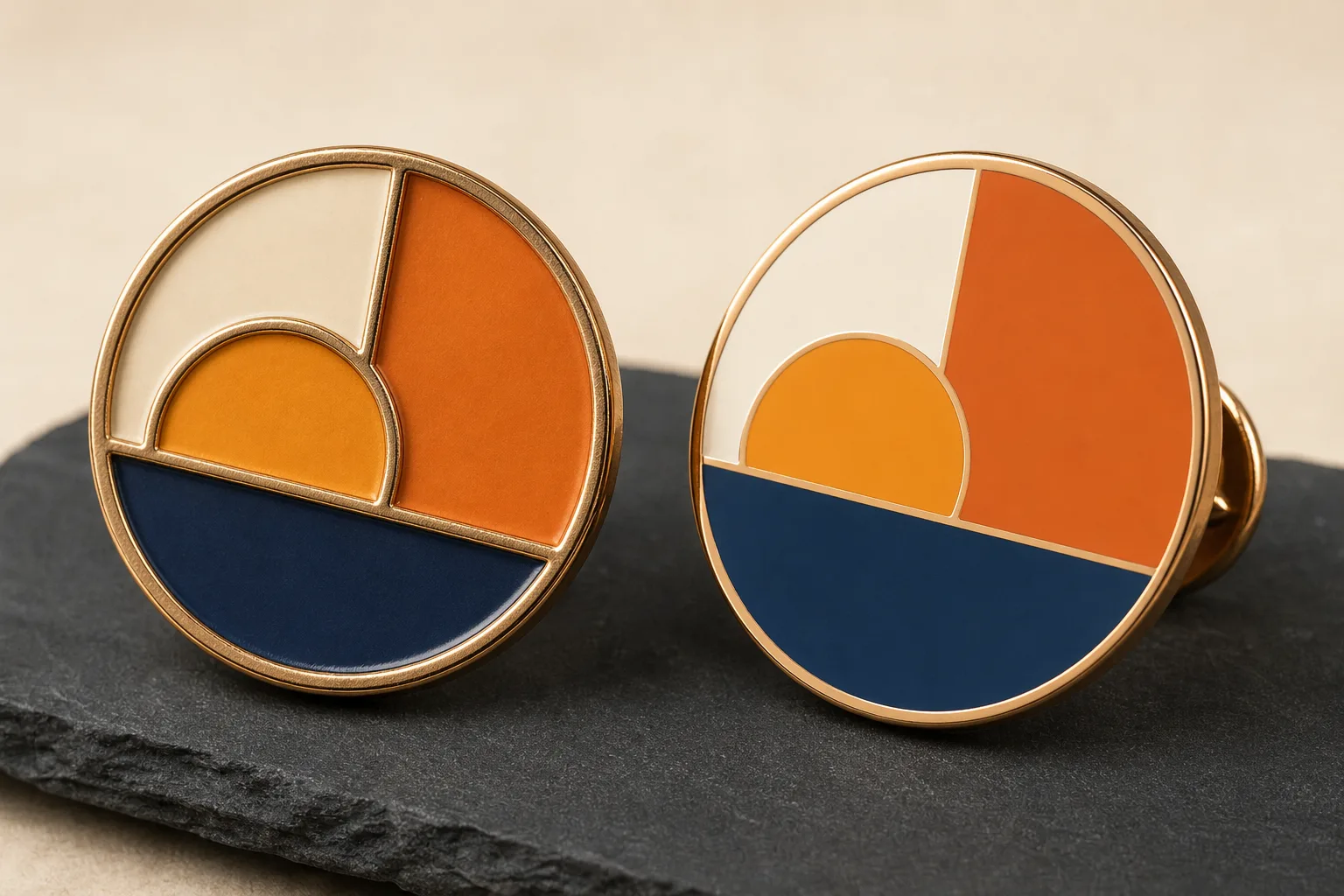
Enamel pins use metal borders to separate color areas. Those borders help define logos, letters and graphic sections during coloring. The main choice is the surface effect you want to show.
Soft enamel creates recessed color areas between raised metal lines. This makes the metal structure visible and gives the face a clear change in level. A transparent epoxy coating can be added when a clear coated surface is part of the design direction. See our custom soft enamel pins for a closer review of artwork and surface planning.
Imitation hard enamel produces a smoother appearance across the colored face. The artwork still needs controlled color areas and metal borders, but the final presentation differs from recessed soft enamel. Review imitation hard enamel pins when a smooth enamel surface is central to the brief.
Neither route is automatically right for every logo. Line clarity, text size, color separation and the intended metal finish must be reviewed together. Complex artwork may need an adjusted border layout or a different decoration route.
Use Die-Struck Construction for Metal-Line Artwork
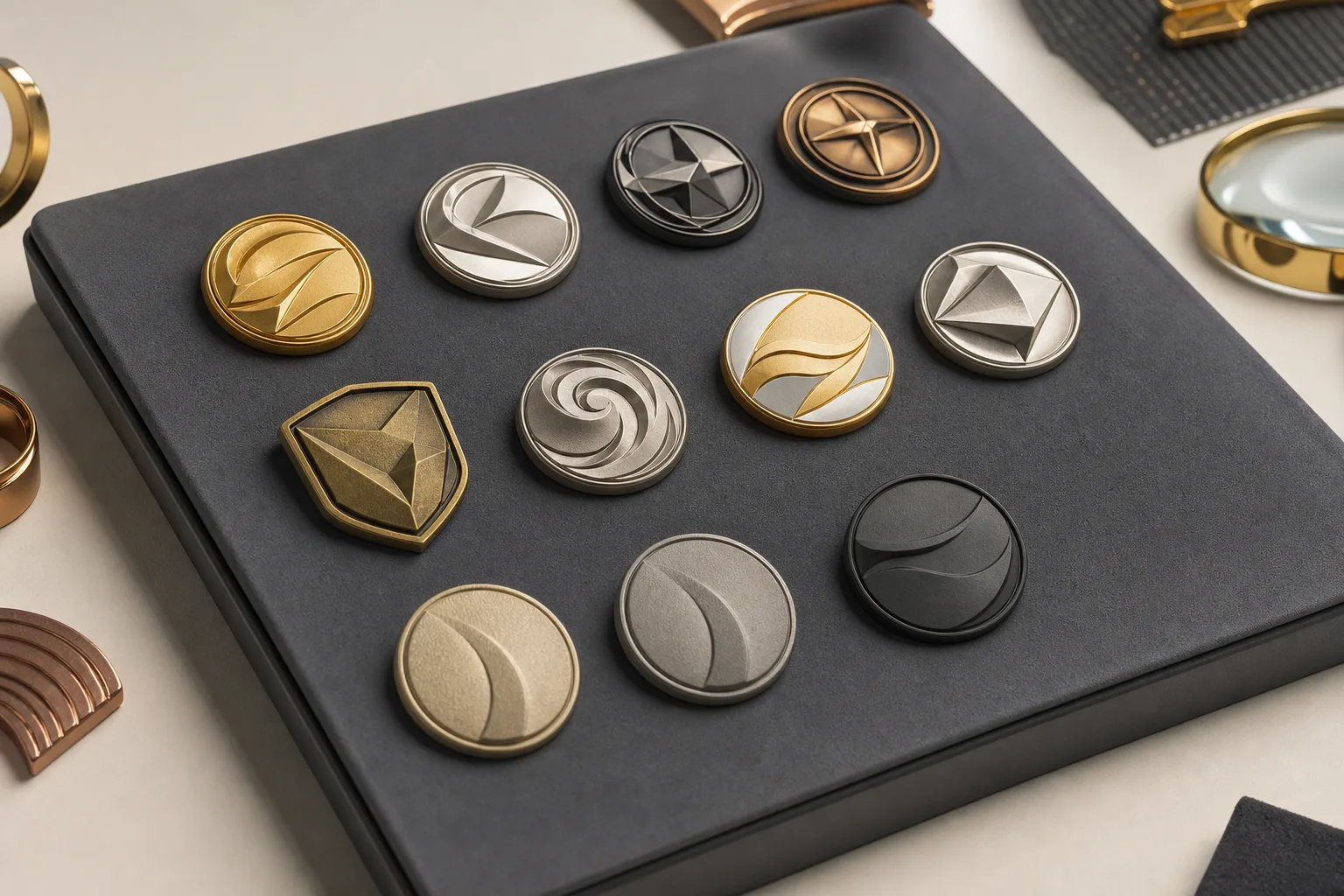
Die-struck badges are formed by stamping metal with tooling made for the design. This route supports artwork organized around raised lines, recessed sections and shaped metal surfaces. Color, plating or printing can be considered after the base form has been selected.
Artwork review focuses on the features that must remain clear after forming:
- Logo outlines and the relationship between raised and recessed areas
- Small text and narrow lines that need clear separation
- Areas intended to remain as visible metal
- Sections planned for enamel or printed color
- The outer badge shape and attachment position
Stamping describes how the metal is formed. It does not define the final decoration by itself. A die-struck pin may use a plated metal presentation, enamel color or another reviewed surface treatment. We coordinate forming and decoration so the proof reflects the intended finished badge.
Select Die-Casting for Formed Shapes and Dimensional Relief
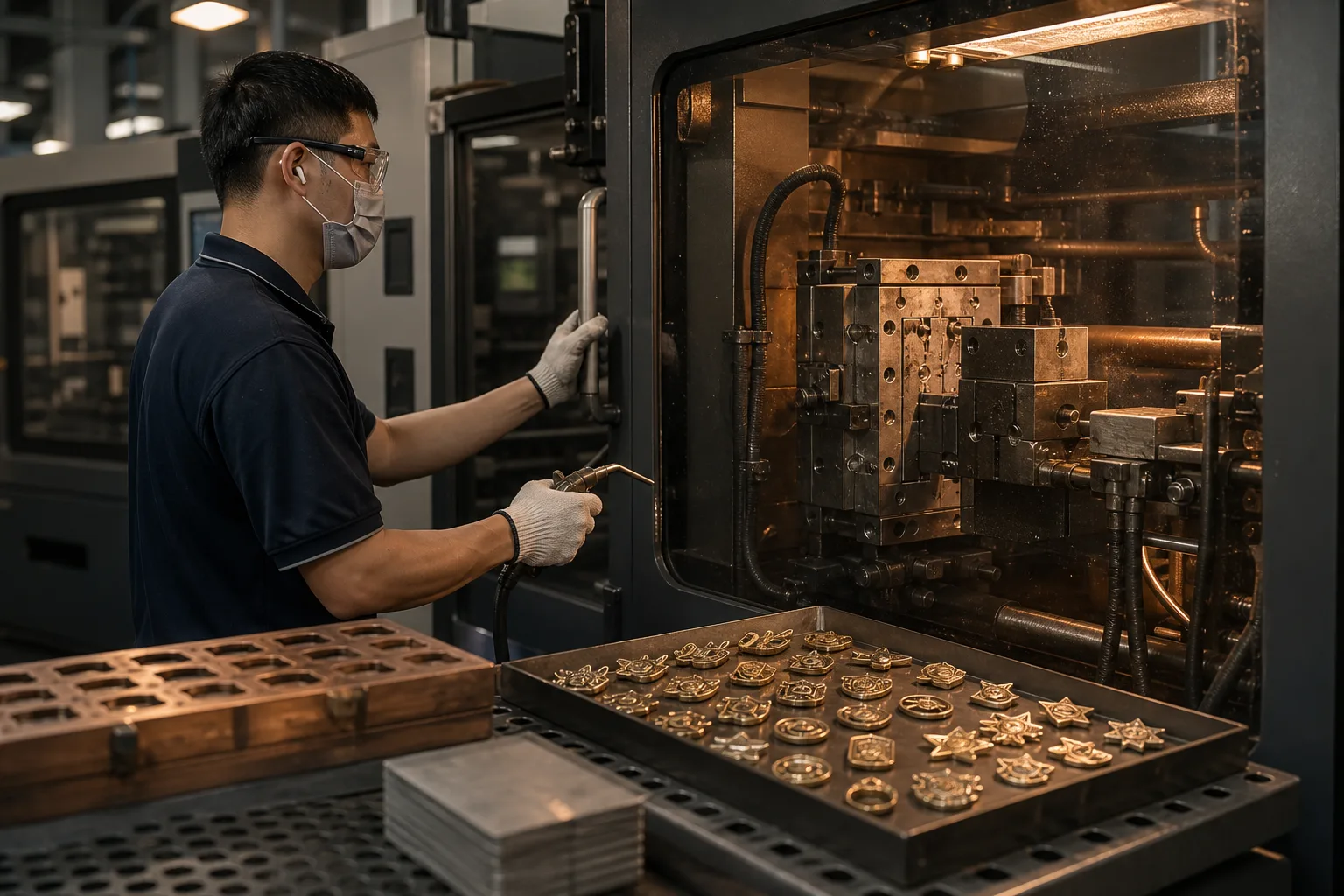
Zinc alloy die-casting is an option for pins that require a formed outline or more dimensional relief. Molten zinc alloy is shaped in a mold, creating the base part before polishing, plating, coloring and assembly.
Gairun operates 88T and 160T zinc alloy die-casting machines. For a pin project, this capability is relevant when the concept includes sculpted surfaces, an irregular formed body or relief that needs a casting review. Our engineers assess the geometry and decoration plan before mold work begins.
A die-cast route does not mean every fine detail can be transferred without adjustment. The artwork must show which features are raised, recessed, colored, plated or printed. Dimensions, thickness and the back attachment area also need to be defined. Buyers with deeper process questions can review our zinc alloy die-casting capability.
Keep Detailed Graphics as Screen or UV Printing
Some badge artwork is better treated as a printed image than separated into enamel cells. Gairun provides screen printing and UV printing for custom metal badges. The choice depends on the graphic structure, color layout, text and the selected metal base.
Printed construction can be reviewed when artwork contains visual detail that would change if every color needed a surrounding metal border. It can also support layouts where the buyer wants the graphic to read as a printed face rather than a relief-and-enamel design.
A clear epoxy coating may be applied over the decorated surface. Epoxy changes the face by adding a transparent coated layer, so it should be shown in the specification rather than treated as an automatic step. Our printed and epoxy-coated badge page covers these decisions in more detail.
Coordinate Base Metal, Plating and Surface Effects
Gairun processes zinc alloy, brass, iron, stainless steel and aluminum. Material selection follows the construction method, geometry, surface plan and artwork. We do not assign a base metal only from the product name; the complete design must be reviewed first.
Available metal appearance options include gold, silver, nickel, black nickel, antique bronze and antique silver. Dual plating can place two plating tones within one coordinated design. Sandblasting and matte finishing provide additional surface directions.
Consider these choices as one system. A dark metal finish changes the contrast around color and text. An antique effect interacts with recessed detail differently from a bright plated face. Dual plating requires planned visual boundaries. The forming method must also support the intended relief and outer shape before the finish is chosen.
Reference images can communicate the desired appearance, but the quotation should still name the preferred finish. This allows our team to compare the request with the artwork and proposed production route.
Define How the Pin Will Be Worn or Presented
A badge used on apparel has different planning needs from one distributed in a presentation box or supplied as campaign merchandise. Tell us how the product will be worn, issued and handled before the artwork is approved.
Butterfly clutches and strong magnets are attachment examples handled in our pin and badge work. Attachment security is checked during final inspection. The attachment must be identified early because its position affects the back layout and how the finished badge sits when worn or displayed.
Brand and campaign pins
define the logo treatment, distribution method and presentation requirement.
Club and membership badges
identify member versions, wording changes and attachment expectations.
Institutional badges
provide the controlled emblem, exact text and approval requirements.
Event pins
state the event identity, version count, distribution plan and required schedule.
Distributor programs
separate each design, quantity, finish and packaging requirement in the order brief.
Approve Artwork, Samples and Inspection Details
We can begin with vector artwork, a PDF or a sketch. The design team develops a 2D or 3D proof as needed, followed by engineering review and mold work where the selected construction requires tooling. The proof should define dimensions, thickness, relief, color areas, plating and the attachment position.
Custom sampling normally takes 7–10 working days. This is the sampling stage, not a promise of final delivery timing. The order schedule is reviewed separately based on the selected design, process and project requirements.
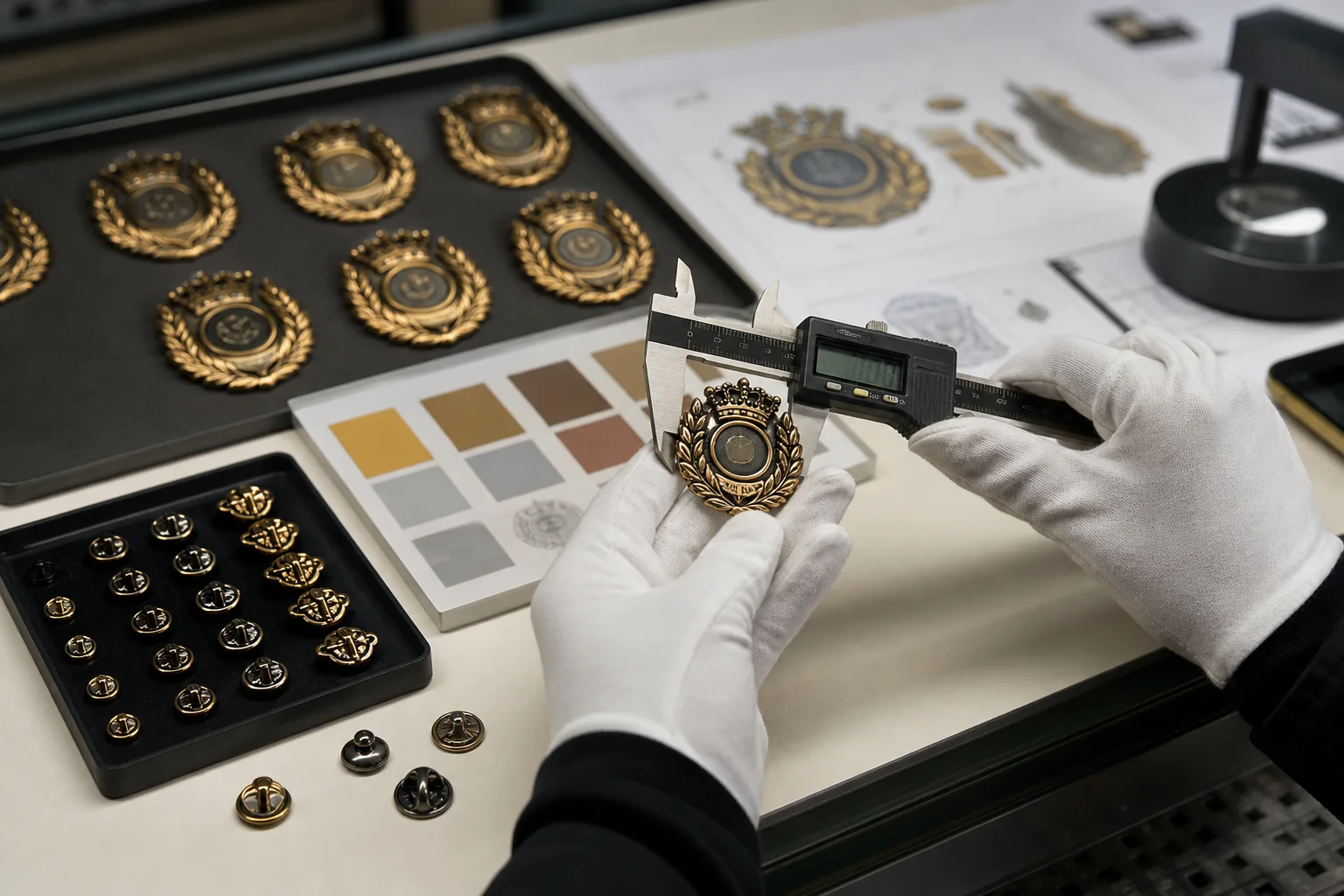
01
File review
We examine the artwork and project specifications to identify a suitable construction route.
02
Visual proof
The proposed shape, metal areas, color treatment and finish direction are shown for buyer review.
03
Engineering and tooling
Dimensions, relief and production details are checked before mold development or forming.
04
First article
The initial piece is compared with the drawing for dimensions, thickness and relief detail.
05
In-process checks
Inspection may cover burrs, flatness, plating color and adhesion, plus enamel overflow or missing color.
06
Final inspection
Finished badges are visually checked for surface scratches and attachment security.