
FACTORY-DIRECT OEM / ODM MANUFACTURING
Custom Metal Product Safety Compliance for Buyer Review
Gairun is an OEM and ODM manufacturer of custom metal awards and promotional products. We supply custom medals, challenge coins, lapel pins and badges, metal trophies and plaques, keychains and bottle openers for event organizers, institutions, brands and promotional product buyers.
Our stated custom metal product safety compliance position covers RoHS and REACH environmental requirements. The stated United States scope also includes CPSIA and California Proposition 65, with lead, cadmium and nickel release identified as relevant heavy-metal controls.
Compliance requirements can change with the product, material, finish, intended use and destination market. Buyers should provide the rules and documentation criteria that apply to their order so the request can be reviewed against the custom product specification. To begin that review, share your project requirements with our quotation team.

Products Within Our Stated Compliance Scope
Gairun’s stated safety and environmental compliance position applies across our declared range of custom metal products. This range includes:
This product coverage does not mean that every item has the same legal requirements. A medal for an adult sporting event, a promotional pin and a product intended for children may require different assessments. The destination market can also change which rules apply.
Compliance teams should therefore review the finished product as a complete specification. Base metal, plating, color treatment, coating, attachments, packaging, intended user and distribution market can all affect the order brief.
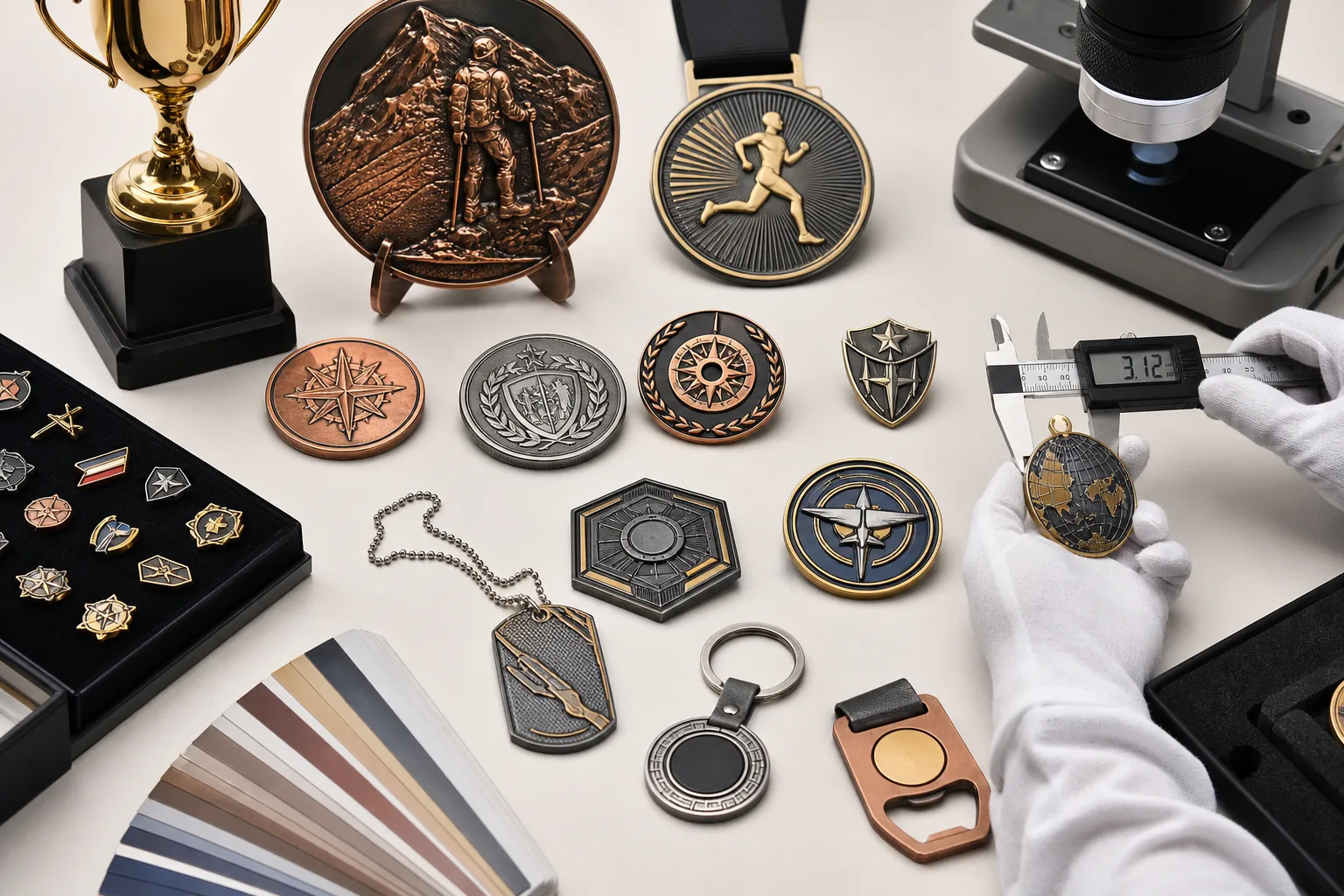
Custom medals, including sports medals, 3D relief medals and spinning or combination medals
Challenge coins for military, public safety, corporate and institutional programs
Lapel pins and badges made with enamel, formed metal, printing or epoxy finishes
Metal trophies and plaques, including wood-metal and crystal-metal combinations
Metal keychains, bottle openers and leather-metal accessories
RoHS Compliance for Custom Metal Products
Gairun describes its custom metal products as compliant with RoHS environmental requirements. RoHS is a framework that restricts specified hazardous substances in products that fall within its applicable scope.
A buyer should not rely on the name of the product alone when deciding whether a RoHS requirement applies. The product category, destination, use and purchasing specification need to be considered together. If your order must meet a particular RoHS requirement, identify that requirement in the project brief.
Our general compliance position is not a substitute for an order-specific assessment. It also does not, by itself, confirm a particular directive edition, exemption, numerical substance limit, certificate or laboratory report. Any required evidence must be identified and confirmed for the individual project.
REACH Review for European Market Orders
Gairun’s custom metal products are also described as REACH compliant. REACH is the European Union framework for controlling chemicals and their use in products supplied to the European market.
For custom awards and promotional products, the buyer’s REACH brief should identify the destination and any substance or documentation requirement set by the importer, brand or purchasing organization. This is especially important when an internal supplier standard goes beyond a general market requirement.
The stated REACH position does not establish an order-specific substance limit, registration status or document package. Those details should be reviewed against the actual product design, materials and finishes. Buyers responsible for European market access should provide their current purchasing criteria rather than assume one general statement covers every product configuration.
CPSIA Considerations for United States Orders
Gairun’s stated United States product safety scope includes CPSIA requirements. The Consumer Product Safety Improvement Act, or CPSIA, sets safety requirements for products within its legal scope in the United States. Lead and cadmium are among the heavy-metal controls named in our provided compliance information.
CPSIA requirements depend on factors such as the product category and intended use. Not every custom medal, coin, pin, trophy or promotional accessory falls under the same requirement. Buyers should state who will use the product, how it will be marketed and whether a purchasing specification treats it as a regulated product.
A general CPSIA compliance position does not replace a product-specific review. If your organization requires defined substance limits, test methods or supporting documents, include those criteria before the material and finish specification is confirmed.
California Proposition 65 Requirements
California Proposition 65 is included in Gairun’s stated United States compliance scope. The named controls are lead, cadmium and nickel release. Buyers placing products in California should define any substance, warning or documentation criteria that apply to their order.
California Proposition 65 addresses exposure to listed chemicals. Its application may depend on the chemical, exposure route, product use and other facts outside a general manufacturing description. For that reason, the compliance review should be tied to the actual design and supply arrangement.
Gairun does not use a general compliance statement to claim that a warning is never required. Buyers should obtain appropriate legal or regulatory advice for their market responsibilities and provide the resulting product criteria in the order brief.
Lead, Cadmium and Nickel Release Controls
Lead, cadmium and nickel release are the specific heavy-metal controls identified in Gairun’s product safety information. They should be addressed as separate requirements because the applicable rules and buyer criteria may differ by substance, market and intended use.
| Named control | Buyer review focus | Project information needed |
|---|---|---|
| Lead | Applicable product and market requirements | Destination, intended use and required substance criteria |
| Cadmium | Applicable heavy-metal controls for the finished item | Product specification, material or finish requirements and buyer limits |
| Nickel release | Requirements linked to the finished surface and product use | Contact conditions, destination rules and requested review criteria |
The controls apply to the finished product assessment, not merely the name of the base metal. A custom item can include formed metal, plating, enamel, printed decoration, clear epoxy, attachments or mixed-material parts. The relevant specification should account for the parts and surfaces included in the final supplied product.
Gairun’s stated compliance position does not represent a published numerical result for every design. Product-specific evidence, where required, must be identified and confirmed for the order rather than inferred from a general statement.
Information Needed for a Product-Specific Compliance Review
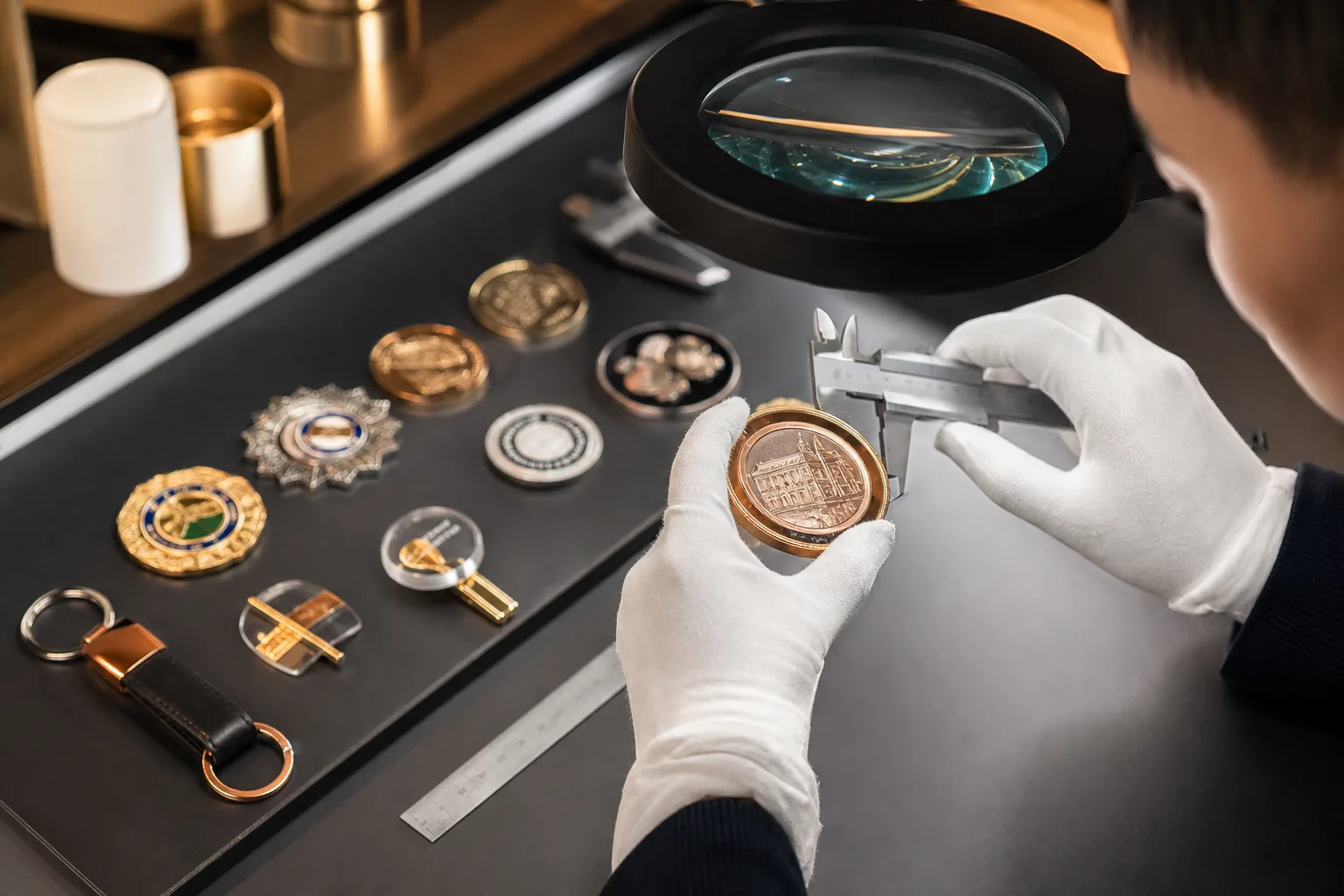
A complete compliance brief allows the requirement to be checked against the planned product. It also reduces the risk of discovering a market or documentation issue after the design has moved forward.
Provide the following information with your request:
Do not assume that a named regulation automatically defines the full commercial requirement. Brand owners, distributors and institutional buyers may have their own criteria. These requirements should be stated clearly so their relationship to the proposed product can be reviewed.

01
Product type
Identify the medal, coin, pin, badge, trophy, plaque, keychain, bottle opener or mixed-material product.
02
Destination market
State each country or region where the product will be imported, sold or distributed.
03
Intended use
Explain the user group, product role and expected form of contact or handling.
04
Material and finish requirements
List any specified base metal, plating, enamel, printing, coating or attachment requirement.
05
Applicable standard
Name the regulation, customer standard or purchasing specification that must be reviewed.
06
Substance criteria
Provide any required limits or controls for lead, cadmium, nickel release or other substances identified by your organization.
07
Required documentation
State what evidence your compliance or procurement process expects and when it is needed.
Regulatory Compliance and Physical Product Testing Are Different
Chemical and regulatory compliance review is different from physical quality testing. A plating adhesion test, corrosion-resistance test or connection-strength test does not prove RoHS, REACH, CPSIA or California Proposition 65 compliance.
Gairun’s verified physical testing activities include cross-hatch testing for plating adhesion, salt spray testing for resistance to oxidation or corrosion, and pull testing for medal ribbon connections. These tests evaluate physical features of a product or finish. They do not measure the same issues as a heavy-metal or chemical compliance assessment.
Our quality control and product testing process provides more detail about incoming inspection, first-article comparison, in-process checks, final visual inspection and physical tests. Keep the physical quality brief and regulatory compliance brief separate so each can be reviewed against the correct requirement.