A low zinc die casting draft angle may be practical on a selected face when the part geometry and intended tool-withdrawal direction support release. It should not be treated as a universal angle or a default promise of zero draft. Before making the choice, identify the pull direction, the face’s depth and texture, and any dimension that controls fit. A marked drawing submitted for Die Casting Tooling and Design Review gives the discussion a specific geometry and measurement requirement.
Draft is the taper of a wall in the direction the tool is intended to withdraw. A near-straight face can be a candidate for engineering review, but its practicality depends on the complete part rather than on an isolated angle label. The sections below explain how to frame that decision without relying on an unsupported minimum angle.
When low draft is practical in zinc die casting
Low draft is a face-specific design proposal. A broad, shallow external face with limited surface detail may be a more practical candidate for low draft than a deep recessed wall with detailed texture. That is an initial direction for review, not a conclusion: a different pull direction, neighboring feature, or controlled dimension could change the assessment.
Zero draft zinc casting is therefore a question to resolve against the actual geometry, not a default specification. A nominally straight wall on a drawing does not by itself establish that the intended tooling can release it. Likewise, calling a face “low draft” does not define its measurement location or acceptance requirement.
| Observable geometry | Initial review direction | Why it matters | Variable that could change it |
|---|---|---|---|
| Shallow, open external face with little surface detail | Consider as a low-draft candidate | The face is clearly identified and has no deep adjacent detail in the described area | Pull direction, nearby walls, or a deeper feature |
| Deep or textured internal face | Examine the release question carefully | Depth and texture form part of the face geometry that must be considered with the withdrawal direction | Feature depth, texture, or tooling direction |
| Face tied to a fit or interface dimension | Define the controlled measurement before choosing | Taper changes the wall’s width across its height | Datum, measurement plane, and required tolerance |
For a broad, shallow outside face with limited relief, low draft may be worth submitting as a focused design request. If that face borders a deep return or the pull direction crosses a feature, the initial assessment could change. For a recessed internal detail with a long wall and fine texture, do not carry over the same assumption: the depth, texture, and withdrawal direction all need to be considered.
Gairun’s pre-tooling engineering review may cover dimensions, thickness, relief, and the proposed production method. The exact review depends on the product structure and artwork. This makes low draft a useful topic to flag before tooling, not a guaranteed capability for every design.
Set the pull direction before judging draft
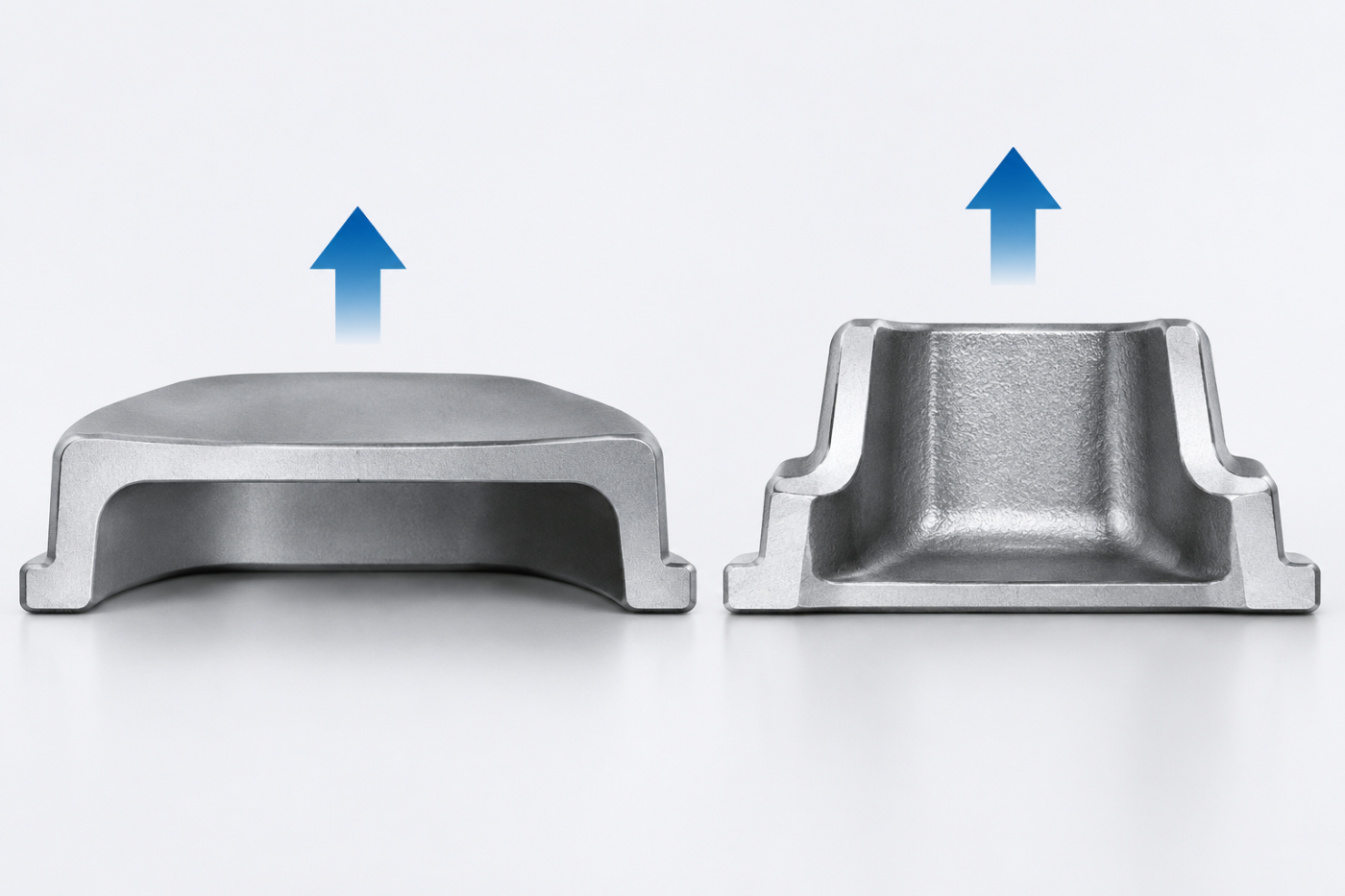
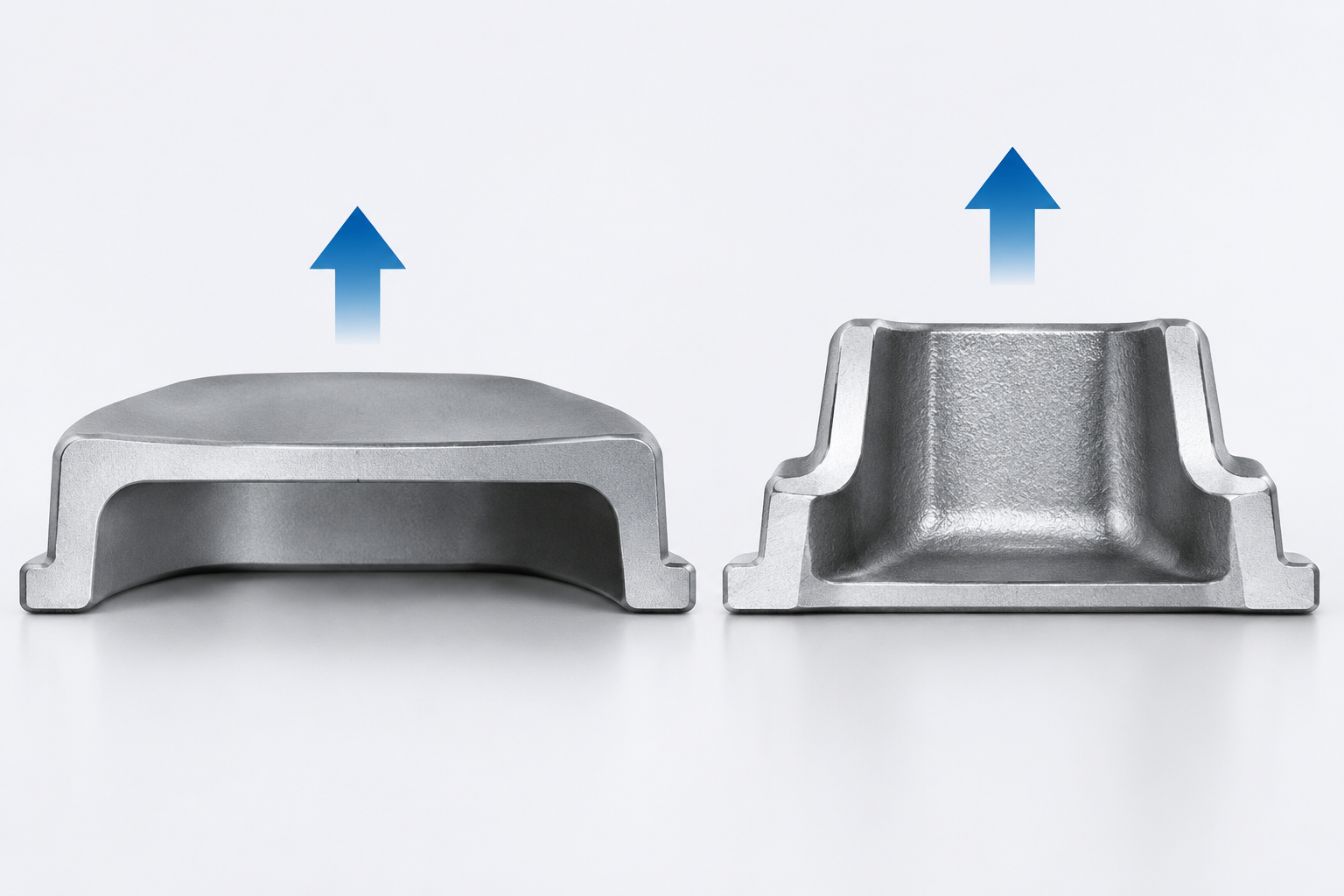
Draft has meaning in relation to the direction in which the tool is intended to withdraw. A wall that appears nearly straight in a front view may be oriented differently when viewed against the proposed pull direction. A second face, recess, or return can also make the part’s geometry more complex than the first view suggests.
For that reason, do not compare faces or specify a draft angle until the intended pull direction is visible. On a section or 3D view, mark:
- The proposed tool-withdrawal direction.
- The parting region, if it is identified in the design discussion.
- The exact face for which low draft is requested.
- Any neighboring wall, recess, opening, or relief that may affect the face.
This markup gives the reviewer a shared reference. It also helps distinguish an intended straight-wall design from a confirmed release solution. A drawing communicates the buyer’s design intent; it does not, on its own, confirm that a particular tooling arrangement or production route will work.
When one view is insufficient, provide a section through the face and the relevant adjacent geometry, or a model that makes those surfaces identifiable. Include dimensions and explain which face matters. Gairun’s stated pre-tooling review may consider dimensions, thickness, relief, and the proposed production method; it does not establish that every concept is feasible. For general process context, see Zinc Die Casting Manufacturing.
Compare internal and external faces, depth, and texture
“Internal” and “external” describe where a face sits in the part, but they do not settle the draft question. Each face must be assessed against the intended pull direction and the geometry around it. It would be misleading to assume that every internal wall needs more draft than every external wall, or the reverse.
Depth and surface detail also belong in the discussion. A deeper wall or pronounced texture changes the geometry being considered for release, so a low-draft request on that face deserves attention to those features. This is a qualitative design consideration, not a universal rule or a numeric threshold. No single depth or texture description supplied here establishes an acceptable angle.
Consider a recessed internal face with fine detail: the reviewer needs to see the depth, texture, and pull direction before judging whether the requested taper is appropriate. If the texture is removed, the feature becomes shallower, or the direction changes, the assessment may also change. By contrast, a broad, shallow external face with little detail may be a more practical low-draft candidate—but neighboring geometry still matters.
Describe the surface as it is designed rather than relying on a broad label. Identify which surfaces are recessed, raised, textured, or open, and mark the face for which the near-straight profile is important. This keeps the conversation focused on observable geometry instead of applying a general internal-versus-external rule.
Understand draft’s effect on functional dimensions
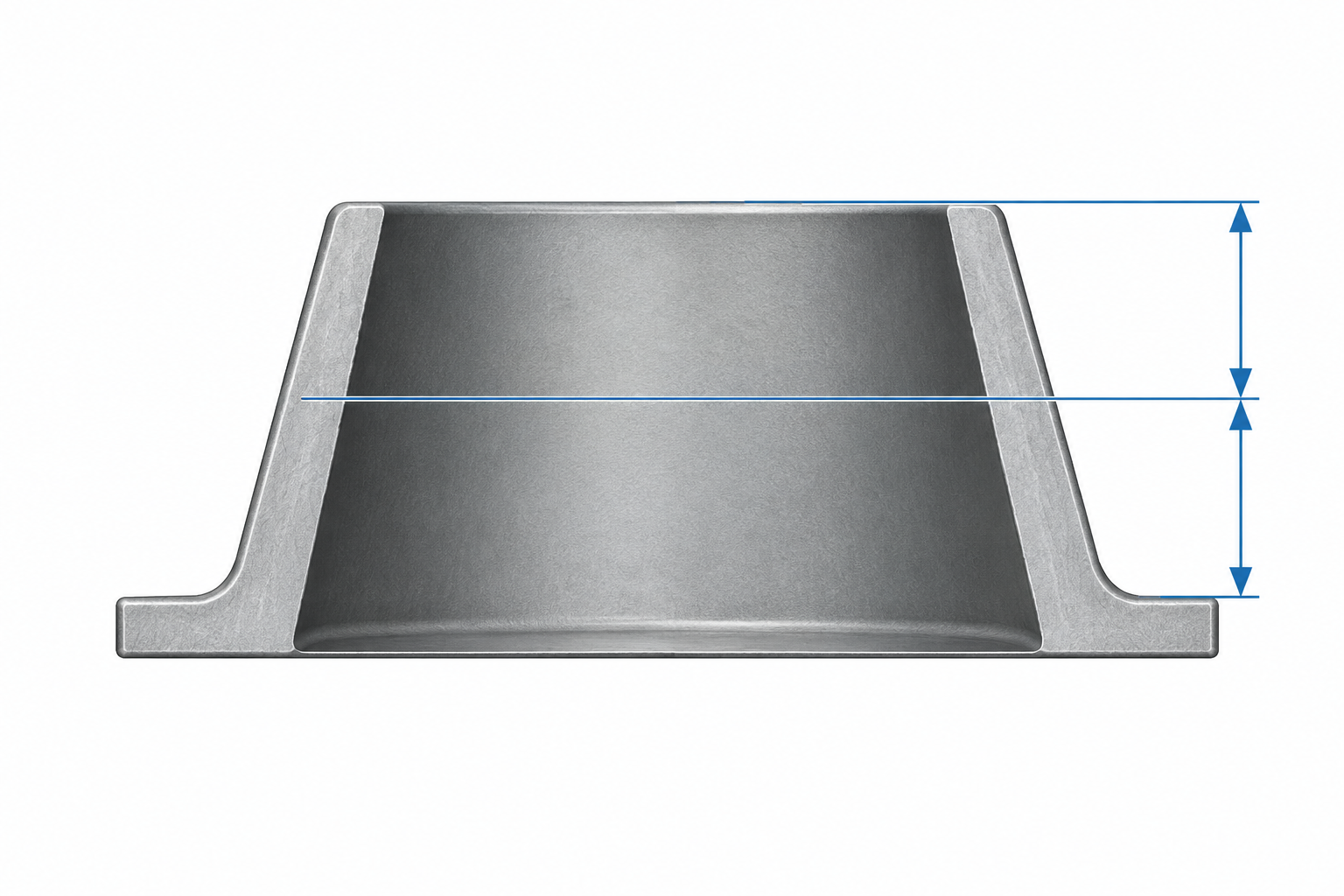
A tapered wall does not have the same width at every height. In a cross-section, imagine measuring between the two sides of the wall at a lower plane and then at a higher plane: the measurements can differ because the sides are angled. The amount of difference depends on the geometry, but no calculation is needed to identify the drawing issue.
A width callout without a stated measurement height or datum can leave the intended dimension unclear. If the dimension controls an interface, fit, or alignment, specify where it applies. If the face is mainly cosmetic, say so; that separates appearance intent from a functional measurement requirement.
For each relevant dimension, tell the reviewer:
- Which faces define the measurement.
- The measurement plane or datum.
- Whether the dimension controls fit, alignment, or another interface.
- The required tolerance, rather than only a nominal value.
This information helps separate a near-straight appearance from a dimension that must be controlled at a particular location. Gairun states that after tooling and trial forming, the first article is compared with the approved 1:1 drawing for dimensions, thickness, and relief. Buyers still need to specify project tolerances and the measurement location; that described comparison does not establish a tolerance or measurement capability. Related design considerations can be explored in Zinc Die Casting Design and Alloy Selection.
Weigh low draft against a finishing operation
If a face must remain near-straight for a functional reason, identify the controlled dimension before deciding whether to rely on the cast geometry or assess a separate finishing operation. Access to the face, the required measurement location, and adjacent features all belong in that conversation. A finishing operation is not an automatic substitute for a low-draft design, and low draft is not automatically the right way to meet a dimensional requirement.
For a face whose location controls fit, describe the interface and measurement plane first. The reviewer can then consider the requested geometry and whether a separate operation merits assessment. Avoid asking only for “zero draft”: that phrase does not say which face matters or what dimension must be preserved.
For a broad visible face where appearance is the main concern, consider whether a later operation could affect surrounding surfaces or design details. The relevant question is not whether finishing is generally better, more accurate, or less costly. Those outcomes cannot be assumed for a particular part without process-specific evidence and review. Instead, state the visible surface requirement, access constraints, and adjacent features that must remain intact.
Keep the two options tied to the part’s purpose. A functional interface calls for an explicit measurement requirement; an appearance-driven face calls for a clear description of the visible geometry. The production route and any finishing step require assessment against the actual construction.
Specify low-draft faces clearly for tooling review
A useful request identifies one face and explains why it matters. Avoid labeling the whole part “zero draft” when only one wall is in question. Provide the part model or a section view that shows the relevant geometry, then mark the intended pull direction and the face under discussion.
Include the measurement plane or datum and state whether the requirement is functional or cosmetic. Show the face’s dimensions, thickness, and relevant relief. Separate the nominal design intent from the required tolerance so that a reviewer can distinguish the preferred form from the acceptance criteria.
Before tooling approval, ask which geometry or process assumption could change the recommendation. Record the agreed interpretation of the face, measurement location, and acceptance requirement in the drawing or its accompanying specification. If the proposed direction or parting region is not settled, identify that as an open item rather than implying the face has already been approved.
Gairun’s pre-tooling engineering review may consider dimensions, thickness, relief, and the proposed production method; the exact scope depends on the product structure and artwork. Gairun also states that first articles are compared with an approved 1:1 drawing for dimensions, thickness, and relief. Specify project tolerances and low-draft acceptance criteria separately. This makes the request easier to discuss without suggesting that review alone confirms feasibility.
Make the low-draft decision on the actual geometry
Low draft may be practical on selected faces, but zero draft is not a universal specification or a guaranteed supplier capability. Pull direction, face depth, texture, neighboring geometry, and dimensional intent can all change the decision. Submit a marked drawing or model that identifies the face, its function, and its controlled measurement location for project-specific review.
Frequently asked questions
Does zero draft mean a zinc die-cast wall is exactly parallel to the pull direction?
It can express that design intent, but the label alone does not confirm that the geometry can be released. Identify the face and pull direction, then have the complete part assessed.
Do internal faces always need more draft than external faces?
No universal internal-versus-external rule is established here. Assess each face in relation to the pull direction, neighboring geometry, depth, and surface detail.
How should a drawing define the measurement height for a drafted wall?
State the measurement plane or datum and identify the faces that define the dimension. Include the required tolerance, especially when the dimension controls fit or alignment.
Can surface texture affect whether low draft is practical?
Texture is part of the face geometry and should be shown in the design information. The assessment can change with the texture, feature depth, or pull direction.
When might machining be considered instead of relying on a low-draft cast face?
It may merit assessment when a face has a defined functional measurement or surface requirement that the buyer wants to address separately. Access, adjacent features, and the actual process route need review; machining is not an automatic substitute.