
FACTORY-DIRECT OEM / ODM MANUFACTURING
Custom Metal Trophies and Plaques for Recognition Programs
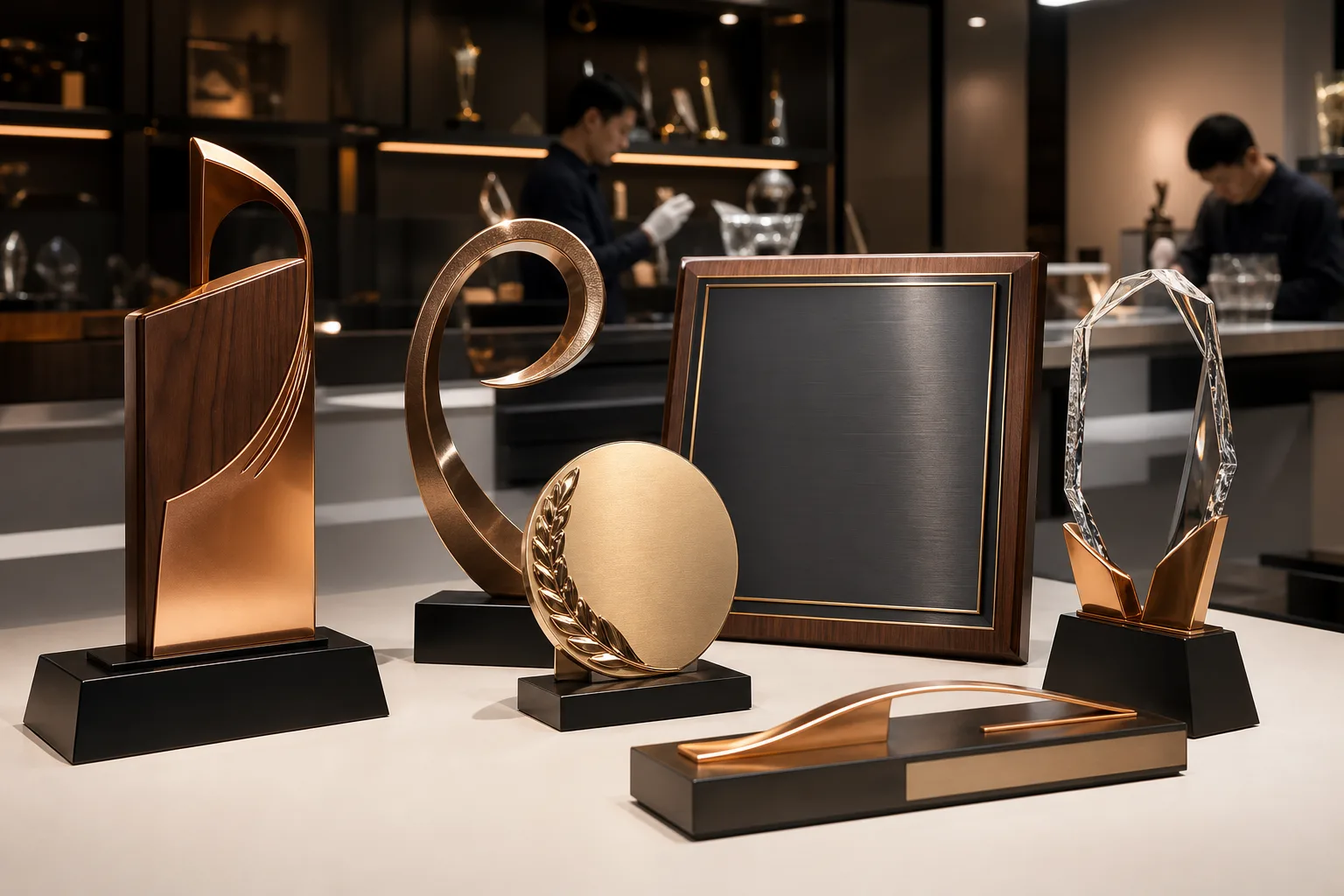
Compare Trophy and Plaque Formats for Your Program
The right format depends on how the award will be viewed, displayed and presented. A metal trophy gives the design a dimensional profile. A plaque creates a broad face for names and recognition messages. Mixed-material awards combine metal branding with wood or crystal to create a different visual structure.
| Award format | Physical structure | Planning priority | Common program fit |
|---|---|---|---|
| Metal trophy | Shaped or assembled metal award with a dimensional profile | Silhouette, visible sides, logo position and component relationships | Corporate awards, event honors and association recognition |
| Metal recognition plaque | Plaque-led format with a mainly metal presentation face | Display direction, text hierarchy and variable recipient details | Service awards, milestones and formal recognition messages |
| Wood-and-metal plaque | Wood base combined with a custom metal element | Balance between the wood area, metal branding and recipient information | Corporate, association and organizational recognition |
| Crystal-and-metal trophy | Crystal body coordinated with custom metal branding components | Award profile, transparent areas, metal position and final assembly | Presentation-led corporate and event awards |
If you are still comparing broader product categories, visit our custom metal products overview. This trophy and plaque range is intended for award programs that need a standing or plaque-led presentation rather than a small portable item.
Use a Metal Trophy for a Dimensional Award Concept
A custom metal trophy is suitable when the award shape itself carries part of the recognition message. The outline may follow a company symbol, event mark, abstract form or other buyer-supplied concept. Shaped and assembled metal elements can also create a clear front view while adding detail to other visible sides.
Start by defining the main viewing angle. The logo, award title and recipient information need a clear order when seen from that position. If the trophy has several components, the artwork should show how the parts relate to one another and which surfaces need branding or finish contrast.
The base or support must be considered with the main metal form because it affects the complete profile. Dimensions, relief and the location of fixed and variable content are reviewed before tooling or production. Buyers developing a trophy-led design can review our dedicated custom metal trophies page for more detailed shape and component planning.
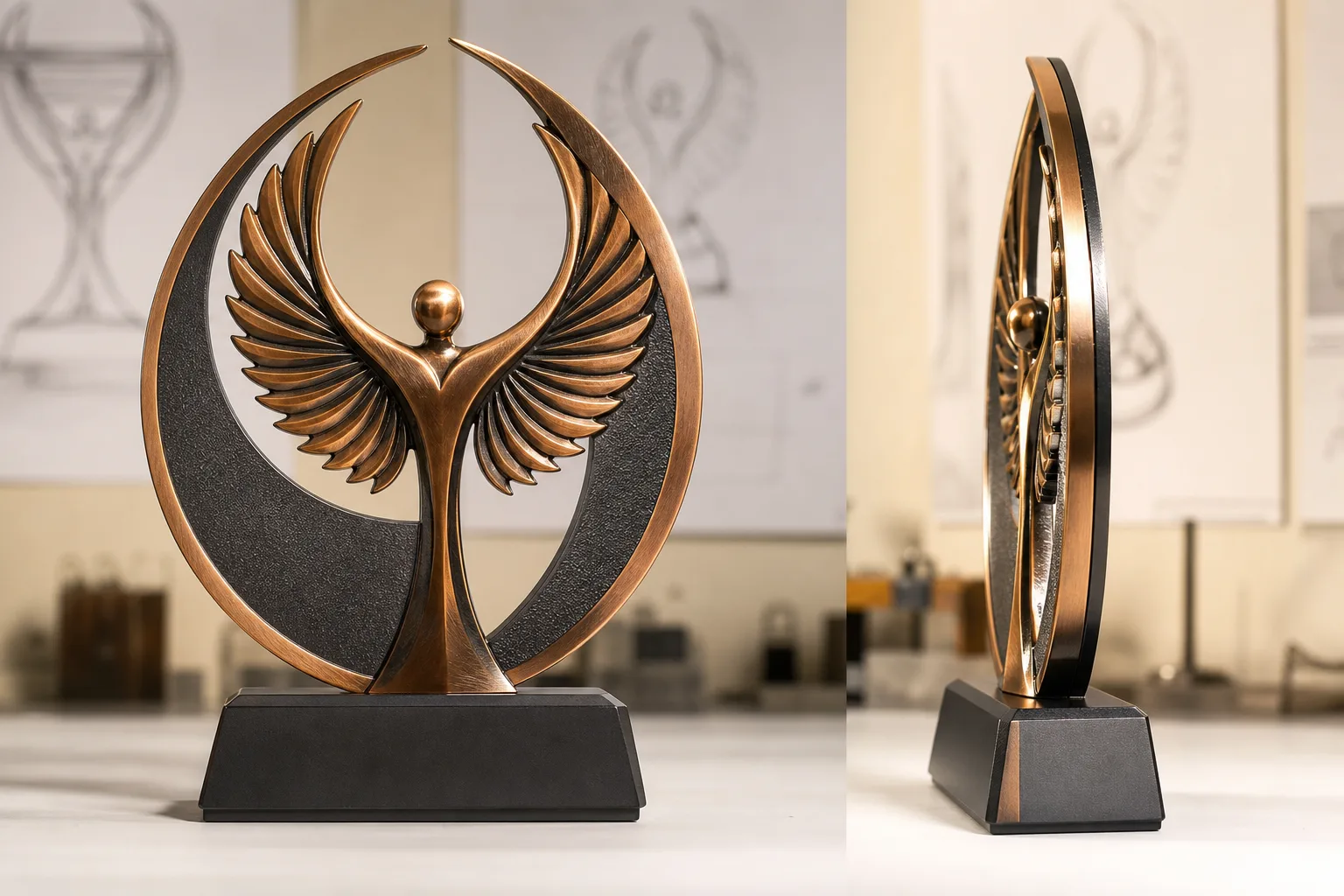
Choose a Recognition Plaque for Names and Formal Messages
A metal recognition plaque places the main information on a broad, defined face. It can give more visual space to a recipient name, service milestone, organization mark or award statement. This makes the format useful when the written message is as important as the award symbol.
The first decision is the display direction. A vertical layout often supports a top-to-bottom order of logo, award title, recipient and supporting message. A horizontal layout can provide more room for longer wording or several aligned information groups. The artwork should identify which text remains fixed across the order and which details change for each recipient.
Do not select a plaque format based only on the amount of text. The logo-to-message balance also matters. A large emblem may need a separate metal area, while a text-led program may require a quieter brand position. Confirm the orientation, dimensions, content hierarchy and number of recipient versions before the proof is prepared.
Coordinate Wood and Metal as One Plaque Design
A wood-and-metal plaque combines a wood base with a custom metal logo, message panel or award element. These parts need to be designed as one composition. Treating the metal part as an added decoration can lead to weak alignment, crowded wording or an unclear focal point.
Define the area assigned to the wood base and the area assigned to metal. Then map the company or event logo, award title, recipient name and supporting message. The metal component may carry the main brand mark, the recognition message or both, depending on the available space and the desired visual balance.
The project brief should also state whether the plaque is vertical or horizontal and how it will be presented. If an order includes several award levels or recipient versions, identify which elements remain consistent across the family. For focused guidance on logos, names and mixed-material layout, see custom wood and metal plaques.
Balance Crystal Surfaces with Custom Metal Branding
A crystal-and-metal trophy uses the contrast between a transparent body and a solid metal element as part of the award design. The crystal profile, metal branding and message area must be planned together so that one component does not obscure or compete with another.
Consider the award from its main viewing angle. Decide where the logo will sit, how much space is needed for the award message and which metal finish supports the intended appearance. The outline of the metal component should relate to the crystal body rather than appear detached from it.
The project review also considers the position and alignment of the components in the final assembly. Crystal grade, crystal decoration methods and specific assembly tolerances depend on the project and are not assigned without technical review. Visit our custom crystal and metal trophies page to prepare a more detailed mixed-material award brief.
Select Metal, Forming and Finish Directions
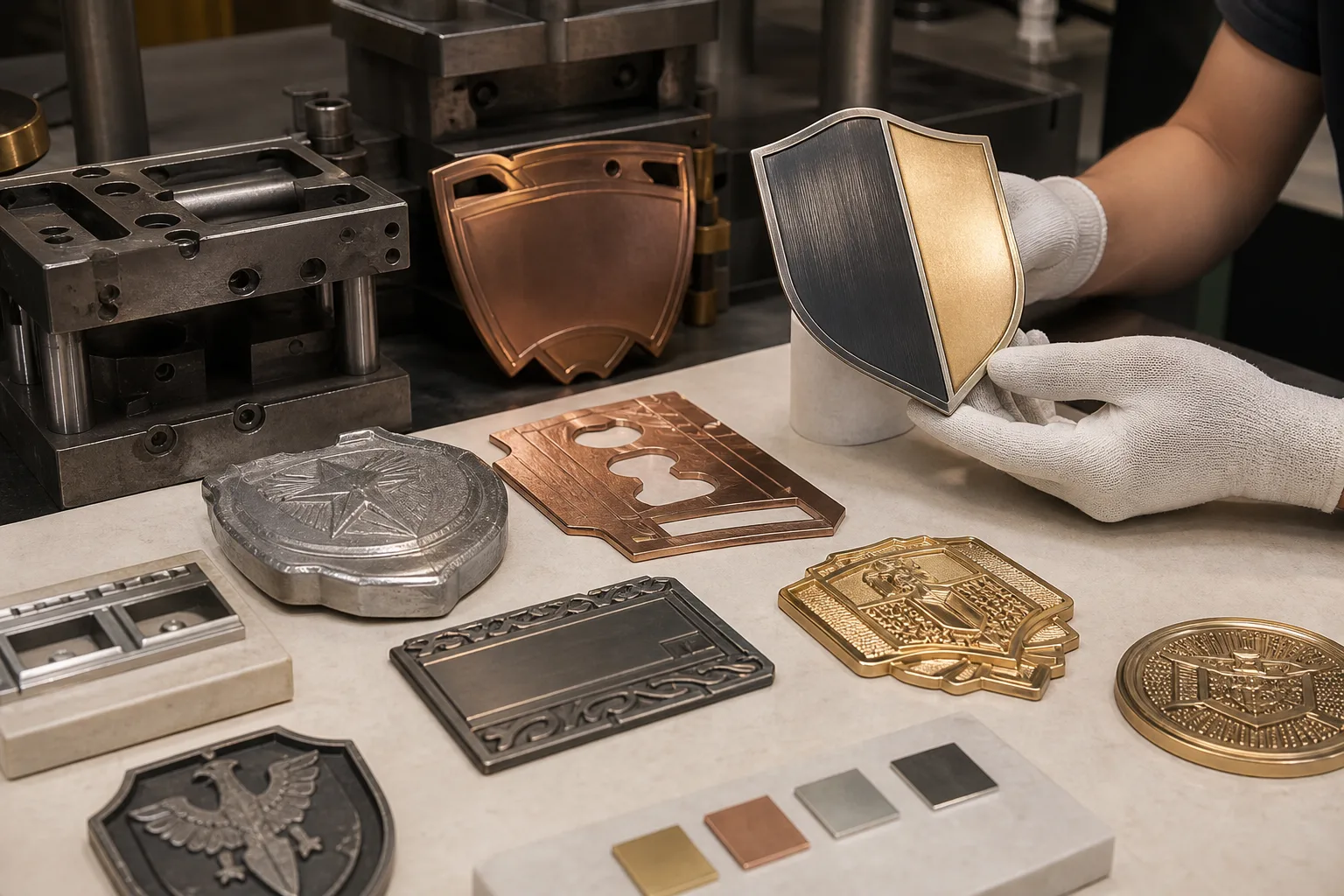
Gairun can process zinc alloy, brass, iron, stainless steel and aluminum for custom award components. The suitable metal depends on the proposed form, relief, surface treatment and component structure. Material selection is therefore part of the engineering review, not a stand-alone appearance choice.
Available forming routes include die-casting, stamping, photo etching and hydraulic high-relief forming. Die-casting can be considered for formed shapes and dimensional components. Stamping or die-struck production can support suitable metal-led designs, while photo etching and hydraulic high relief address different detail and relief requirements. Final process selection depends on the artwork and award structure.
Metal appearance can be developed with gold, silver, nickel, black nickel, antique bronze, antique silver or dual plating. Sandblasted and matte effects are also available. Bright and dark finishes can separate a logo from surrounding surfaces, while antique effects can make recessed and raised areas easier to distinguish. Dual plating uses two metal tones in one design, subject to review of the plating boundaries.
Finish names describe visual directions, not universal performance rankings. The proof should identify where each finish or surface effect appears, especially when an award has several connected metal parts.
Prepare Artwork and Personalization Data for Review
A useful award brief connects the visual concept with the order structure. Provide the award type, quantity, dimensions, logo, fixed wording and variable recipient details. Add the preferred metal, finish direction, packaging needs, destination and required schedule when known.
Separate fixed and variable information clearly. Fixed content may include the program name, company mark or event identity. Variable content may include recipient names, award levels, departments, dates or milestone wording. A structured recipient list reduces the risk of assigning the right text to the wrong award version.
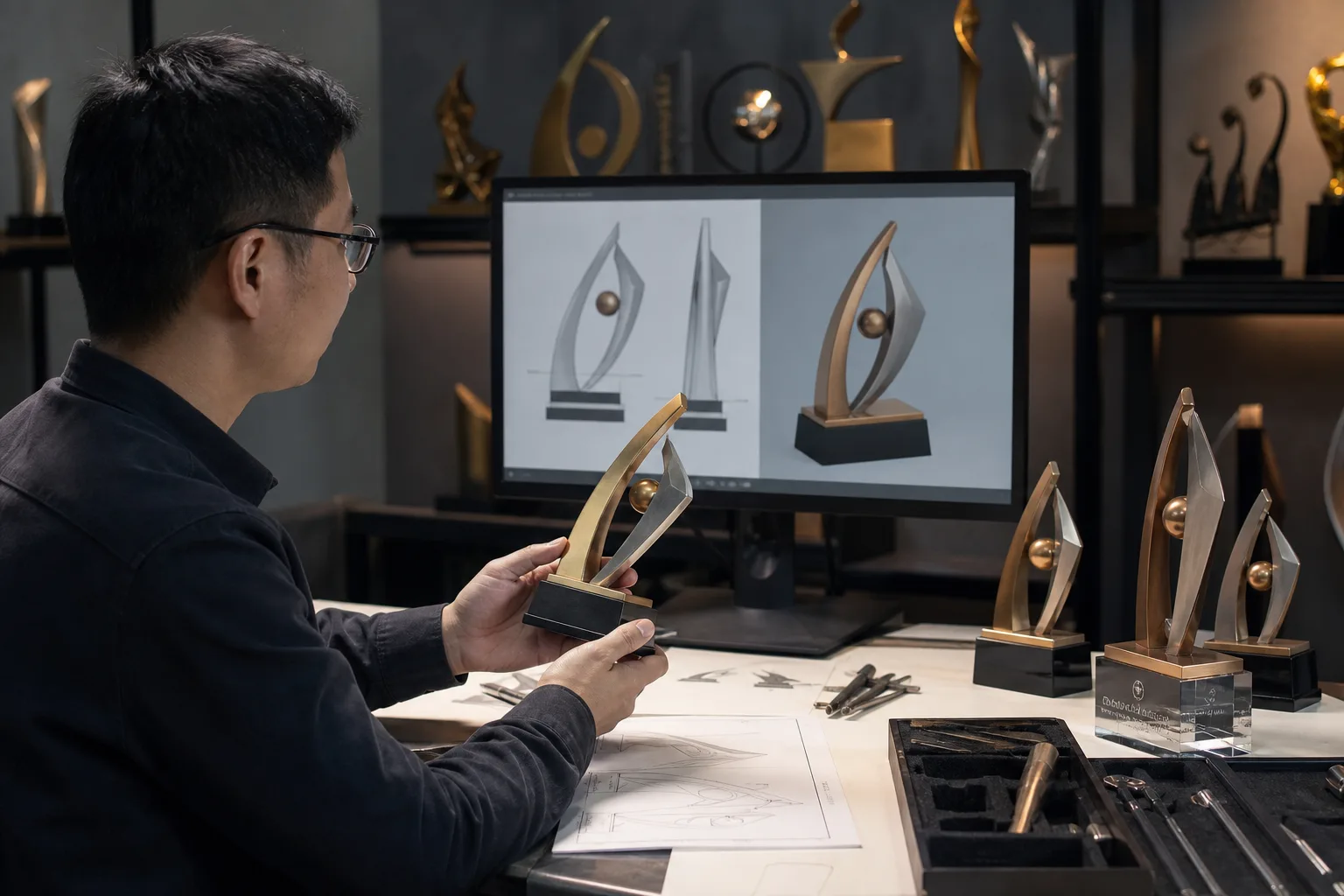
Our 2D and 3D design team can develop a free artwork proof within 24 hours from vector artwork, a PDF or a hand-drawn concept. This is pre-production artwork support, not a completed physical sample. The proof gives both parties a visual basis for checking dimensions, relief direction, component relationships and visible content.
Artwork approval must take place before tooling or production. If the design includes several award levels, show how the shape, wording or finish changes between them. This allows the review to address the full award family instead of treating each version as an unrelated item.
Plan Order Quantity, Sampling and Inspection
The standard minimum order quantity is 100 pieces per design. A 50-piece trial order may be supported for selected products, subject to the award design, process requirements and project review. Different recipient names do not automatically define separate designs, but the version structure must be reviewed with the artwork and quotation.
Custom sampling normally takes 7–10 working days. Standard bulk production normally takes 15–20 working days, and expedited production is supported. These periods refer to production stages and should not be treated as a guaranteed arrival date. The complete schedule also depends on specification approval, sampling decisions, packaging, destination and transport planning.
Relevant award inspection points
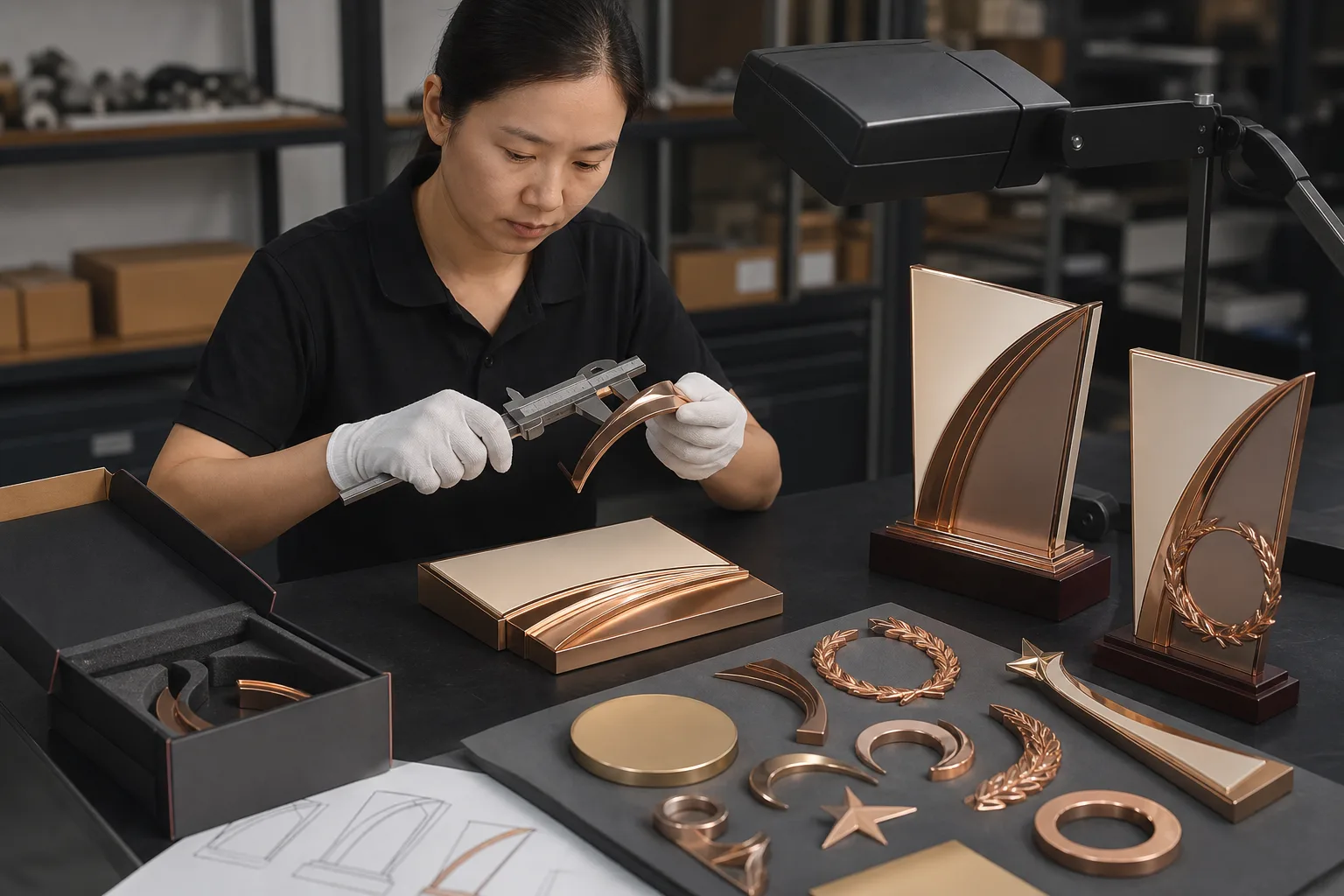
- First-article inspection compares dimensions, thickness and relief detail with the approved drawing after mold development and trial forming.
- In-process checks review burrs after forming, surface flatness after polishing, plating color and adhesion, and color application where used.
- Final visual inspection checks finished surfaces for scratches and reviews the completed assembly and packaging before shipment.
For mixed-material awards, the sample review should cover the complete composition rather than the metal component alone. Check the viewing angle, logo position, wording, finish direction and alignment between the award parts.