FACTORY-DIRECT OEM / ODM MANUFACTURING
Custom Challenge Coins Made to Match Your Program
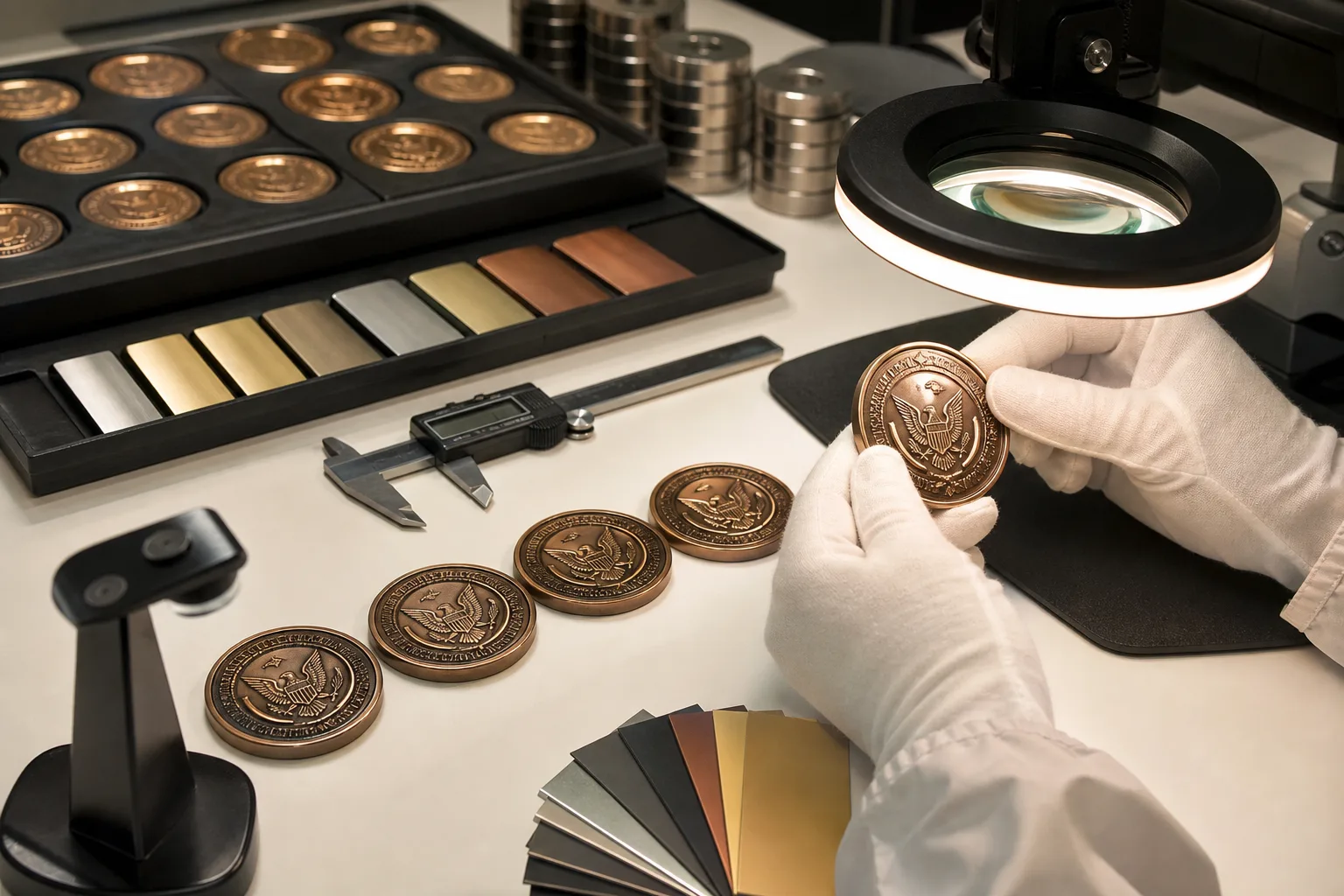
Gairun manufactures custom challenge coins and commemorative coins for military, public safety, corporate, association and collector programs. We turn supplied artwork, PDFs or hand-drawn concepts into production-ready coin designs with coordinated relief, plating, color and edge presentation.
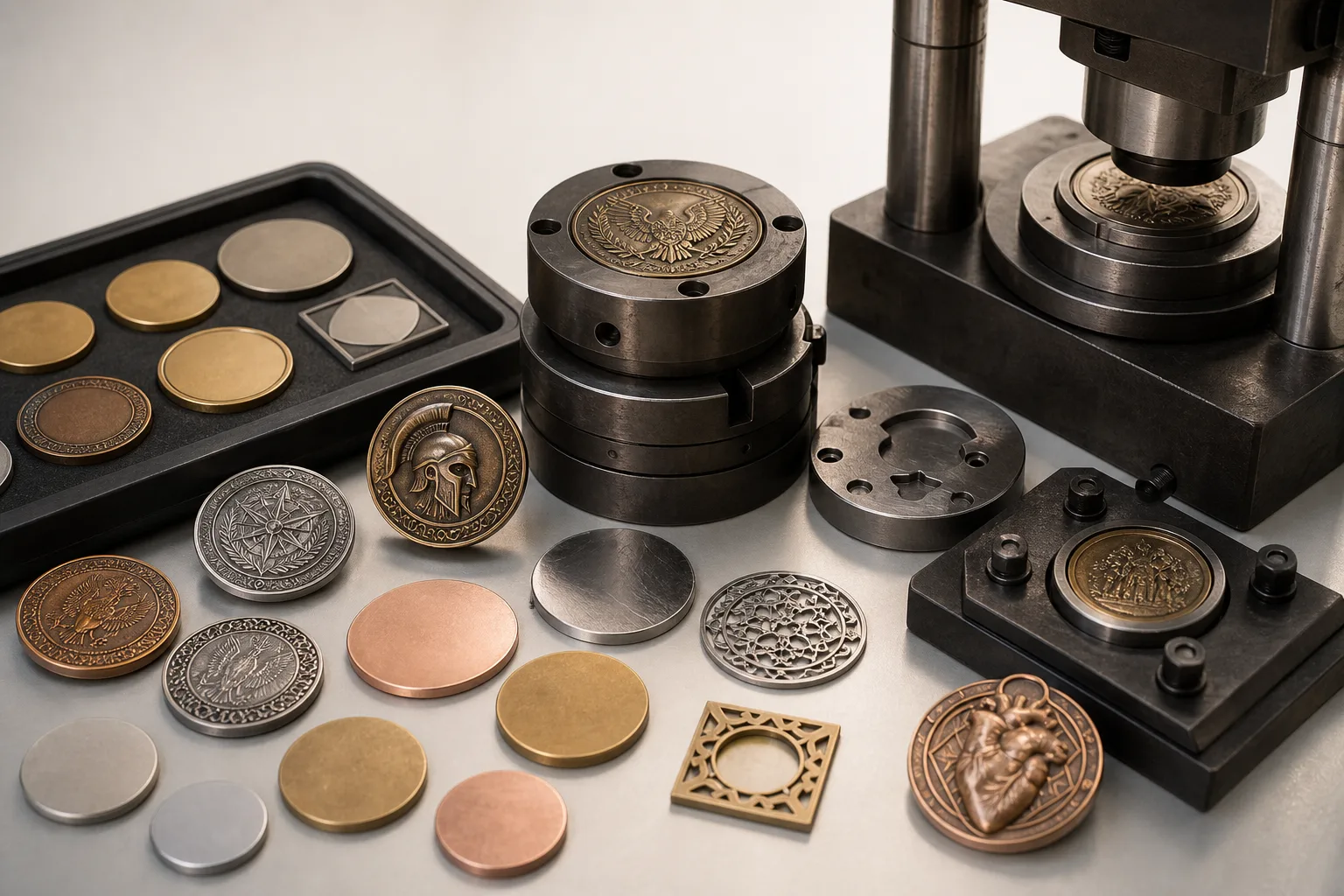
Our metal processing options include zinc alloy, brass, iron, stainless steel and aluminum. Available methods include die-casting, stamping or die-struck forming, photo etching and hydraulic high-relief work. Our 2D and 3D engineering team can also prepare a free artwork proof within 24 hours from the materials you provide.
Send your emblem, text, quantity and preferred coin details for engineering review, or request a challenge coin quote.
Start With the Coin's Purpose and Presentation
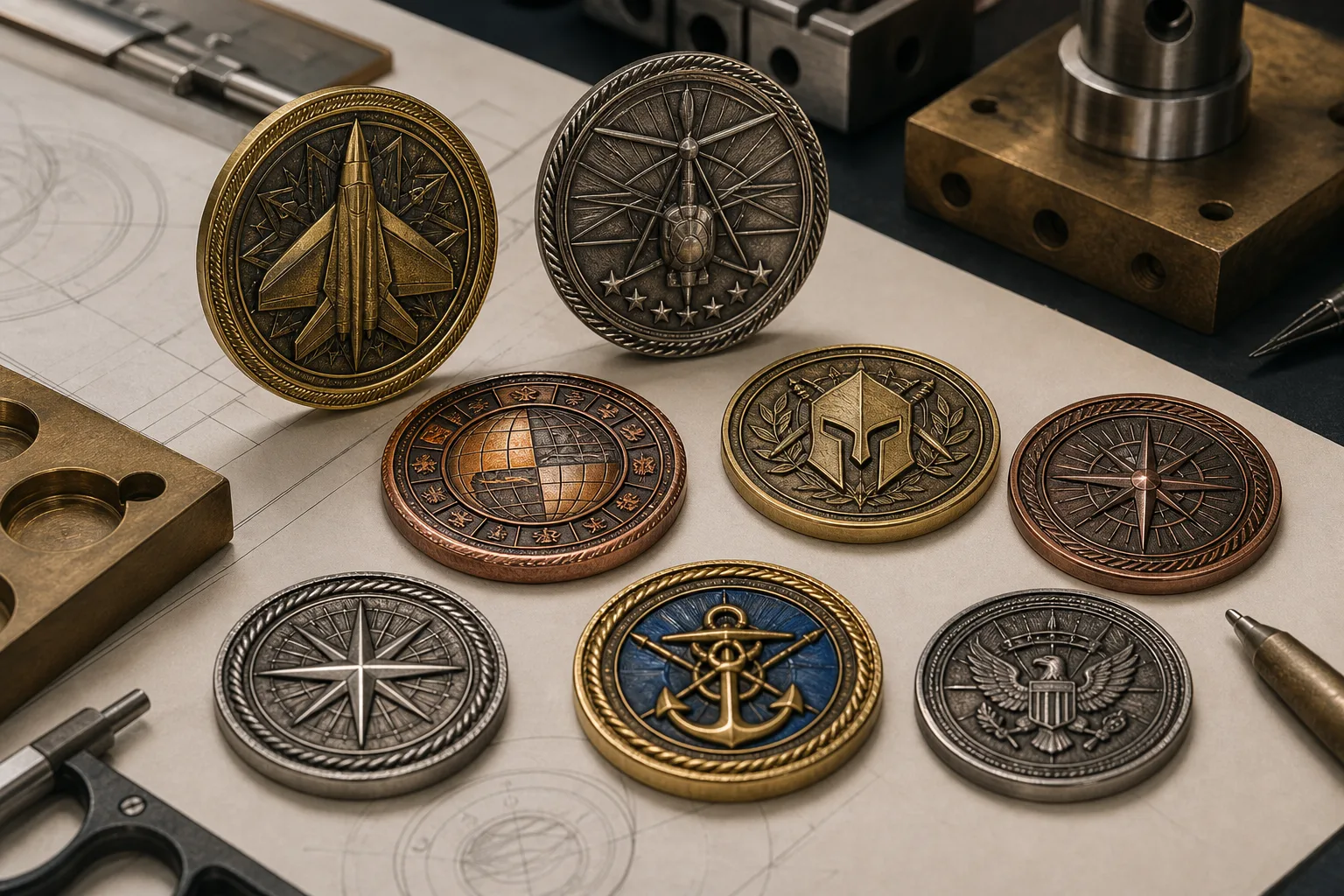
A clear program brief gives every later design choice a reason. First decide what the coin must represent, who will receive it and how it will be presented. A service emblem may need a strict information order, while an anniversary coin may place more weight on a date, company mark or milestone message.
Common formats produced by Gairun include military and public safety coins, corporate anniversary coins, institutional challenge coins, high-relief collector coins and dual-plated coins. Buyers with controlled emblems or departmental approval needs can review our military and public safety challenge coins. Company milestone projects have a separate path for corporate anniversary coins.
Define these program points before choosing a production method:
- Recipient group and reason for recognition or commemoration
- Emblem, logo, date, motto and other required content
- Information assigned to the front and reverse
- Order quantity and any design versions
- Presentation or packaging method
- People responsible for artwork and proof approval
Compare Metals and Coin Forming Methods
The base metal and forming route must work with the shape, relief and surface treatment of the coin. Gairun can process zinc alloy, brass, iron, stainless steel and aluminum. We review the complete design before recommending a material because the artwork, dimensions and planned finish affect the decision together.
| Option | Design point to review | Possible forming direction |
|---|---|---|
| Zinc alloy | Dimensional shapes, relief and overall geometry | Die-casting |
| Brass | Coin face, raised metal lines and relief structure | Stamping, die-struck work or hydraulic forming |
| Iron | Stamped layouts and defined metal areas | Stamping or die-struck work |
| Stainless steel | Artwork, shape and finish compatibility | Project-specific engineering review |
| Aluminum | Artwork, shape and finish compatibility | Project-specific engineering review |
| Photo-etched construction | Recessed graphic areas and surface layout | Photo etching |
| Hydraulic high relief | Deep or sculpted raised forms | Hydraulic pressing |
This table is a starting point, not a fixed material rule. Final feasibility depends on the complete coin specification. For a wider comparison across custom metal products, return to the custom metal products range.
Use Relief to Control the Visual Order
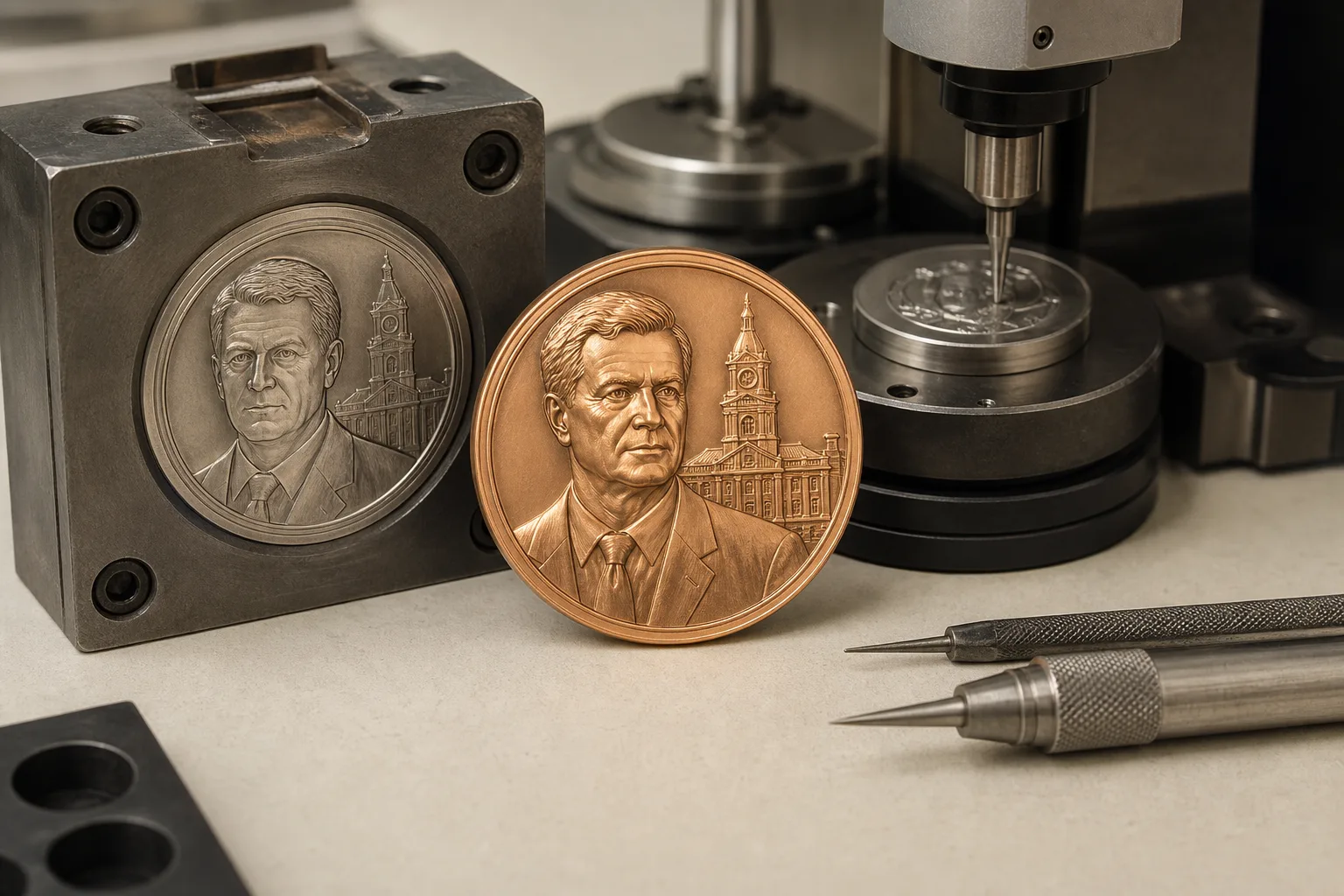
Relief is the difference between raised and recessed areas on a coin. It directs attention and separates the main subject from supporting details. A portrait, central emblem or anniversary number can occupy the dominant level, while background fields, secondary wording and texture remain lower.
Mark the most important feature in your artwork and state whether it should appear as flat raised metal, layered relief or a sculpted form. Reference images are useful when a face, building, vehicle or other three-dimensional subject must be interpreted from several angles.
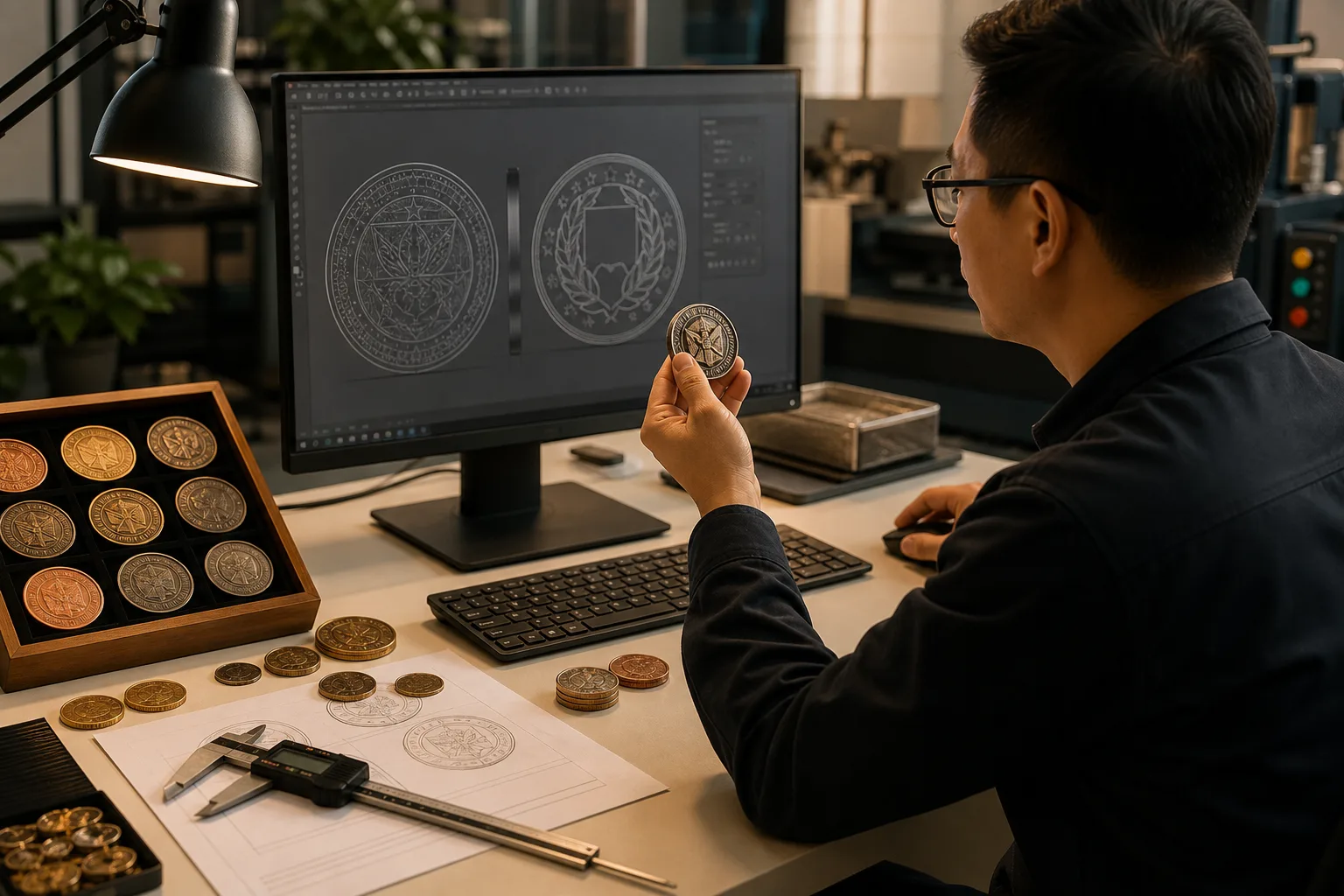
Our engineering team uses 2D and 3D design tools to develop the coin layout, while CNC mold engraving supports the tooling stage. After trial forming, first-article inspection compares the dimensions, thickness and relief detail with the confirmed drawing. Projects that depend on deep sculpting or two-tone separation can follow the more focused guidance for high-relief and dual-plated coins.
Select Plating for Contrast, Not Color Alone
Plating changes the metal appearance and affects how raised and recessed areas read together. Gairun offers gold, silver, nickel, black nickel, antique bronze, antique silver and dual plating. Sandblasted and matte effects are also available for surface contrast.
Choose a finish by looking at the artwork as a complete composition. Bright metal may draw attention to a border or central mark. A dark finish can change the contrast around lettering. Antique effects can emphasize recessed areas, while dual plating can separate selected parts of the design with two metal tones.
The name of a finish does not fully define the final presentation. Include a visual reference when a specific appearance matters, and identify which raised or recessed areas should receive special treatment. We confirm plating boundaries and surface effects during engineering review.
Choose Enamel, Printing or an All-Metal Face
A challenge coin does not always need color. All-metal artwork can rely on relief, plating and surface texture. Color becomes useful when a logo, flag, department mark or program identity must remain visually distinct.
Soft enamel creates colored areas between metal borders. Imitation hard enamel provides a smoother enamel presentation. Both methods require the color fields and metal divisions to work with the coin design. Screen printing can reproduce defined graphic details, while UV printing can be reviewed for fine marks, gradients or other artwork that is difficult to divide into enamel areas. Clear epoxy coating is available as an additional surface treatment.
Small text, narrow lines, gradients and closely spaced colors need engineering review before the decoration method is confirmed. In some designs, one method can handle the main color areas while another addresses a specific printed detail. The proof should show where each treatment will appear.
Coordinate the Edge, Border and Two Coin Faces
The edge is part of the complete coin structure. Its appearance must be considered with the border, thickness, front face and reverse face rather than added after the main artwork is finished.
Provide an edge reference image or describe the intended appearance. Edge feasibility is confirmed during engineering review because the suitable treatment depends on the coin structure and forming route. The review should also check:
- Text direction when the coin is turned from front to back
- Border width and continuity around both faces
- Alignment between major front and reverse features
- Visual balance near the outer edge
- The relationship between edge direction and the main upright view
Do not assume that an edge shown on a reference coin can be transferred unchanged to a new design. Dimensions, relief and border geometry may require a different production solution.
Prepare a Coin Proof Before Mold Work
Gairun’s 2D and 3D engineering team can prepare a free artwork proof within 24 hours from vector artwork, a PDF or a hand-drawn concept. The proof turns the starting materials into a clear visual plan for buyer review.
Provide the coin dimensions, front-and-back layout, exact text, color references, relief direction, preferred plating, edge description and packaging notes. Mark any element that cannot be altered, such as an official emblem, registered company mark or fixed commemorative date.
Review spelling, dates, text orientation, logo proportions, surface assignments and the relationship between both faces. Approval of the artwork proof confirms the visual direction for the next stage; it does not authorize mold work until the buyer has given the required confirmation.
Plan the Sample, Order Quantity and Coin Checks
The standard minimum order quantity is 100 pieces per design. A 50-piece trial order may be supported for selected products after review of the design and process requirements. It is not a universal MOQ. Custom sampling normally takes 7–10 working days.
Inspection continues through the coin production stages. First-article comparison covers dimensions, thickness and relief detail. In-process checks address burrs after forming, flatness after polishing, plating color and adhesion, and color overflow or missing color. Final visual inspection checks surface scratches and the overall appearance before shipment.
Use the custom sample to review the physical coin against the confirmed design. Any requested change should be assessed before bulk production so the team can determine whether it affects artwork, tooling, forming or finishing.