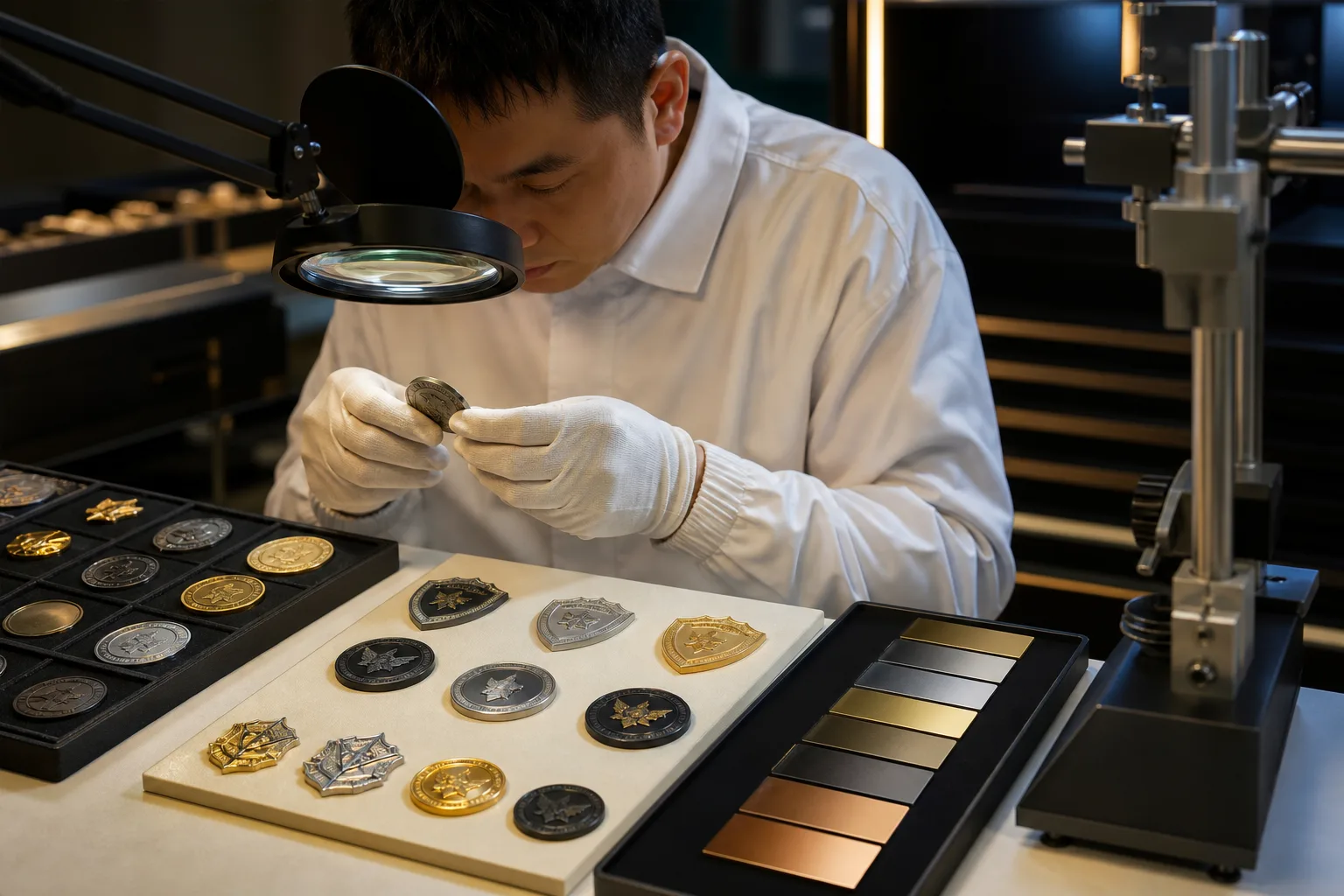
FACTORY-DIRECT OEM / ODM MANUFACTURING
Custom Metal Plating Capabilities for Awards and Promotional Products
Gairun is an OEM and ODM metal products manufacturer supplying factory-applied plating and surface effects for custom medals, challenge coins, pins, badges, trophies, plaques, keychains and bottle openers. We work with designers, sourcing teams, event organizers, institutions, brands and promotional product suppliers that need to confirm a finish before approving a design.
Our custom metal plating capabilities include gold, silver, nickel, black nickel, antique bronze, antique silver and dual plating. Sandblasting and matte finishing are also available when the design calls for a less reflective surface or contrast between selected areas.
Send us the product type, artwork and preferred finish so our team can review the visual direction and finish placement. For broader process information, visit our manufacturing capabilities page.
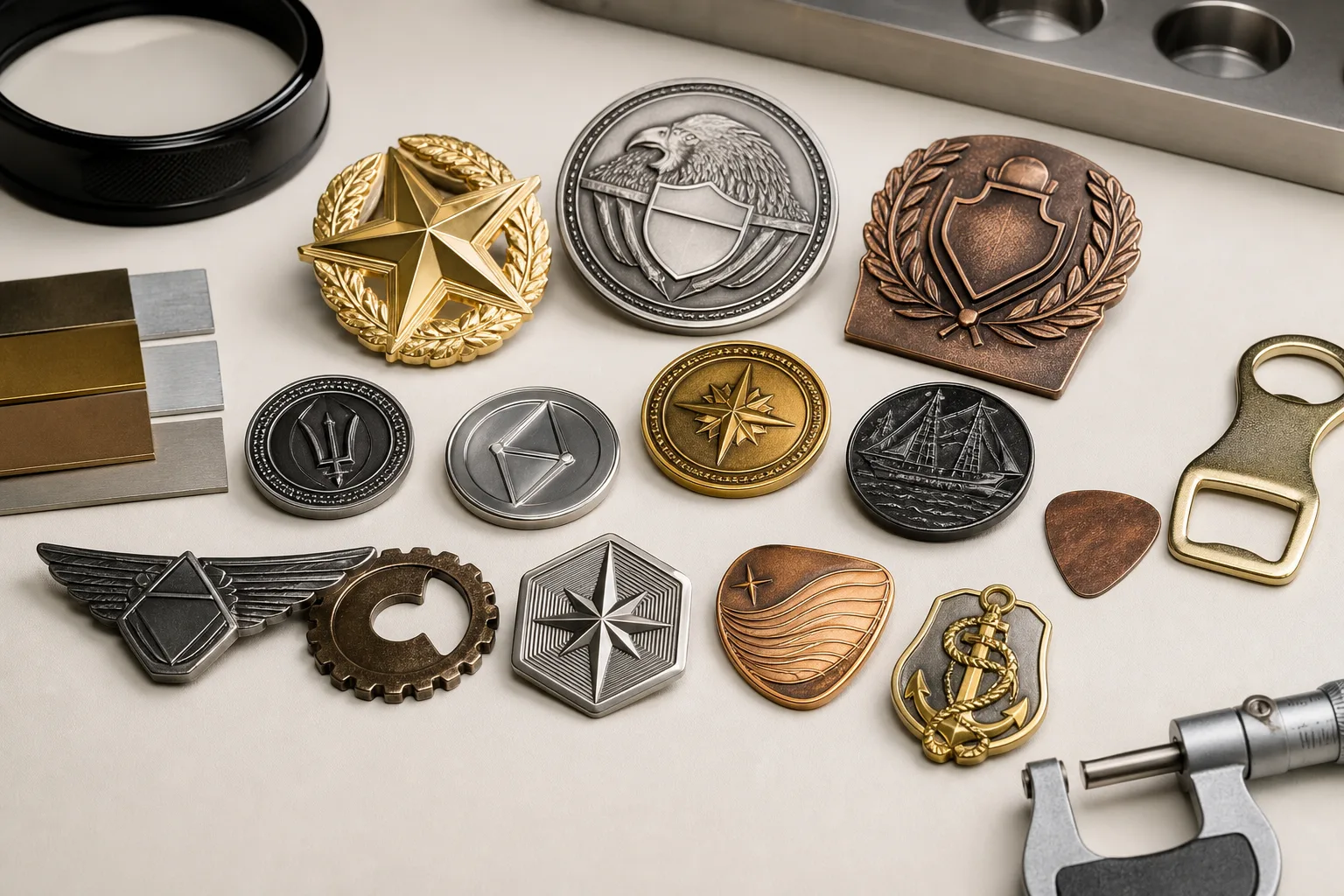
Available Plating and Surface Finish Options
A finish affects the visible metal color, contrast and overall character of a custom product. Bright plating can give the product a clean metallic appearance. Dark and antique finishes can place more emphasis on relief, borders or recessed details. Dual plating can separate two design areas with different metal tones.
| Finish group | Available options | Typical design direction |
|---|---|---|
| Bright metallic plating | Gold, silver and nickel | Clear metallic color for formal, branded or presentation-led designs |
| Dark plating | Black nickel | A darker metal field or contrast against other design elements |
| Antique effects | Antique bronze and antique silver | An aged metal appearance with stronger visual depth |
| Two-tone plating | Dual plating | Two metal tones used to separate selected areas on one product |
| Non-gloss surface effects | Sandblasting and matte finishing | Reduced brightness or controlled contrast between surfaces |
The final result depends on the product geometry, relief layout and nearby decoration. A named finish should therefore be reviewed as part of the complete artwork rather than selected from its name alone.
Gold, Silver and Nickel for Bright Metallic Designs
Gold, silver and nickel plating are available for custom metal products. These options provide different metal-color directions without changing the main artwork. The choice often starts with the brand identity, award level, presentation setting or contrast required around a logo and message.
Gold plating
Gold plating can support designs that call for a warm metallic color. It may be considered for recognition awards, event medals, commemorative products and branded pieces where the metal tone is part of the presentation concept.
Silver plating
Silver plating provides a light, neutral metal direction. It can work with many logo colors and can provide clear separation around raised or recessed artwork. Buyers may also use gold and silver directions to distinguish award levels or product versions, subject to design review.
Nickel plating
Nickel is another available metallic finish. It should be compared with silver plating against the actual artwork and intended visual result. We do not assume that the two finishes are interchangeable because the selected product shape, relief and adjacent decoration can change how each surface appears.
Gairun processes zinc alloy, brass, iron, stainless steel and aluminum. Finish suitability must be confirmed for the selected base metal and product structure. Not every finish should be treated as universally suitable for every material.
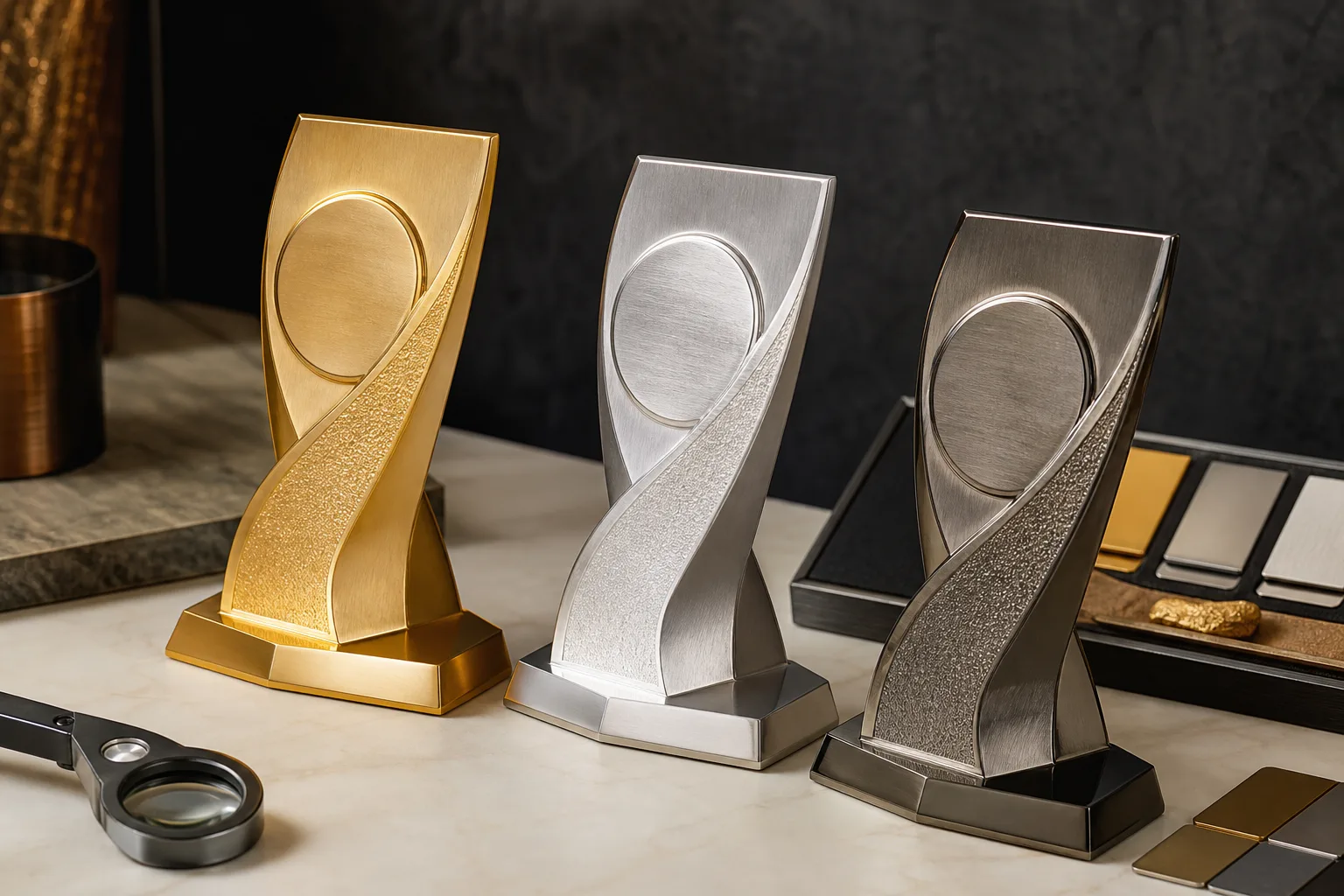
Use Black Nickel to Build Dark Metal Contrast
Black nickel is available for projects that need a darker plating direction. It can form a dark metal field around raised artwork, provide contrast beside colored areas or support a brand concept that does not suit a bright gold or silver appearance.
The finish should be assessed with the complete visual hierarchy. Key logos, lettering and relief details still need to remain distinct from the surrounding surface. Adjacent colors can also change the perceived darkness and contrast of the plated areas.
Black nickel does not define one guaranteed shade or gloss level for every project. Product geometry and other decoration choices can influence the result. Include a clear reference for the intended appearance and identify which areas must remain visually dominant when submitting the artwork for review.
Create an Aged Metal Look with Antique Finishes
Antique bronze and antique silver are available when a design calls for an aged metal appearance instead of a uniformly bright plated face. These effects are often considered for commemorative artwork, traditional emblems, sculpted designs or products where visible relief is central to the concept.
Antique bronze
Antique bronze gives the product a warmer bronze color direction. It can suit artwork intended to feel traditional, historical or understated without relying on bright gold plating.
Antique silver
Antique silver keeps the design within a cooler silver-gray metal direction. It may be used when the buyer wants an aged appearance while retaining a lighter metal color than an antique bronze concept.
The choice should be reviewed against the relief, recessed areas and product geometry. A broad flat badge and a deeply sculpted coin may not present the same antique effect, even when the finish has the same name. Our engineering review can assess whether the proposed finish supports the intended artwork hierarchy.
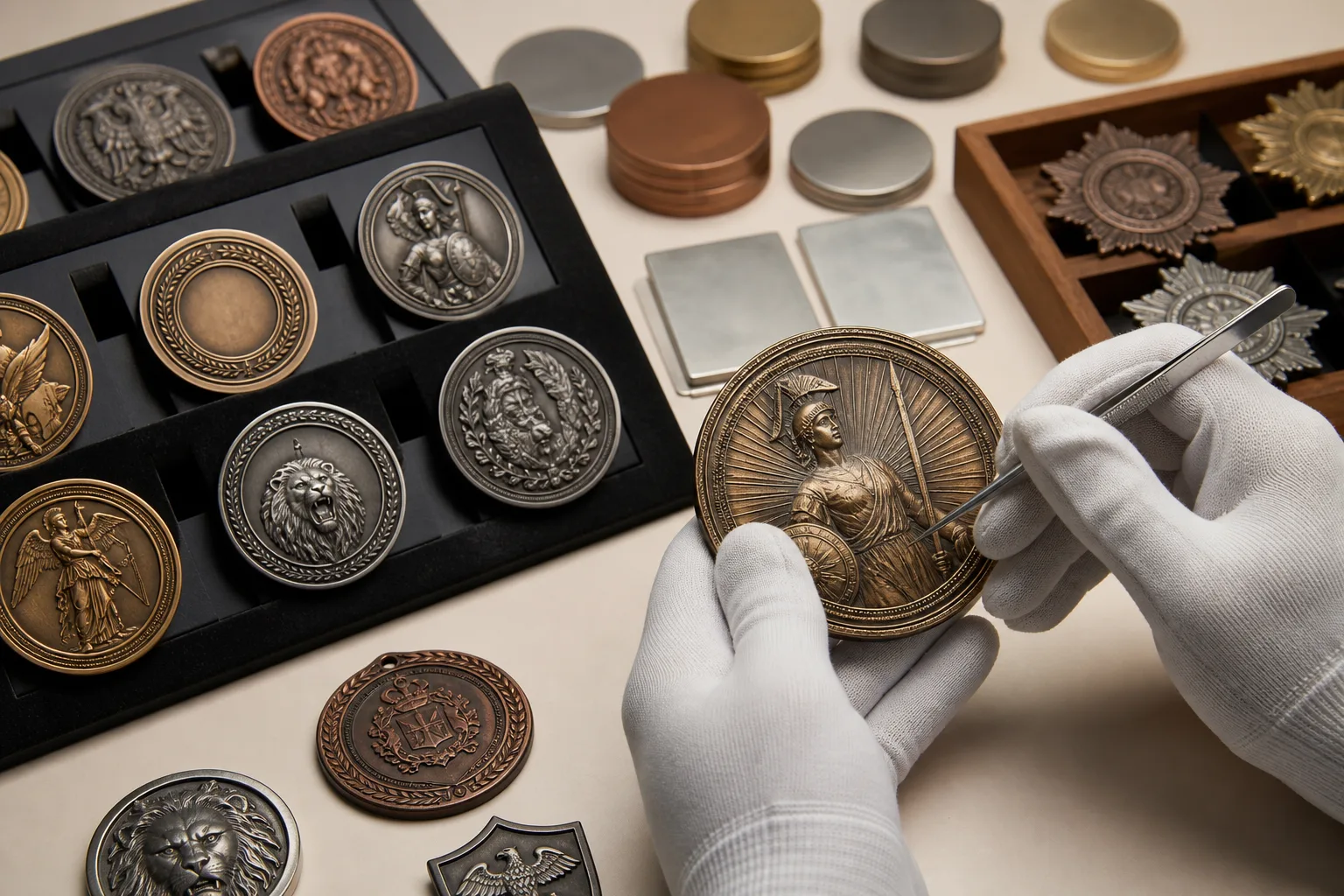
Separate Design Areas with Dual Plating
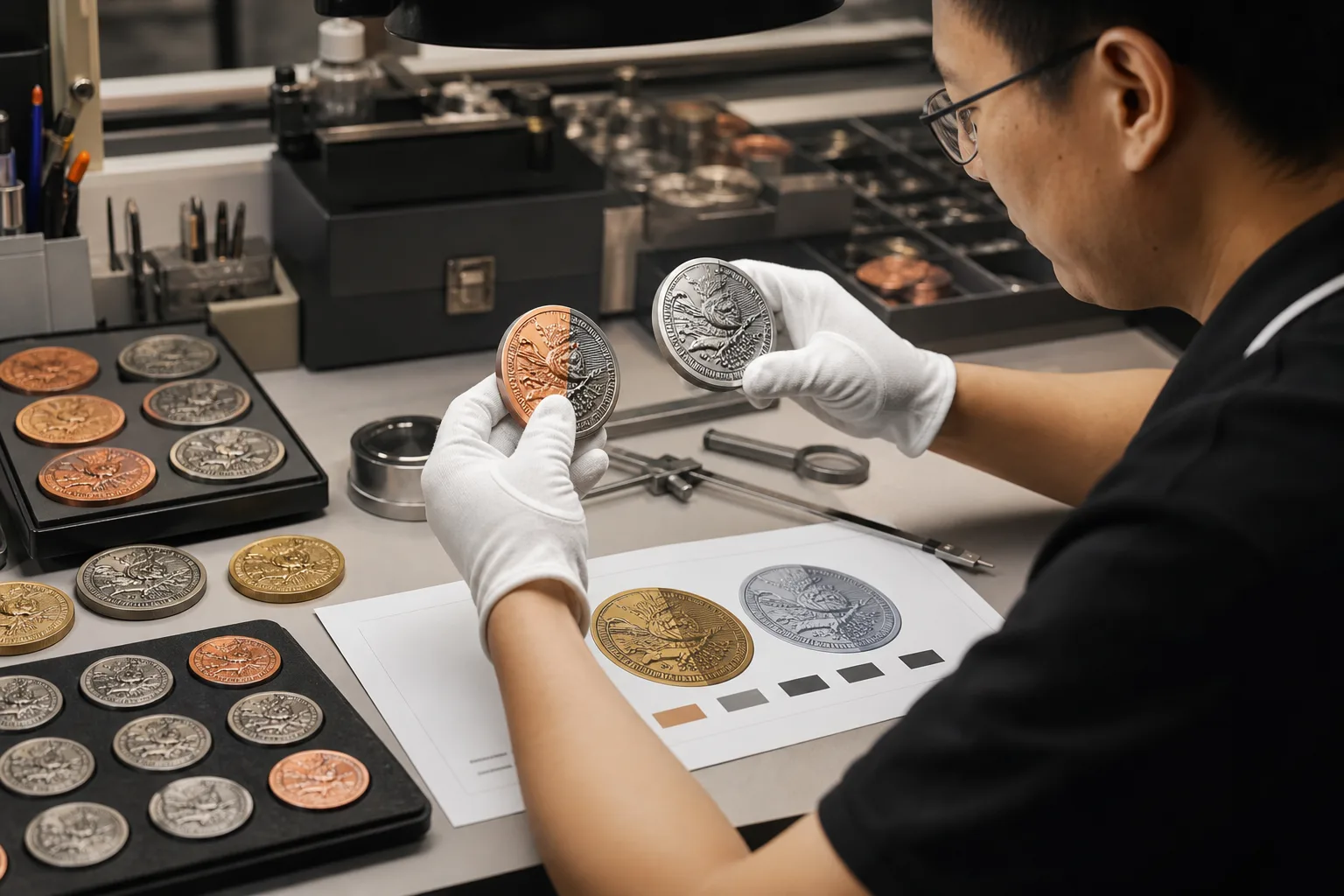
Dual plating places two plating tones on one custom metal product. Gairun offers this capability for designs that need a stronger distinction between separate areas, such as a central emblem and outer border, foreground and background, or two defined sections of a commemorative design.
A workable dual-plating brief must show where each tone belongs. The artwork should identify:
Clear boundaries are important because dual plating is a planned design treatment, not a general instruction to add two colors wherever they fit. Our engineering review service covers finish boundaries, relief areas and intended surface direction before tooling.
For coin projects that combine sculpted relief with two metal tones, see our high-relief and dual-plated coins page.
01
The two requested plating directions
02
The boundary between the plated areas
03
Raised and recessed regions related to each tone
04
The design element that should receive the strongest visual emphasis
05
Any nearby color or printed detail that affects contrast
Control Surface Brightness with Sandblasting and Matte Finishing
Sandblasting and matte finishing are available in addition to metallic plating. Both can reduce a fully bright visual appearance, but they describe different surface directions.
A sandblasted area has a visibly textured, non-mirror character. It can be specified for selected background fields or other areas where a textured surface supports contrast. A matte finish describes a low-gloss visual direction. It can be considered when the product should appear less reflective without making bright plating the dominant feature.
These terms do not establish an exact texture grade, roughness value or gloss level. If a specific appearance matters, provide a visual reference and mark the intended area on the drawing. Our review will consider the surface effect together with product geometry and adjacent finishes.
Preparation stages such as polishing and cleaning are covered separately under polishing and surface preparation.
Match the Finish to the Product and Artwork
The same plating option can serve different roles across our custom metal product range. A finish on a medal may support an award level, while the finish on a challenge coin may define the border around an emblem. On a pin, the metal tone may frame small color areas. On a trophy or plaque, it may need to coordinate with other visible components.
Use these questions to narrow the direction:
- Which metal color fits the brand, event or recognition program?
- Should the product appear bright, dark, aged, two-tone or low-gloss?
- Which logo, message or relief feature needs the strongest contrast?
- Are the key areas raised, recessed or located on separate components?
- Will nearby color decoration change how the metal surface is perceived?
- Does the finish need to distinguish award levels, departments or product versions?
Gold, silver and nickel can support bright metallic concepts. Black nickel provides a darker direction. Antique bronze and antique silver create an aged appearance. Dual plating separates selected areas with two metal tones, while sandblasting and matte finishing reduce surface brightness. For a broader buyer comparison, read the metal finish selection guide.
Prepare a Clear Finish Brief for Technical Review
A useful finish review starts with a defined product and marked artwork. Provide the product type, drawing or artwork, dimensions, quantity and preferred plating or surface effect. For dual plating, label the location of each metal tone instead of describing the placement only in an email.
Also include any required color direction, packaging needs, delivery destination and project schedule. These details allow the finish choice to be considered within the complete project rather than as an isolated visual preference.
Gairun provides 2D and 3D artwork and engineering support for reviewing finish placement and design intent before production. During production, plating-stage inspection includes checks for color difference and adhesion. Detailed inspection methods and physical testing are covered on our quality control and product testing page.
When the product, quantity and finish direction are defined, submit them through our request a quote form for commercial and technical review.