
FACTORY-DIRECT OEM / ODM MANUFACTURING
Custom Soft Enamel Pins with Recessed Color Detail
How Soft Enamel Creates a Textured Pin Surface
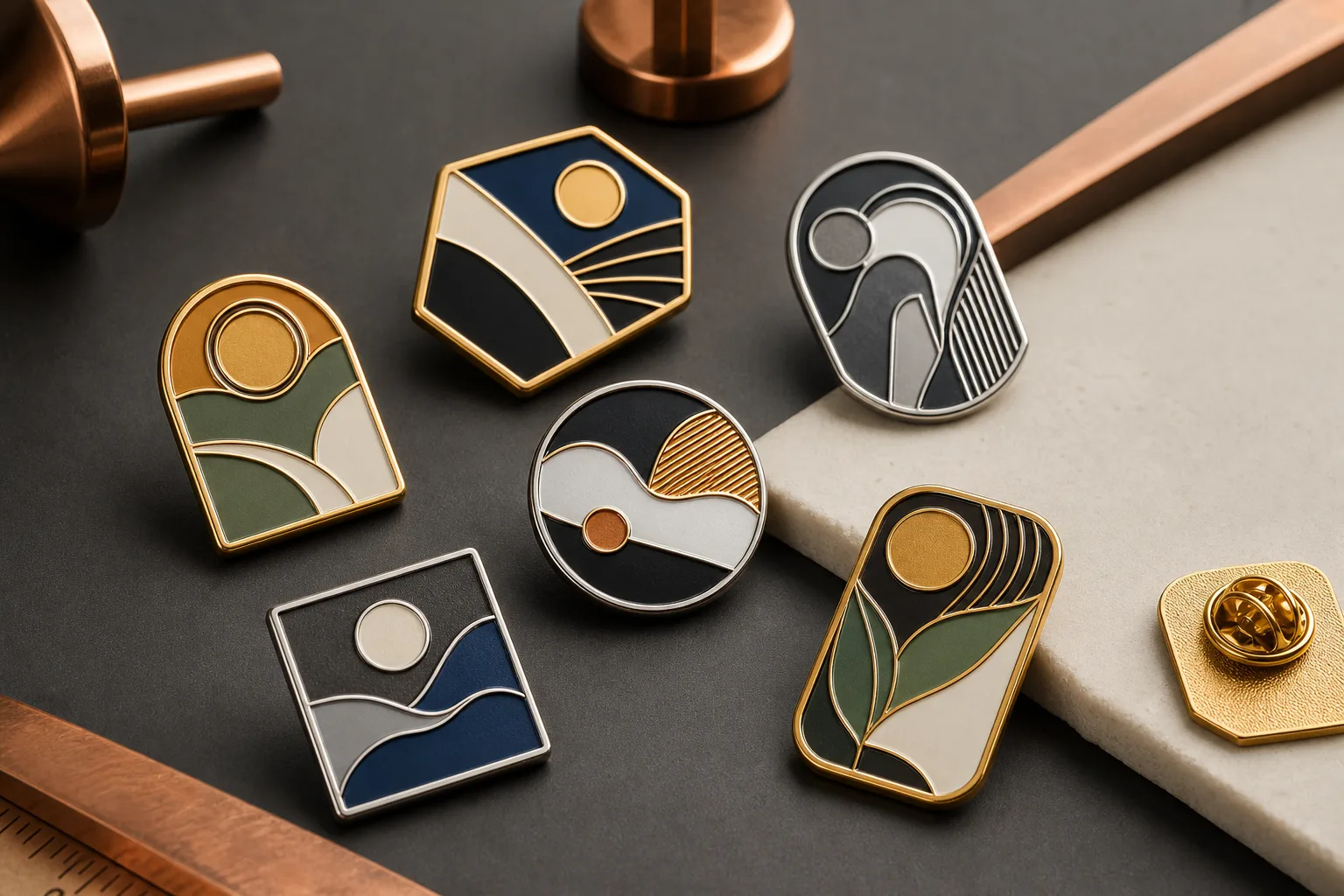
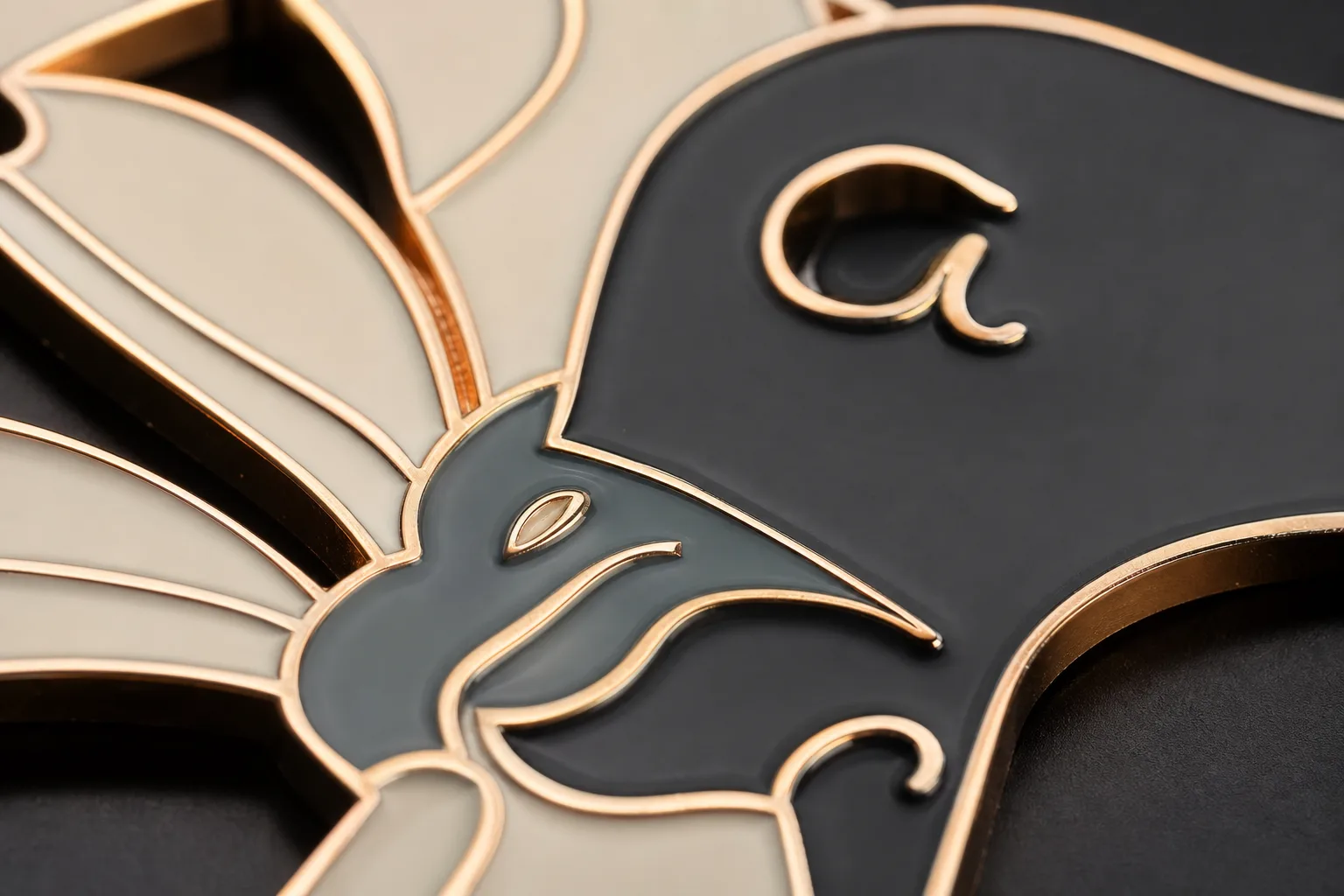
A soft enamel pin has colored areas that sit below the surrounding metal. The raised metal lines remain visible and can be felt across the face of the pin. This height difference gives the design its recessed, textured character.
The metal base first establishes the pin shape, outlines and internal design features. Enamel color is then placed into the recessed cells. Gairun uses automatic color dispensing as well as automatic and manual coloring methods. The applicable coloring route depends on the layout and production requirements of the design.
This construction makes the metal part of the artwork instead of treating it only as a background. A logo may use plated outlines to define letters, divide colors and frame the outside edge. The result combines colored enamel with a clearly visible metal structure.
Choose Artwork with Clear Enamel Color Areas
Logos, emblems, symbols, simple illustrations and short text can work well as custom soft enamel pins. The strongest starting designs usually have clear shapes and color zones that can be separated by metal lines.
Artwork does not need to arrive as a finished production file. Our engineering team can review vector artwork, a usable PDF or a clear hand drawing. However, the design still needs enough information to identify the intended shapes, colors and text.
Design features to identify during review
- The outside pin shape and required dimensions
- Each enamel color area and its color reference
- Text, dates and small brand marks that must remain readable
- Raised, recessed or plain metal areas
- Front and back details, including the attachment position
Narrow lines, small text and tightly spaced details need engineering review. Their suitability depends on the complete design, pin dimensions and forming method. We do not apply one unverified minimum line width or font size to every project.
Complex gradients, photographic images and graphics with no workable color boundaries may require a different decoration method. Those projects can be reviewed through our printed and epoxy-coated badge route.
Use Raised Metal Lines to Separate Enamel Colors
Each soft enamel color must occupy a defined recessed area. Raised metal lines create the boundaries between those areas. They prevent adjacent colors from becoming one uncontrolled shape and help preserve the structure of the original artwork.
For example, a two-color emblem may need a metal line between its color fields. Letters can also require metal around their strokes so that the surrounding enamel does not fill the letter openings. On personalized enamel badges, the outside border can frame the complete design while internal lines organize smaller details.
Metal lines affect appearance as well as production. A bright plated line can create strong contrast against dark enamel. Black nickel can produce a darker outline direction. Antique finishes can make recessed and raised areas read differently, depending on the artwork. The proof should show these relationships before mold development begins.
Coordinate the Base Metal, Forming Route and Plating
Gairun processes zinc alloy, brass, iron, stainless steel and aluminum. Available forming capabilities include stamping and die-casting. The correct combination is not selected from color alone. It must be confirmed from the pin shape, dimensions, relief, edge design and intended appearance.
Plating defines the visible metal borders and any uncolored metal surfaces. Verified options include gold, silver, nickel, black nickel, antique bronze and antique silver. Dual plating, sandblasting and matte finishing are also available for designs that need those effects.
| Design decision | What it controls | What to provide |
|---|---|---|
| Base metal | The material used to form the pin | A preferred material, if specified, or permission for engineering review |
| Forming route | How the shape, borders and relief are produced | Pin dimensions, shape and front-and-back artwork |
| Plating | The appearance of raised outlines and exposed metal | A finish name or clear visual reference |
| Enamel direction | The location and identity of recessed colors | Color references and marked color areas |
| Surface effect | Bright, antique, matte or mixed metal presentation | The intended visual result and any priority details |
Our review connects these decisions rather than treating each option separately. A plating choice that works for one logo may not provide the same separation in another design. The artwork proof is used to confirm the complete direction.
Decide Whether to Add a Clear Epoxy Coating
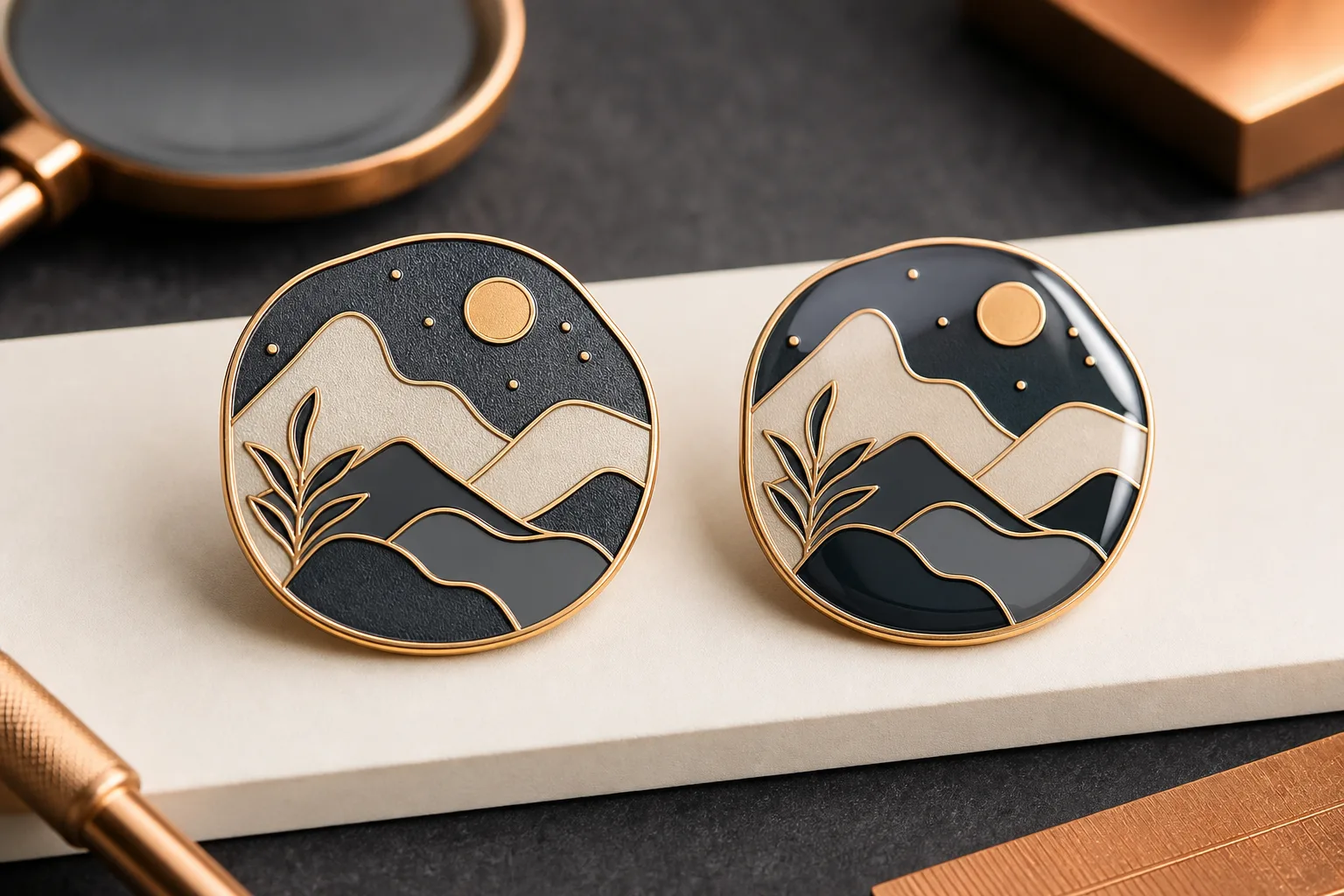
A transparent epoxy coating can be added over the soft enamel surface as an optional post-treatment. It places a clear covering over the recessed enamel and raised metal details. Epoxy is not a standard requirement for every order.
The choice changes how the finished face is presented. Without epoxy, the height difference between the enamel and metal remains directly exposed, preserving the original recessed texture. With epoxy, the clear layer covers that surface relationship. Buyers should decide which presentation better matches the intended use and brand appearance.
When requesting epoxy, identify whether it applies to the full decorated face and include it in the artwork and quotation brief. Our enamel, printing and epoxy finishing capability page provides more information about the available decoration processes.
Approve the Artwork Proof Before Mold Development
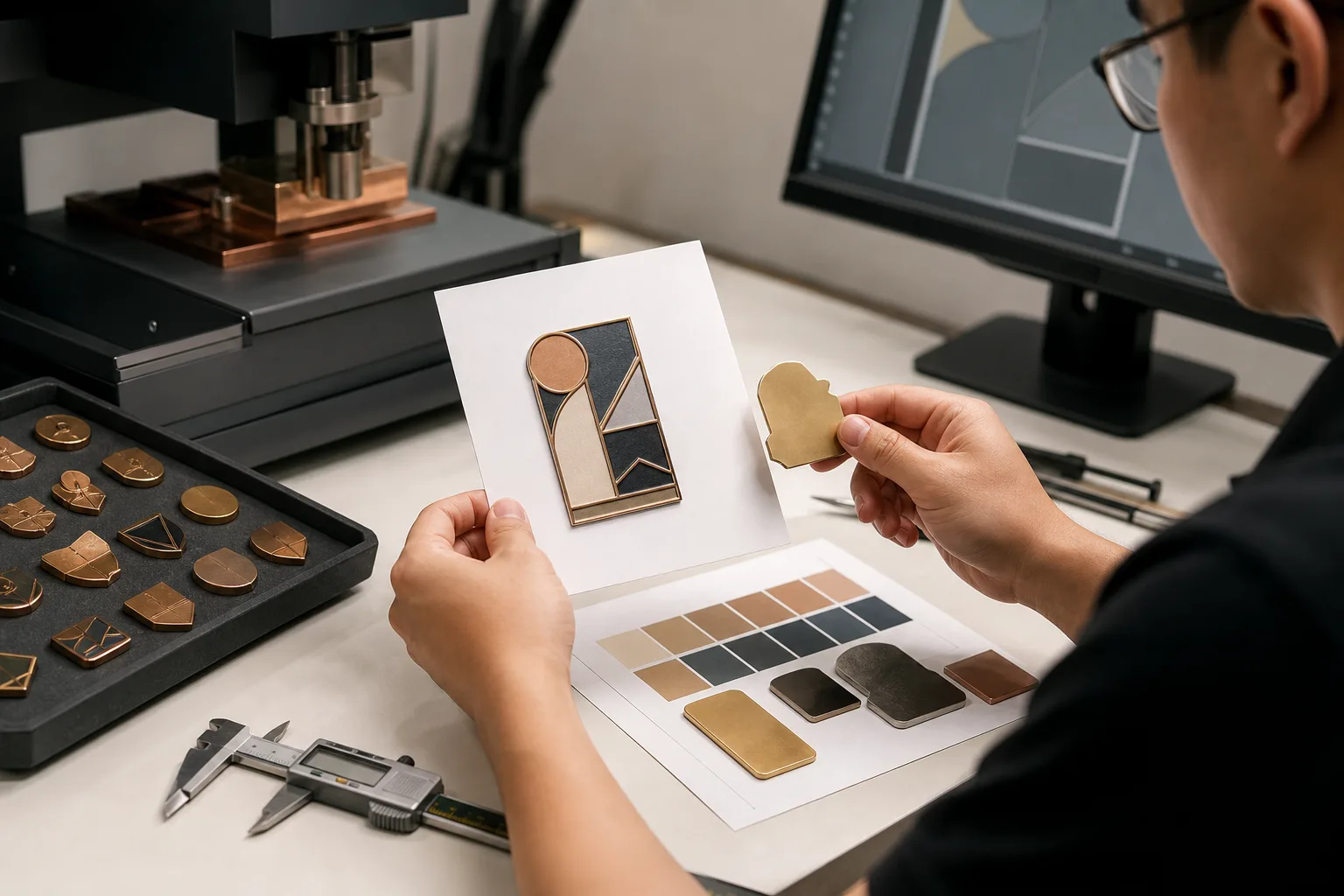
A production proof turns the supplied concept into a controlled reference for manufacturing. Gairun has a 2D and 3D engineering team that can prepare a free artwork proof within 24 hours from vector art, PDFs or hand drawings.
For a useful review, provide the intended pin dimensions, enamel colors, plating direction, front and back details, and attachment notes with the source artwork. A clear sketch can establish the concept, but logos, wording and color references should be as complete as possible.
Review the proof for spelling, shape, color placement, metal borders and the position of each feature. Buyer approval must take place before mold development. This separates design authorization from production and provides a shared visual reference for the later inspection stages. More detail about file handling and approval is available through our artwork design and proofing service.
Inspection Focus for Recessed Enamel Pins
Soft enamel inspection must cover both the formed metal and the applied color. Gairun compares dimensions, thickness and relief detail with the drawing during first-article inspection after mold engraving and trial forming.
In-process checks follow the pin through the main production stages:
Before shipment, finished products receive a full visual inspection for surface scratches. Attachment security is also checked as part of the final inspection. These checks address the details that can change the appearance or assembly of the personalized enamel badge. Exact tolerances and project-specific inspection requirements should be defined during order review when they are required.
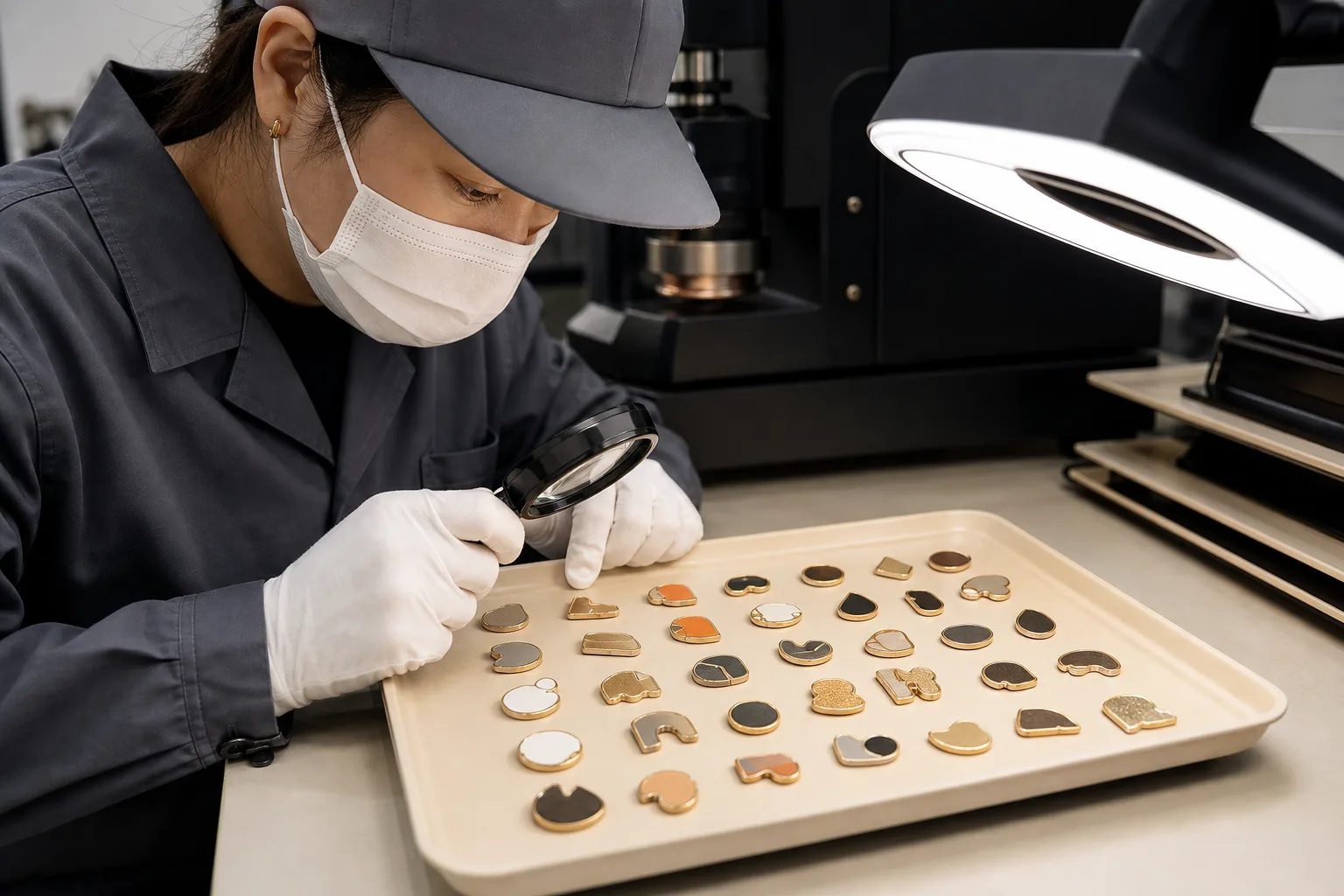
01
Formed parts are checked for burrs after stamping or die-casting.
02
Polished surfaces are checked for flatness.
03
Plated parts are checked for color difference and plating adhesion.
04
Colored areas are checked for enamel overflow and missing color.
Questions About Custom Soft Enamel Pins
Prepare a Complete Soft Enamel Pin Quote Request
A complete RFQ allows us to review the design and commercial scope together. Include the artwork file, order quantity, dimensions, preferred material or process, plating, enamel colors, epoxy preference, attachment, packaging, destination and required schedule.
The standard MOQ is 100 pieces per design. A 50-piece trial order may be supported for selected products, subject to the design, process requirements and factory review. The final order terms depend on the confirmed specification.
Use the request a quote form to submit your requirements for technical review and project-specific pricing.