FACTORY-DIRECT OEM / ODM MANUFACTURING
Custom Hard Enamel Pins with a Smooth, Polished Face
How Imitation Hard Enamel Creates a Smooth Pin Surface
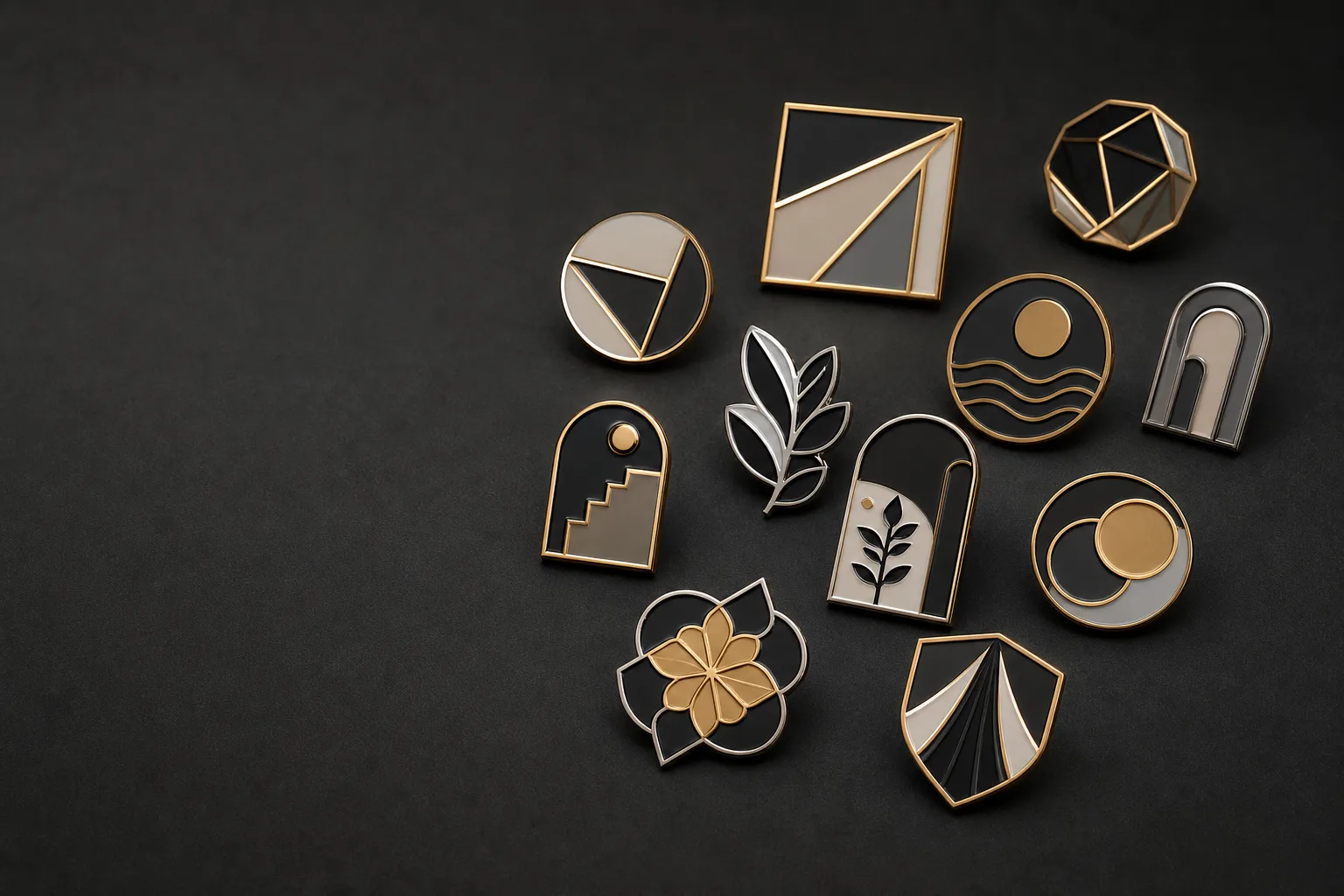
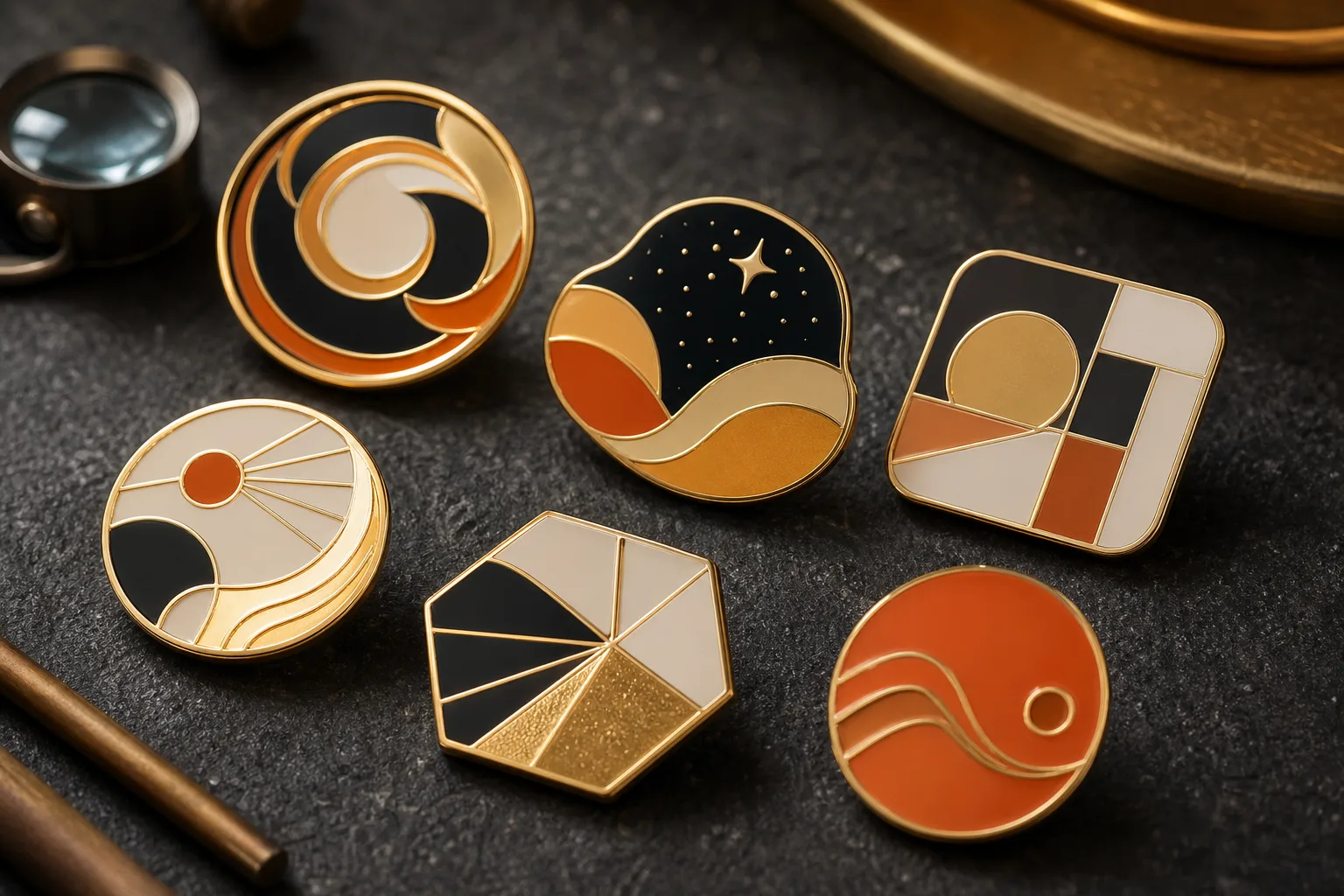
An imitation hard enamel pin has colored areas finished level with the surrounding metal lines. The result is a flat, polished face rather than a surface with visibly recessed color. This construction is often called hard enamel because of its smooth appearance, although the production method is imitation hard enamel.
The metal structure defines the pin shape, design lines and separate color cells. Enamel is applied within those cells and finished to create an even face. The exposed metal remains visible as outlines, lettering or other design details. The balance between enamel and metal affects how clearly the image reads at the final pin size.
Gairun operates automatic color dispensing equipment and both automatic and manual coloring areas. The selected coloring route depends on the artwork, color layout and production review. Buyers who need to compare this surface with other badge constructions can first review our broader range of custom lapel pins and badges.
Choose Artwork with Clear Shapes and Controlled Color Fields
Custom hard enamel pins work well for artwork that can be divided into distinct shapes. Clean logos, emblems, mascots, symbols and short lettering can often be translated into separate enamel areas with metal lines between them.
A design does not need to start as pin-ready artwork. It does need a clear visual hierarchy. The main mark should remain easy to identify after it is reduced to the intended pin dimensions. Small supporting details must not compete with the primary symbol or text.
Artwork features to review
Gradients, photographic shading and color changes without clear boundaries may require a different decoration method. Our artwork design and proofing service can translate an early concept into a visual proof for review before tooling.
Outline shape
The outer profile must match the intended badge or pin silhouette.
Color fields
Each enamel area needs a defined boundary that can be represented in metal.
Lettering
Text must remain open and readable when converted into metal and enamel.
Positive and negative space
Gaps between design elements must stay visually distinct.
Front and back content
Rear marks, wording and the attachment position need to be identified separately.
Use Metal Borders to Separate Every Enamel Color
Metal borders are part of the design, not just a production detail. They form the edges of letters and symbols, divide adjacent enamel colors and preserve the boundaries between small graphic elements. Their plating color also contributes to the finished appearance.
Two enamel colors that meet without a defined metal division may not match the structure required for this process. The artwork proof therefore maps each color into an enclosed or clearly controlled area. A border can also help a light color remain visible beside a similar tone.
Crowded text, very small gaps and unclear transitions require engineering review. The practical solution may be to simplify a minor detail, enlarge a critical opening or adjust the metal-line layout. We do not apply a single dimensional rule to every design because the feasible structure depends on the total pin size, forming route, lettering and surrounding features.
Compare Smooth Enamel with Recessed, Metal and Printed Finishes
The right pin finish depends on the artwork and the surface you want buyers or recipients to see. Imitation hard enamel is the direct choice when a level face and controlled blocks of color are central to the design.
| Pin finish | Surface and visual character | Artwork fit |
|---|---|---|
| Imitation hard enamel | Smooth color areas finished level with visible metal borders | Logos and symbols built from clearly separated color fields |
| Soft enamel | Color sits below raised metal lines, creating visible recesses | Designs that use surface depth as part of the presentation |
| Uncolored metal | Metal relief, lines and plating carry the design without enamel fields | Artwork based on metal contrast, relief or line work |
| Printed decoration | Graphics are applied to the surface rather than divided into enamel cells | Fine graphics, tonal changes or details that cannot be separated by metal borders |
This is a decision-level comparison. For a closer review of recessed and level enamel surfaces, see our soft enamel versus imitation hard enamel guide. Projects centered on printed graphics should be assessed through the relevant printed badge route rather than forced into an enamel structure.
Coordinate the Metal Base, Forming Route and Plating
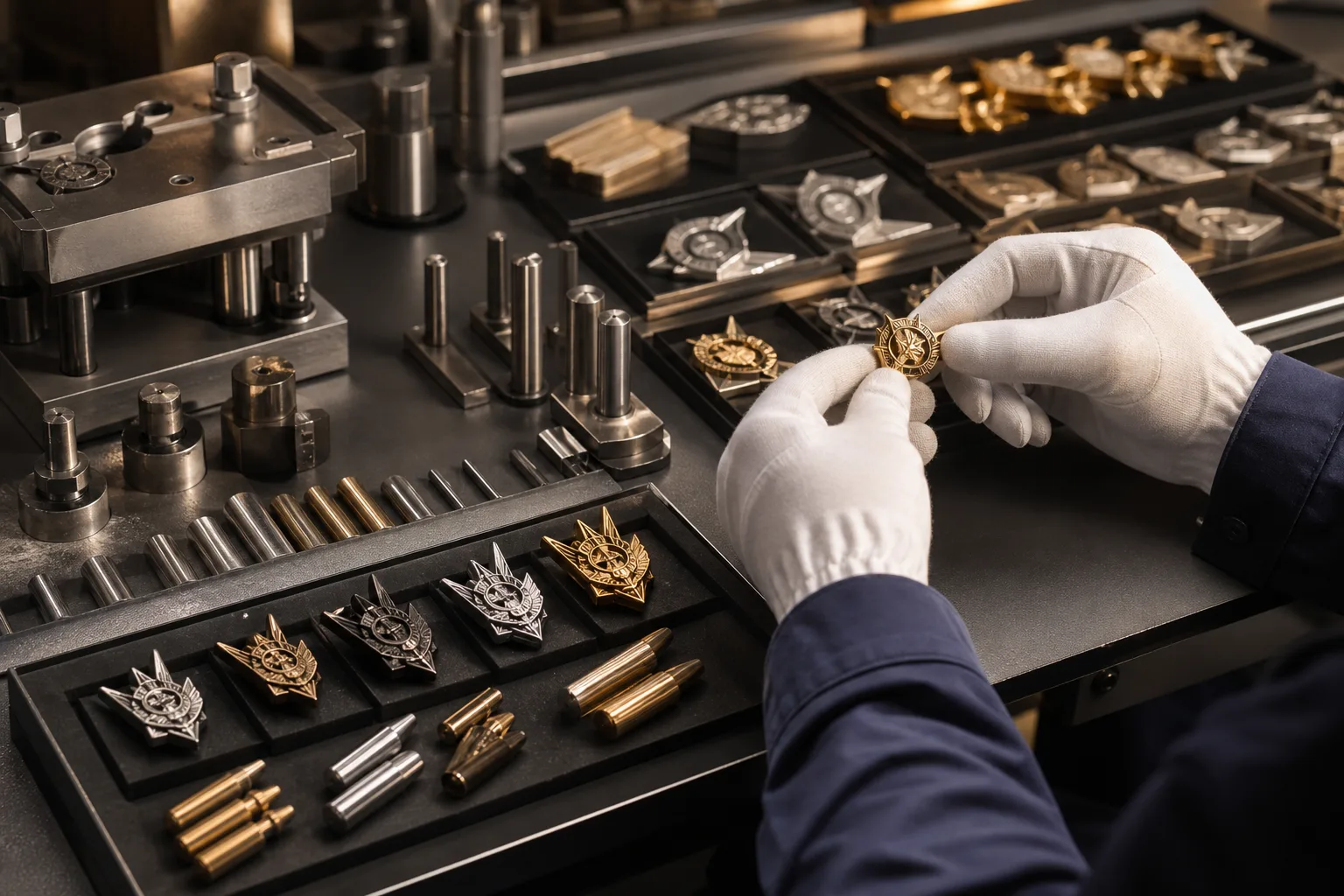
The enamel face must be planned with the metal underneath it. Gairun processes zinc alloy, brass and iron for pin designs, with material and construction selected through a project review. Available forming capabilities include die-casting, stamping and photo etching. These are production options, not interchangeable choices for every logo.
Die-casting may be reviewed for formed outlines or dimensional structures. Stamping can support suitable die-struck designs, while photo etching is another available route for designs that fit that process. The choice affects how the outer shape, metal lines and recessed color areas are created.
Plating determines the appearance of every exposed border. Our verified options include gold, silver, nickel, black nickel, antique bronze, antique silver and dual plating. Sandblasted and matte effects are also available for project-specific review. The proof should show where the selected metal tone appears so the border color does not conflict with the enamel palette or reduce text contrast.
Buyers comparing hard enamel badges with other product structures can browse the wider custom metal product range without treating one forming method as a universal specification.
Review the Hard Enamel Artwork Proof Before Tooling
A production proof turns the visual concept into a controlled pin specification. Our 2D and 3D engineering team accepts vector art, PDF files and hand-drawn concepts. We can provide a free artwork proof within 24 hours after receiving enough project information for review.
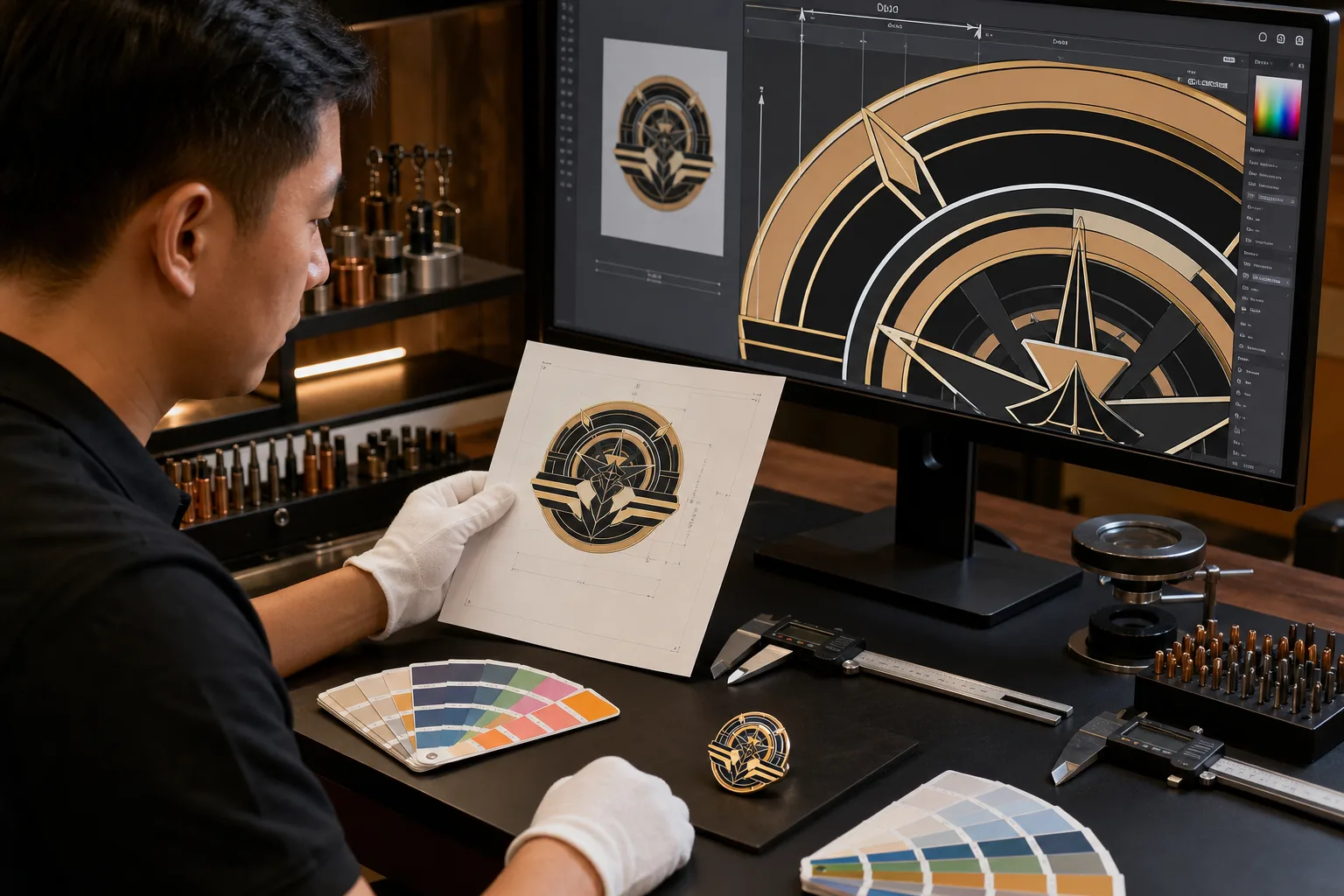
The proof should identify the outline, dimensions, front and back details, enamel color references, metal borders, plating direction and attachment position. It should also show which areas are enamel and which remain exposed metal. This makes color separation and finish decisions visible before mold or forming work begins.
Check names, dates, lettering and brand marks at the proof stage. Also confirm that the attachment position suits the pin orientation. Approval should cover the complete design rather than the front image alone, since a change to size, plating or rear hardware can affect the production setup.
Inspect Color Fields, Borders and the Finished Face
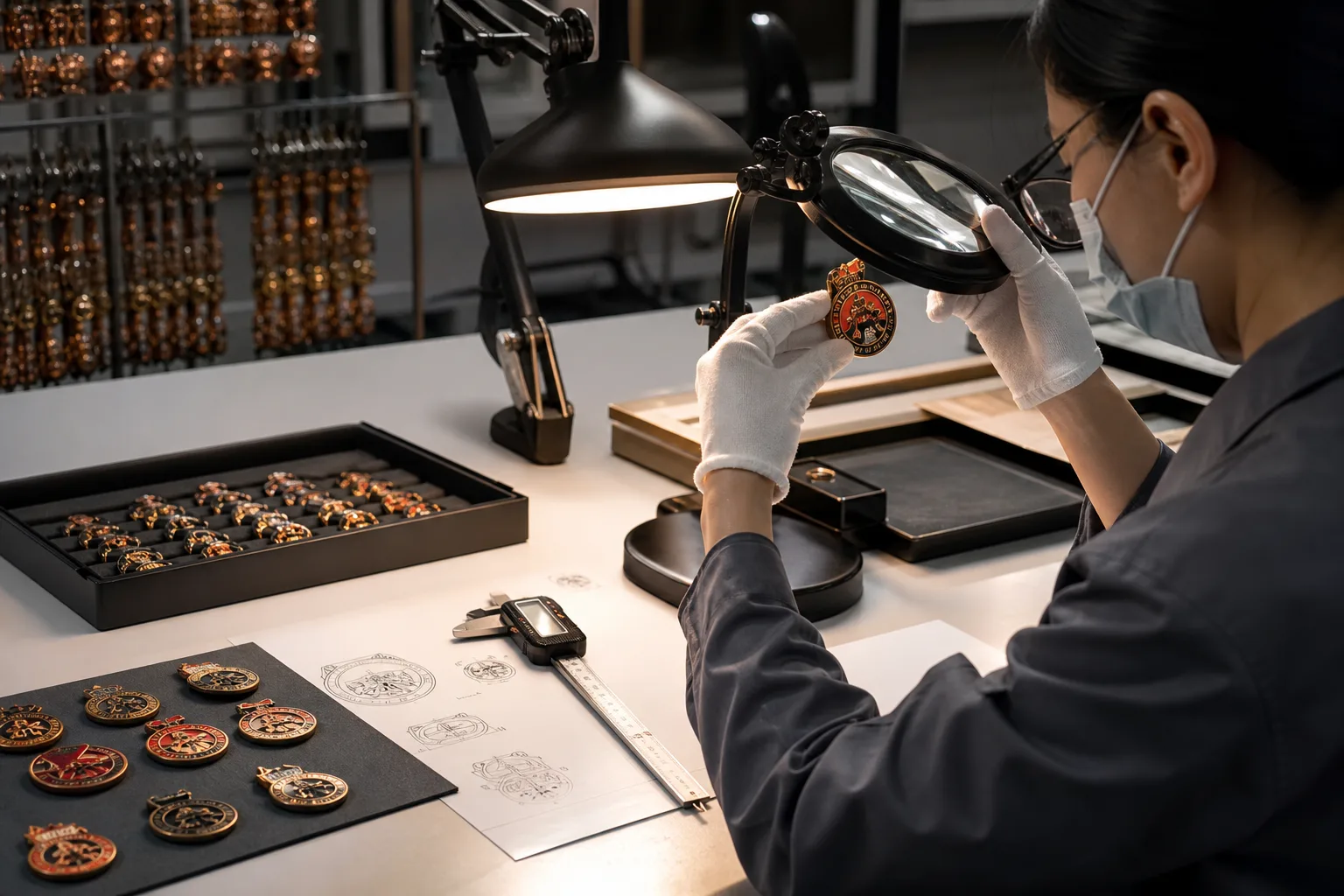
Inspection for a smooth enamel pin begins before the final visual check. Gairun uses first-article comparison to review dimensions, thickness and relief details against the drawing after tooling and trial forming. This stage checks whether the formed part follows the approved structure.
During production, plating is checked for color difference and adhesion. Coloring checks look for enamel overflow and missing color. These controls relate directly to the features that define a hard enamel badge: complete color fields, intact metal divisions and a consistent visual relationship between enamel and plating.
Final inspection includes a visual check for surface scratches and a security check for the specified attachment. Inspection does not replace clear artwork approval. It confirms the produced pin against the agreed design and production requirements.