
FACTORY-DIRECT OEM / ODM MANUFACTURING
OEM and ODM Metal Product Manufacturing for Controlled Outsourcing
Gairun provides OEM and ODM metal product manufacturing for brands, institutions and distributors. We produce custom medals, challenge coins, pins, badges, trophies, plaques, keychains and bottle openers through a managed program from requirements to shipment.
Under an OEM model, we manufacture from your design and product specifications. Under an ODM model, our 2D and 3D design engineering team helps develop a workable product from a concept, reference, PDF, vector file or hand-drawn sketch. In both models, you approve the product direction before tooling and production move forward.
Send us your intended product, quantity and key specifications to establish which model fits your project and what each party will control.
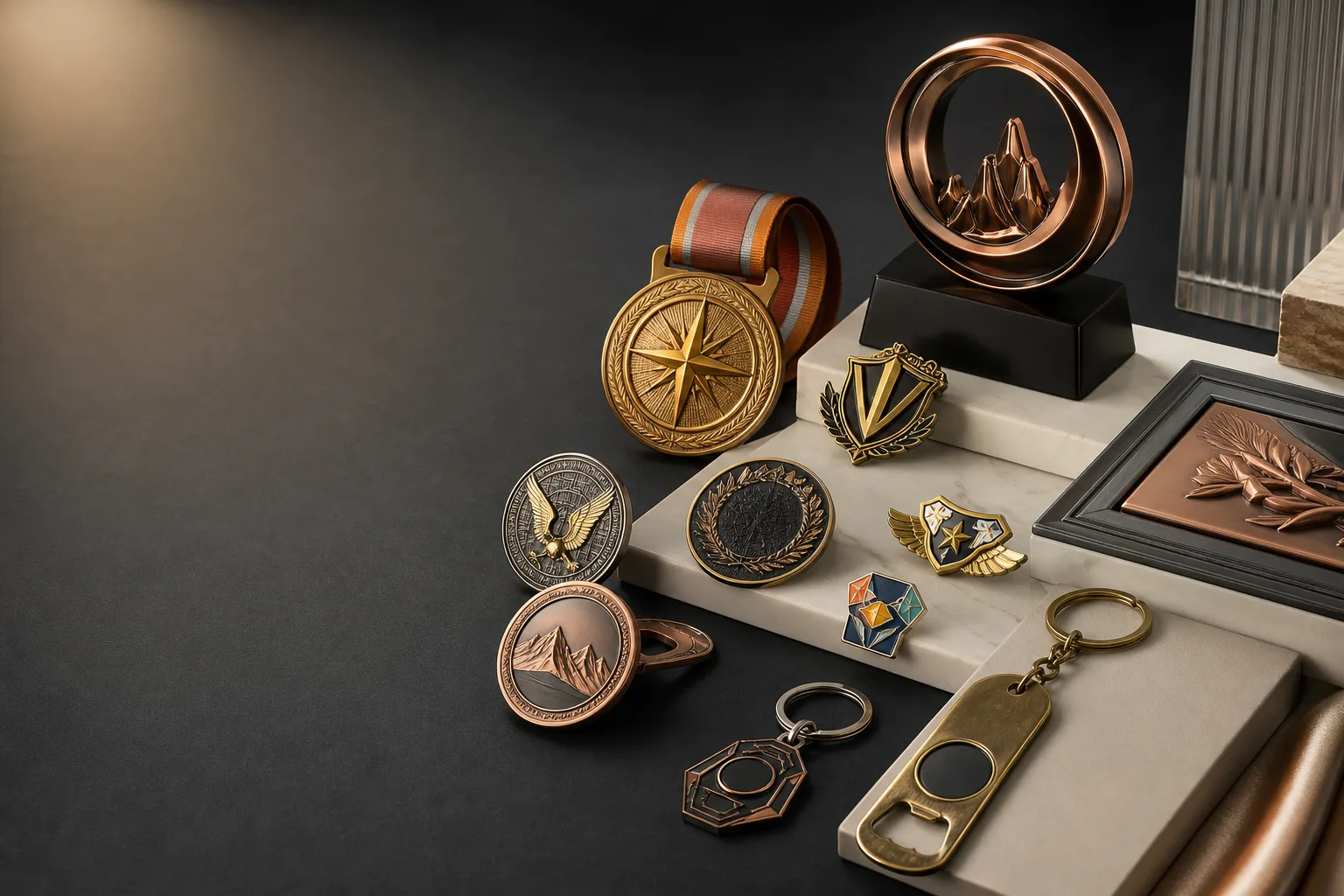
Choose the Right Responsibility Model for Your Project
The main difference between OEM and ODM is the starting point. OEM production begins with a buyer-controlled design or specification. ODM development begins with a less complete concept and requires more factory support to define the product.
| Decision Area | OEM Manufacturing | ODM Development |
|---|---|---|
| Starting information | Buyer-supplied design, drawing or detailed specification | Concept, reference product, PDF, vector artwork or sketch |
| Factory role | Review the supplied requirements and produce the agreed design | Help translate the concept into a defined metal product |
| Buyer role | Control the design intent and approve manufacturing decisions | Set the product goal and approve the developed design |
| Best suited to | Established products, controlled brand designs and repeat programs | New products or concepts that need design and engineering input |
| Approval requirement | Buyer approval before tooling, sampling and bulk production | Buyer approval of the developed direction before the same production stages |
OEM does not remove the need for factory review, and ODM does not transfer product ownership decisions to the factory. Material, structure, finish, components and commercial scope still require buyer approval. Our broader customization services show where artwork, engineering, sampling, packaging and shipment support connect with either model.
Custom Metal Products Available for OEM and ODM Programs
We support outsourced manufacturing across several award, recognition and promotional product families. A program may cover one design, several versions of the same item or a group of related products.
Product structure affects the required forming route, assembly work and approval process. A one-piece stamped pin, for example, has a different development path from a spinning medal or mixed-material trophy. Review the custom metal product range to identify the closest product family before defining the manufacturing relationship.
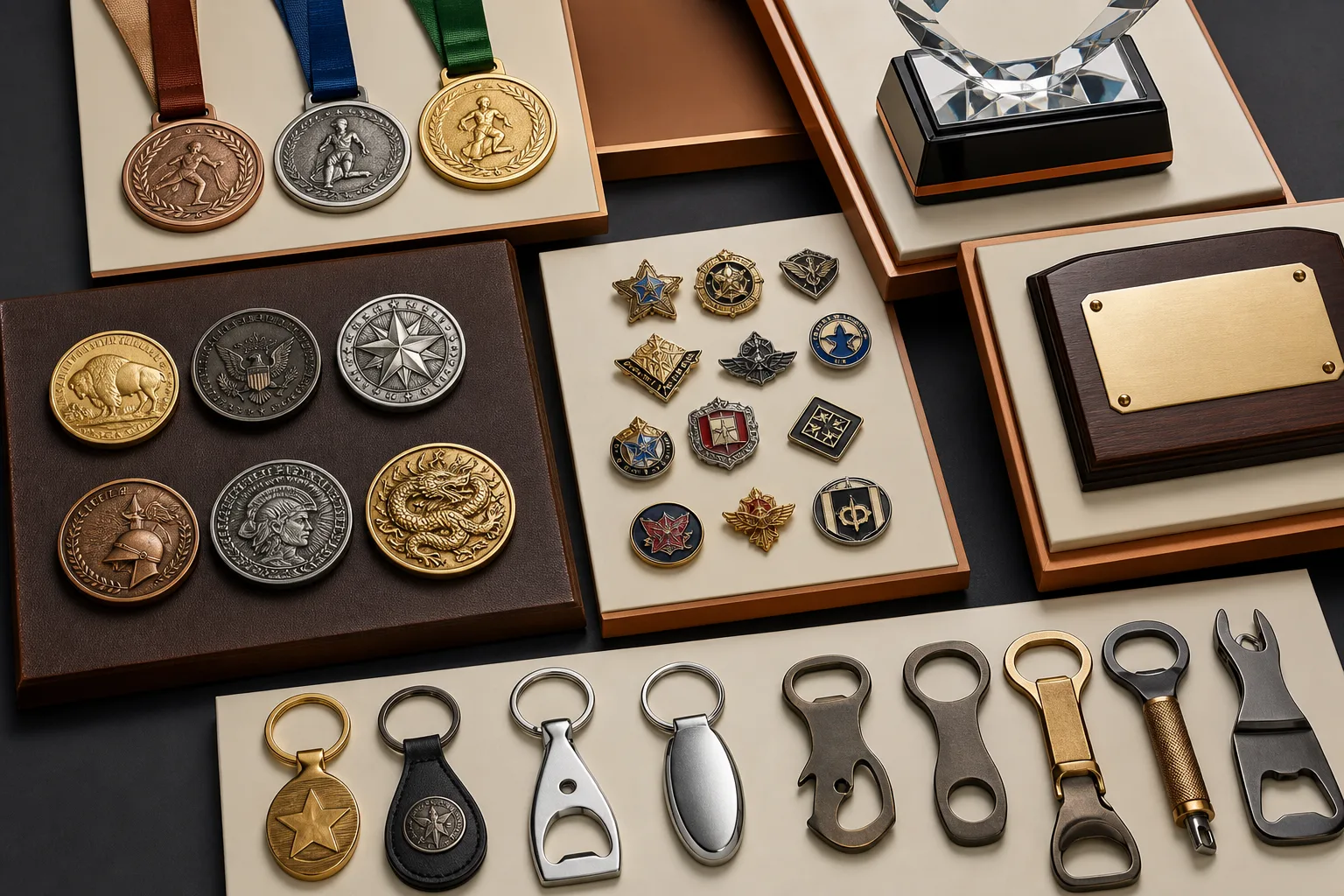
Custom medals
marathon and sports medals, 3D relief designs, spinning medals and combined structures.
Challenge coins
military and public safety coins, corporate anniversary coins, institutional designs and high-relief dual-plated formats.
Lapel pins and badges
soft enamel, imitation hard enamel, stamped, die-cast, printed and epoxy-coated options.
Metal trophies and plaques
metal awards, wood-and-metal plaques and crystal-and-metal trophies.
Keychains and bottle openers
custom metal accessories, functional openers and leather-and-metal combinations.
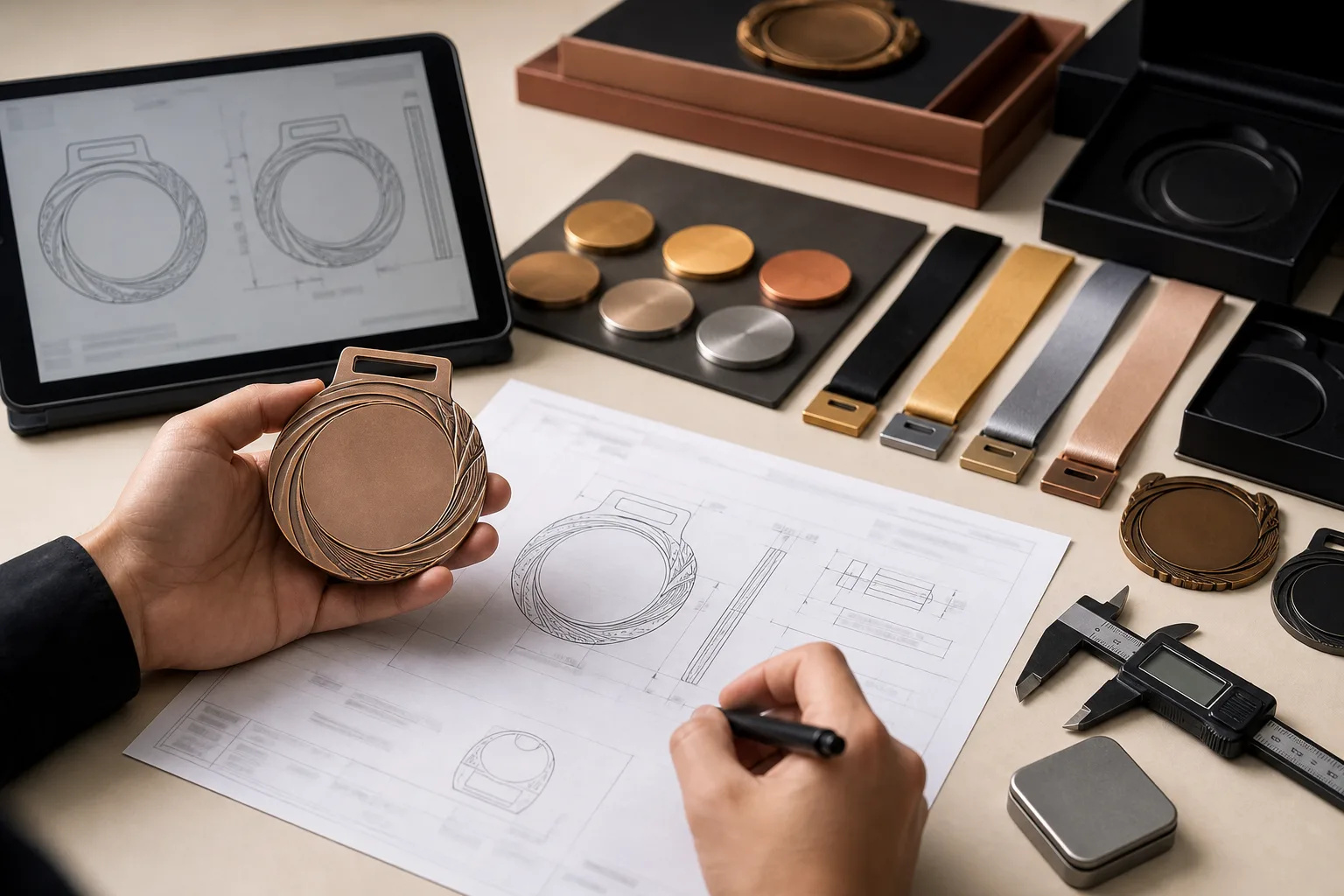
Build a Project Brief That Defines the Commercial Scope
A clear brief gives both parties one baseline for quotation, approvals and later changes. It also separates confirmed requirements from preferences that still need technical review.
The initial scope should identify the product type and intended use, expected quantity, dimensions, artwork or concept reference, preferred material or process, surface finish, colors, components and packaging needs. The destination and required schedule are also needed to plan production and shipment coordination.
Not every decision must be final at the inquiry stage. If material or process choices are open, state the visual result, product function and budget priorities that guide the decision. We can then identify which points need further development under an ODM model.
For OEM projects, submitted files should use clear version names. The quotation and production record must refer to the same design version, quantity and product structure. This reduces the risk of pricing one specification and approving another.
Control the Project from Requirements to Shipment
Our one-to-one project follow-up model keeps requirements, approvals and production updates connected. The assigned project manager coordinates communication between the buyer and the relevant design, engineering, production, inspection and shipment functions.
More information about the people responsible for these handoffs is available on our engineering and project team page.
01
Requirement confirmation
We review the product concept, quantity, intended construction and commercial requirements.
02
Visual and technical approval
The project direction is documented for buyer review before tooling or production begins.
03
Sample or first-article review
The produced item is compared with the agreed drawing and product requirements.
04
Bulk production authorization
Production proceeds after the required approval gate has been completed.
05
Production tracking
The project manager follows the order and can provide photo or video progress updates.
06
Inspection and packing
In-process checks and final visual inspection are completed before the order is prepared for shipment.
07
Shipment follow-up
Shipment information is tracked and communicated through the project handoff.
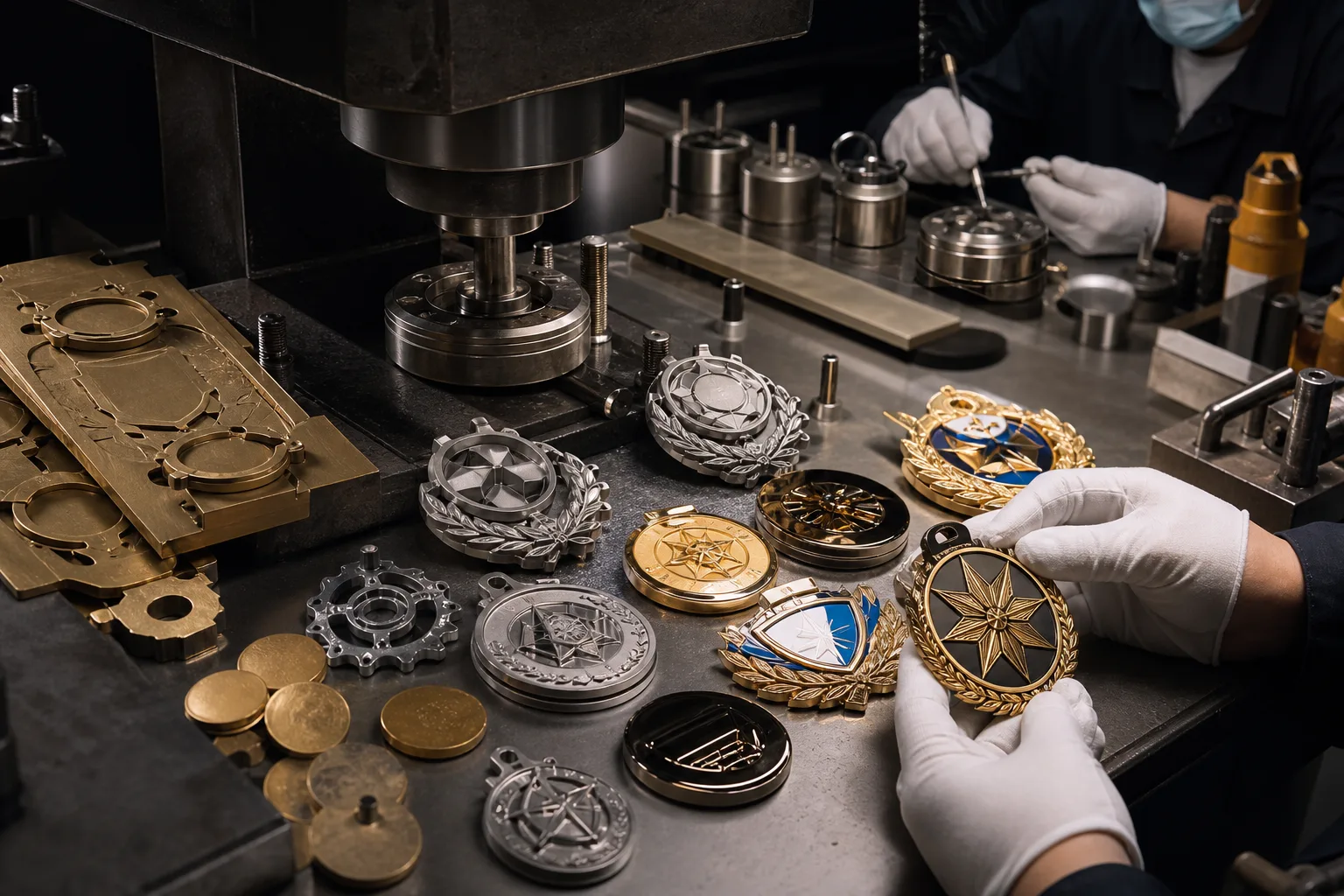
Match Materials and Processes to the Product Design
Gairun works with zinc alloy, brass, iron, stainless steel and aluminum. Available forming methods include die-casting, stamping, photo etching and hydraulic high relief. The suitable combination depends on the product shape, relief, surface design and planned decoration.
Finish options include gold, silver, nickel and black nickel plating, antique bronze, antique silver and dual plating. Sandblasting and matte surfaces can also be reviewed. Decoration may use soft enamel, imitation hard enamel, screen printing, UV printing or a clear epoxy coating.
These options define the available production range, but they are not interchangeable on every design. Product geometry, raised and recessed areas, color boundaries, moving parts and mixed-material assembly can affect the final route. Buyers who need to assess equipment and process fit can review our manufacturing capabilities.
Use Approval Gates to Prevent Specification Errors
An approval gate records which design and specification may move to the next stage. It protects both the buyer and the factory from producing an outdated file or an unconfirmed change.
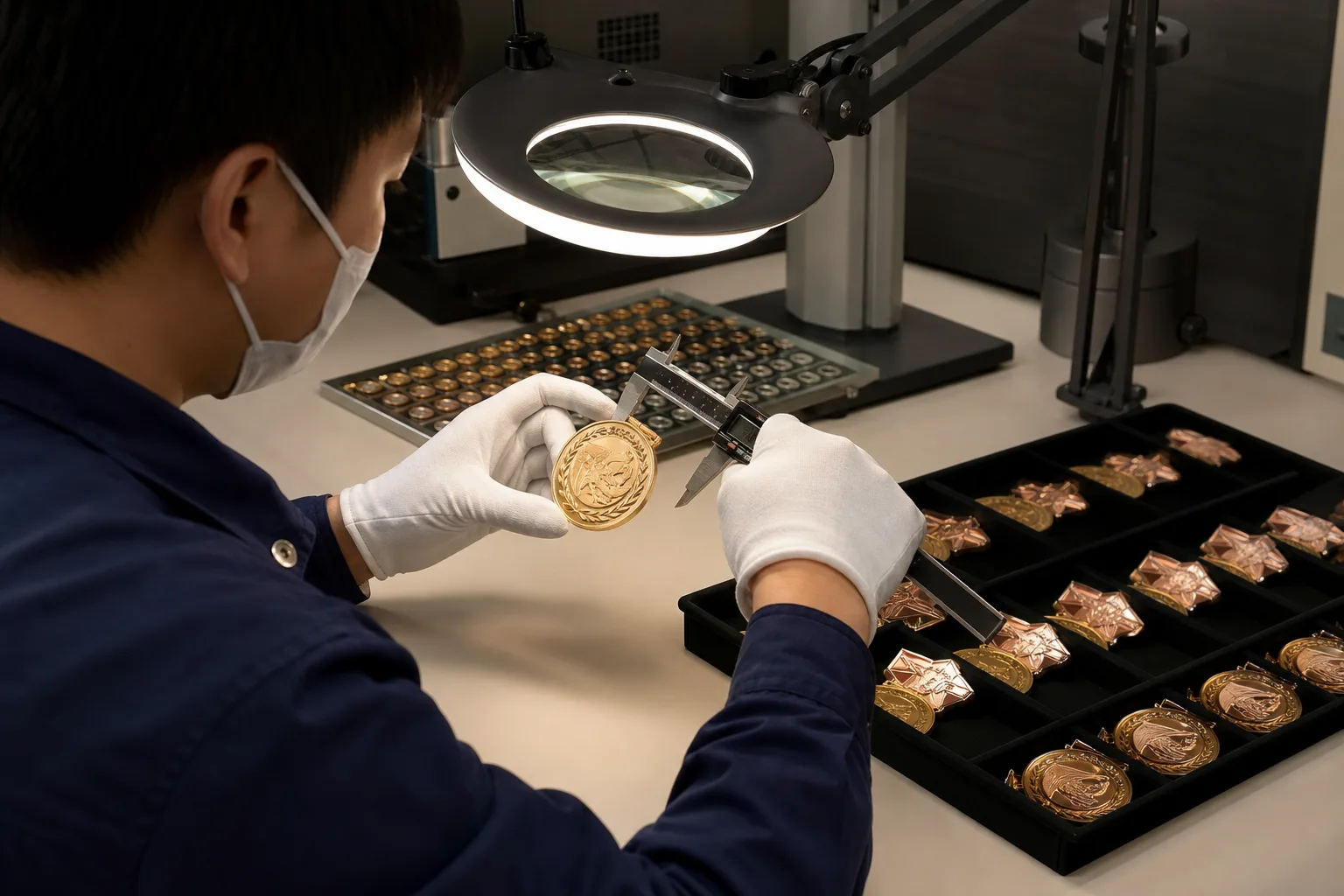
Gairun quality control begins with incoming material inspection. After mold development and trial production, first-article inspection compares dimensions, thickness and relief details with the agreed drawing. In-process checks cover the relevant forming, polishing, plating and coloring stages. Before shipment, finished products receive a 100% visual inspection that includes surface appearance and the security of applicable accessories.
Buyer sign-off is part of this control system. A request made after drawing, sample or production approval may affect tooling, product samples, production timing or quotation scope. We review the effect before accepting the change. Revised instructions should identify the new file version and the requirement it replaces.
Plan MOQ, Production Time and Payment Terms
The standard MOQ is 100 pieces per design. A 50-piece trial order may be supported for selected projects, depending on the product, design and process requirements, and factory review. The smaller quantity is conditional and is not a universal MOQ.
Standard bulk production takes 15–20 working days. Expedited production is supported, but the actual schedule must be confirmed against the approved product scope and production plan. Timing changes caused by design revisions or new requirements require a separate review.
The verified payment structure is 100% of the mold fee at the sampling stage. For bulk orders, the payment structure is a 30% deposit and the remaining 70% before shipment. Product pricing, tooling requirements and the final production plan are set through a project-specific quotation.
Maintain Clear Records for Repeat and Multi-SKU Orders
Repeat supply depends on using the correct specification, not only the same product name. Each release should identify the approved artwork version, material, finish, colors, components and packaging reference. Multi-SKU programs also need a clear link between each item code and its related files.
Changes for a new release should be listed separately from the unchanged specification. For example, a buyer may retain the same medal structure while changing the year, color or ribbon artwork. Recording the exact differences helps prevent an older version from entering production.
Repeat orders remain subject to order review. Previous pricing, production timing or material decisions should not be treated as fixed for future releases unless they are reconfirmed in the new quotation.