
FACTORY-DIRECT OEM / ODM MANUFACTURING
Custom Leather and Metal Keychains Built as One Branded Accessory
Gairun manufactures custom leather and metal keychains for corporate gift programs, retail collections and promotional merchandise. Each keychain combines a specified leather section, a custom metal emblem and connection hardware in one coordinated assembly.
The main design task is to make these parts look and function as one product. We review the component layout, branding position, visible faces, orientation and connection points before production. Buyers can submit vector artwork, a PDF or a hand-drawn concept with the required quantity and specifications for review. You can also compare other custom keychains and bottle openers before selecting a format.
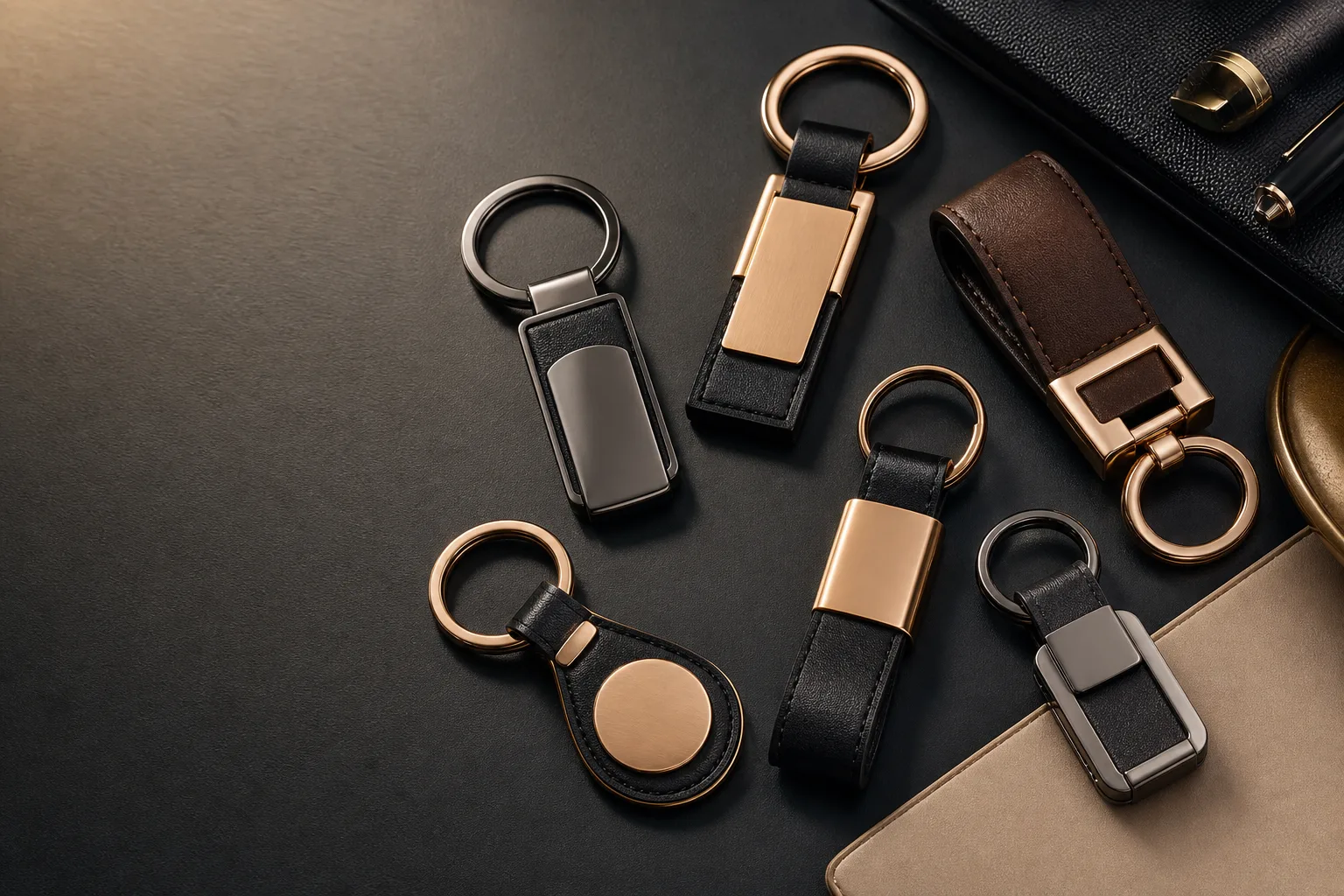
How Leather, Metal and Hardware Form One Keychain
A leather-metal keychain is more than a metal badge attached to a separate material. Its three main elements must be planned as a complete structure:
The layout begins with the intended dimensions and the position of each component. The design should identify which face is front, what may appear on the back and where each connection point sits. The assembled proportions matter because a large emblem can dominate the leather area, while a small emblem may leave limited space for readable branding.
Leather specifications, including the required appearance and construction details, must be confirmed for each project. We do not assume a leather grade, color, stitching method or surface treatment from the metal artwork alone.
Leather section
Establishes the mixed-material format and provides a visible area that must be balanced with the metal component.
Metal emblem
Carries a logo, symbol, message or decorative feature through relief, plating, enamel or printing.
Connection hardware
Joins the parts and provides the key-carrying connection while controlling how the product hangs and turns.
Choose a Mixed-Material or All-Metal Format
Leather-metal keyrings suit projects that call for a visible contrast between a leather section and a manufactured metal brand element. An all-metal design gives the metal body greater visual coverage and may be more direct when the logo shape itself defines the whole product.
| Decision point | Leather-metal keychain | All-metal keychain |
|---|---|---|
| Overall character | Mixed-material accessory with separate but coordinated surfaces | Metal-led product with a unified metal body |
| Branding position | Brand content must be assigned between the leather area and metal emblem | Brand content is mainly developed within the metal component |
| Metal coverage | Metal is used as an emblem or defined component | Metal forms most or all of the main visible product |
| Component planning | Requires review of leather, emblem and hardware interfaces | Focuses more directly on metal shape, decoration and attachment |
| Approval focus | Proportions, orientation and assembled alignment | Metal shape, finish, color and attachment arrangement |
Select the mixed-material format when the contrast between the two main surfaces is part of the design concept. Select an all-metal format when you want the metal shape and finish to carry most of the visual identity. Buyers considering that route can review our custom metal keychains.
Plan the Leather Area and Metal Emblem Together
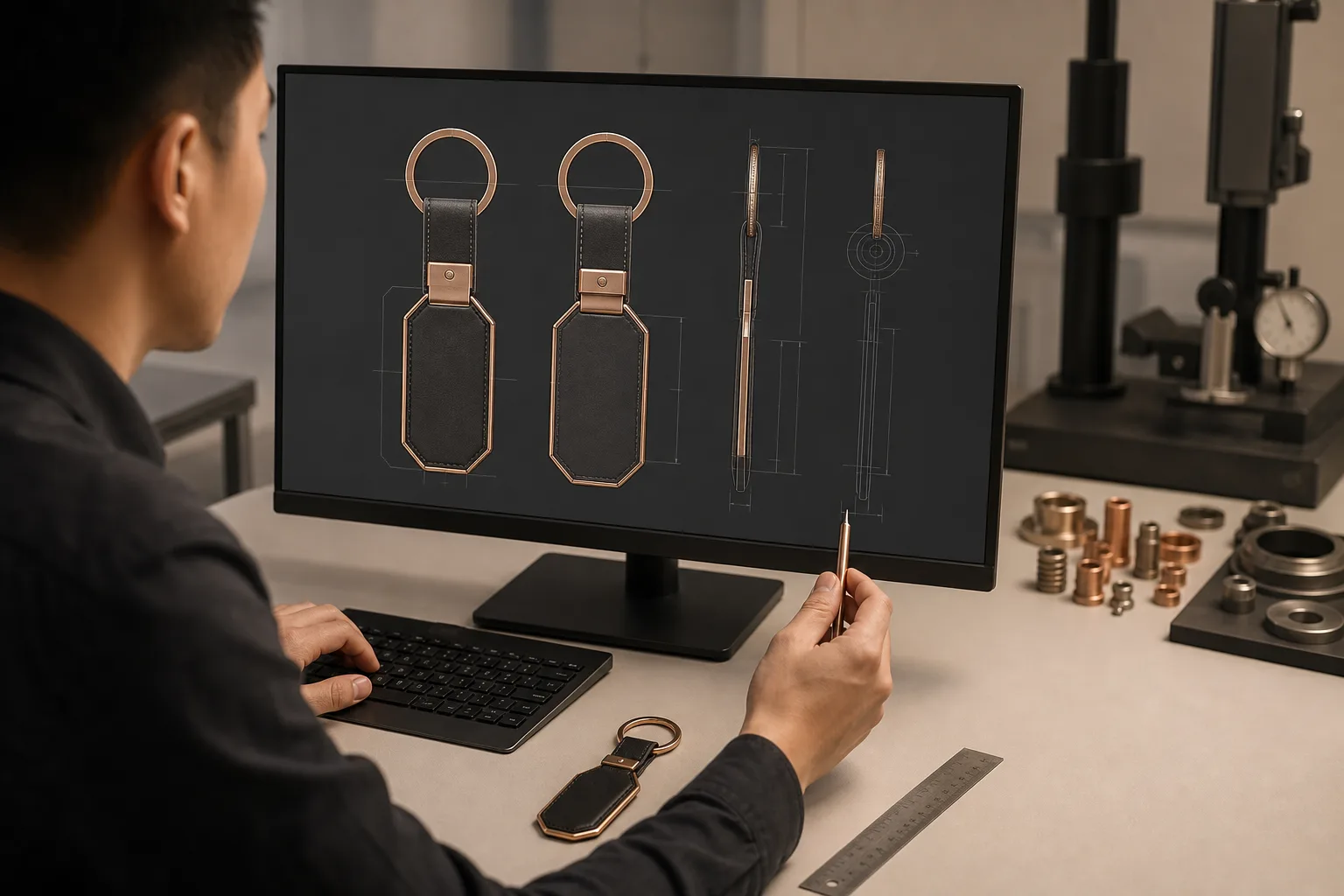
Start the layout by drawing the complete assembled keychain, not only the logo badge. Mark the intended overall dimensions, the visible leather area, the emblem position and all connection points. Show both sides when the back will remain visible during normal movement.
The main logo usually needs the clearest position and the strongest scale. Supporting text should remain secondary and must fit the available branding area without crowding the emblem edge. Leave enough visual space between text, relief features, printed details and the outer boundary so each element remains distinct in the proof.
Front-to-back orientation also affects presentation. A metal emblem may face correctly in a flat drawing but turn away from the intended front after connection hardware is added. The assembly view should therefore show how the parts align when the keychain hangs naturally.
For branded leather keychains, any proposed logo treatment on the leather section must be listed as a project requirement. We assess that request with the complete design rather than assuming that a metal decoration process can also be applied to leather.
Match the Metal Emblem to a Forming Process
The emblem artwork guides the manufacturing route for the metal component. Gairun works with zinc alloy, brass, iron, stainless steel and aluminum for relevant custom metal parts. Material selection depends on the design, structure and selected process, so no single metal is suitable for every mixed-material keychain.
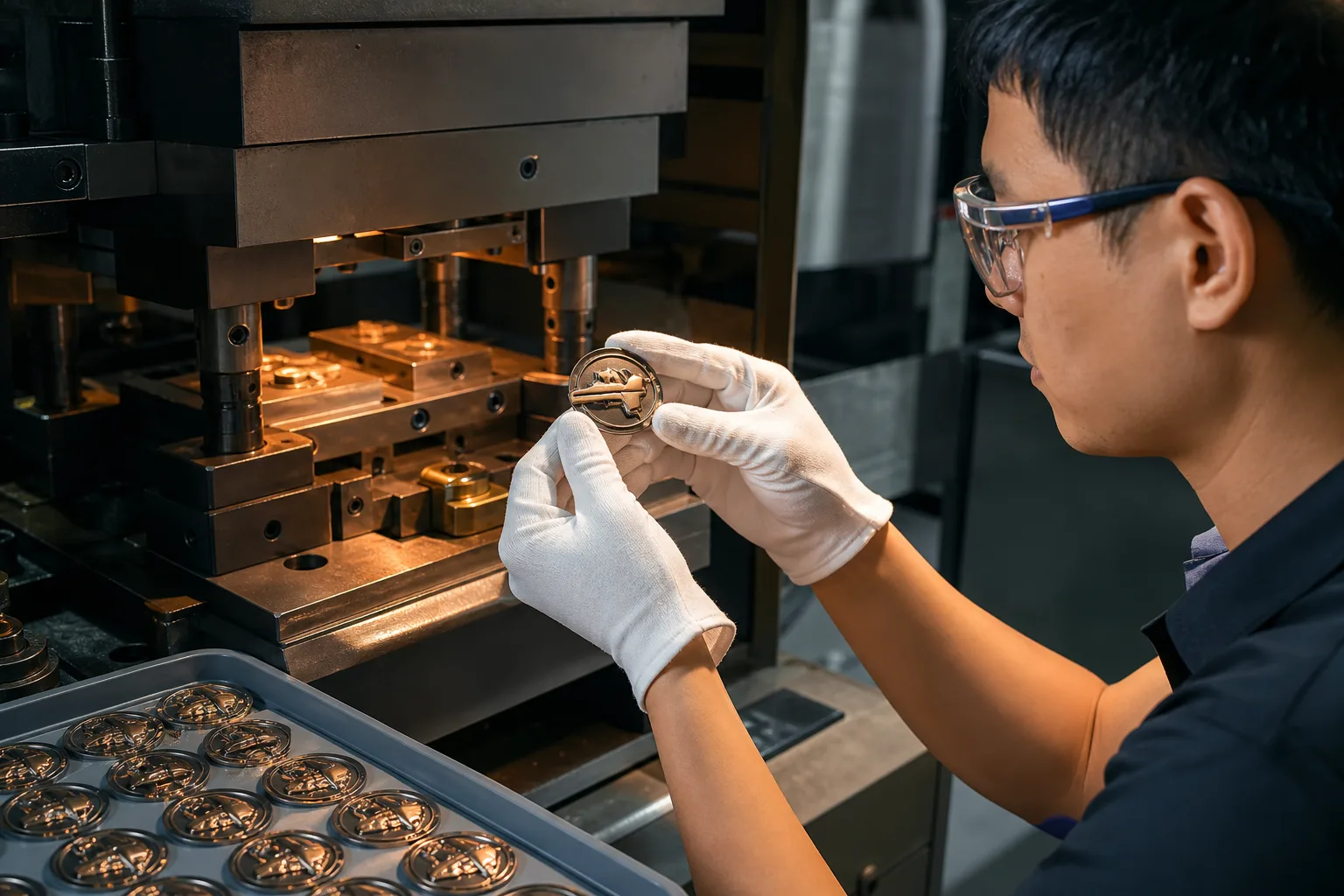
Available forming routes include zinc alloy die-casting, stamping or die-struck production, photo etching and hydraulic high relief. Each route supports a different design direction:
The final route is chosen after the emblem shape, dimensions, relief, surface treatment and connection needs are reviewed together. Our engineering review service covers these production relationships before mold work begins.
01
Die-casting
Can be reviewed for formed outlines, dimensional features and molded relief.
02
Stamping or die-struck production
Can suit artwork organized around metal lines, recessed areas and defined faces.
03
Photo etching
Can be considered for shallow graphic detail on the metal component.
04
Hydraulic high relief
Supports review of an emblem concept with strongly raised metal features.
Place Brand Details Across the Two Materials
A clear brand hierarchy prevents the mixed surfaces from competing with each other. Decide whether the metal emblem will carry the primary logo, a symbol, a short message or a decorative feature. Then identify any supporting information intended for the leather area and mark it separately for feasibility review.
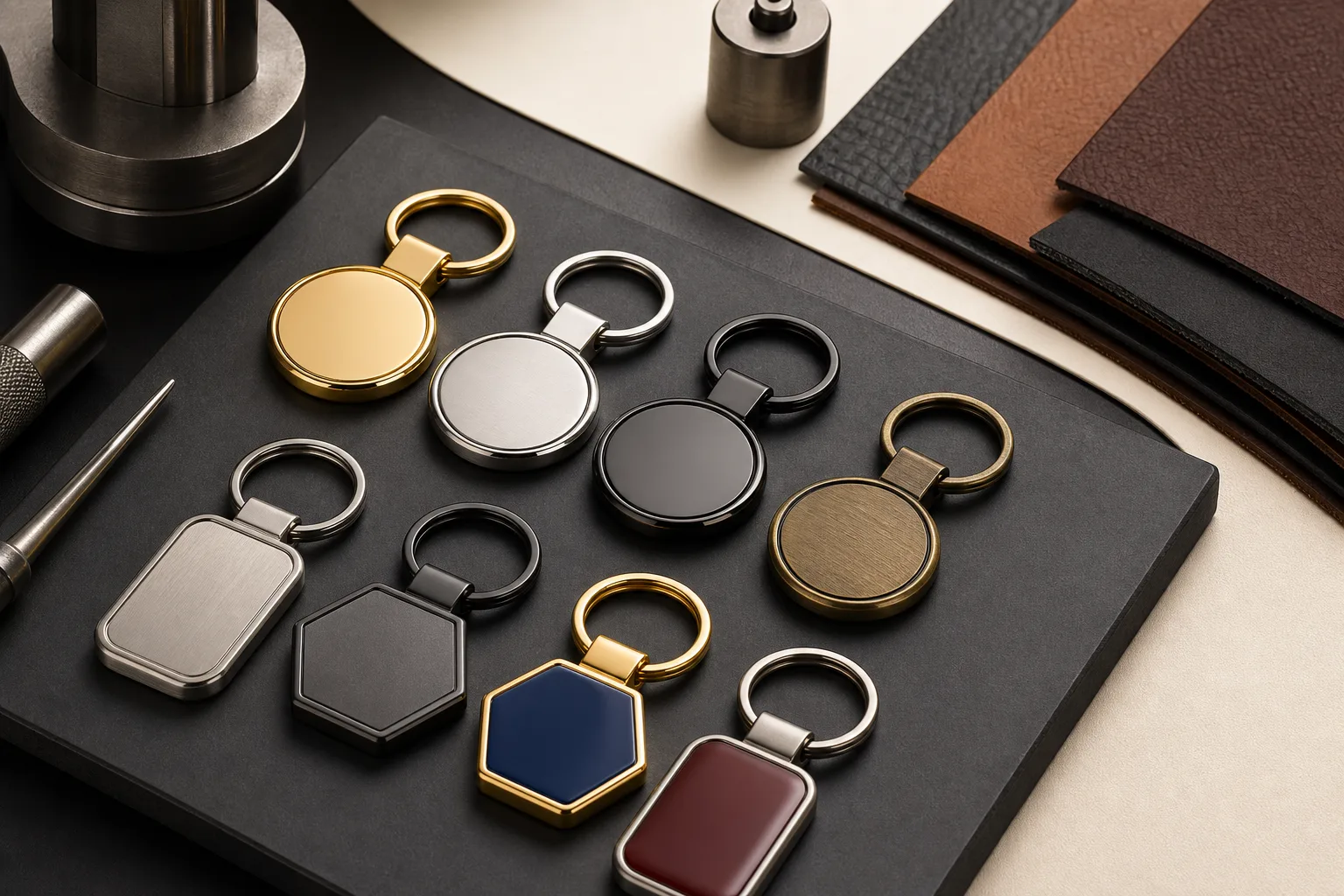
The metal emblem can use verified plating and surface effects such as gold, silver, nickel, black nickel, antique bronze, antique silver, dual plating, sandblasting or a matte finish. Color and graphic options include soft enamel, imitation hard enamel, screen printing, UV printing and clear epoxy coating.
Relief and enamel work best when the artwork clearly defines raised metal and color areas. Printing can be considered when the emblem contains graphic details that are not expressed as separate relief or enamel fields. Clear epoxy can be reviewed as a coating over decorated metal. The artwork proof should identify each surface treatment instead of relying on a general color image.
Decoration for the leather section remains project-specific. Include the required logo position and appearance in the brief, and we will confirm what can be coordinated with the selected leather construction.
Review Connection Points and Final Orientation
The interfaces between the leather section, metal emblem and key-carrying hardware affect both assembly and presentation. Each connection point should be shown in relation to the full product, including the direction in which the parts are expected to face.
Our review considers where the components join, how they can move and which surfaces remain visible. It also checks how the connected structure carries load through the assembled parts. This review does not rely on a generic hardware arrangement because emblem shape, leather proportions and orientation can change the connection requirements.
Useful assembly questions include:
These checks are especially important for mixed-material products because a correct metal emblem can still produce an incorrect final presentation if its orientation or connection location is not controlled.
01
Does the metal emblem face the intended direction when the keychain hangs?
02
Can the emblem or leather section turn and hide the main logo?
03
Are the connection points visually centered within the complete layout?
04
Does the movement of one component interfere with another component?
05
Are the front and back views clear in the artwork proof?
Approve the Proof and Check the Assembled Sample
Gairun provides 2D and 3D artwork support from vector files, PDFs or hand-drawn concepts. The proof should show the complete assembly and identify the leather section, metal emblem, connection hardware, visible faces and finish direction.
Before approval, check the relative size of each component, logo position, text hierarchy, relief or printed detail, plating direction and color areas. Confirm that the emblem is facing the correct way and that the leather-to-metal alignment matches the intended design.
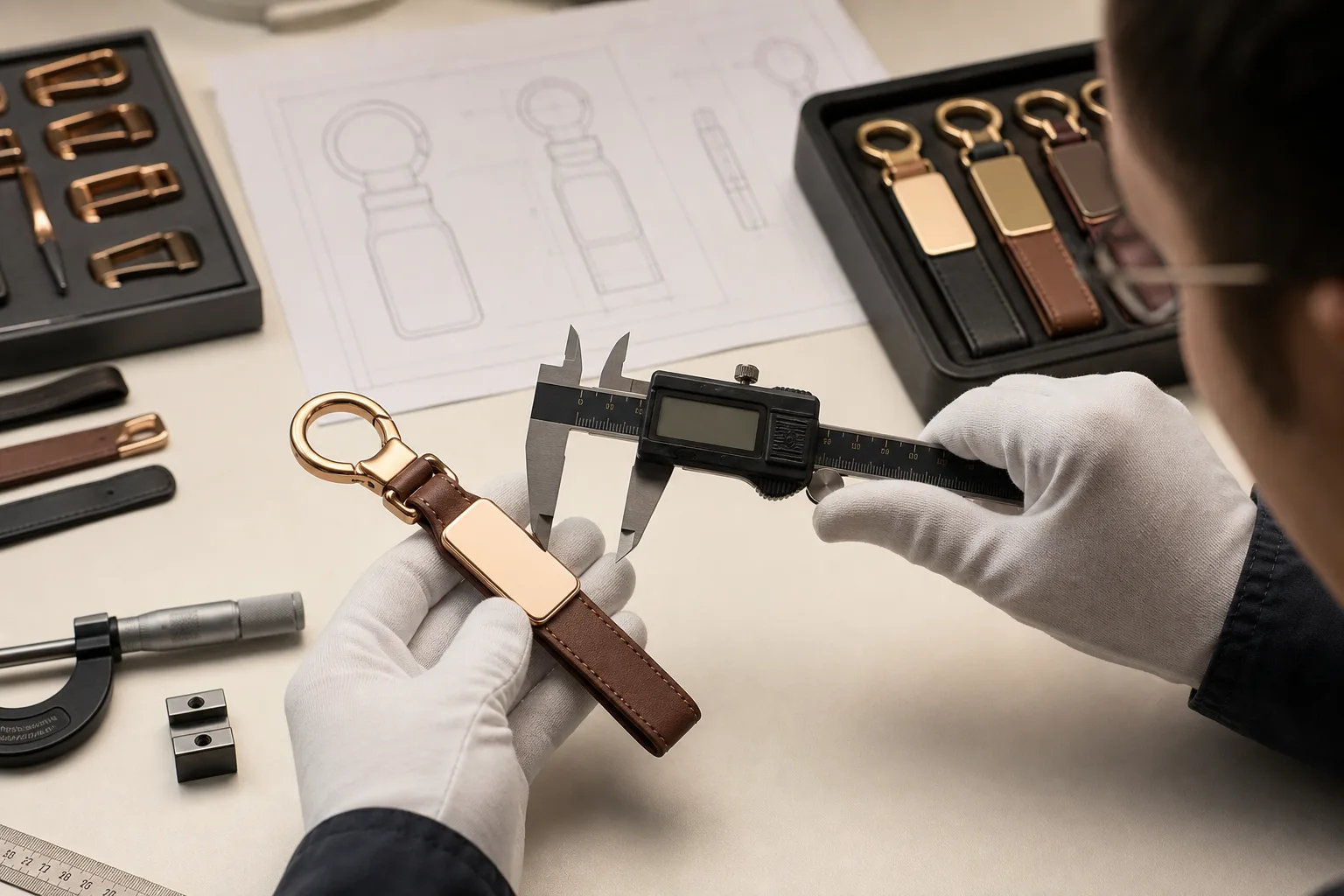
First-article inspection includes comparison with the drawing for dimensions, thickness and relief detail. For a leather-metal keychain, the physical sample should also be reviewed as an assembled product. Check the component proportions, surface presentation, orientation and alignment rather than assessing the metal emblem by itself.
Custom sampling normally takes 7–10 working days. The sampling stage provides a physical basis for comments before bulk production, while the full project schedule depends on the reviewed design and order requirements.
Prepare a Leather-Metal Keychain Project Brief
Send the complete brief through the request a quote form so our team can review the component layout, metal process and assembly requirements.