
FACTORY-DIRECT OEM / ODM MANUFACTURING
Custom 3D Relief Medals with Sculpted Metal Detail
How Sculpted Relief Changes a Medal Design
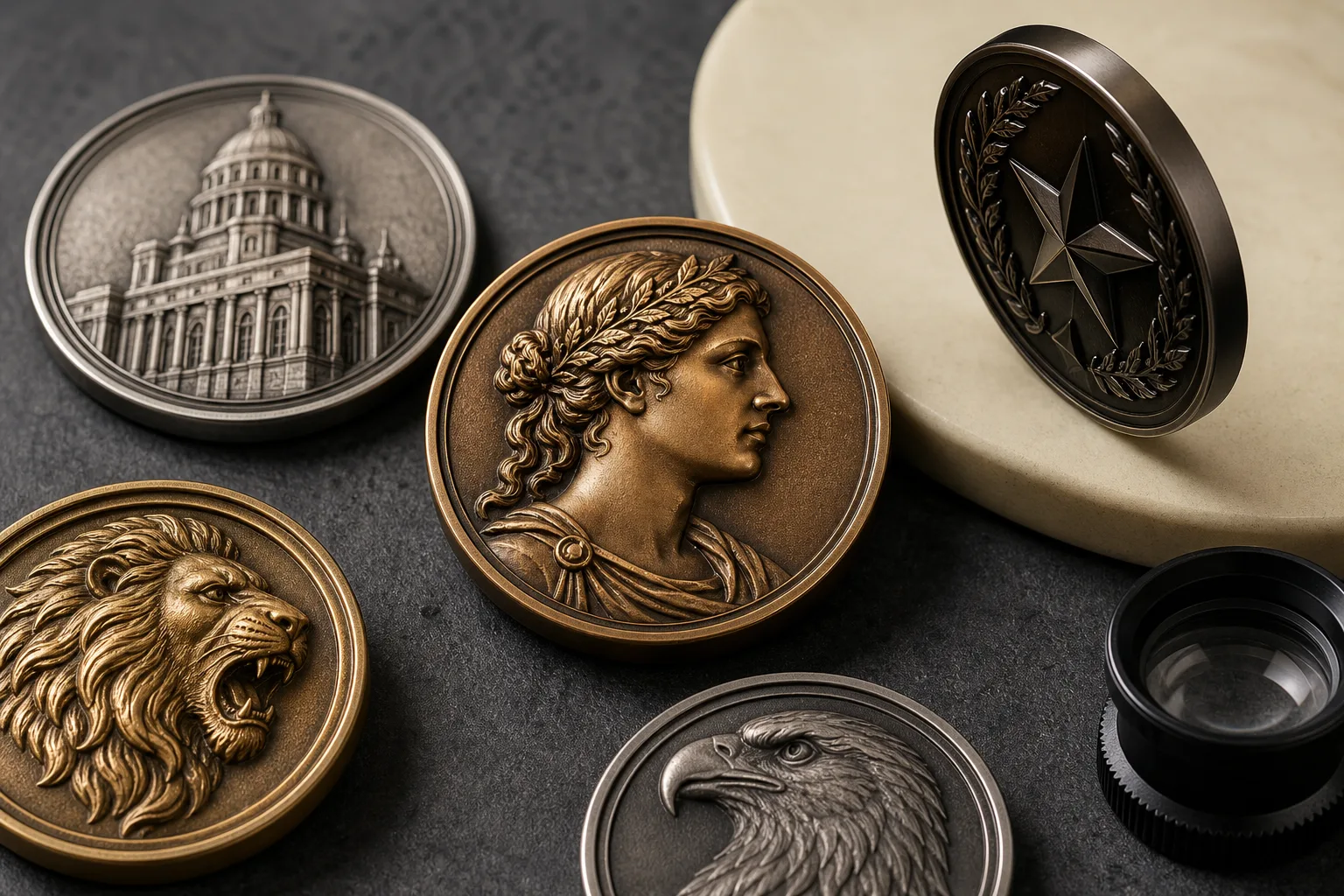
Flat medal artwork organizes a design mainly through outlines, metal borders and color areas. Sculpted relief adds changing surface heights. The highest areas catch light, recessed areas create shadow, and sloped transitions make a subject appear rounded rather than simply raised.
This difference is important when the image depends on form. A face may need shaped cheeks, eyes and hair. A building may need separate foreground, facade and roof levels. A landscape may require a clear relationship between terrain, structures and background elements.
| Construction approach | Visual result | Suitable artwork direction |
|---|---|---|
| Flat or color-led design | Separation comes mainly from lines, borders and color blocks | Logos, simple symbols and clearly divided graphic areas |
| Shallow raised metal | Outlines and selected elements rise from the base | Text, borders and graphic emblems with limited depth changes |
| 3D sculpted relief | Rounded forms and layered surfaces create light and shadow | Portraits, figures, architecture, terrain and dimensional scenes |
Relief does not have to cover the full medal face. A design can use a sculpted central subject with flatter text, borders or background fields. The right balance depends on which elements must remain readable and which need physical depth.
Choose 3D Relief When the Subject Depends on Form
High relief medals work best when a buyer wants the metal surface itself to describe shape. Strong candidates include sculpted portraits, human or animal figures, monuments, buildings, topographic forms, layered scenes and emblems with rounded or modeled features.
Consider 3D construction when the answer to one or more of these questions is yes:
Sculpting may add needless complexity when the design relies mainly on a flat logo, small text or separate blocks of brand color. In those cases, a simpler raised-metal, enamel or printed treatment may communicate the artwork more clearly. The decision should follow the subject, not an assumption that deeper relief is always more effective.
Does the subject need rounded surfaces rather than one raised level?
Must foreground and background elements appear at different depths?
Would side lighting need to reveal contours across the medal face?
Does the artwork contain a figure, object or landmark that looks incomplete as a flat outline?
Is depth a central part of the intended visual identity?
Plan the Relief Around a Clear Detail Hierarchy
A successful 3D medal starts with a hierarchy of forms. Identify the primary subject first, then supporting details and background texture. The primary form should remain recognizable from the intended viewing angle without depending on very small features.
Mark which areas form the highest points and which recede into the base. Also consider the edge profile. A feature that rises near the outer edge can affect the apparent border, while a deeply layered center can compete with nearby text. Stronger depth is not automatically better if it weakens a date, name, border or small emblem.
Front-facing artwork and angled viewing create different effects. A front view establishes the main layout, but an angled reference reveals slopes, rounded surfaces and the relationship between layers. For a portrait, the angle can affect the nose, brow and chin. For architecture, it can change how columns, roofs and facade levels are understood.
Keep small wording on a controlled plane where possible. Text placed across changing contours may become harder to read. During review, we assess how sculpted forms, lettering, borders and recessed fields work together before the design moves to tooling.
Provide References That Describe Shape, Not Just Outline
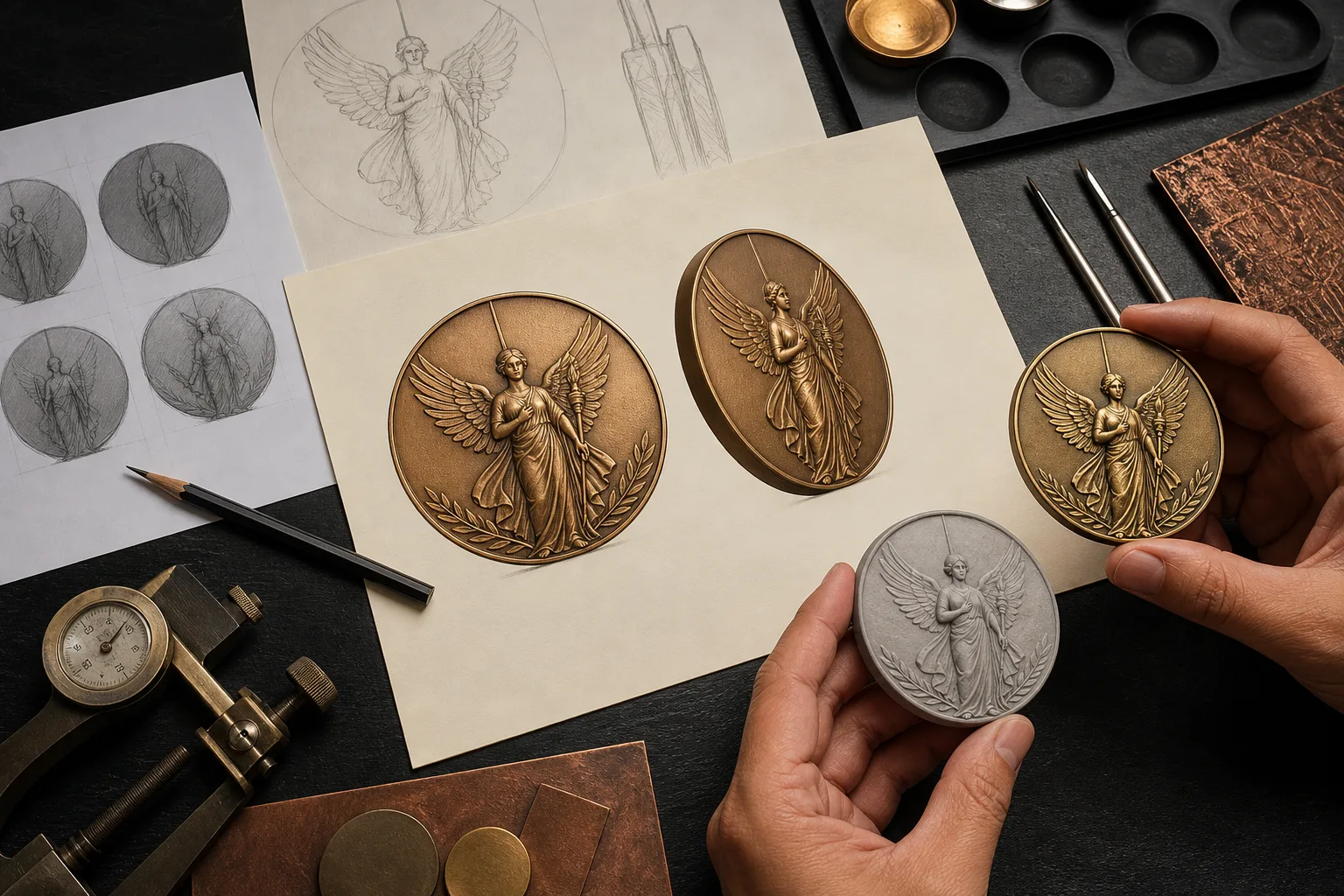
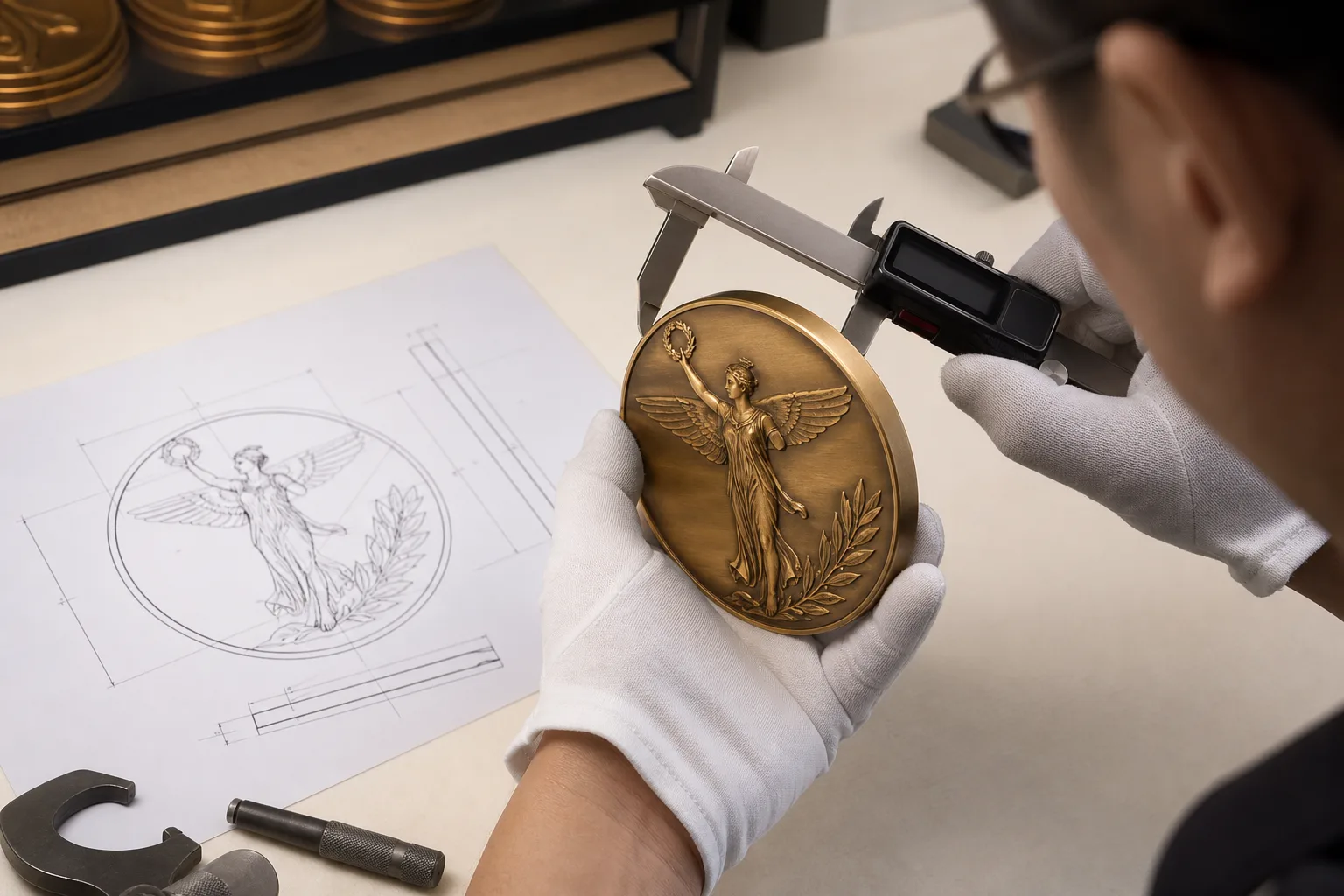
A vector file or usable PDF can define the medal outline, text and main graphic positions. However, a flat logo often does not contain enough information to show how a subject should curve or project from the surface. Additional references reduce interpretation during 3D development.
A useful concept package can include:
- Overall medal dimensions and the required front and back views
- Vector artwork or a PDF showing the main layout
- All final text, dates and emblem details
- Labels for the intended raised, recessed and flat areas
- Side views or angled drawings where profile matters
- Photographs of the person, object, landmark or texture being modeled
- Existing 3D files or rendered views, when available
A sketch can establish the initial idea. Photographs and side views then help define volume that the sketch does not show. If several references show different angles or details, label which image controls each feature.
For broader guidance on file organization and technical preparation, use the artwork and specification resources available through our engineering team. The relief concept itself should make the intended shape and visual priority clear.
Resolve Production Questions Before Mold Engraving
Engineering review converts the visual concept into a relief model that can be used for production. Before mold development, the main questions are not only what the medal depicts, but how each feature relates to the metal surface.
Our review covers which elements rise or recede, where borders remain, how small text sits within the relief, and whether the reverse also needs sculpted treatment. We also examine the relationship between the medal outline, the main subject and the background plane.
Gairun’s engineering team uses AutoCAD, CorelDRAW, Adobe Illustrator, Rhino and ZBrush for 2D and 3D artwork development and review. These tools support the handoff from graphic layout to modeled relief, but buyer direction remains essential. A technically complete model can still be visually wrong if the intended facial expression, building profile or emblem hierarchy is unclear.
Our engineering review and design-for-manufacturing service provides more detail about the pre-tooling assessment. Relief direction should be settled before mold work because later changes may affect the modeled geometry and tooling.
Match the Approved Relief Model to the Forming Route
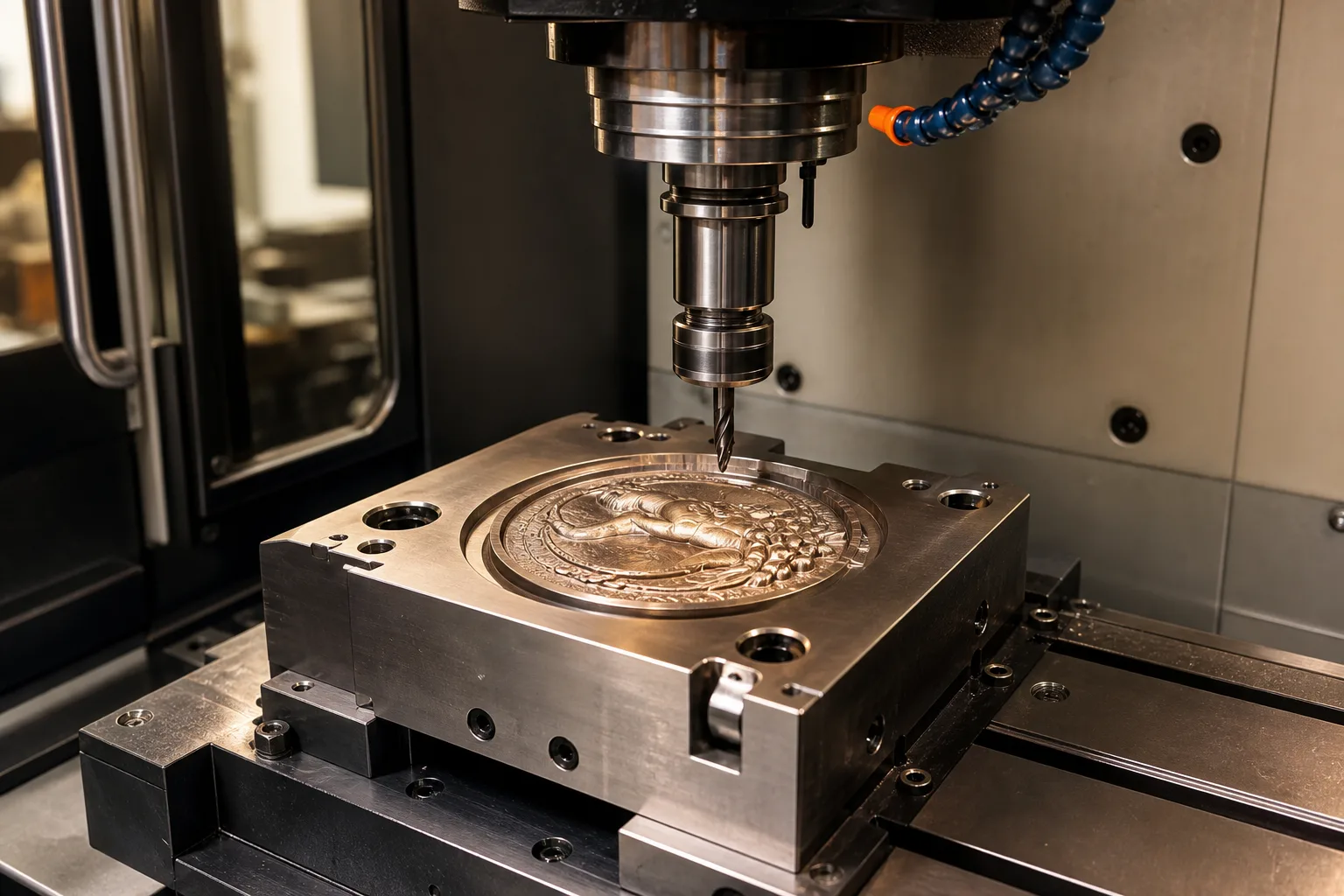
Once the relief model is approved, its geometry is translated into mold surfaces. CNC engraving creates the tooling detail used during trial forming. The forming route depends on the reviewed design rather than a fixed relief label.
Gairun has CNC engraving machines for mold development, along with 88T and 160T zinc alloy die-casting machines. We also operate 200T and 500T hydraulic presses and support hydraulic high-relief forming. These capabilities provide different production routes for sculpted metal designs, but the equipment rating alone does not define a relief limit, tolerance or guaranteed design result.
Zinc alloy can be reviewed for a die-cast 3D medal. Other verified metal choices include brass, iron, stainless steel and aluminum, although material suitability must be considered together with the intended geometry and forming method. We do not select a material from appearance alone; the relief structure and production route must also support it.
Learn more about how artwork becomes tooling through our mold making and CNC engraving capability. The key handoff is an approved model with clear relief levels, dimensions and front-to-back requirements.
Use Metal Finishes to Make Depth Easier to Read
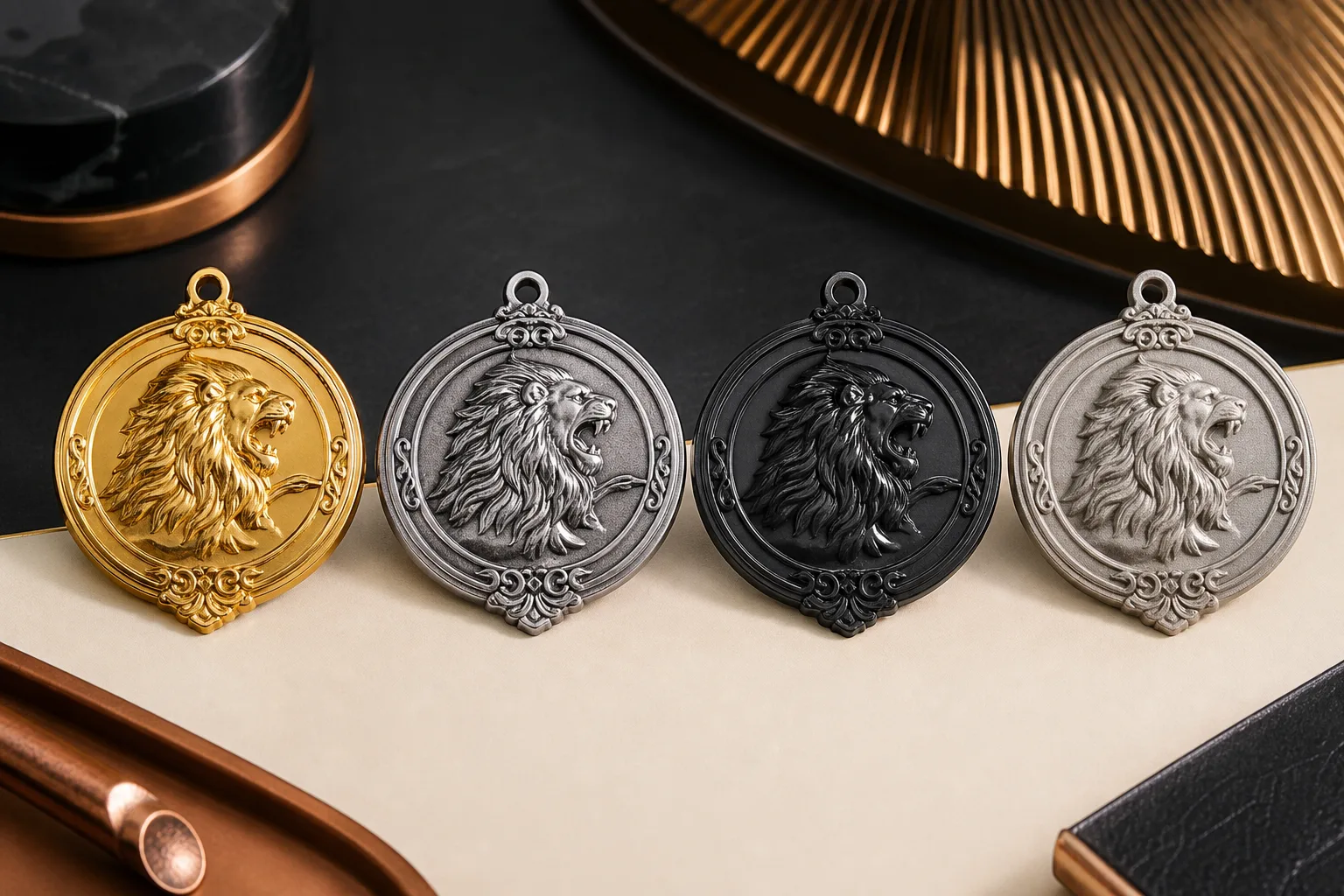
Relief becomes visible through changes in light and shadow. Finish selection can strengthen or soften that effect. Bright surfaces reflect light from raised points, while matte or sandblasted areas can reduce glare and create separation between neighboring planes.
Available treatments include gold, silver, nickel and black nickel plating. Antique bronze and antique silver can emphasize recessed areas and surface texture, which may make modeled contours easier to see. Dual plating can introduce two metal tones where the artwork has suitable visual boundaries.
Sandblasting and matte finishes can also distinguish a background from a smoother raised subject. For example, a matte recessed field can support a brighter central emblem without adding another color. The finish should follow the relief map so that it reinforces the main forms rather than dividing them into unrelated surface effects.
Finish samples and digital references can guide the direction, but the artwork proof should state where each treatment appears. Buyers comparing bright plating, antique effects, dual plating and textured surfaces can use our dedicated finish guidance before confirming a preference.
Check the Proof and First Article Against the Relief Intent
The artwork proof should show more than the medal outline. Review the major height relationships, position of text, border width, front and back treatment, overall dimensions and intended thickness. Confirm that the primary subject remains clear and that secondary texture does not compete with important wording.
After mold engraving and trial pressing, Gairun performs a first-article inspection. The trial output is compared with the 1:1 drawing for dimensions, thickness and relief detail. This check connects the digital relief plan to the first physical result before bulk production.
During buyer review, focus on identifiable features rather than asking only if the medal looks sufficiently deep. Check the shape of major forms, the transition between layers, the position of lettering and the relationship between the highest points and the border. For portraits or recognizable landmarks, compare the physical result with the controlling reference images.
If a feature needs correction, describe the location and intended change clearly. Comments such as ※raise the central emblem above the background§ or ※reduce texture behind the lower text§ give more direction than a general request for stronger relief.
Prepare a Focused Brief for Your 3D Medal
A complete brief lets us evaluate the relief concept, forming route and mold requirements together. Include the concept artwork, target dimensions, quantity, final text, required front and back treatment, preferred finish and any images that define the sculpted form.
If the design is still at the sketch stage, label the intended raised and recessed areas where possible. Note which subject is primary and identify any details that must remain readable from the front. We can then assess what additional views or references are needed before 3D modeling and mold development.
Send the project through our request a quote form for artwork and production review.