
FACTORY-DIRECT OEM / ODM MANUFACTURING
Custom Recognition Products for Government and Public Safety
Gairun is an OEM/ODM metal crafts and awards manufacturer that produces organization-specific challenge coins, pins, badges, plaques and metal trophies. We support government agencies, police and fire departments, military units and public safety procurement teams that need firm control over official emblems, wording, product versions and approval records.
Our engineering team can prepare 2D or 3D artwork from vector files, PDFs or hand-drawn concepts. A staged review and inspection process then connects the authorized design to the finished order. To begin, send a structured brief that identifies the issuing organization, recognition purpose, authorized artwork, versions, quantities and required procurement documents.
For other use cases, visit our custom metal product applications. Buyers comparing the full manufacturing range can also review our custom metal products.
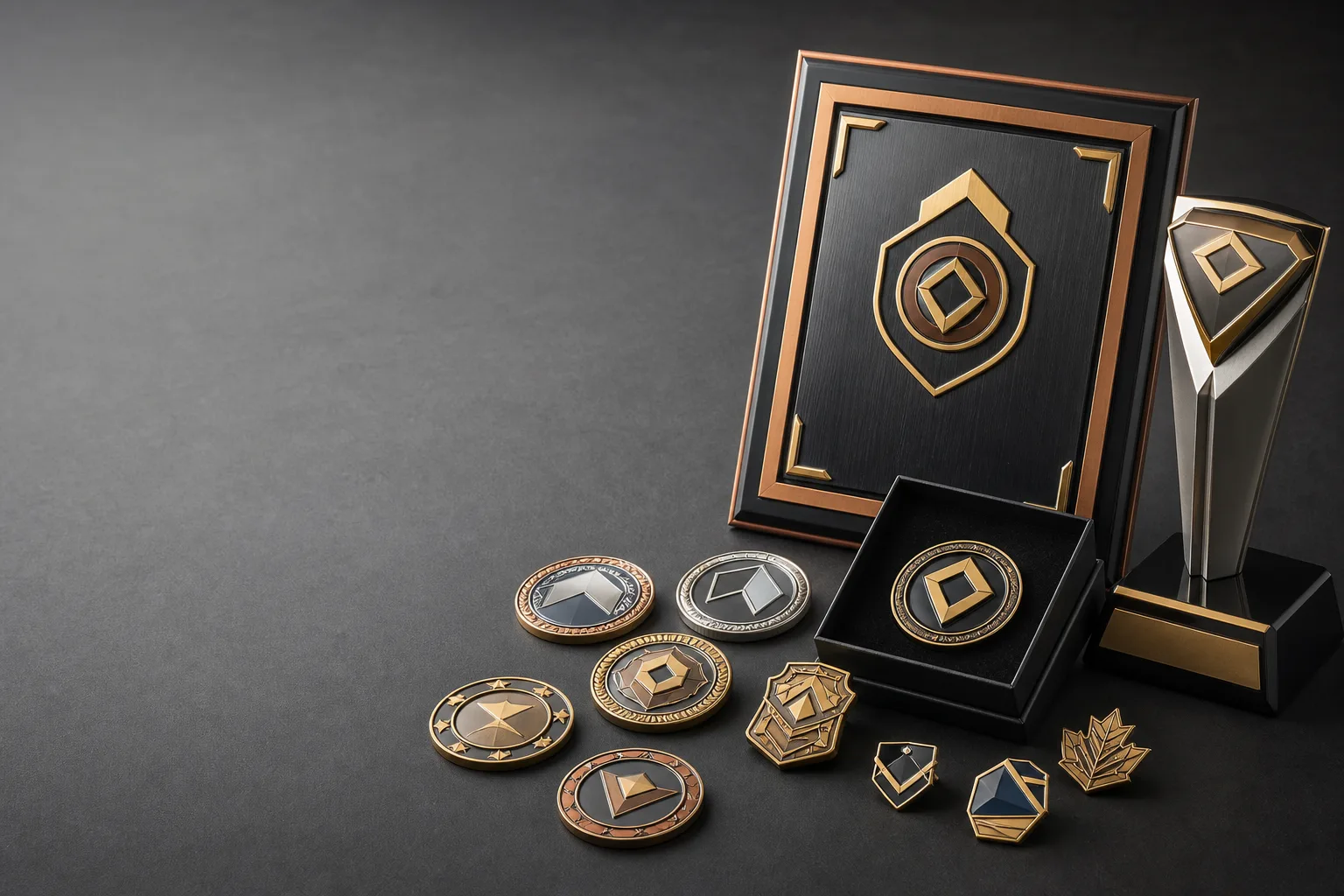
Define the Recognition Program Before Selecting a Product
An institutional project starts with the reason for issue, not the product shape. A service award for an individual, a unit coin for departmental issue and a plaque for a formal ceremony each create different requirements for content, presentation and approval.
Build one shared project brief for procurement, command staff, communications teams and other stakeholders. It should establish:
- Issuing organization: Name the agency, department, command, station or unit responsible for the item.
- Recipient group: Identify the rank, team, service group or individual award category.
- Purpose: Record whether the product recognizes service, marks a commemorative date, supports an official presentation or identifies a department.
- Issue method: Explain if products will be presented at a ceremony, worn, displayed, distributed by a unit or stored for later issue.
- Required versions: List changes in rank, unit, date, award class, wording or recipient information.
- Approval authority: Name the person or department responsible for approving official content and protected marks.
This shared baseline reduces the risk of different teams reviewing different files or interpreting the same requirement in conflicting ways.
Match Coins, Badges and Awards to Their Institutional Role
The right format depends on who receives the item, how it will be used and how much information the design must carry. Product selection should also account for the viewing distance, available artwork area and need for individual or departmental variants.
| Product format | Common institutional role | Key planning points |
|---|---|---|
| Challenge coins | Unit recognition, service commemoration or departmental issue | Front-and-back content, emblem detail, dates, unit names and presentation method |
| Pins and badges | Wearable identification or recognition | Readable detail, attachment, size, color areas and authorized insignia |
| Plaques | Formal individual or departmental presentation | Display setting, names, award wording, emblem placement and packaging |
| Metal trophies | Ceremonial recognition with a dimensional display format | Component layout, branding, presentation setting and any version-specific text |
For product construction and finish decisions, review the relevant family in our product range. Buyers planning police, fire, military or other departmental coins can examine military and public safety challenge coins in more detail.
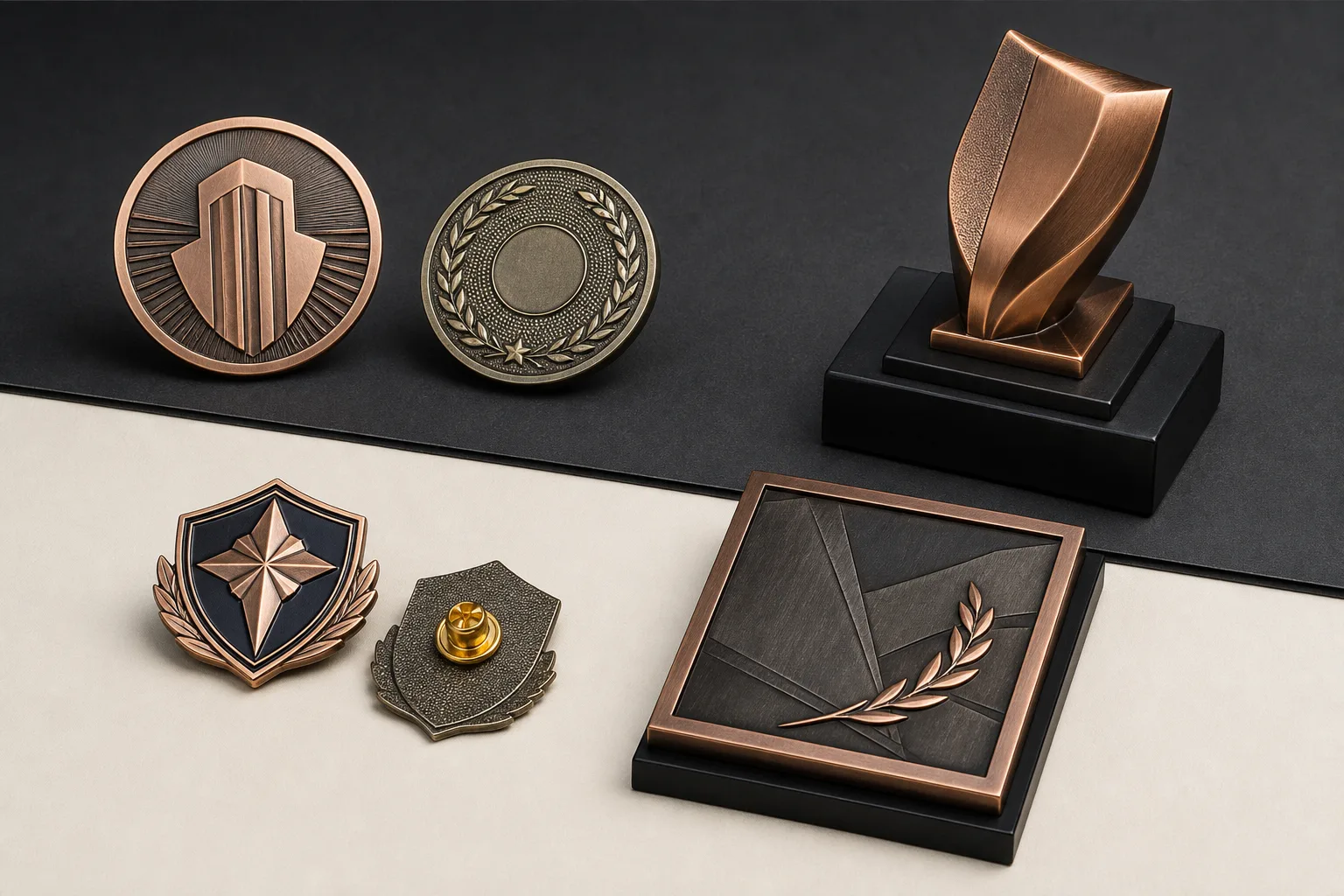
Control Official Seals, Crests and Department Insignia
Official marks require a controlled source and a clear approval owner. Gairun can reproduce supplied artwork and prepare it for manufacturing, but we do not grant or verify legal permission to use a government seal, badge, crest, unit mark or public safety emblem. The buyer must confirm authorization through the appropriate organization.
Submit the best authorized source artwork available. The design package should identify the exact agency or unit name, approved wording, dates, rank identifiers and front-and-back content. If an emblem has fixed colors, spacing rules or required clear areas, include those rules with the artwork.
Small differences can change the meaning or status of an official design. Check spelling, number sequences, dates, title capitalization, motto text, insignia orientation and the relationship between symbols. Avoid relying on screenshots or unofficial online images when an authorized master file is available.
The approval record should also state who reviewed the emblem and which artwork identifier was accepted. This keeps manufacturing approval separate from the organization’s permission to use the mark.
Use a Version Matrix for Units, Ranks and Award Classes
A single institutional order may contain several products that look similar but carry different information. A version matrix gives every item a unique identity and prevents quantities, files and approvals from being mixed.
Create one row for each department, rank, service period, award class or commemorative date. Record the product type, version name, quantity, artwork file name, revision number, approver and approval status. If only one side changes, state which side remains common across all versions.
For example, a shared department emblem may remain on the front while the reverse changes by unit or service year. Treating those combinations as separate controlled versions makes the order easier to review and reproduce.
01
Assign a short, unique code to every version.
02
Match each code to one artwork file and quantity.
03
Record each revision without overwriting the prior identifier.
04
Route the correct proof to the designated approver.
05
Release only clearly accepted versions for mold development.
Approve Production Artwork Before Mold Development
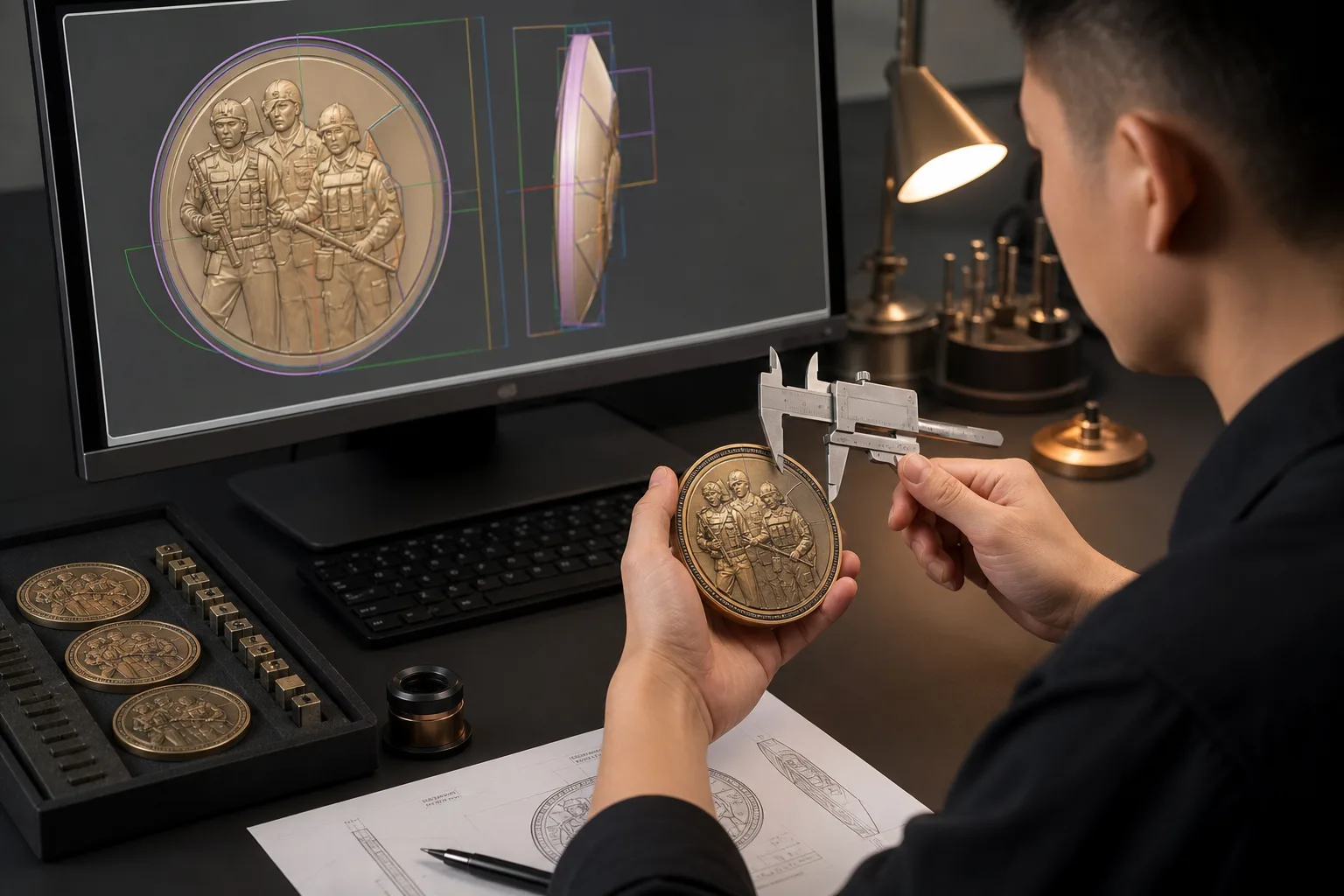
Gairun’s engineering team can work from vector artwork, PDFs or hand-drawn concepts. We use AutoCAD, CorelDRAW, Adobe Illustrator, Rhino and ZBrush for 2D and 3D development, depending on the product structure and artwork needs.
We provide a free artwork proof within 24 hours for preparation and review. This proof allows the buyer to check how the supplied design translates into a production-oriented layout. It does not authorize the use of a protected emblem and does not replace approval from the issuing organization.
The proof review should cover dimensions, thickness, relief, color areas, metal borders, front-and-back orientation, attachments and the proposed production method. Text and version codes should be checked against the institutional matrix rather than reviewed from memory.
For relief designs, confirm which elements rise from or recess into the metal. For colored areas, check that borders and color boundaries follow the intended emblem. For pins and badges, verify the attachment position and expected wearing direction. Mold work should begin only after the correct stakeholder accepts the production artwork. Our artwork design and proofing service provides more detail about this review path.
Connect the Accepted Design to Production Inspection
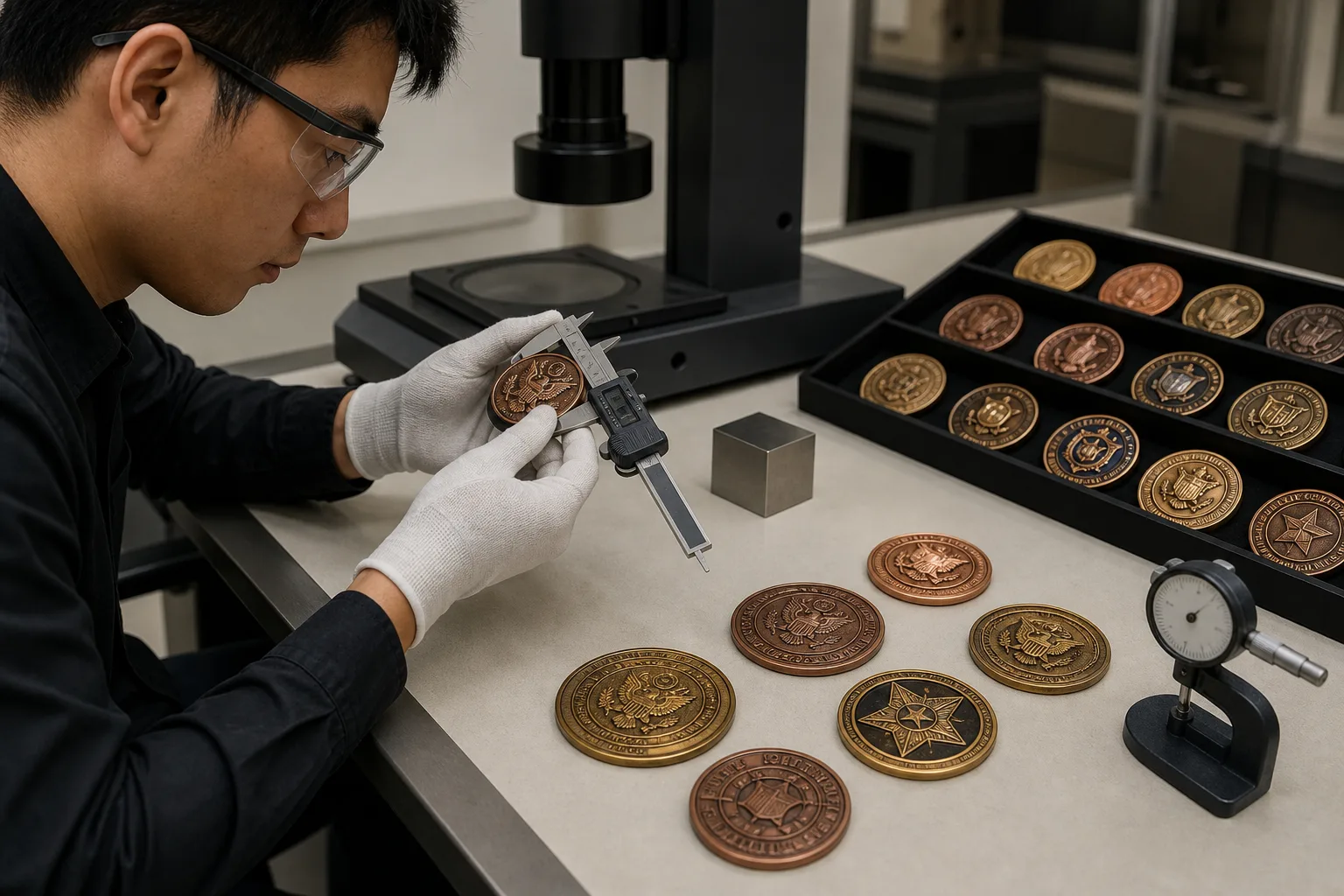
Consistent reproduction depends on checking the product at defined stages rather than relying only on a final review. Gairun’s verified inspection sequence includes incoming material inspection, first-article comparison, in-process inspection and a 100% final visual inspection before shipment.
During first-article inspection, dimensions, thickness and relief detail are compared with the 1:1 drawing. This check connects the formed item to the accepted design before the order moves through later production stages.
In-process checks address details that can change during forming and finishing. These include burrs after die-casting or stamping, surface flatness after polishing, plating color difference and adhesion after plating, and enamel overfill or underfill after coloring.
The final visual inspection checks finished product surfaces and relevant accessories before shipment. Procurement teams can also identify project-specific inspection concerns in the RFQ so their availability and scope can be reviewed. Any requested tolerance, test method, reporting format or acceptance rule must be defined and confirmed for the project rather than assumed.
Specify Presentation and Protective Packing by Use
Packaging should reflect how the recognition item will be handled and presented. A product issued directly by a department may need individual separation, while a formal award ceremony may require a display box. Products moving between receiving points may need additional contact protection.
Available options include standard anti-scratch packing, individual OPP bags, bubble bags, velvet boxes, paper display boxes and plastic display boxes. The correct option depends on the product dimensions, attachments, presentation setting and shipment plan.
State whether packaging applies to every item or only selected award classes. Also identify labeling, version separation and receiving-point needs so the packing plan follows the departmental issue process.
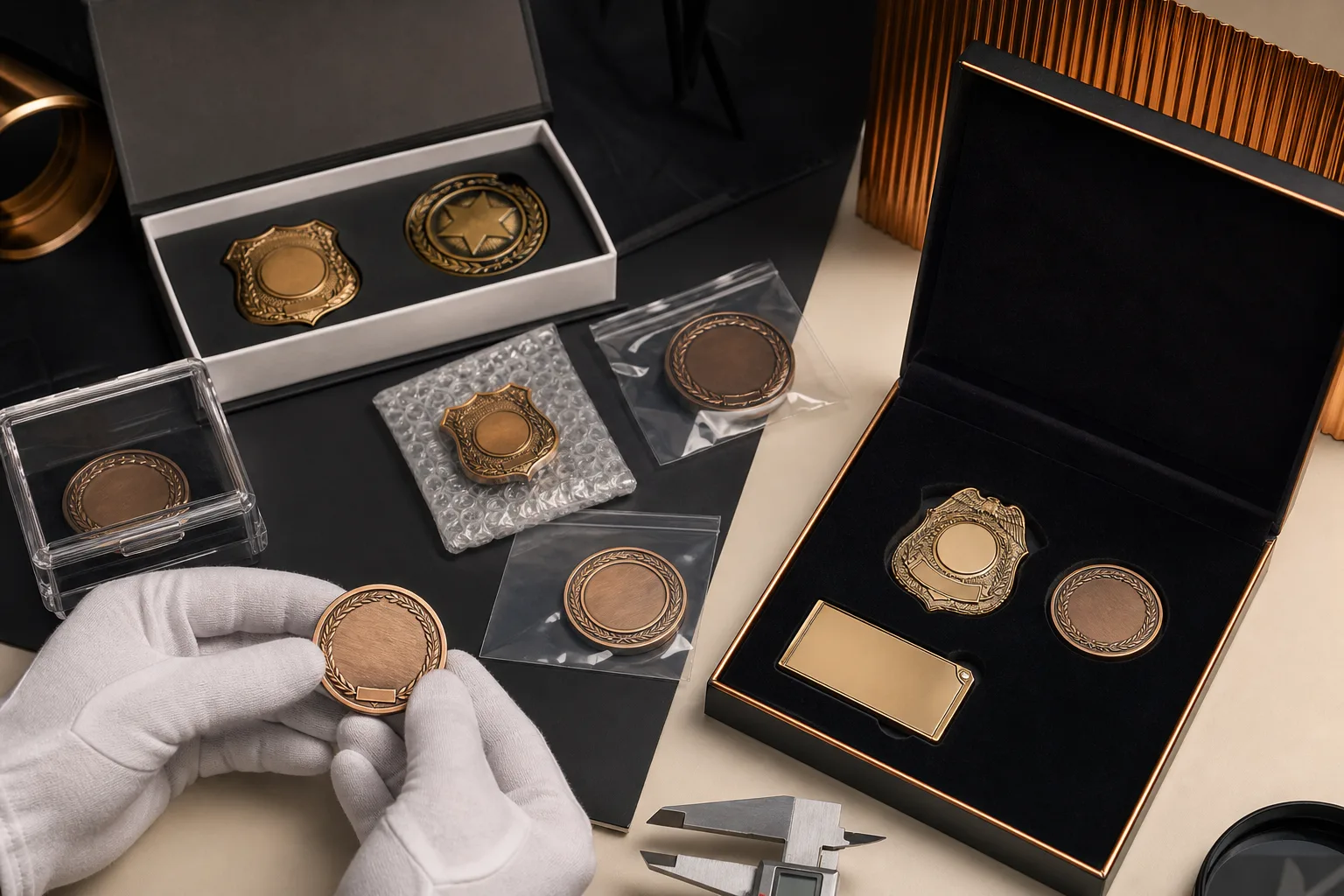
Standard anti-scratch packing
Provides basic surface separation for suitable bulk-packed products.
OPP bags
Keep individual items separated for issue or internal handling.
Bubble bags
Add protection where products could contact one another during handling.
Velvet boxes
Support formal presentation of suitable coins, plaques or awards.
Paper or plastic display boxes
Provide an individual display format when specified for the product.
Prepare a Procurement-Ready Institutional RFQ
A complete RFQ allows manufacturing, artwork and commercial requirements to be reviewed together. Include the product type, authorized artwork, dimensions, quantity for each controlled version, material or process preference, finish, colors, attachments, packaging, destination and required schedule.
Government and public safety buyers should also list the records and documents their organization expects. These may include purchase-order fields, internal approval records, project-specific compliance documents, packing information, shipping terms or other procurement forms. Document availability and scope must be confirmed before ordering; not every requested record applies automatically to every product or shipment.
Before submission, verify that the RFQ quantity table matches the artwork version matrix. Name the authorized contact for technical decisions and the contact responsible for commercial approval. If the receiving address, presentation date or shipping responsibility is not final, identify it as an open point rather than allowing an assumption to enter the order.
Send the completed brief through our request a quote page for project-specific review.