
FACTORY-DIRECT OEM / ODM MANUFACTURING
Custom Metal Products Factory in Shenzhen for OEM and ODM Projects
Gairun operates a custom metal products factory in Shenzhen, China, for OEM and ODM awards, recognition items and promotional products. Our approximately 3,000-square-meter independent production building brings tooling, metal forming, polishing, coloring, inspection, assembly, packaging and production support into one organized facility.
We manufacture custom medals, challenge coins, lapel pins and badges, metal trophies and plaques, keychains and bottle openers. The facility supports event organizers, institutional procurement teams, corporate buyers, brand agencies, and award and promotional gift wholesalers that need to understand where their products will be made.
Buyers conducting supplier due diligence can review the workshop structure, relevant equipment groups and intended production route with our team. Arrange a factory consultation to discuss the facility areas related to your project.
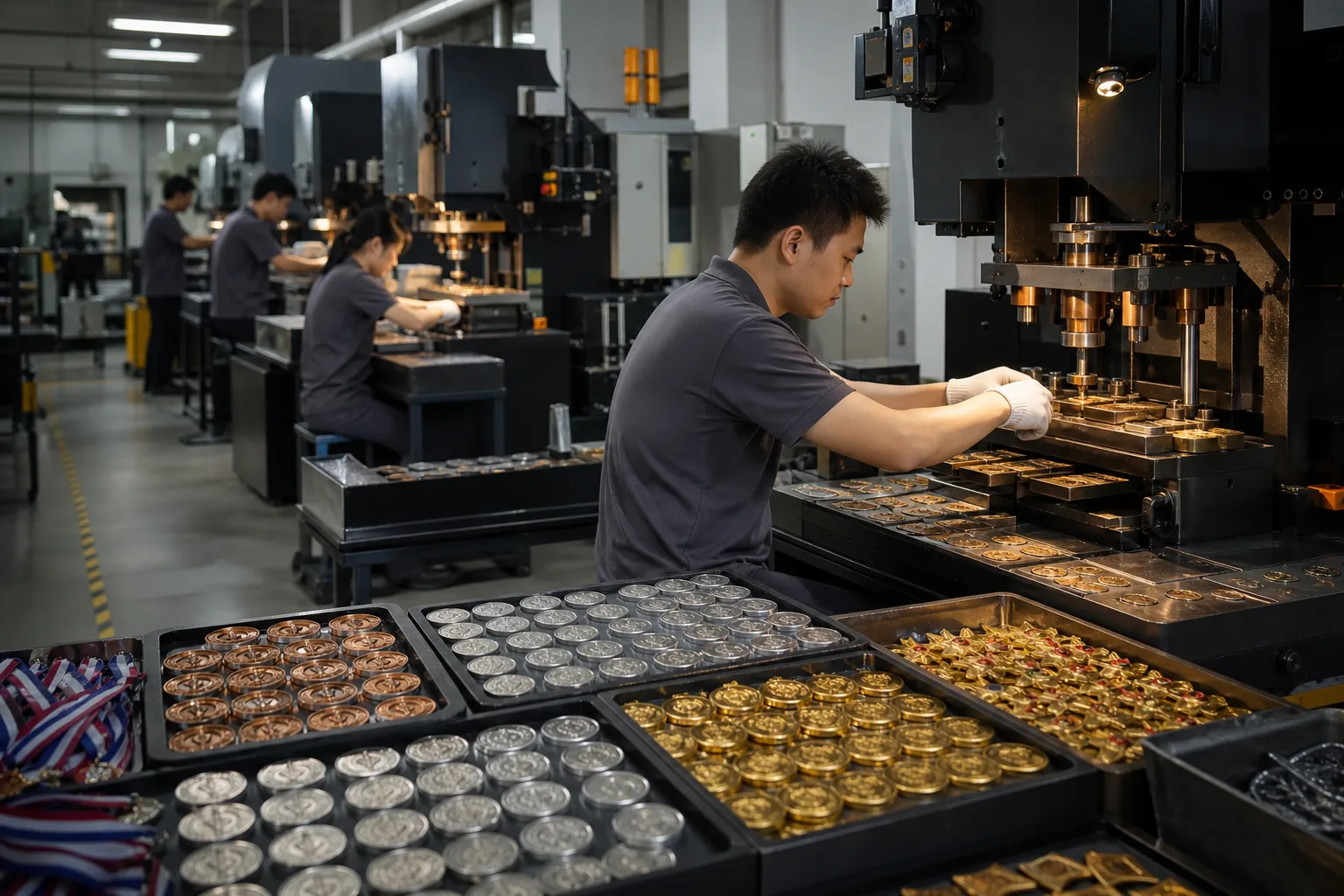
A 3,000-Square-Meter Facility Organized for Custom Metal Work
Our factory is located in Shenzhen within an independent production building of approximately 3,000 square meters. The facility is divided into production and support areas based on the main stages required to turn an approved design into finished metal goods.
The layout covers mold making and CNC work, stamping and hydraulic pressing, zinc alloy die-casting, polishing, coloring and epoxy work, quality control, assembly and packaging. A sample showroom and warehouse center support product review, storage and order handling.
This structure gives procurement teams a practical way to assess factory fit. Instead of reviewing equipment as an isolated list, buyers can consider how tooling, forming, decorative work and final order preparation connect across the facility. For a broader view of available processes, visit our manufacturing capabilities hub.
How Work Moves Between the Production Workshops
A custom metal order does not stay in one work area. Its route depends on the product structure, material, artwork and required appearance. A medal with raised relief may follow a different forming route from a flat badge, while a multi-part trophy also requires coordinated assembly.
The factory layout supports a general flow from tooling and forming to surface preparation, decoration, inspection, assembly and packing. The table below shows the role of each area without prescribing a process for every design.
| Factory area | Main role in the facility | Typical buyer review point |
|---|---|---|
| Mold-making and CNC studio | Supports tooling work for approved custom designs | How the design enters physical production |
| Stamping and hydraulic pressing shop | Provides metal-forming routes for suitable product structures | Whether the design is suited to a pressed format |
| Zinc alloy die-casting shop | Forms suitable zinc alloy parts and dimensional shapes | Whether the planned geometry requires casting |
| Polishing shop | Prepares formed metal parts for later decorative work | How parts move from forming toward finishing |
| Coloring and epoxy workshop | Handles automatic and manual coloring and epoxy work | How colored areas are organized within production |
| QC, assembly and packaging line | Brings inspected parts, components and packing together | How completed goods are prepared for the order |
| Showroom and warehouse | Supports sample review, storage and production handling | How product references and stored goods support operations |
Tooling and Metal Forming Within the Shenzhen Factory
Approved custom designs enter physical production through the tooling and forming areas selected for the project. The mold-making and CNC studio contains CNC engraving machines. Separate forming areas contain zinc alloy die-casting machines, precision stamping presses and hydraulic presses.
These equipment groups support different structures rather than one universal production method. Product geometry, relief, material and component design all affect the route. A factory consultation can identify which work areas are relevant, while the technical decision is handled during artwork and engineering review.
Detailed design rules, tooling development and forming-method comparisons are covered in the relevant process capability pages. On a facility review, the main question is whether the factory has a defined area and verified equipment group for the proposed production path.
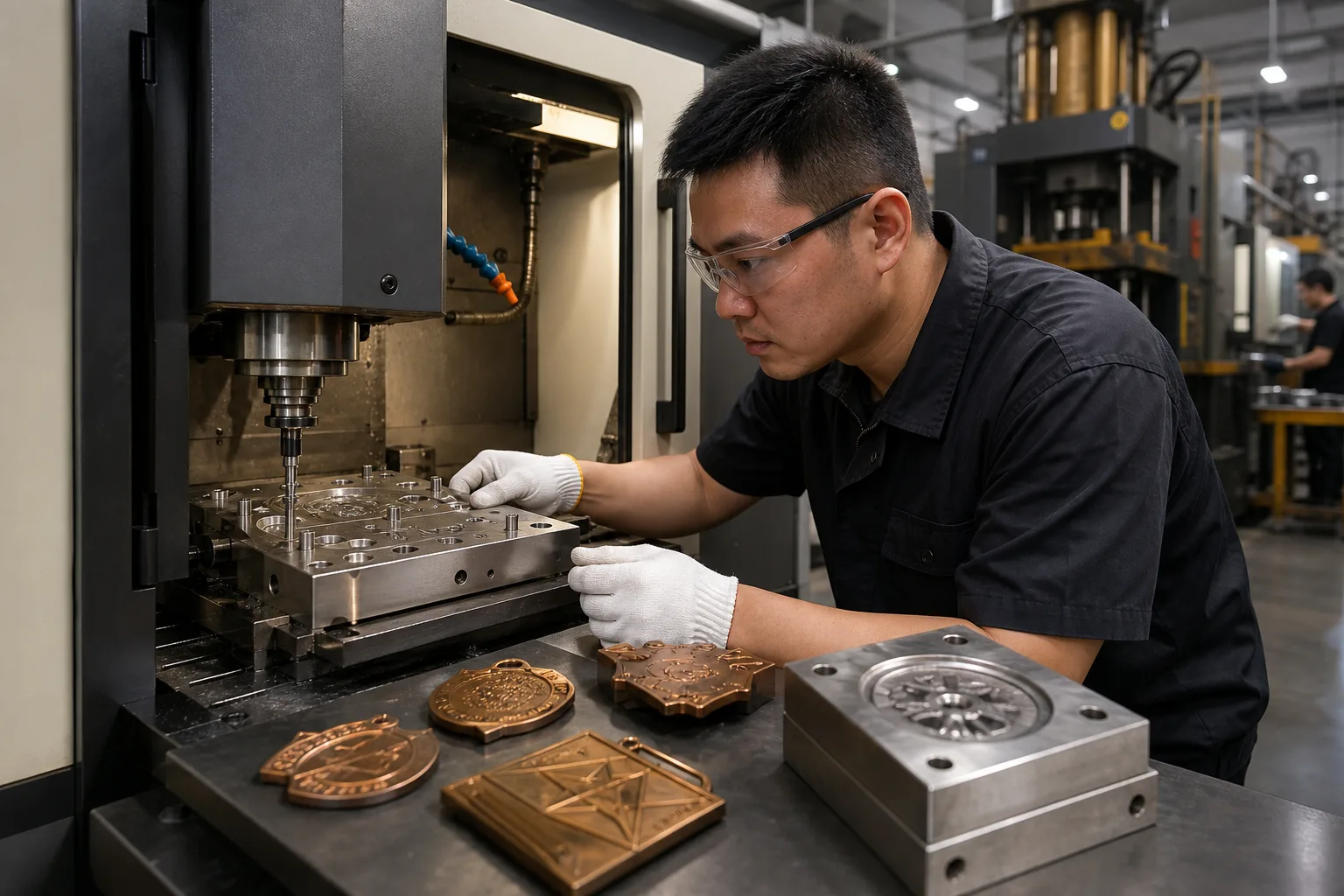
01
CNC engraving machines
located within the mold-making and CNC work area.
02
Zinc alloy die-casting machines
located within the dedicated die-casting shop.
03
Precision stamping presses
used within the stamping work area for suitable formed products.
04
Hydraulic presses
part of the hydraulic forming area for designs that require that production route.
Handoffs from Formed Metal to Decorative Work
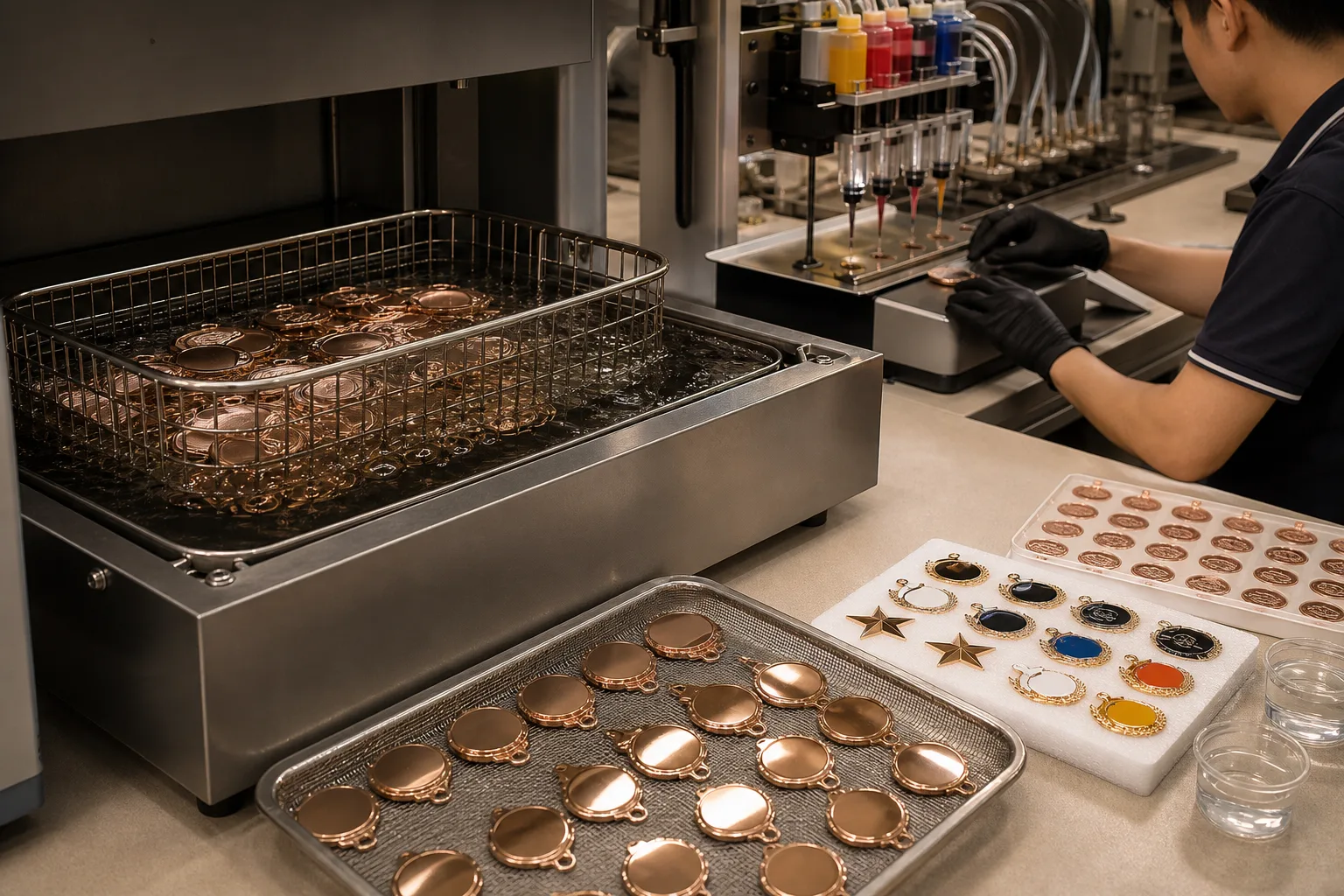
After forming, metal parts move into preparation and decorative stages. Our polishing shop contains automatic polishing equipment and ultrasonic cleaning equipment. These equipment groups support the handoff between raw formed parts and later surface or color work.
Prepared parts can then move to the planned decorative stage. Plating may form part of this production sequence when required by the design. The facility page does not treat plating as a separate workshop because the verified factory layout identifies it as a supported production stage rather than a named facility area.
For colored products, the factory includes automatic color dispensing machines and an automatic and manual coloring and epoxy workshop. Automatic and manual routes allow the production team to direct different artwork structures to an appropriate work path. The exact coloring, printing or coating method remains a project-specific technical decision.
Separating forming, preparation and coloring into defined work areas helps buyers see who receives the parts at each stage. It also makes the physical production path easier to discuss during supplier qualification.
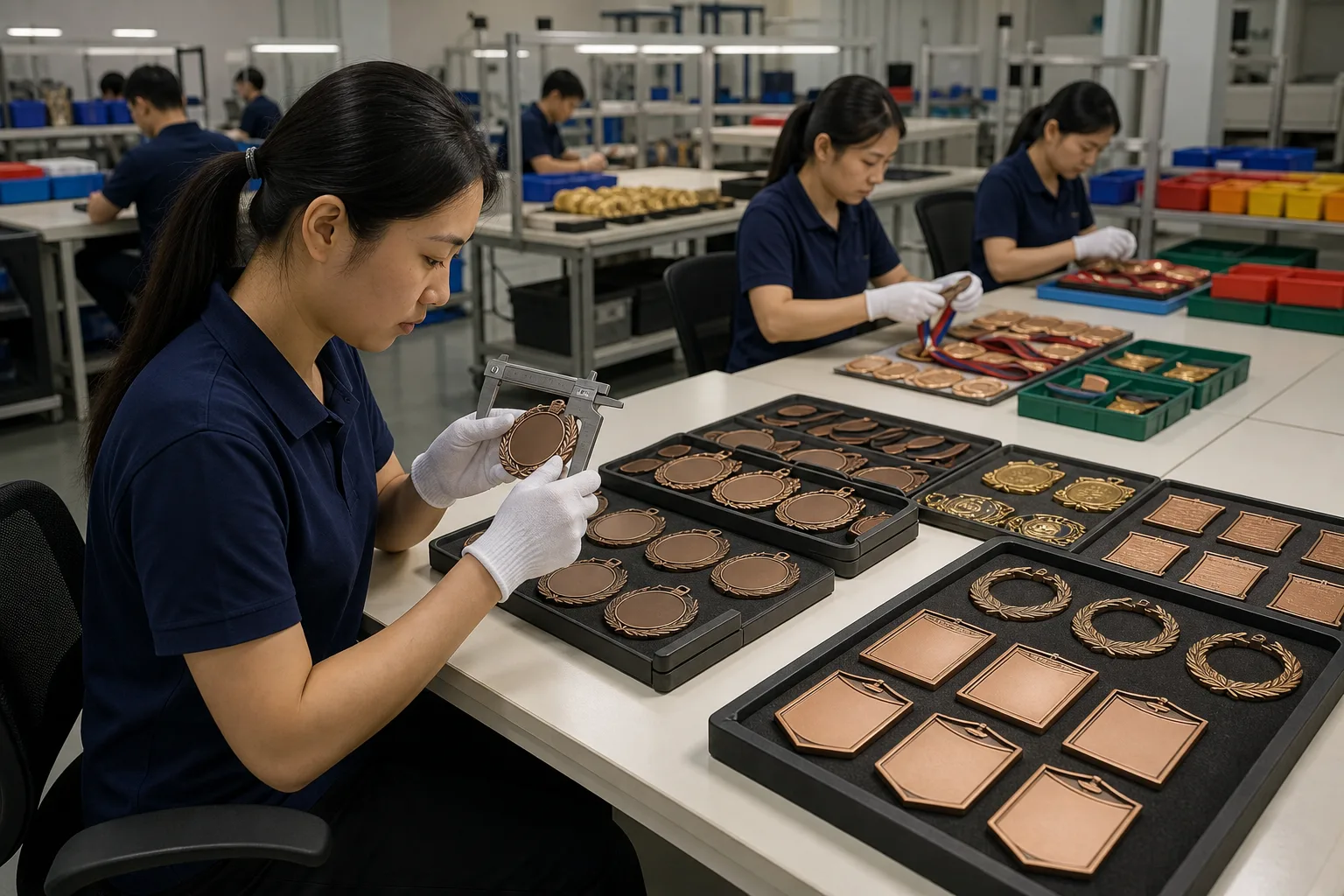
QC, Assembly and Packaging in One Dedicated Line
The factory includes a dedicated quality control, assembly and packaging line. This area receives decorated parts and any required components before the products are prepared as completed goods.
Quality control is positioned as part of the production organization, not as a separate claim about a product that has not yet been reviewed. The line supports the orderly transfer of parts into inspection, component fitting, final assembly and packing. Exact inspection stages, physical test methods and compliance requirements are handled on the relevant quality and compliance pages.
Assembly needs vary by product. Medals may include ribbon components, pins and badges may use back attachments, and trophies or plaques may combine several parts. Packaging also depends on the product format and the buyer’s presentation or distribution plan. Keeping these activities within the facility allows the project path to continue from decorated metal parts to packed orders without changing the factory location.
What Buyers Can Review in the Showroom and Warehouse
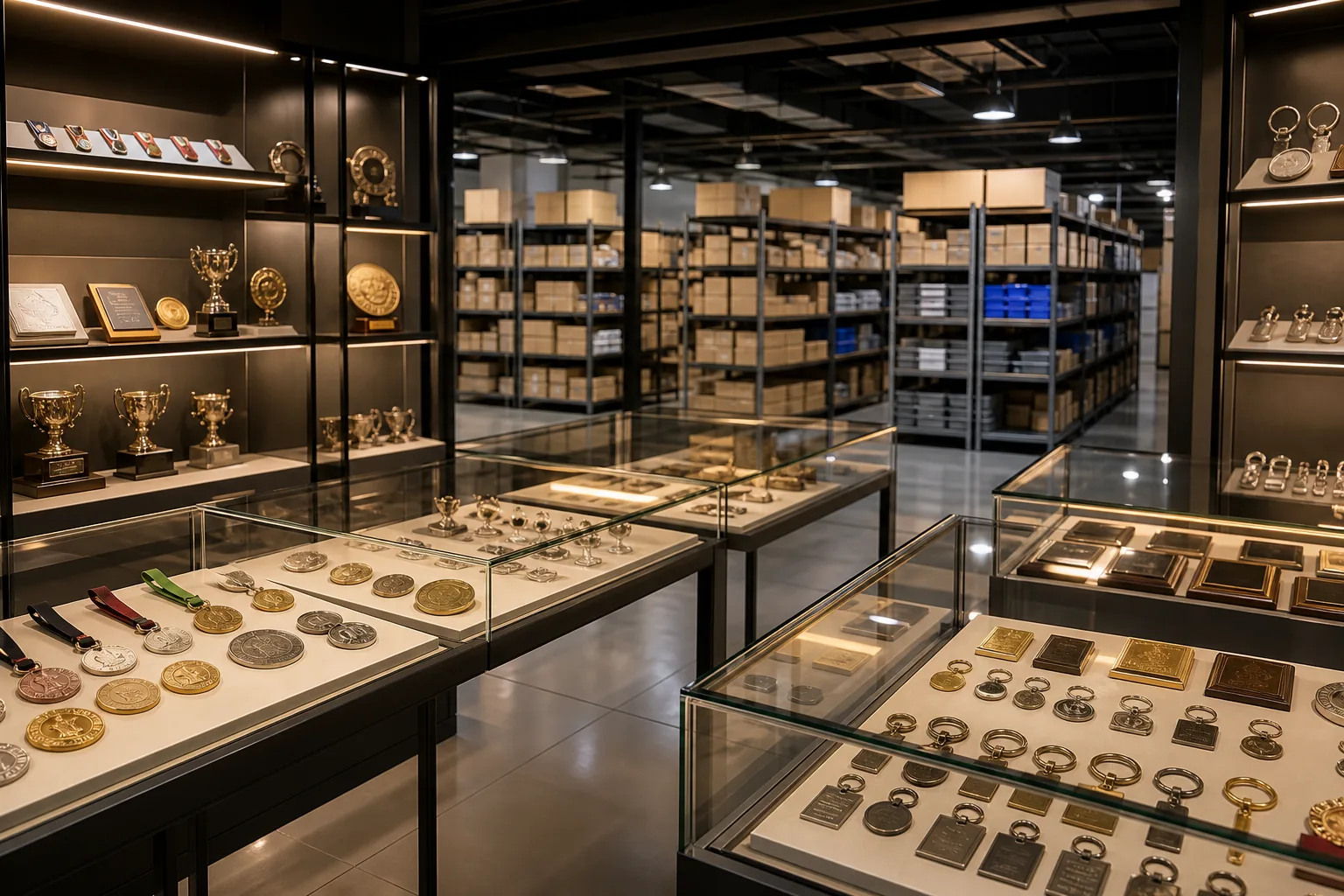
The sample showroom gives visiting or consulting buyers a place to review the types of metal products handled by the facility. Physical product references can help procurement teams discuss size, structure, relief, surface appearance, color layout and component choices more clearly than artwork alone.
The showroom represents the range of product formats produced by Gairun. It does not confirm that a specific sample, design or inventory quantity is available. Buyers seeking samples should use the appropriate sample request and project review routes.
The warehouse center forms part of the factory’s storage and production-support structure. During supplier due diligence, buyers can ask how materials, parts, packing items and completed goods relate to their proposed workshop path. Any project-specific stock or storage requirement must be reviewed against the actual order.
Product Families and Metals Supported by the Facility
The Shenzhen facility supports Gairun’s declared range of custom metal awards, recognition products and promotional goods. Buyers can review the full category structure through the custom metal products hub.
Verified material capabilities include zinc alloy, brass, iron, stainless steel and aluminum. These materials are not interchangeable for every design. Shape, relief, surface treatment, attachments and intended production method affect the final selection. Material and process choices should therefore follow a review of the actual artwork and specifications.
Custom medals
including sports, marathon, relief, spinning and combination formats.
Challenge coins
including military, public safety, corporate anniversary and commemorative formats.
Lapel pins and badges
including enamel, formed and printed structures.
Metal trophies and plaques
including metal awards and products that combine metal with wood or crystal.
Keychains and bottle openers
including all-metal and leather-metal formats.