
FACTORY-DIRECT OEM / ODM MANUFACTURING
Metal Stamping and Hydraulic Relief Forming for Custom Metal Products
Gairun is an OEM and ODM metal products manufacturer that uses precision stamping and hydraulic relief forming for custom badges, pins, coins, medals and metal emblems. We support event organizers, institutions, brands and promotional product buyers that need to compare forming methods before committing to a design.
Metal stamping and hydraulic relief are related forming routes, but they serve different design needs. Stamping creates struck detail in suitable metal stock. Hydraulic pressing can form a more pronounced raised surface when the artwork, dimensions and selected material support it. Gairun operates precision stamping equipment and hydraulic presses rated at 200T and 500T.
The right route depends on the material, part shape, thickness, relief level and front-to-back artwork. Buyers can review our wider manufacturing capabilities or submit a design for a process-fit assessment.
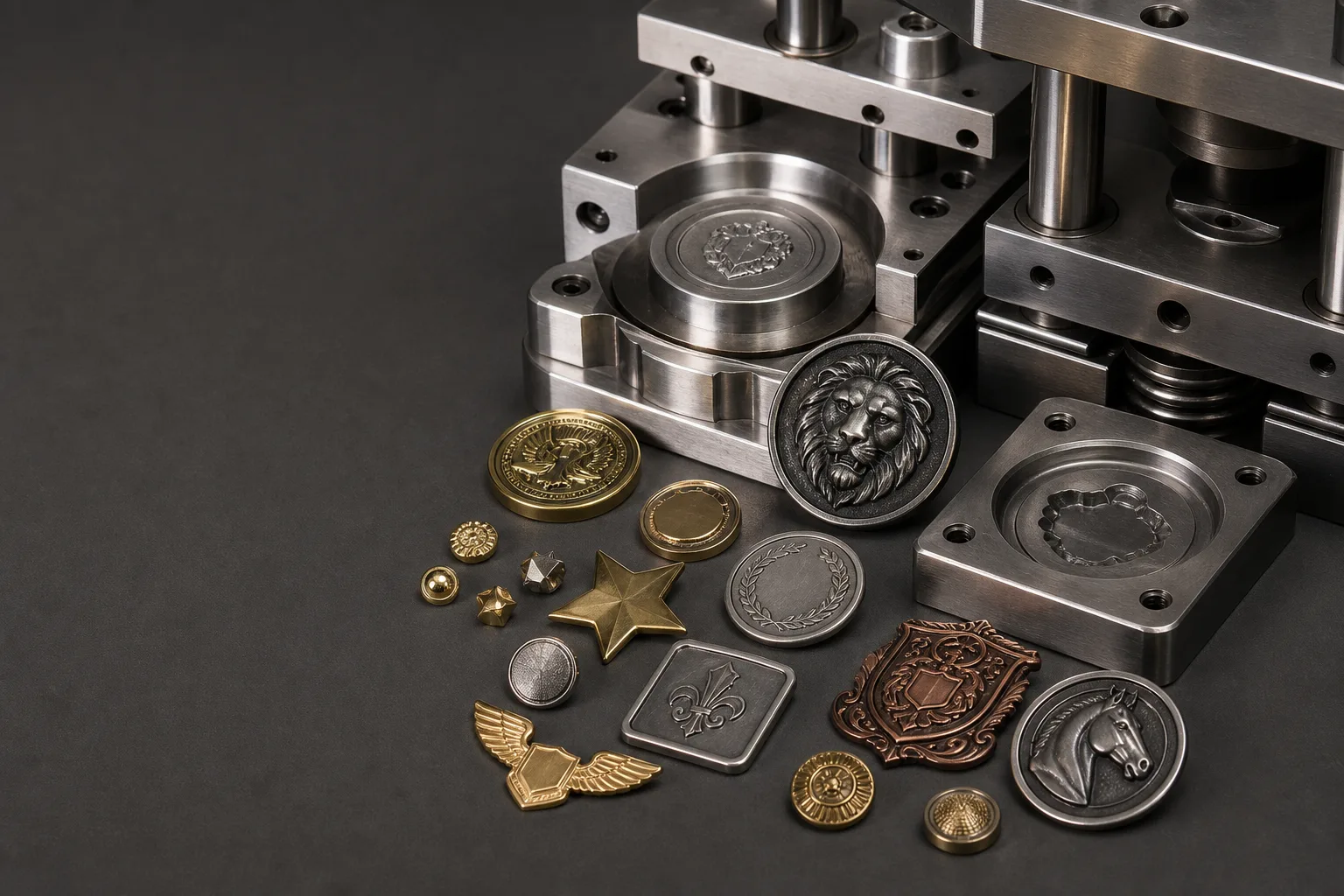
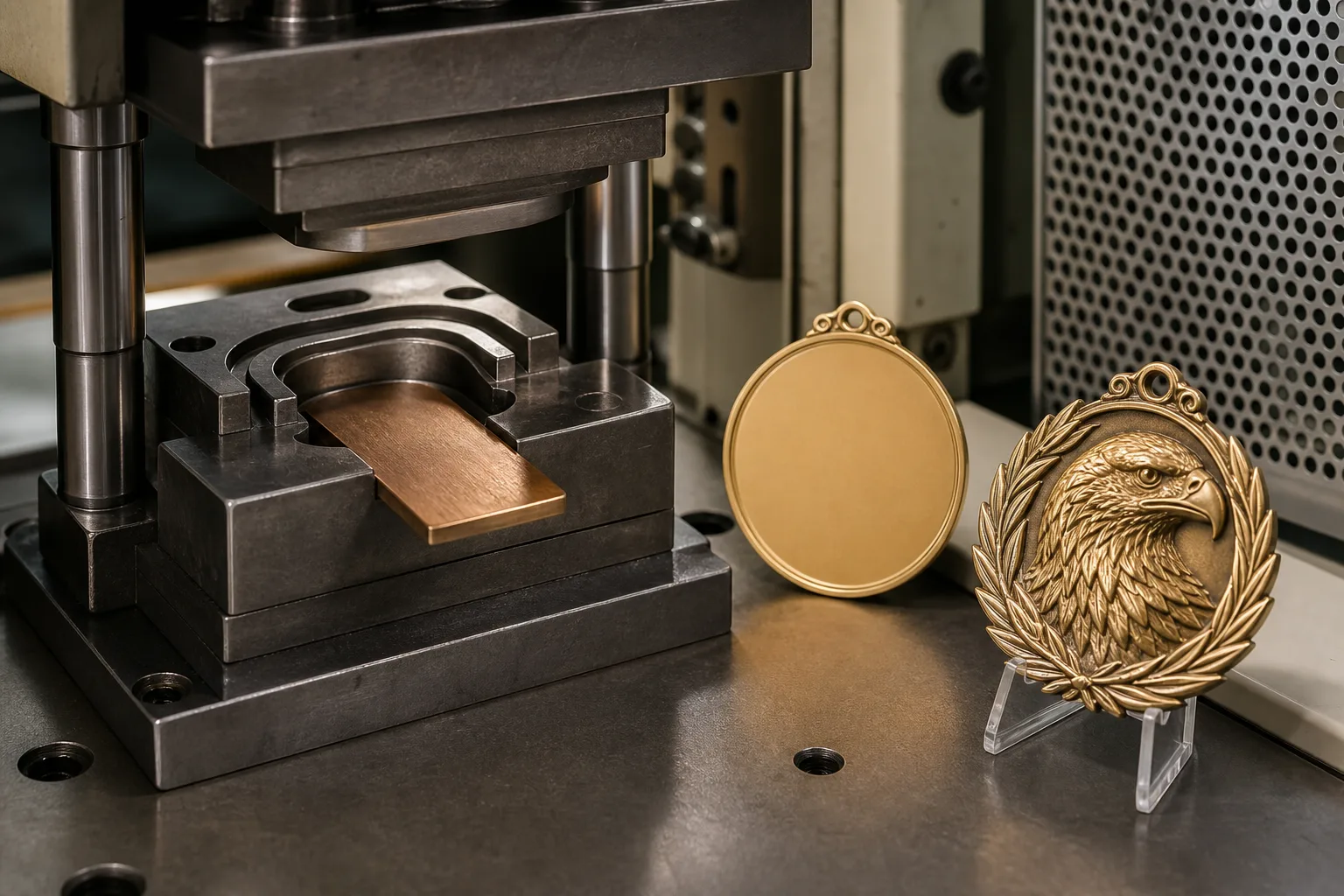
How Stamping and Hydraulic Pressing Shape Metal
Metal stamping, also called die-striking in this product context, uses shaped tooling and pressure to form artwork in suitable metal stock. The process can create outlines, recessed areas and raised metal detail. It is often reviewed for designs that depend on a defined metal face rather than a deeply dimensional body.
Hydraulic high-relief forming also applies pressure, but it is considered when a design calls for stronger height changes or a more sculpted raised surface. The process route must match the metal, product dimensions, thickness and relief arrangement. A high press rating alone does not confirm that a specific design can be formed.
These methods are distinct from casting. Zinc alloy die-casting forms molten metal in a mold and may suit products with more dimensional shapes or structural features. Stamping and hydraulic pressing begin with suitable metal stock and form the required detail through pressure.
Die-Struck Product Formats and Material Review
Stamped construction may be suitable for badges, lapel pins, coins, medals and metal emblems. It works best when the product structure and artwork can be expressed through struck metal levels, a controlled outline and suitable front and back surfaces.
Gairun can review the following metals as possible inputs for a stamped or relief-formed project:
Material names alone do not determine the process. Thickness, outline, openings, detail distribution and attachment points can change the forming recommendation. Buyers comparing the broader roles of these metals can use our metal materials comparison.
Brass
A metal option for die-struck products when the design, stock format and relief requirements are suitable.
Iron
Another possible choice for stamped badges, pins, medals and related products, subject to a full design review.
Stainless steel
Considered for product-specific sheet-metal applications rather than assumed to fit every struck design.
Aluminum
Reviewed where the intended shape, dimensions and forming requirements match the material.
Precision Stamping Based on Part Requirements
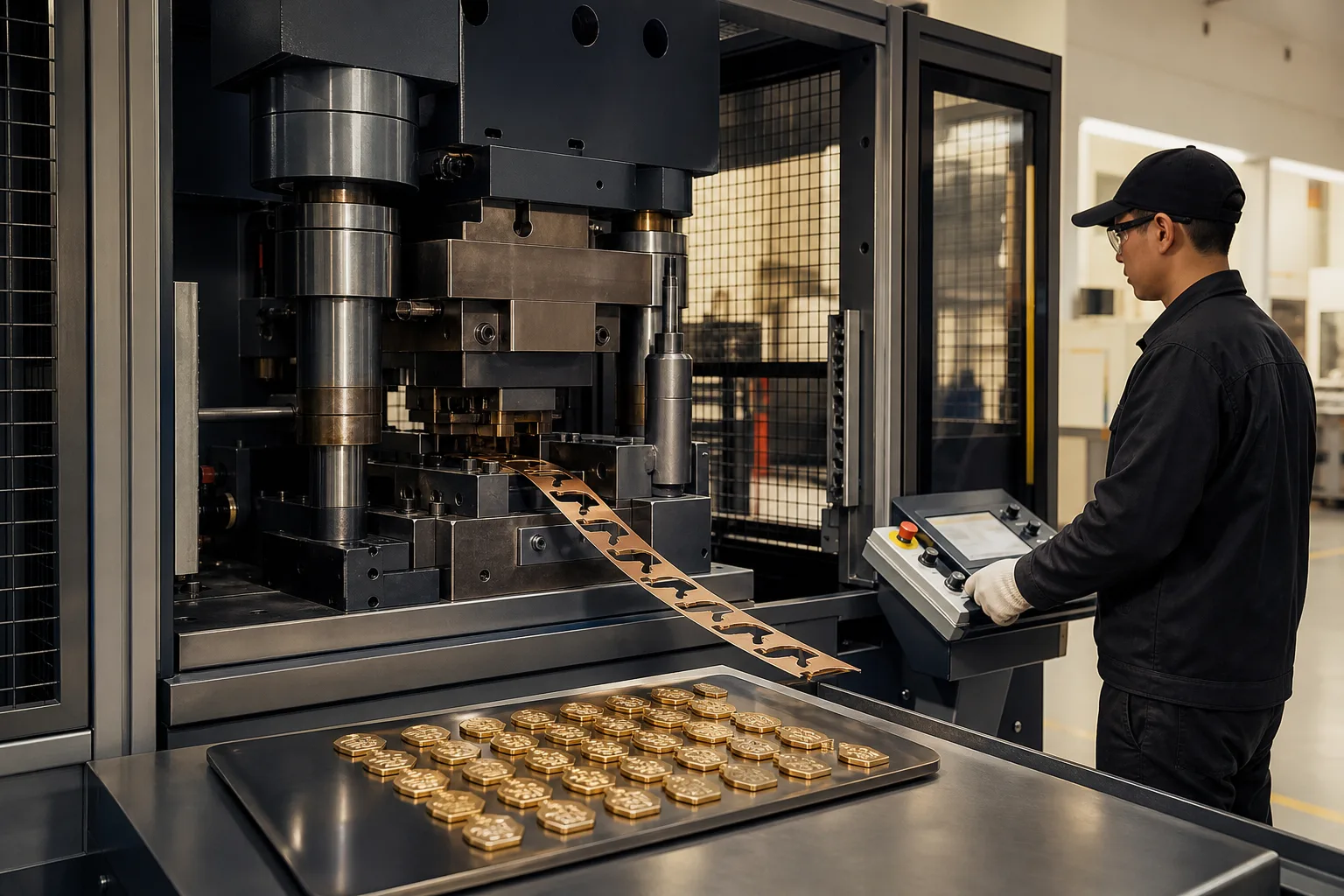
Gairun uses precision stamping machines as part of its metal-forming capability. Equipment selection starts with the proposed part, not with a general rule for a product category. Two badges with similar dimensions may require different routes because their outlines, metal thicknesses or struck details differ.
Our engineering review considers the information that affects forming:
This review determines whether the design is a practical candidate for stamping and whether its details need adjustment before the forming route is confirmed. Achievable detail, depth and dimensional control remain project-specific.
01
Overall length, width and thickness
02
Selected or preferred metal
03
External outline and internal openings
04
Raised, recessed and flat artwork areas
05
Front and back design requirements
06
Attachment or connection locations
What the 200T and 500T Hydraulic Press Ratings Mean
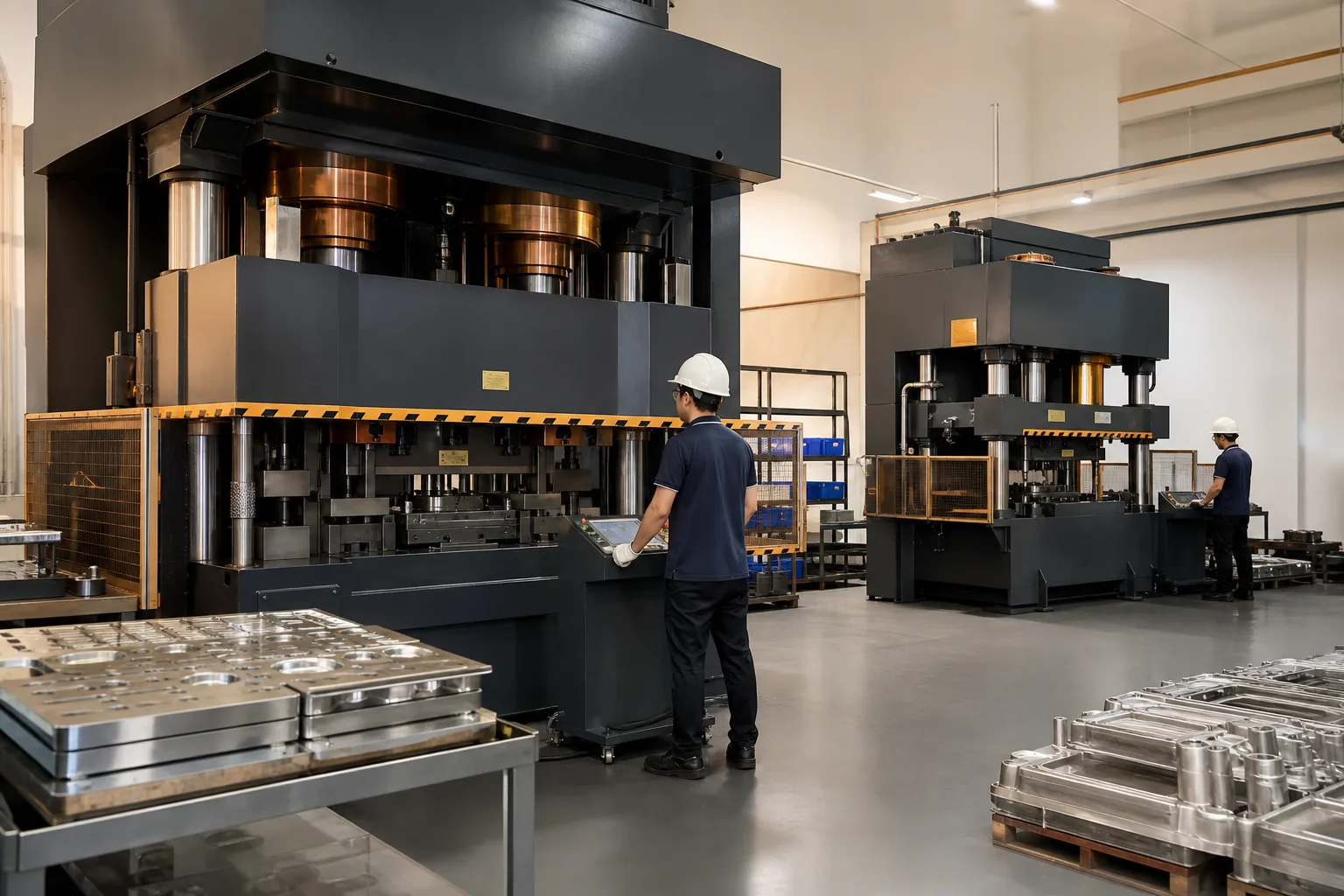
Gairun operates hydraulic presses rated at 200T and 500T for hydraulic forming and high-relief work. These figures identify equipment press ratings. They are not product size limits, relief-depth guarantees or measures of finished-part precision.
Press selection depends on the complete relationship between the design and the material. Engineers need to consider the part dimensions, stock thickness, relief area, outline and distribution of raised features. The required force is not determined by overall size alone.
For buyers, the practical point is simple: access to both press ratings gives our team equipment options to assess, but a drawing review is still required. We do not assign a project to the larger press only because the artwork appears more detailed or the product has a larger face.
When a Design May Need Hydraulic High Relief
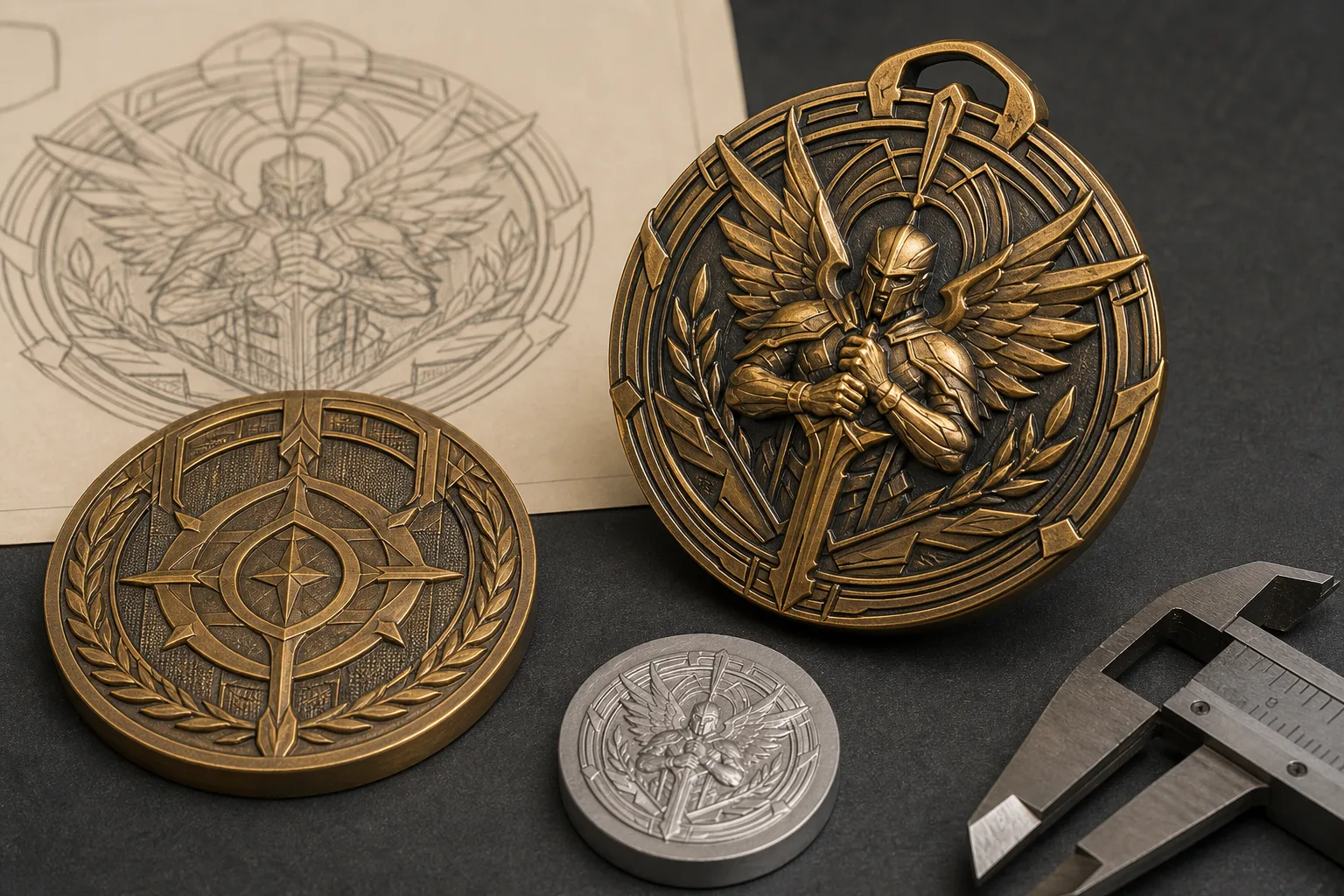
Hydraulic high-relief forming may be considered when a design needs more pronounced raised areas than standard struck detail can provide. Examples may include a central emblem, a modeled figure or a surface with clear foreground and background levels. Suitability still depends on the full part structure.
A useful high-relief review identifies which features must stand forward and which can remain lower or flat. The engineering team also checks how the front relief relates to the reverse layout, overall thickness, edge area and any openings. Concentrating every element at the same height can weaken the visual hierarchy, even when the design can be formed.
Vector artwork, PDFs and sketches can begin the assessment. Reference views can also communicate the intended raised structure. Projects that need detailed guidance on sculpted medal artwork should use the dedicated 3D relief medal resource, while process questions can be directed to our engineering review service.
Stamping, Hydraulic Relief or Zinc Alloy Casting?
Choose the forming route from the design requirements, not from the product name. A coin, medal or badge may be reviewed for more than one route. The comparison below shows the main selection differences.
| Review point | Precision stamping | Hydraulic relief forming | Zinc alloy die-casting |
|---|---|---|---|
| Starting material | Suitable metal stock, including project-specific review of brass, iron, stainless steel or aluminum | Suitable metal stock selected for the proposed hydraulic forming work | Zinc alloy formed in a mold |
| Typical design direction | Defined outlines with struck raised and recessed detail | More pronounced raised or sculpted relief | More dimensional shapes and formed structural features |
| Main artwork focus | Metal levels, borders, outline and front-to-back layout | Relief hierarchy, raised area, thickness and reverse layout | Overall geometry, dimensional form, edges, openings and attachments |
| Selection limit | Suitability depends on material, dimensions, thickness and detail | Press rating does not guarantee a specific depth, size or precision | Suitability depends on the complete moldable shape and structure |
Stamping is often the first route to review for a sheet-metal design with clear struck detail. Hydraulic pressing may be considered when the raised surface needs greater visual depth. Casting may be a better candidate when the part has a more dimensional body or complex formed geometry.
These are selection principles rather than fixed rules. See our zinc alloy die-casting capability for a focused casting assessment.
Information Needed to Select a Forming Route
A complete project brief allows our engineers to compare the practical options without assuming that one method will fit. Include the following details where available:
Vector files are useful, but a PDF or sketch can start the discussion. Our 2D and 3D engineering team can assess the concept and identify missing information. Buyers still comparing product formats can browse the custom metal product range before submitting the brief.
01
Identify the product.
State whether the project is a badge, pin, coin, medal, emblem or another metal part.
02
Provide the dimensions.
Include overall size, intended thickness and dimensions for important openings or connected areas.
03
State the material preference.
Name a preferred metal or ask us to compare suitable options.
04
Describe the relief.
Mark flat, recessed, standard raised and high-relief areas on the artwork.
05
Show both sides.
Supply the front and back layout, including any required text or structural features.
06
Mark functional details.
Identify openings, attachment points and connection areas that may affect forming.
07
Add the order quantity.
Quantity is part of the project and quotation review.