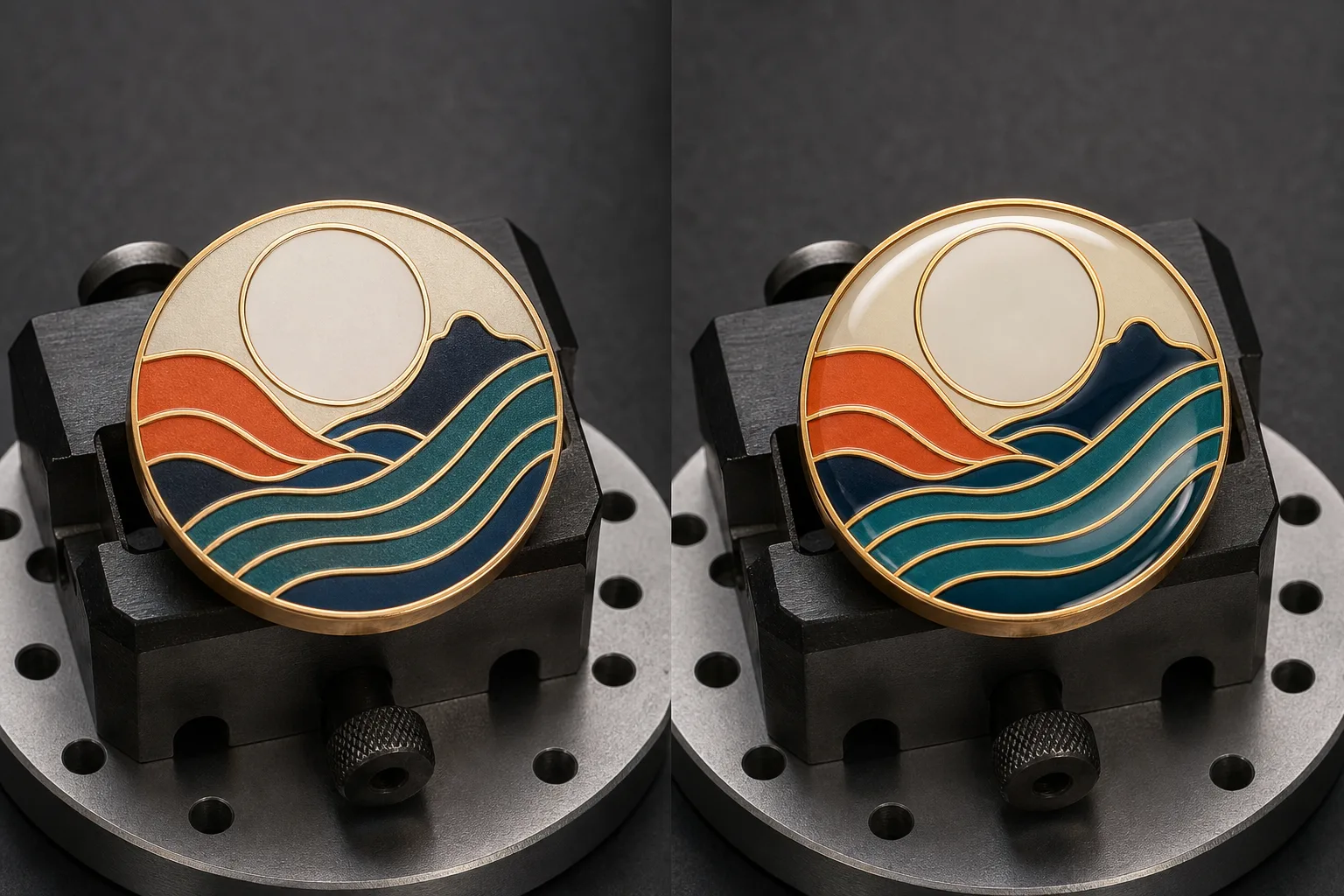
FACTORY-DIRECT OEM / ODM MANUFACTURING
Enamel Coloring and Metal Printing for Custom Products
Gairun is an OEM and ODM metal crafts manufacturer that applies enamel color, printed graphics and clear epoxy coatings to custom metal products. We support event organizers, institutions, corporate brands and promotional product wholesalers that need to reproduce logos, text, solid colors or detailed graphics on a formed metal base.
Our enamel coloring and printing capabilities include soft enamel, imitation hard enamel, automatic and manual coloring, screen printing and UV printing. Clear epoxy is also available as an optional layer over selected decorated surfaces. Send us your artwork for an engineering review to identify a process that fits the graphic detail, color layout and intended surface effect.
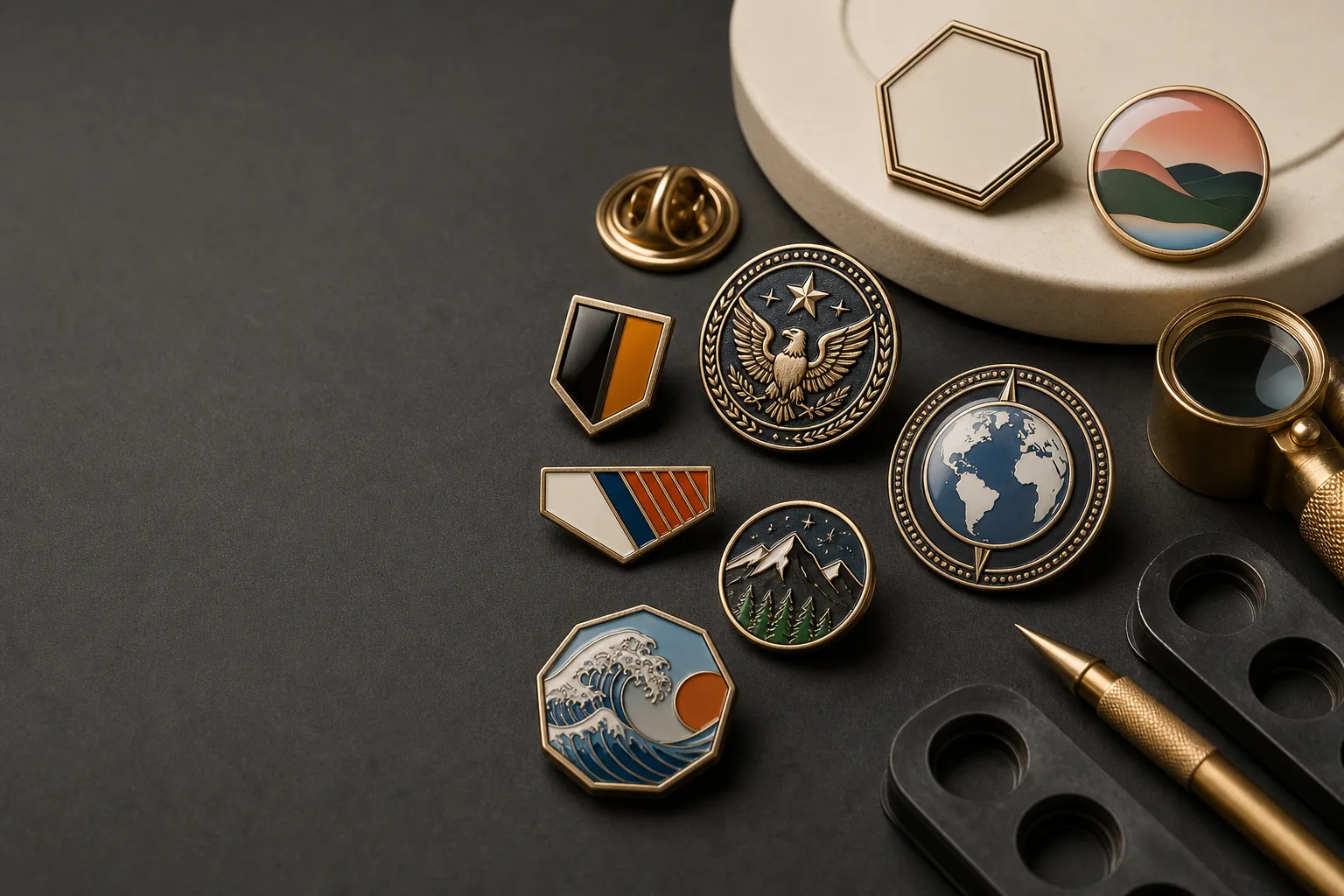
Choose a Decoration Route Based on the Artwork
Enamel, printing and epoxy perform different roles. Enamel fills defined areas within a metal design. Printing places graphic content on the surface. Epoxy is a transparent coating applied after decoration and is not a coloring method by itself.
The right route depends on how the artwork is constructed. A logo made from separate solid-color fields may suit enamel. Small text, fine lines or tonal artwork may require printing. A clear epoxy layer can be considered when the buyer wants a coated face and a different surface presentation.
| Artwork or surface goal | Process to review | Main design consideration |
|---|---|---|
| Separated solid-color areas with visible metal borders | Soft enamel or imitation hard enamel | Each color area must be clearly defined |
| Recessed color below raised metal lines | Soft enamel | Metal borders shape and separate the enamel cells |
| Smoother color face with metal divisions | Imitation hard enamel | Artwork still needs clear boundaries between colors |
| Defined text, symbols or line graphics on metal | Screen printing | Printed elements must be reviewed with the base surface |
| Fine detail or multi-tone graphics | UV printing | The image does not depend on raised dividers between every tone |
| Transparent layer over a decorated face | Clear epoxy coating | The coating changes the final surface presentation |
These processes can be reviewed for custom medals, challenge coins, lapel pins and badges, trophies and plaques, keychains and bottle openers. The product shape and decorated area affect process selection, so artwork should be assessed in the context of the complete item. Buyers comparing available formats can browse our custom metal product families.
Soft Enamel Creates Recessed Fields of Color
Soft enamel is a filled-color process used when artwork contains separate areas enclosed by metal lines or borders. The enamel sits below the raised metal features, leaving a recessed color surface. This height difference gives the design a clear metal-and-color structure.
The method is well suited to artwork in which each color has a defined boundary. Emblems, event marks, symbols and lettering can be considered when their shapes can be translated into enclosed color areas. Metal lines do more than add visual contrast: they also define where one enamel color ends and another begins.
An artwork review checks whether the color cells, metal borders and small design elements are practical for the selected product geometry. When a coated face is wanted, clear epoxy can be reviewed as a separate post-decoration option. Epoxy does not turn soft enamel into imitation hard enamel, and the two finishes should not be described as the same construction.
Imitation Hard Enamel Produces a Smoother Color Face
Imitation hard enamel is available for designs that need a smoother color surface while retaining metal borders between color areas. Unlike the recessed effect of soft enamel, the finished color areas present a more even face in relation to the surrounding metal design.
This process still relies on clear color separation. Adjacent colors need suitable divisions, and the artwork must show which lines are metal and which areas receive enamel. Fine marks that cannot be represented as practical enamel fields may need to be adjusted or considered for printing.
The choice between the two enamel routes is mainly a decision about surface style and artwork structure. Buyers who need a deeper comparison can read our soft enamel versus imitation hard enamel guide. That guide covers the selection question in detail, while our manufacturing review confirms how the chosen route relates to the actual part.
Automatic and Manual Coloring Support Different Design Needs
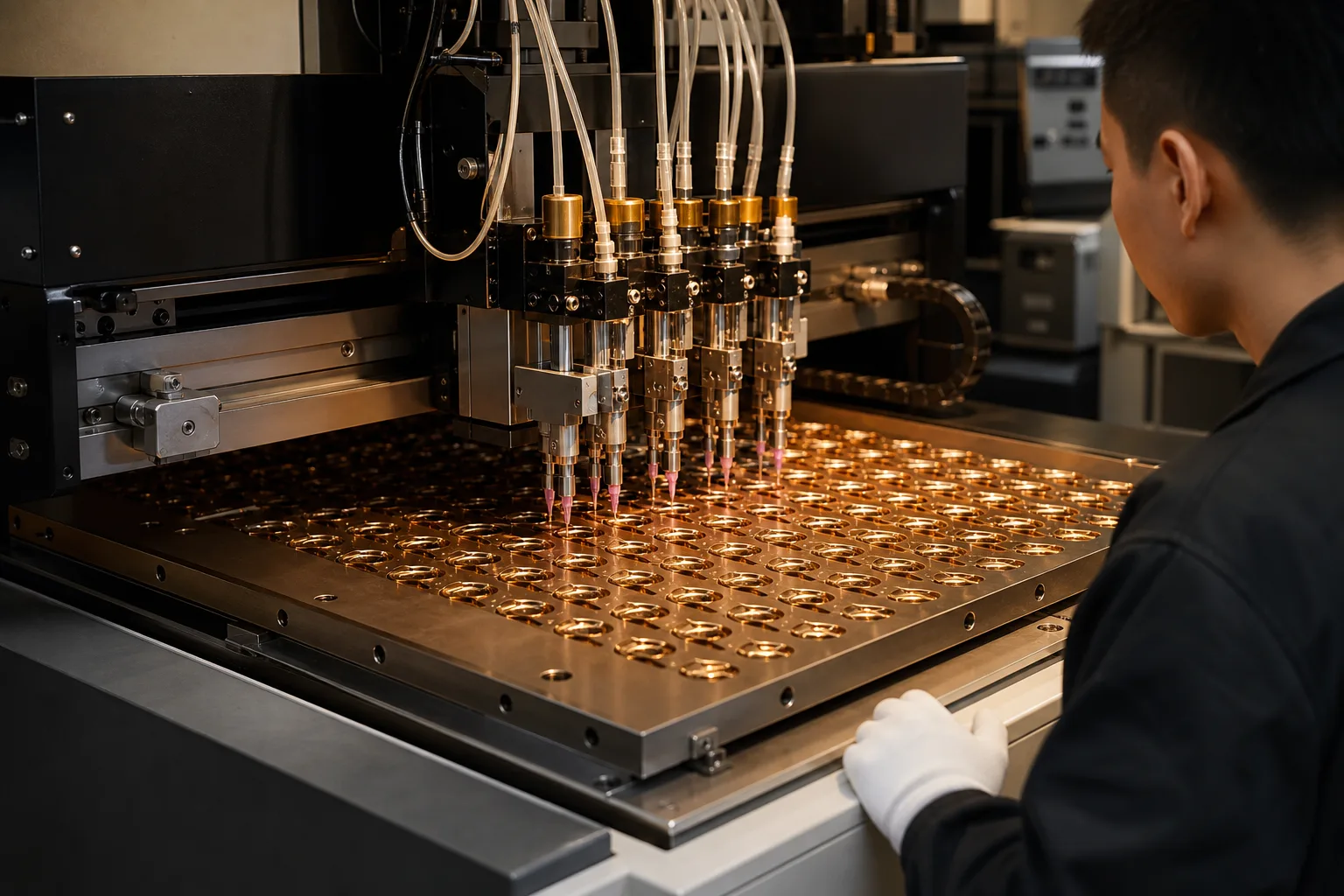
Our Shenzhen operation includes an enamel coloring and epoxy workshop with automatic and manual coloring functions. Verified equipment includes automatic color dispensing machines.
Automatic dispensing can be considered for suitable repeated enamel areas. Manual coloring remains available when a design or part geometry requires direct operator handling. The choice is made after the artwork and product structure have been reviewed; it is not based on the process name alone.
Key review points include:
A single design may contain areas with different handling needs. For that reason, buyers do not need to specify automatic or manual application without technical input. A clear artwork file and a description of the desired surface give our team a better basis for recommending the coloring route.
01
The shape and separation of each color area
02
The position of raised metal borders
03
The number and arrangement of decorated faces
04
The geometry of the part around the color area
05
The required recessed or smoother enamel appearance
Screen Printing Applies Defined Graphics to Metal Surfaces
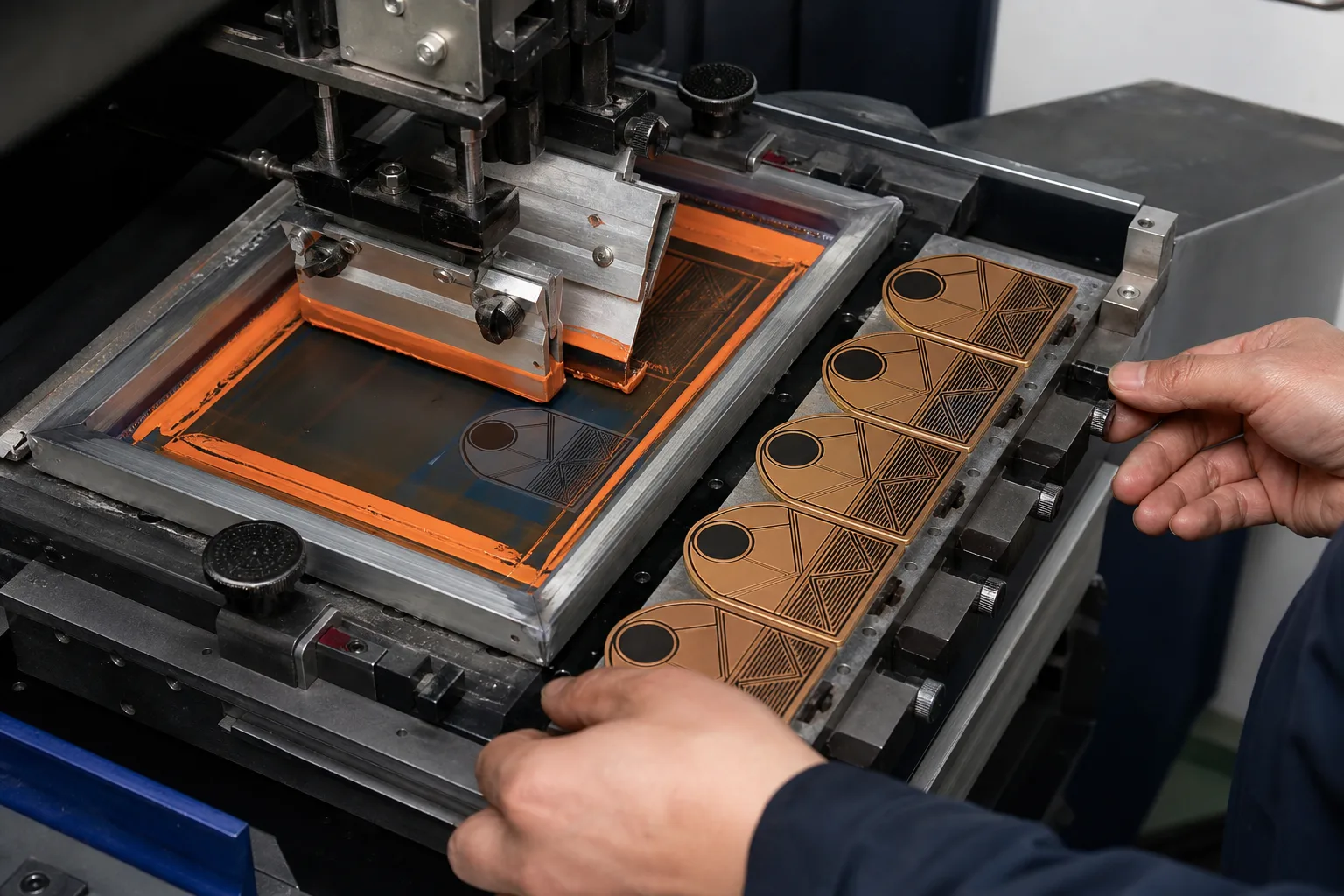
Screen printing is a surface decoration method for graphic elements that are not intended to sit inside enamel cells. It can be considered for defined text, line work, symbols and other printed artwork applied to a suitable metal surface.
This route is useful when adding metal dividers around every graphic element would change the design. It also gives buyers another way to place branding on a metal face without converting each printed feature into a recessed color area.
Process fit depends on the artwork and the available print area. Text, line detail, color layout and the relationship between the print and the surrounding metal all require review. We do not apply one fixed line-width or color-count rule to every product. The practical result depends on the complete design, surface and product geometry.
UV Printing Handles Fine and Multi-Tone Artwork
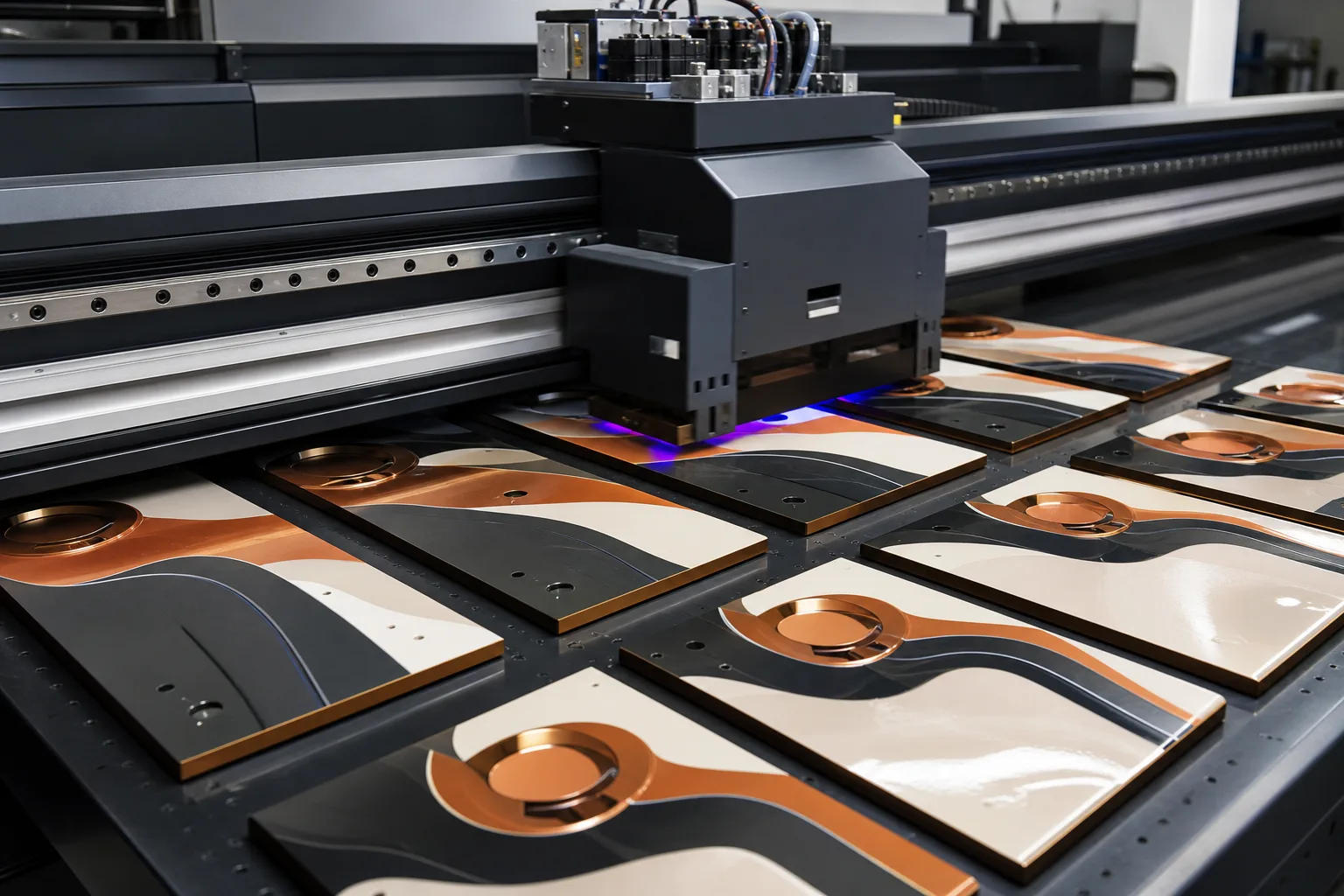
UV printing is available for metal artwork that is not well represented by separated enamel fields. It can reproduce fine graphic detail and tonal changes without requiring raised metal borders between every part of the printed image.
This makes UV printing a process to review for multi-tone logos, complex illustrations and graphics that contain visual transitions. It is different from enamel because the image is printed onto the surface rather than placed into defined metal cells.
UV printing and screen printing should not be treated as interchangeable labels. Screen printing is generally considered for clearly defined printed elements, while UV printing can be reviewed for finer or more varied graphic content. Final selection depends on the source artwork, the metal surface and the required visual result. We do not assign unverified claims about print resolution, outdoor life or ink performance to either process.
Clear Epoxy Adds a Transparent Coated Surface
Clear epoxy coating is an optional post-decoration process, including for badges. It forms a transparent layer over the decorated face and changes how that surface looks and feels. The layer also separates the underlying printed or colored face from direct contact.
Epoxy is not enamel. Enamel provides the color inside defined areas, while epoxy is placed over an existing decoration. A printed badge, for example, can be reviewed with or without a clear epoxy layer depending on the desired presentation. Soft enamel may also be considered with a later clear coating when that combination suits the project.
The coating choice should account for the product shape, decorated area and expected appearance. We do not state a universal scratch rating, service life or environmental performance for clear epoxy. Any project-specific performance requirement must be identified and reviewed separately.