
FACTORY-DIRECT OEM / ODM MANUFACTURING
Custom Spinning Medals Engineered for Moving Designs
Gairun is an OEM/ODM manufacturer of custom spinning medals and combination medals for event organizers, institutions, brands and promotional product buyers. We produce medals with rotating centers and other assembled metal structures at our Shenzhen factory.
A moving medal requires more planning than a standard one-piece design. The position of each component, its connection method and its path of movement must be clear before tooling begins. Our 2D and 3D engineering team reviews these details and prepares a visual proof for approval. CNC mold engraving, metal forming and first-article inspection then follow the confirmed structure.
Send us your concept, dimensions, quantity and notes about the moving parts. We will assess the design before providing a project-specific quotation. Buyers who are still comparing medal formats can first review our wider range of custom medals or browse all custom metal products.
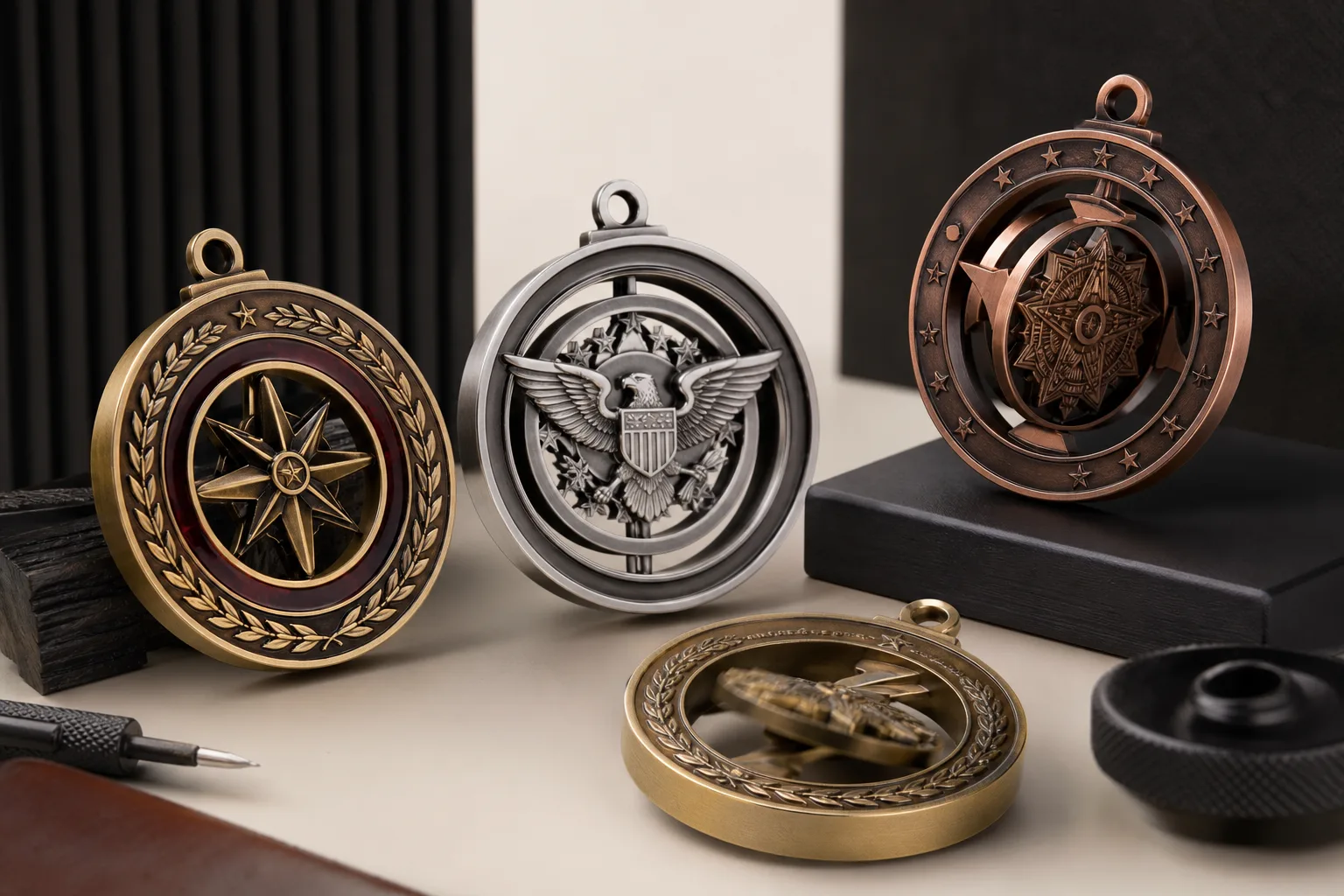
Choose a Rotating Center or Multi-Part Medal Structure
A spinning medal has an inner component that rotates within an outer frame. The spinner may show artwork on one or both visible faces. Its orientation can change as the recipient turns the center.
A combination medal uses two or more separate components to form one finished award. Some parts may move, while others remain fixed. Components can overlap, connect in sequence or align to complete a larger image. A design can also combine a rotating center with additional fixed sections.
| Structure | How it works | Main design questions |
|---|---|---|
| Rotating-center medal | An inner piece turns inside a fixed outer body. | Where is the center located, which faces are visible and how should it move? |
| Fixed combination medal | Separate metal parts are assembled into one non-moving design. | Which parts overlap, connect or align in the finished medal? |
| Moving combination medal | Multiple parts are assembled, with one or more designed to move. | Which parts move, what remains fixed and where are the connection points? |
The complete component map must be settled before molds are made. Changes to the number, shape or position of parts after tooling can affect the production route and assembly plan.
Define How the Medal Center Should Rotate
The rotating element needs a clear location within the outer medal body. A centered spinner is only one possible arrangement. The artwork may place the moving piece off center or use a shaped opening, but the engineering review must confirm how the parts fit together.
For an effective review, define the following points:
- The shape and overall position of the rotating component
- The artwork visible on its front and back faces
- The intended resting orientation of the artwork
- The shape and decoration of the surrounding frame
- The intended range and direction of movement
- Any areas where the moving piece passes close to the outer body
Front, back and layered views allow our team to see how the center sits inside the frame. We also review edge clearance, connection locations and front-to-back alignment. No movement result should be assumed from a flat front view alone.
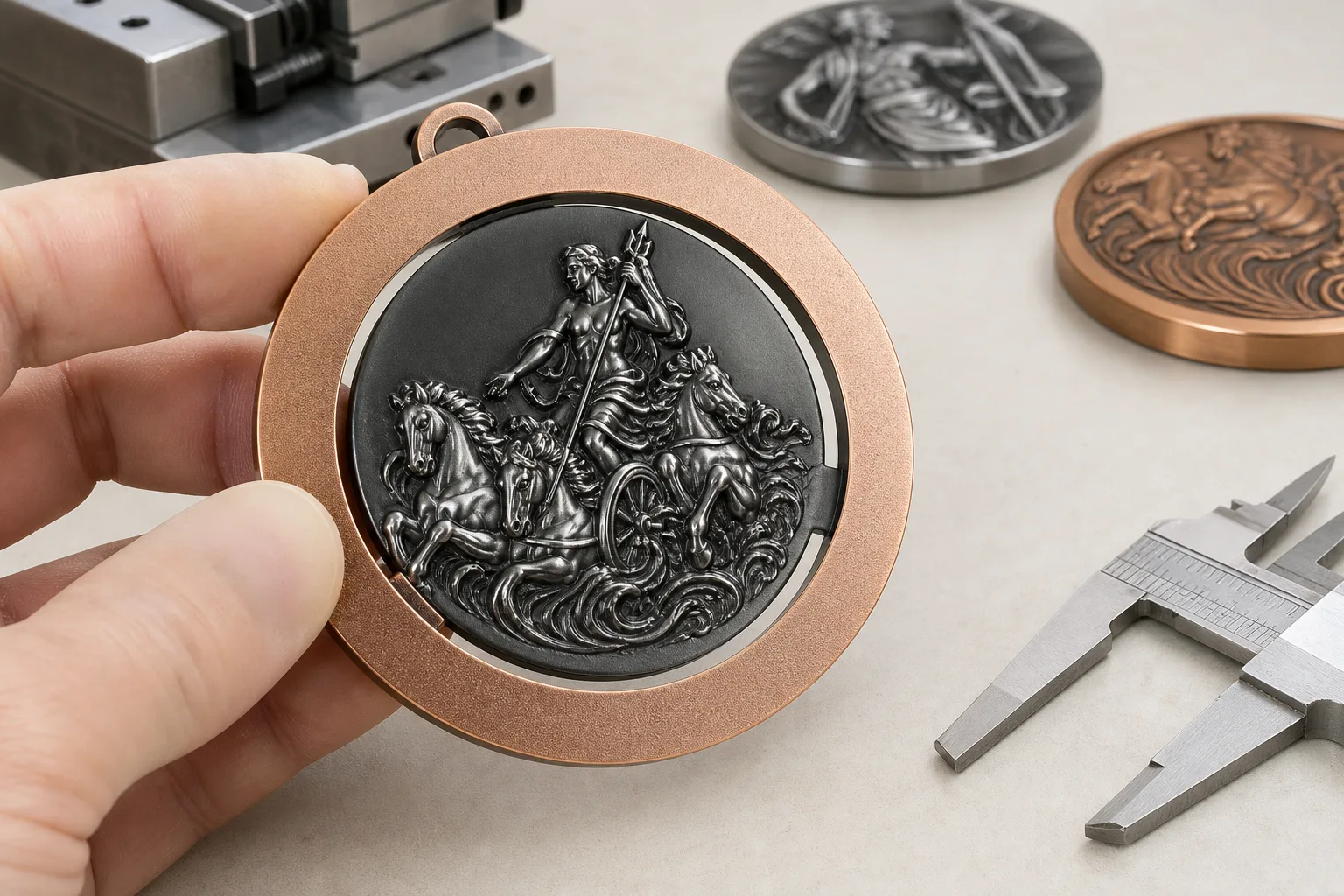
Plan Every Moving and Fixed Medal Component
For a multi-part medal, each physical piece needs a defined role. Mark components as moving or fixed, and show how they relate to adjacent sections. If two pieces are intended to form one image, their alignment must be visible in the assembled view.
Separate artwork may be needed when components have different shapes, relief, colors or metal effects. A useful component plan identifies:
These details let the engineering team assess the complete medal rather than treating each piece as an isolated shape. They also reduce the risk of artwork becoming hidden, reversed or misaligned after assembly.
01
Each individual metal part and its dimensions
02
The order in which parts overlap or connect
03
Connection points and the intended assembly orientation
04
The face or faces that receive artwork
05
Decoration that must continue across more than one part
Separate Artwork into Clear Production Layers
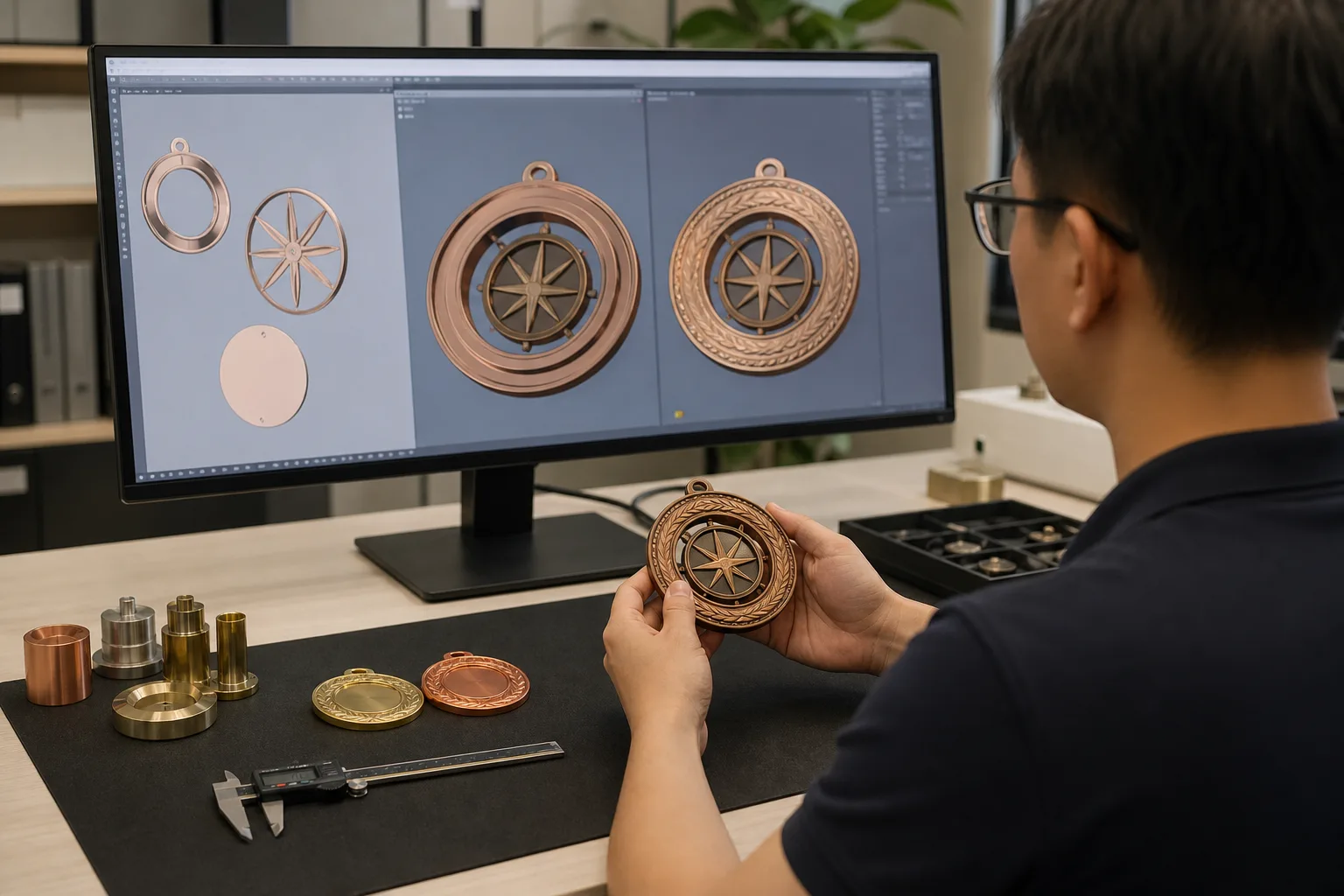
You can submit vector artwork, a PDF, a dimensioned drawing or a hand-drawn concept. Include overall dimensions, front and back details, color references and labels for every component. Arrows or short notes can show which piece rotates and how the parts are connected.
Our 2D and 3D engineering team works with AutoCAD, CorelDRAW, Adobe Illustrator, Rhino and ZBrush. We can use the submitted source material to develop a visual proof that separates the outer body, moving center and other assembled sections.
The proof should show the structure from enough views to remove doubt about component location and artwork orientation. It is also the place to resolve whether an image remains upright, changes direction as the center turns or uses different artwork on opposite faces. Learn more about our artwork design and proofing service.
Match Metal and Forming Methods to the Structure
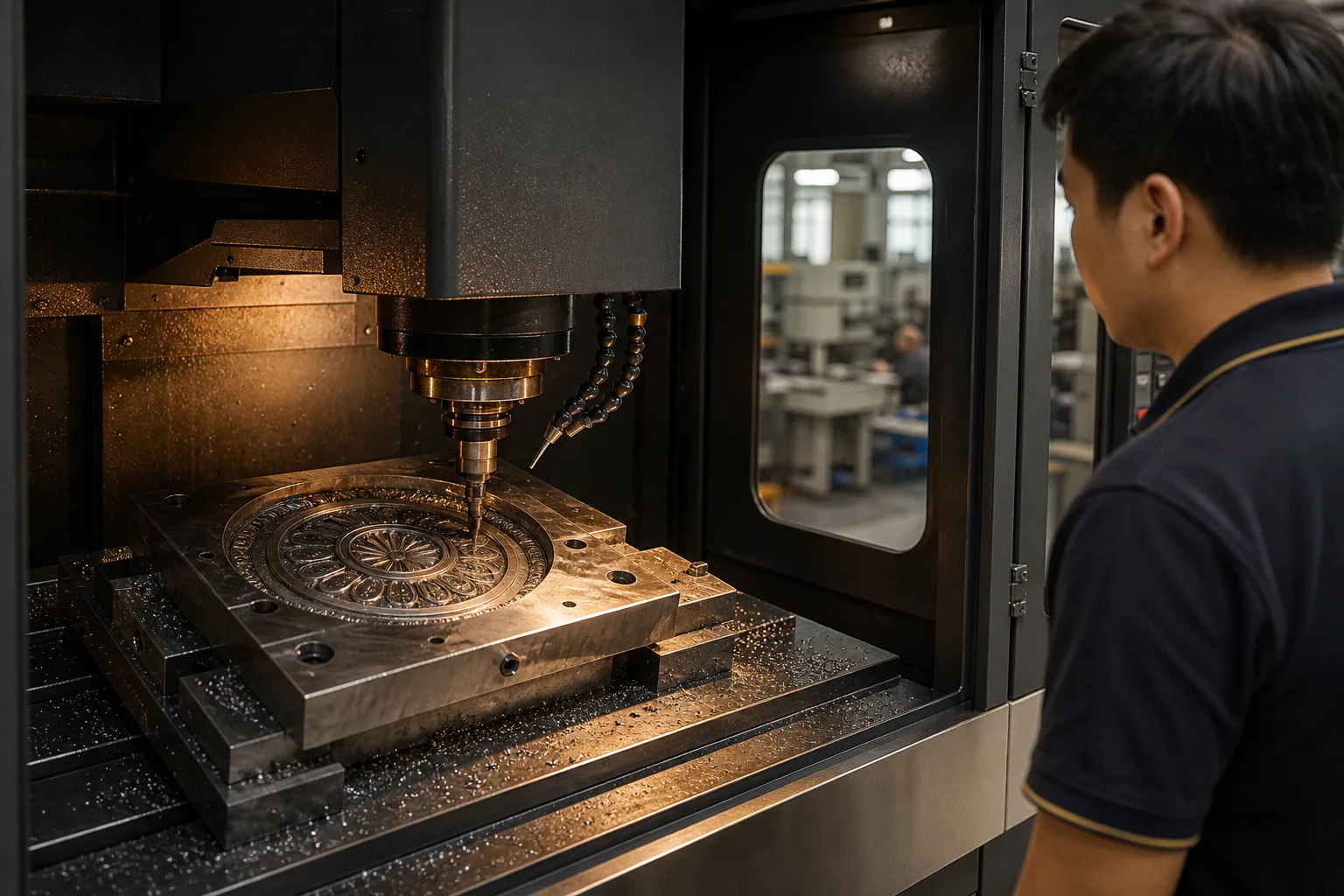
The shape, relief and assembly plan influence how each medal component is formed. Gairun processes zinc alloy, brass, iron, stainless steel and aluminum. Available routes include die-casting, stamping or die-struck forming, photo etching and hydraulic high relief.
One production route is not suitable for every moving design. A component with dimensional geometry may require a different review from a flat section with defined linework. Separate parts in the same medal may also have different forming needs.
Our Shenzhen factory has a mold-making and CNC engraving workshop, 88T and 160T zinc alloy die-casting machines, and precision stamping and hydraulic presses rated at 200T and 500T. The engineering review matches the proposed material and process to the shape, relief and assembly requirements. It does not assume that every concept can use the same construction.
Use Finish and Color to Separate Connected Parts
Finish choices can make the outer frame, rotating center and fixed sections easier to distinguish. Available metal effects include gold, silver, nickel, black nickel, antique bronze, antique silver and dual plating. Sandblasting and matte finishes can create further surface contrast.
Color options include soft enamel and imitation hard enamel. Screen printing or UV printing can be considered for graphic details, while clear epoxy is available as a surface coating. Each treatment must be assigned to a specific component or artwork area.
For example, a buyer may request one plating direction for the outer frame and another effect for the spinner. The proof should show where each finish begins and ends. Connected artwork also needs review so that color areas remain visually aligned when the parts are in their intended position. Detailed finish selection can be handled separately after the medal structure is confirmed.
Resolve Movement and Assembly Details Before Tooling
Pre-tooling engineering review turns the visual concept into a defined production structure. For a spinning or combination medal, we review component count, dimensions, thickness, relief placement, movement path, connection points, edge clearance, artwork orientation and front-to-back alignment.
The approved 2D or 3D proof must identify both the appearance and the physical relationship between parts. If the intended movement or assembly is unclear, those points need buyer confirmation before mold work starts. This protects the project from relying on assumptions that are not visible in the source artwork.
Our engineering review service covers these design-for-manufacturing decisions. Once the component map and production direction are confirmed, the design can move to mold making and CNC engraving.
Inspect the First Article and Finished Assembly
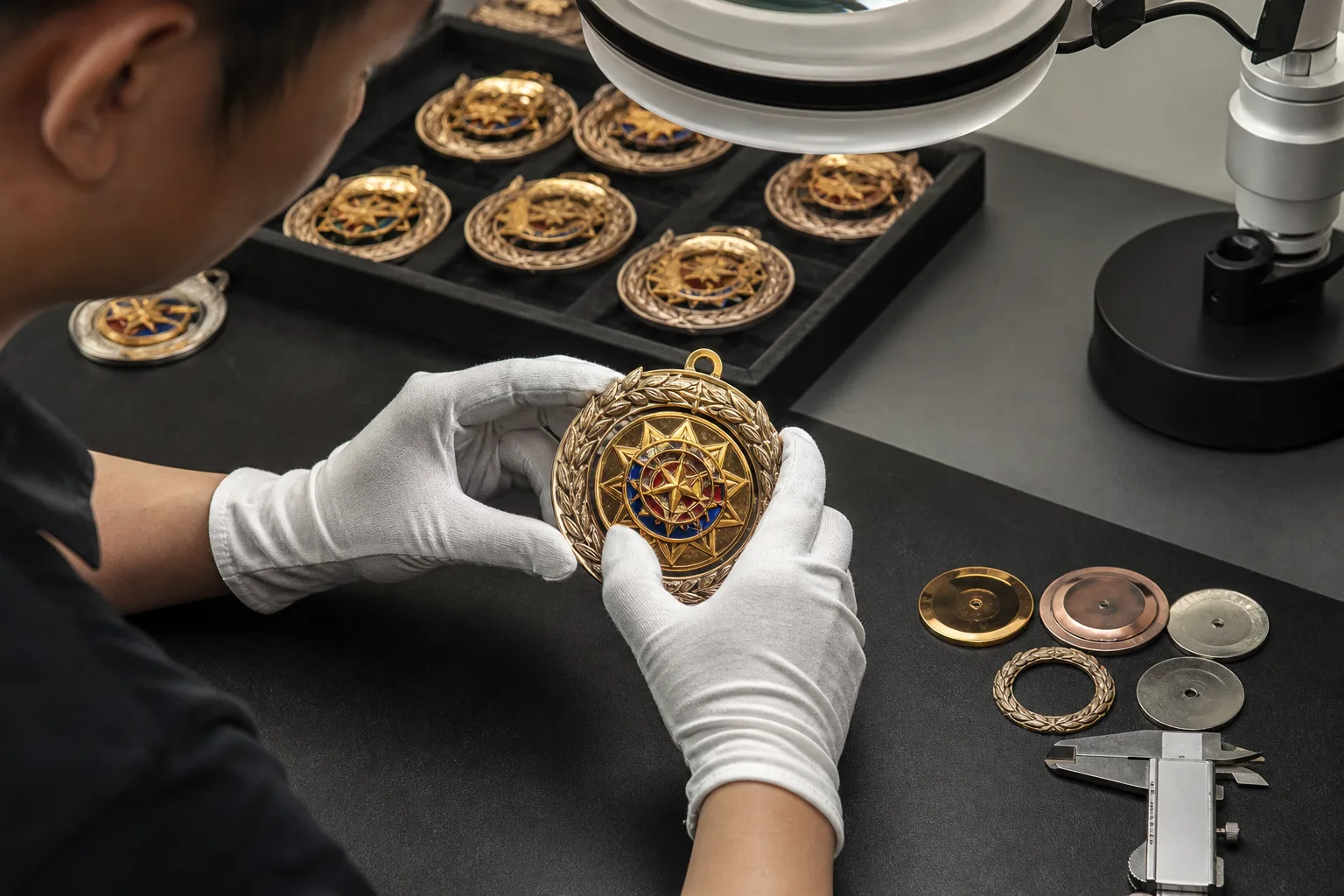
After mold engraving and trial forming, first-article inspection compares dimensions, thickness and relief details with the approved drawing. This check occurs before bulk production and provides a physical reference for the confirmed design.
Later production checks cover burrs after casting or stamping, flatness after polishing, plating color and adhesion, and color-fill defects such as overflow or missing color. Final visual inspection covers surface scratches and the security of applicable attachments.
A moving medal also needs an assembly check against the approved proof. Inspectors confirm that components are installed in the correct orientation and that the assembled structure follows the intended movement shown in the design. This review does not replace a project-specific test requirement. If your project calls for a defined test method or acceptance condition, include it in the inquiry for assessment.
Prepare a Quote Brief for a Moving Medal
A complete brief lets our team review the structure, decoration and commercial requirements together. Submit:
- Overall medal dimensions and the number of components
- Labels for every moving and fixed part
- Front, back and separate component artwork
- The intended movement and assembled orientation
- Your preferred metal or forming process, if already selected
- Plating, surface finish and color requirements
- Order quantity and any design variants
- Packaging needs, destination and required schedule
The standard minimum order quantity is 100 pieces per design. A 50-piece trial order may be supported for selected products, subject to the design, process and project review. Feasibility is confirmed only after the moving structure and specifications have been assessed.
Use the request a quote form to send your artwork and project details for engineering review.