
FACTORY-DIRECT OEM / ODM MANUFACTURING
Custom Printed Badges for Detailed Brand Artwork
Gairun is an OEM/ODM metal crafts manufacturer that supplies custom printed badges for brand teams, promotional product buyers, institutions and wholesale channels. Screen printing and UV printing reproduce graphics directly on a prepared metal face, making them practical for gradients, small text and detailed images that may not suit separate enamel-filled areas.
Clear epoxy can be added as an optional transparent coating when you want a glossier, slightly raised surface. Send us your artwork, badge size and intended appearance. Our engineering team will review whether screen printing, UV printing or another badge construction is the better route before you commit to production.
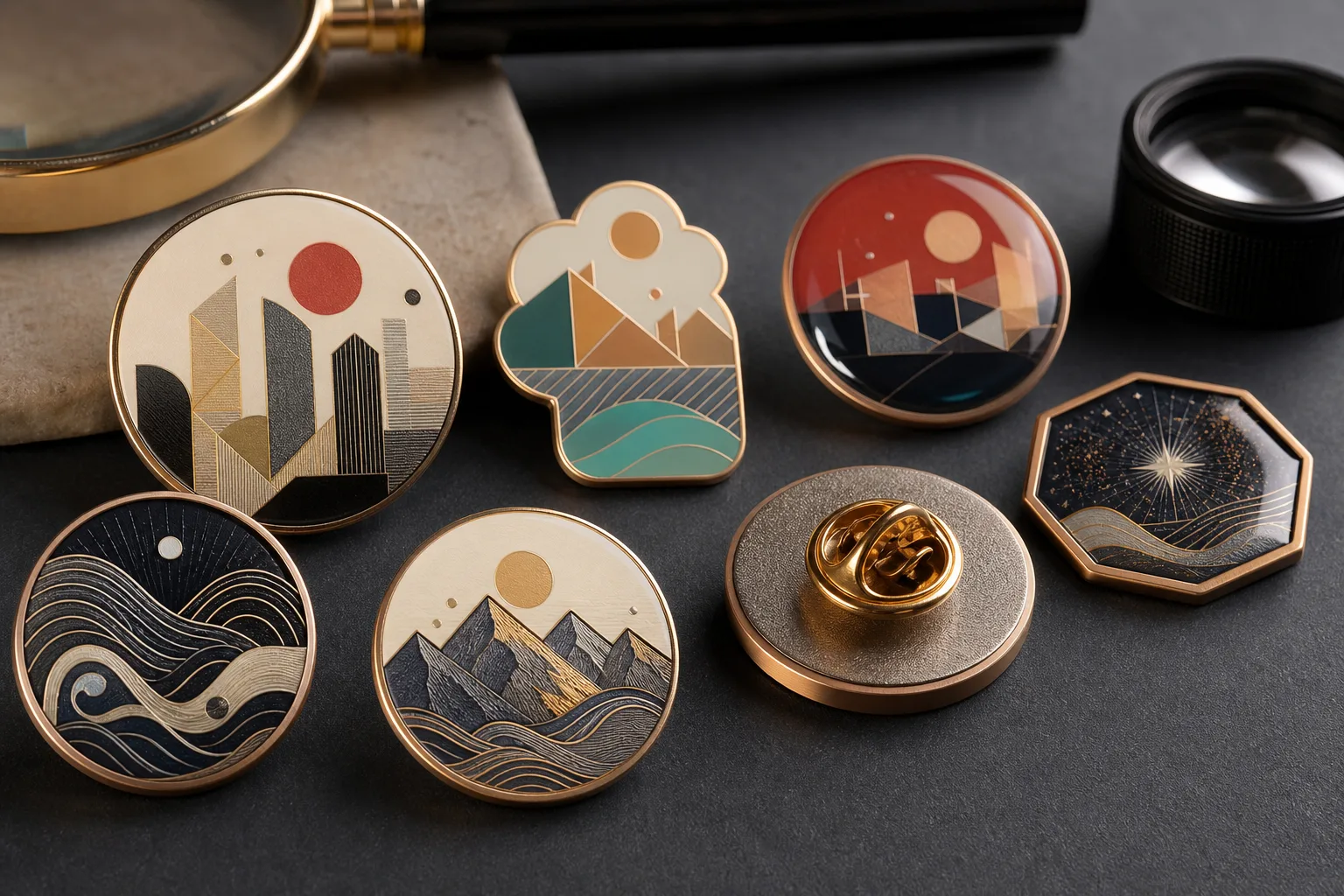
When Printing Is the Right Choice for a Metal Badge
A printed badge is useful when the visual identity depends on details that cannot be divided into simple color areas. The design is printed on the metal surface instead of being built mainly from separate enamel sections divided by metal borders.
Consider a printed construction when your artwork contains:
- Gradients or shaded color transitions
- Small lettering and compact lines of text
- Closely spaced graphic elements
- Detailed illustrations or photographic-style artwork
- Brand graphics that need a flatter visual presentation
Printing does not remove the need for an engineering check. Badge dimensions, available print area, surface preparation and artwork scale all affect the result. If you are still comparing printed, enamel, die-struck and die-cast formats, review our custom lapel pins and badges category or browse the wider custom metal product range.
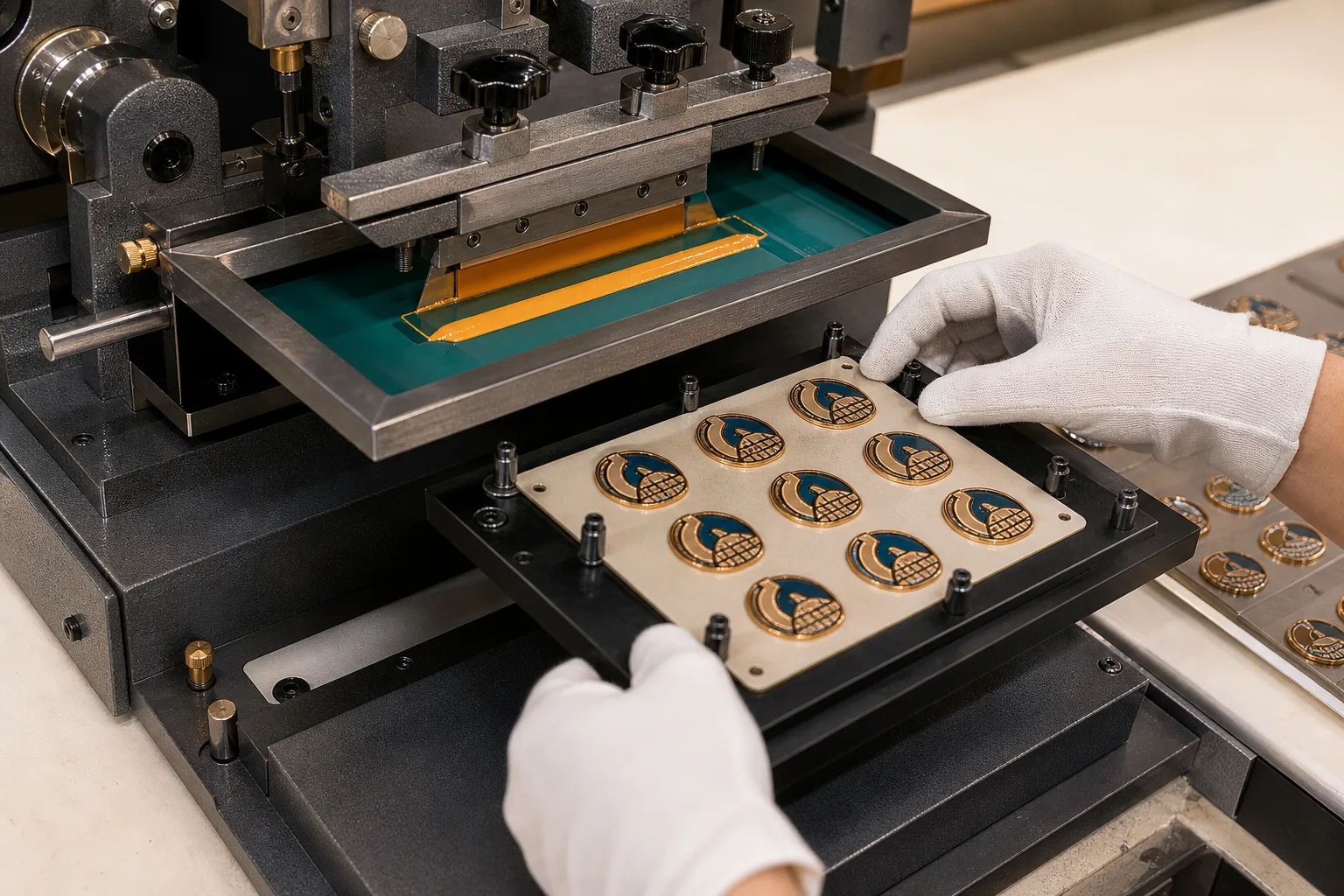
Screen Printing for Clear Shapes, Lines and Colors
Screen printed lapel pins are generally evaluated for artwork with defined shapes and clear color boundaries. This route can suit logos, symbols, lettering and graphic elements that use distinct printed colors without complex tonal changes.
During artwork review, we examine how each printed element fits within the badge face. Important points include the number and arrangement of colors, the spacing between lines, the size of text and the position of the print relative to the badge edge or raised metal details.
A design that looks clear on a large monitor may become difficult to read when reduced to badge size. The proof should therefore show the actual dimensions and print location. We do not apply a fixed process choice based only on the file type; the artwork structure and intended badge appearance guide the decision.
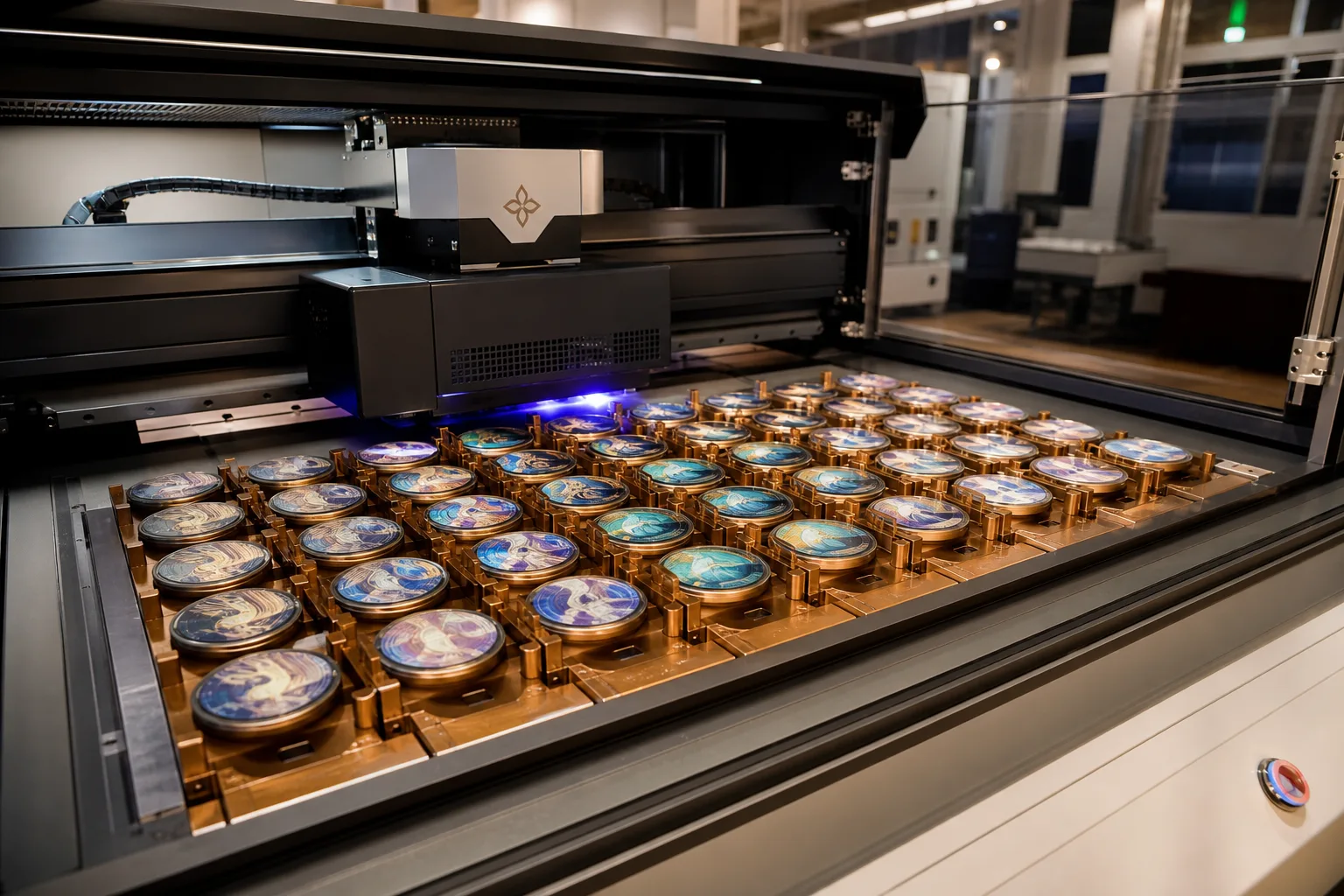
UV Printing for Gradients and Complex Graphic Detail
UV printed metal pins should be considered when the artwork uses gradients, detailed illustrations, small text or more complex color transitions. UV printing can place multi-tone artwork directly on the prepared metal surface without dividing every color into a separate filled area.
Suitability still depends on the complete design. Our review considers the submitted file, finished badge dimensions, metal surface, print location and expected visual presentation. Fine content may need to be simplified or resized if it loses clarity at the chosen badge size.
Color shown on a screen is also viewed differently from color printed over a physical metal base. Plating tone, surface finish and an optional epoxy layer can change how light and color appear. These elements should be assessed together in the proof rather than selected as separate decoration choices.
Compare Screen Printing and UV Printing
Both methods are available for Gairun printed badge projects. The best route follows the artwork and engineering review, not a general rule based on product name alone.
| Decision point | Screen printing | UV printing |
|---|---|---|
| Artwork structure | Clear shapes, lines and defined graphic areas | Detailed illustrations and more complex image structures |
| Color treatment | Distinct printed colors with clear boundaries | Gradients and multi-tone transitions |
| Small content | Reviewed for line spacing, text size and placement | Considered for fine details and small text, subject to finished size |
| Surface planning | Requires a prepared and correctly sized print area | Requires coordination with the metal base and intended visual effect |
| Final selection | Confirmed after artwork review | Confirmed after artwork review |
If the design relies mainly on separate solid color areas and metal borders, an enamel format may need to be considered instead. The parent badge category provides the appropriate comparison without treating printing and enamel as interchangeable processes.
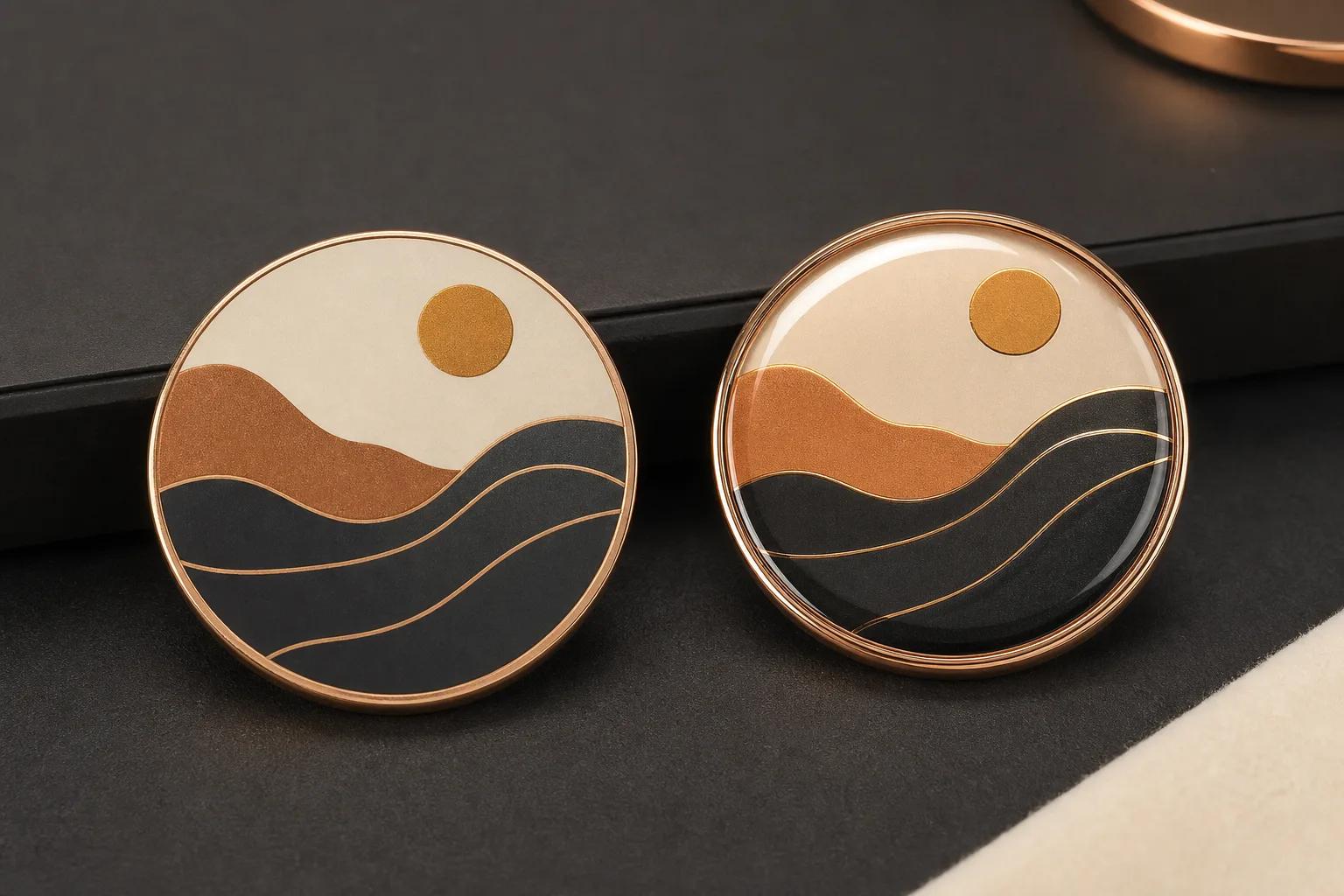
How Clear Epoxy Changes the Badge Surface
Clear epoxy is an optional transparent coating placed over the decorated face. On a printed badge, it adds gloss and creates a slightly raised coated presentation. It can make the front appear more visually enclosed than an uncoated printed surface.
The coating also changes how the badge interacts with light. Reflections may become more visible, and very fine printed details can look different beneath the clear layer. For that reason, epoxy should be selected as part of the visual design rather than added automatically to every printed badge.
Choose between coated and uncoated presentation based on the intended look, print detail and viewing conditions. Any project-specific performance requirement should be stated in the inquiry so it can be reviewed separately. The presence of epoxy alone should not be treated as proof of a specific scratch, weather or service-life result.
Coordinate the Metal Base, Shape and Printable Area
A printed graphic still depends on the structure beneath it. Gairun processes zinc alloy, brass, iron, stainless steel and aluminum. The available forming capabilities include die-casting, stamping or die-struck forming, photo etching and hydraulic relief.
Not every material or forming route is suitable for every badge. A simple flat badge, an irregular cast shape and a design with raised metal features create different printing conditions. The engineering review must coordinate:
- Overall badge shape and dimensions
- Base metal and forming method
- Flat or raised areas around the graphic
- Plating or surface finish beneath and around the print
- Usable print area and distance from edges
- Front and back construction
- Attachment position and assembly needs
These choices establish where the artwork can be placed and how the printed face relates to the surrounding metal. For a broader feasibility assessment, see our engineering review and design-for-manufacturing service.
Review the Artwork Proof Before Production
Start with the badge dimensions, front and back artwork, exact text, color references, print location, attachment requirement and epoxy preference. Include the intended quantity and any metal or process preference if your team has already set one.
Our 2D and 3D engineering team works with vector art, PDF files and hand-drawn concepts. The team uses AutoCAD, CorelDRAW, Adobe Illustrator, Rhino and ZBrush and can prepare a free artwork proof within 24 hours. The proof converts the concept into a visual production reference and shows the proposed graphic placement and badge construction.
Your approval is required before tooling or production begins. Review spelling, logo form, dimensions, colors, front and back orientation, attachment position and epoxy choice. Detailed file-preparation guidance is available through our artwork design and proofing service.
Set Inspection Points for Printed Badge Orders
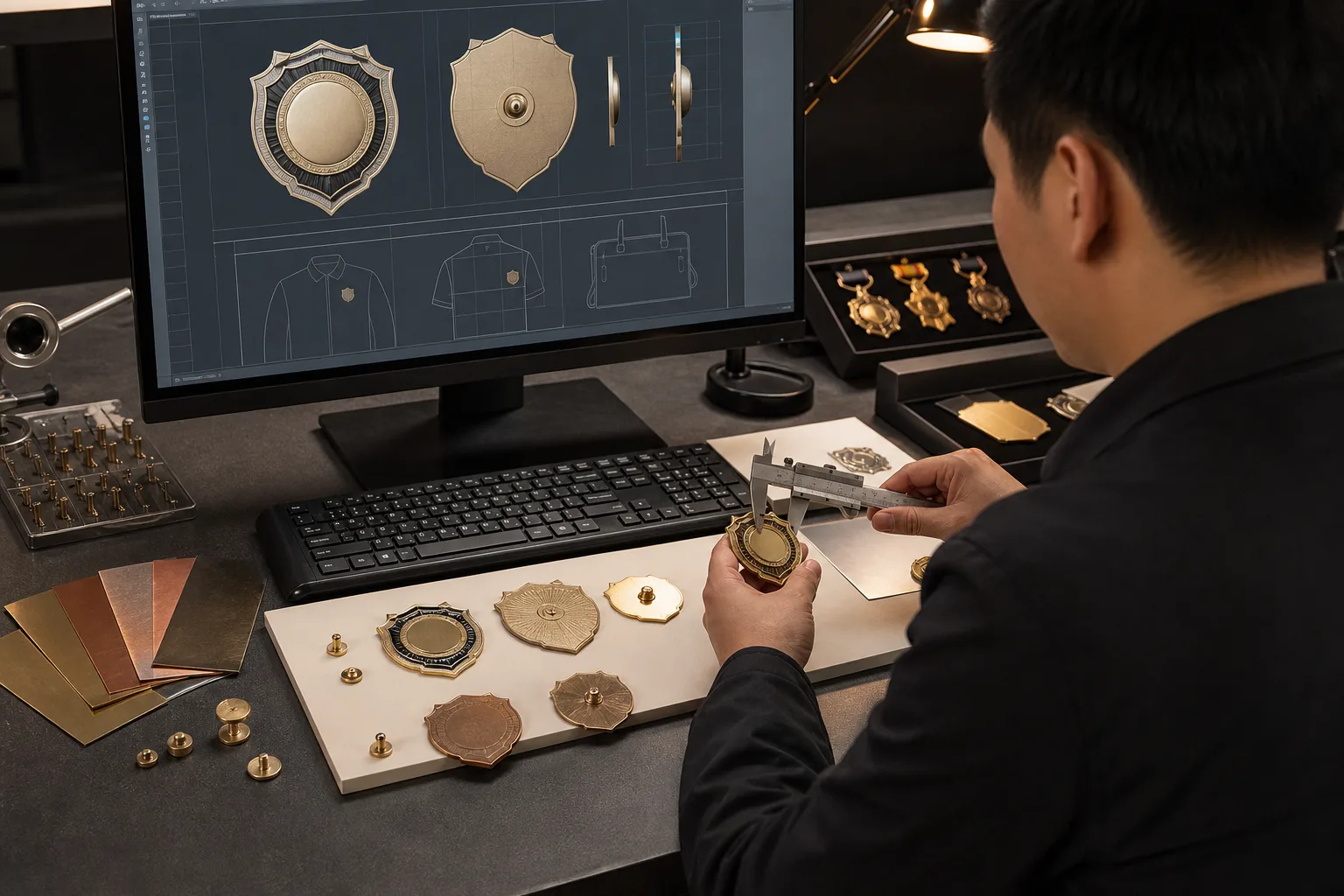
Printed badge inspection starts with the approved drawing. During first-article inspection, the formed piece is compared with the drawing for dimensions, thickness and relief detail. In-process checks address burrs after forming, flatness after polishing, plating color and adhesion, and color defects after decoration.
For a printed project, the proof can also define acceptance points for print alignment, text readability, missing image areas and epoxy surface consistency. These are project requirements to agree on during review; they are not fixed performance results for every design.
Before shipment, Gairun carries out a 100% visual inspection for surface scratches and checks the security of relevant attachments. Buyers conducting supplier due diligence can review the wider quality control and product testing process.