
FACTORY-DIRECT OEM / ODM MANUFACTURING
Custom Metal Trophies Designed Around Your Award Program
Gairun manufactures custom metal trophies for competitions, corporate achievement programs and formal recognition events. We provide OEM and ODM support for organizations that need a trophy shape, branded metal components, award text and presentation details developed as one coordinated product.
Your concept can start with vector artwork, a PDF, a reference image or a clear sketch. Our engineering team reviews the intended form, dimensions, relief, decoration and component layout before mold development. If you are still comparing freestanding trophies with plaques or mixed-material awards, review our custom metal trophies and plaques category first.
To begin a technical review, provide the award purpose, quantity, approximate dimensions and available artwork. We can then help turn the concept into a defined trophy specification.
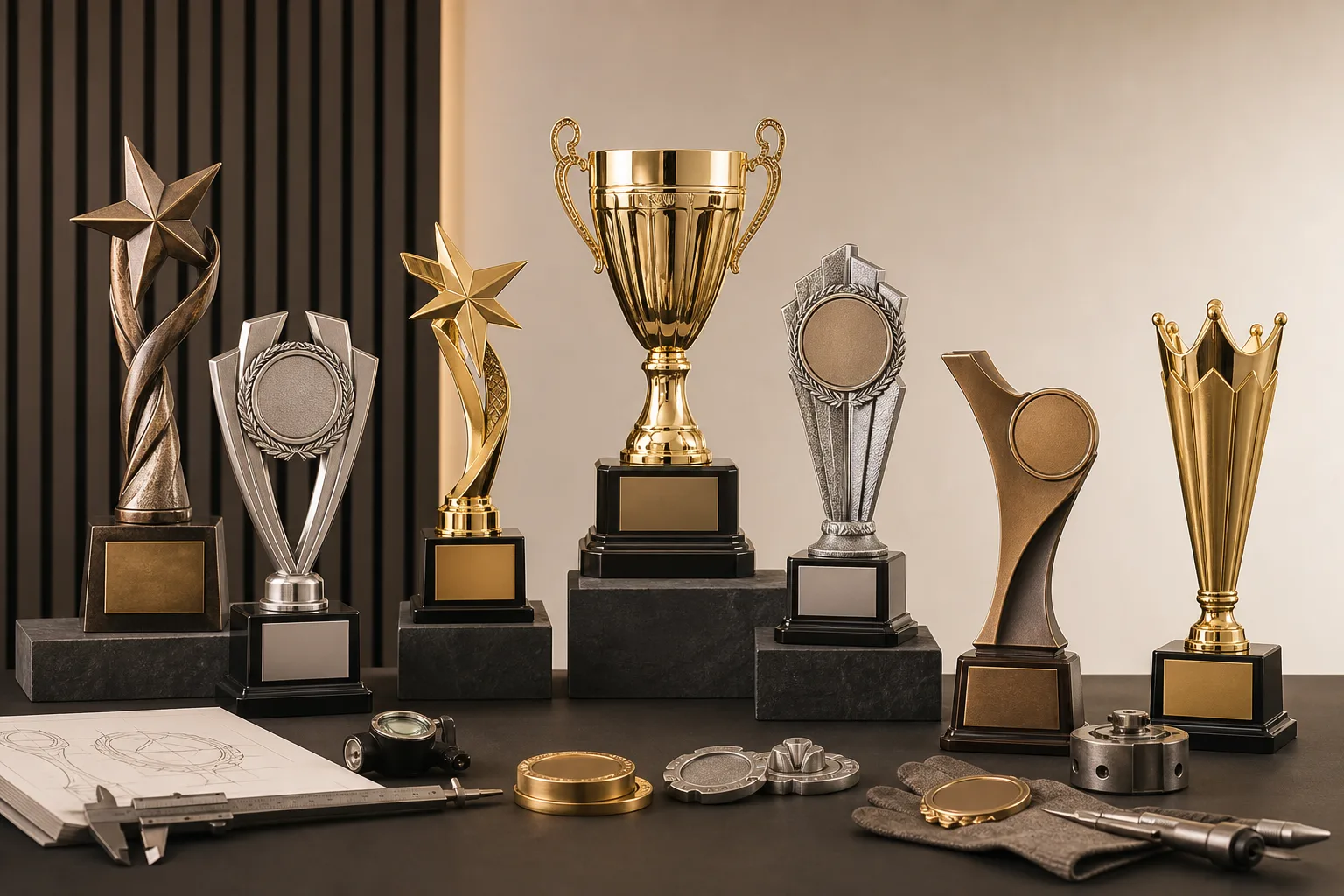
Match the Trophy Format to the Recognition Role
A custom trophy should make the award level and purpose clear at first view. A competition trophy may need distinct versions for placements, divisions or teams. A corporate achievement award may place more emphasis on the company mark, achievement title and recipient information. A commemorative trophy may give greater visual weight to an event symbol or date.
Start by defining how the trophy will be displayed and presented. A freestanding award needs a clear viewing direction and a stable visual hierarchy. The main emblem, award title and recipient information should not compete for attention. If several award levels share one design, decide which features remain fixed and which features change.
This page focuses on freestanding metal trophies and custom award cups. For other structures, compare the broader award format range.
Competition placement
Identify the ranking, category or division that must be visible.
Team recognition
Define whether the team name, event name or achievement is the main message.
Corporate achievement
Set the order of the logo, program title, recipient and recognition statement.
Commemorative presentation
Give the event identity, date or milestone a clear position in the design.
Define the Silhouette, Dimensions and Metal Components
The outside shape is only one part of a workable trophy concept. Engineering review also needs to show how the trophy is divided into components and how those parts relate to one another.
Provide a front view and side view when possible. Mark the overall height, width and depth, as well as the intended display orientation. If the concept contains separate elements, identify the body, emblem, text area, connectors and base where these features are present. This component map helps us review forming, decoration, alignment and assembly as connected decisions.
| Design input | What to define | Why it matters |
|---|---|---|
| Overall silhouette | Outline, viewing direction and visual balance | Sets the main award form and presentation angle |
| Dimensions | Height, width, depth and key feature sizes | Supports material, forming and packaging review |
| Component map | Separate metal parts, emblem, connectors and name area | Shows where forming and assembly decisions meet |
| Display orientation | Front, reverse, side and intended standing position | Keeps logos, text and relief facing the correct direction |
| Design variants | Fixed elements and details that change by award level | Reduces errors across multiple trophy versions |
Do not assume that every shape can use the same component arrangement. Dimensions, relief, connection points and decoration must be reviewed together through our engineering and design-for-manufacturing service.
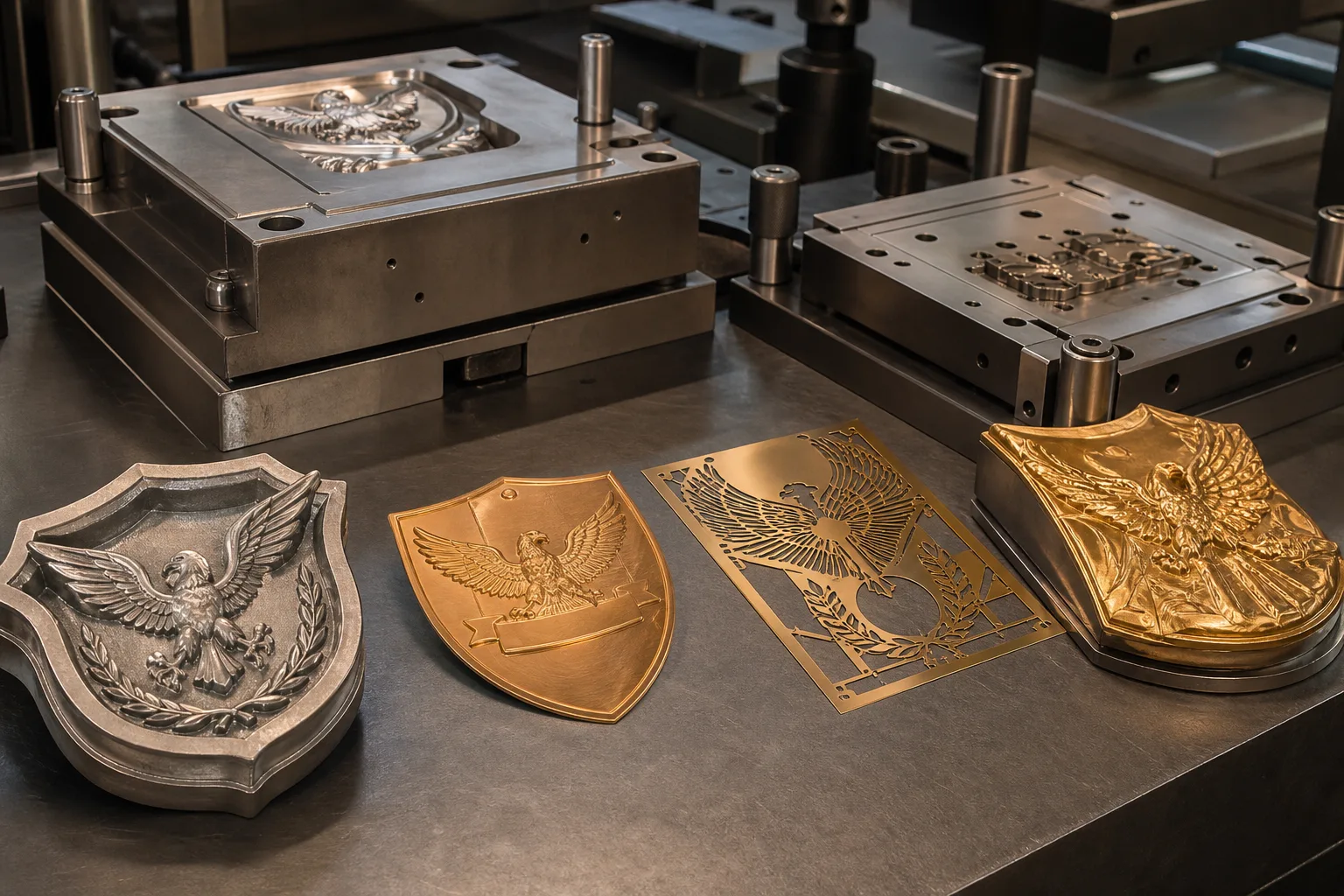
Select Metal and Forming Methods for the Trophy Shape
Material selection should follow the intended geometry, relief and component design. Gairun works with zinc alloy, brass, iron, stainless steel and aluminum. The final choice depends on engineering review rather than appearance alone.
Our verified forming capabilities include zinc alloy die-casting, stamping or die-struck forming, photo etching and hydraulic high-relief forming. Die-casting can be reviewed for formed zinc alloy components. Stamping and die-struck methods use tooling to press a design into metal. Photo etching uses a controlled chemical process to create recessed details. Hydraulic high-relief forming supports raised designs that require more sculpted depth.
A trophy may contain features that call for different production decisions. A dimensional emblem, a flatter text area and a separate decorative component should each be assessed according to their shape and surface treatment. Not every material works with every forming route or detail level.
For a broader comparison of the available metals, use the metal materials guide. The project review will then connect the preferred material to the actual trophy design.
Organize Logos, Award Text and Personalized Details
Personalized metal trophies often combine several types of information: a logo, event name, award title, placement, recipient name and date. The design needs a clear reading order so the most important message remains visible.
Mark each text field as fixed or variable. Fixed content stays the same across the order, such as the event logo or program name. Variable content changes between trophies, such as recipient names, award levels or divisions. Supply the final spelling and capitalization for every version, and use a version list that matches the quantity breakdown.
Text must also remain readable within the selected area. Very small letters, narrow gaps and long lines may need adjustment during engineering review. The proof should show the actual wording rather than sample text so line length and hierarchy can be assessed before tooling.
- Place the primary logo or event symbol in the main viewing area.
- Separate the achievement title from supporting details.
- Keep award levels visually consistent across the set.
- Label every recipient-specific field in the version list.
- Review spelling, dates and numbering before approving the proof.
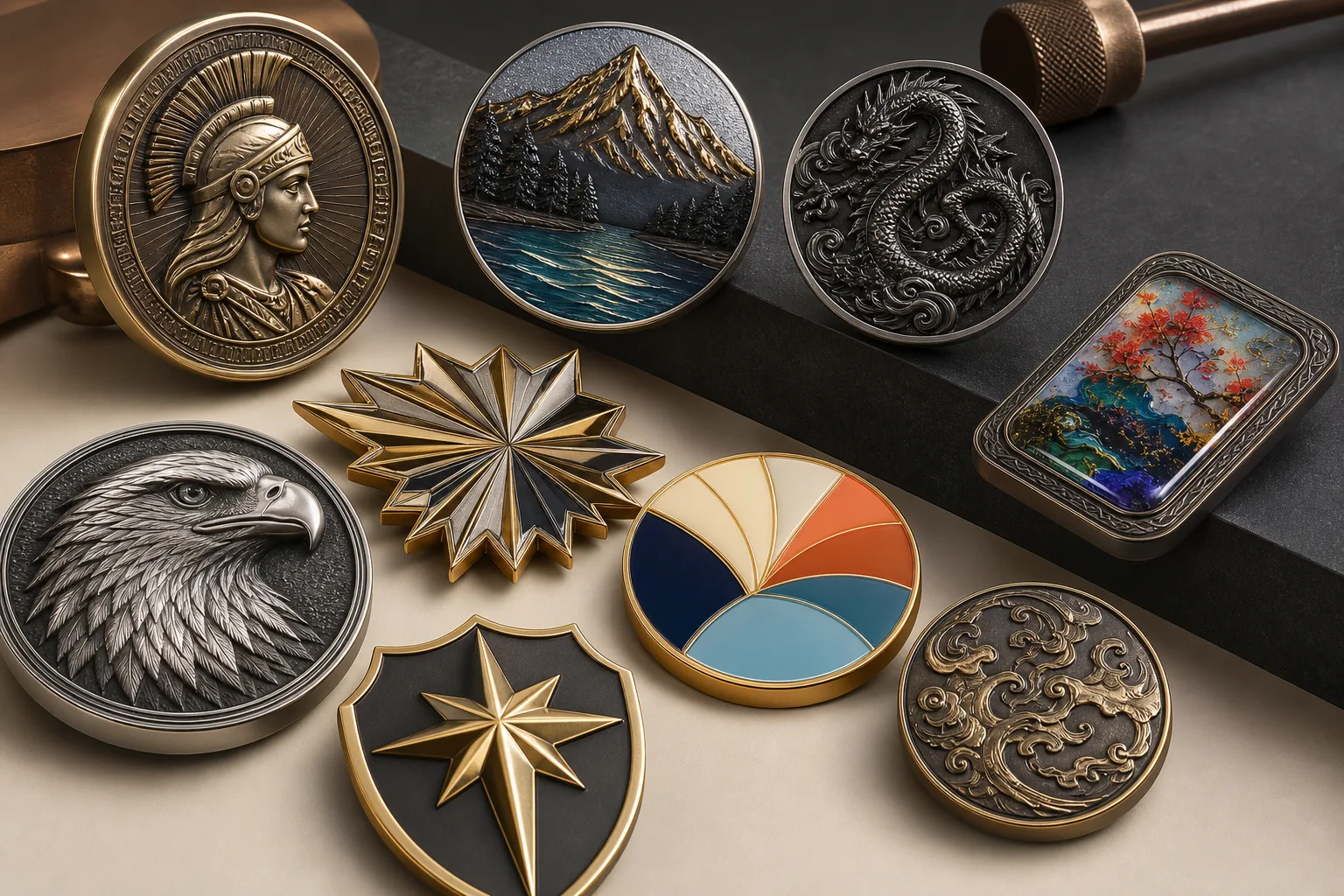
Coordinate Relief, Color and Metal Finish
Relief, color and finish affect the same visual surface. They should be planned together rather than selected as separate add-ons.
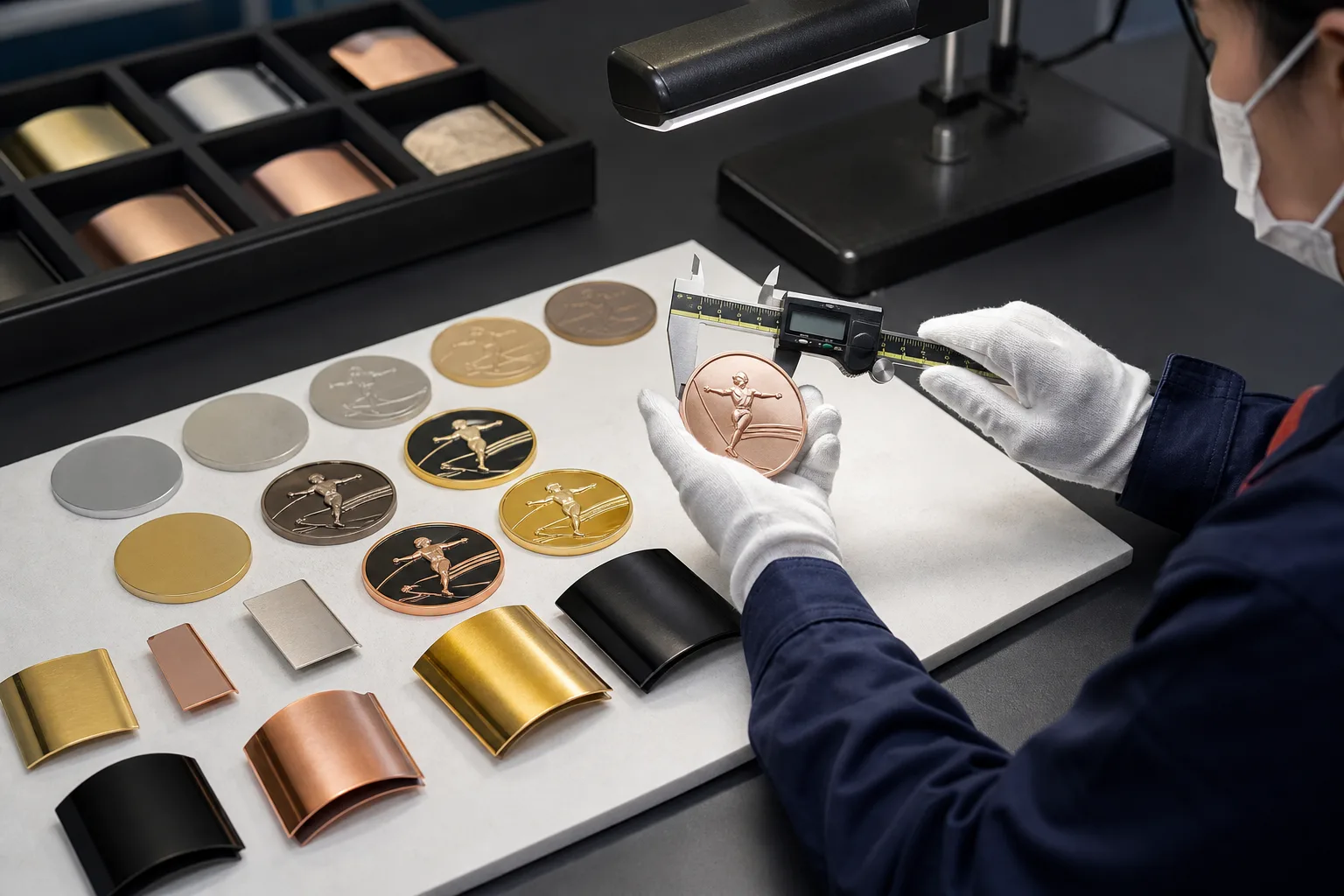
Three-dimensional relief can give an emblem, figure or symbol a sculpted face with raised and recessed areas. Soft enamel places color below surrounding metal borders, while imitation hard enamel creates a smoother color surface. Screen printing can apply defined graphic details, and UV printing can reproduce artwork that needs printed color treatment. Clear epoxy may be reviewed as a protective surface over decorated areas.
Available metal directions include gold, silver, nickel, black nickel, antique bronze and antique silver. Dual plating uses two plating tones within one design. Sandblasting and matte treatment can create controlled surface contrast. The border around a colored area, the boundary between plating tones and the transition between polished and matte surfaces all need to be visible in the artwork proof.
A detailed logo may need a different treatment from a sculpted emblem. Likewise, a large color field and fine printed text do not place the same demands on the design. Our team reviews the artwork before confirming which combination is workable. See the metal finish selection guide for a closer comparison of surface directions.
Approve the Trophy Artwork Before Mold Development
A production proof converts the trophy concept into a visual record for engineering and buyer approval. Gairun’s 2D and 3D engineering team can prepare a free artwork proof within 24 hours from buyer-supplied vector art, PDFs or drawings, subject to review of the project requirements.
For a useful proof, send the overall dimensions, component notes, decoration choices and final text variants with the artwork. A hand-drawn concept can also support an initial review when it clearly identifies the intended shape and key details.
The proof should show the trophy outline, viewing direction, relief areas, color regions, finish boundaries and component relationships. Review every version carefully. Buyer approval is required before mold development because later changes to shape, relief or fixed text may affect tooling and other production steps.
Approval confirms the defined artwork direction. It does not mean every decoration method can be applied to every shape. Process suitability remains subject to engineering review.
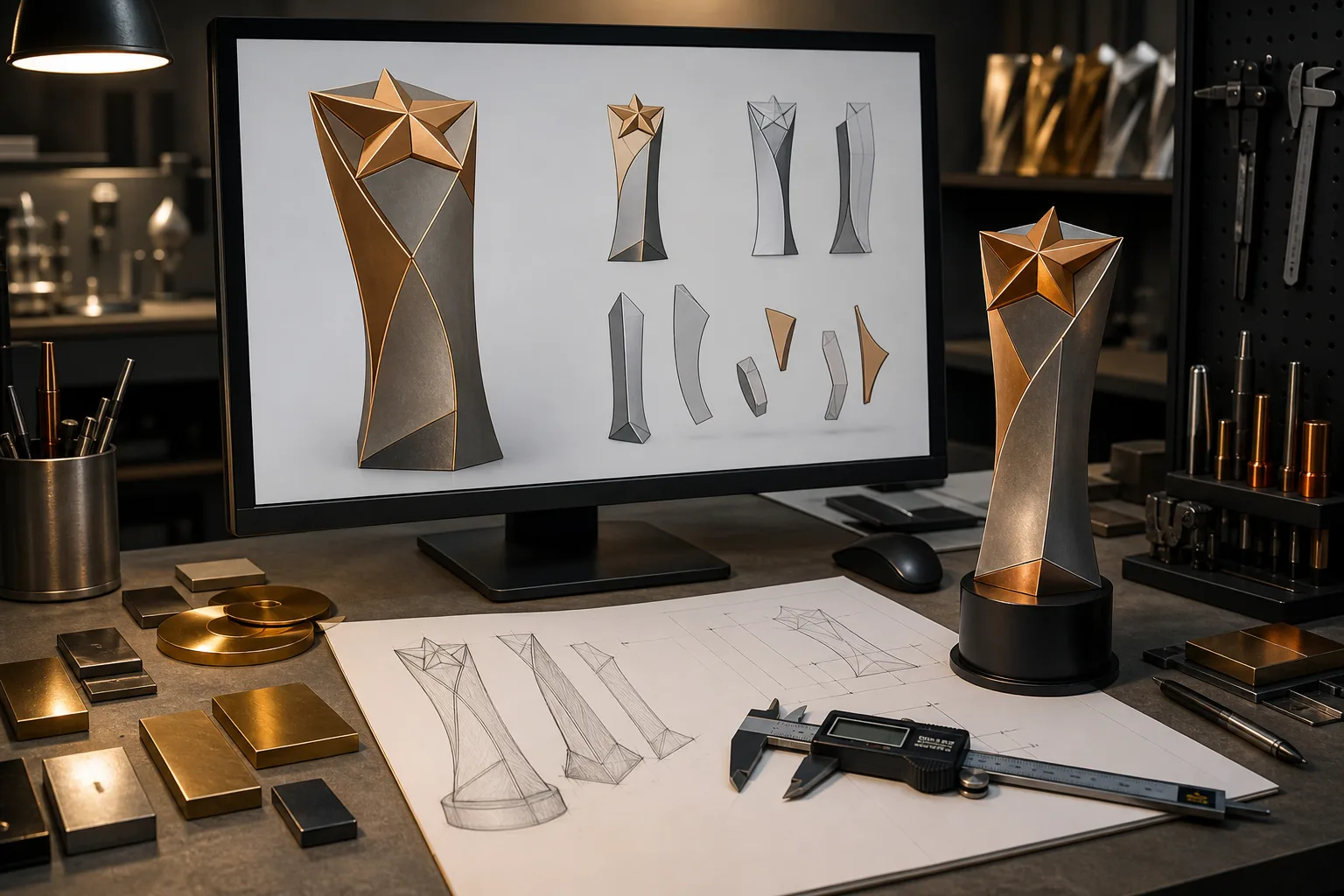
Plan Assembly, Handling and Presentation as Part of the Design
Separate parts, connection points and display orientation affect how a finished trophy is assembled, handled and packed. Identify every component that must align with another part. Mark the intended front and note any feature that could be placed in the wrong direction during assembly.
Presentation requirements should be defined after the trophy dimensions and component layout are known. Gairun provides standard anti-scratch packing and can review OPP bags, bubble protection, velvet boxes, paper display boxes and plastic display boxes. Package fit must be confirmed for the final dimensions and assembled form.
Bulk distribution and formal presentation may call for different packing choices. An individually presented achievement award may need a display box, while an event order may place more emphasis on separating finished surfaces and organizing award versions. State how the trophies will be stored, transported and handed to recipients so the packaging can be reviewed in context.
Verify Trophy Details at Each Inspection Stage
Inspection follows the product through material intake, initial forming, finishing and final packing. Incoming quality control checks raw metal materials. After mold engraving and trial forming, first-article inspection compares dimensions, thickness and relief details with the drawing.
In-process checks follow the work being performed. Formed parts are checked for burrs. Polished parts are checked for flatness. Plated surfaces are checked for color differences and adhesion, while colored areas are checked for overflow and missing color.
Before shipment, finished products receive a 100% visual inspection for surface scratches. Accessory security is also checked where the trophy design includes applicable accessories or connected parts. These stages provide a defined inspection path without replacing project-specific acceptance requirements supplied by the buyer.
Prepare a Complete Custom Trophy Quote Brief
A focused brief allows us to assess the trophy as a complete award rather than as separate artwork and finish choices. Include the following information in your request:
- Award purpose, program type and intended presentation setting
- Concept artwork, reference image, PDF or sketch
- Order quantity and breakdown by award level or recipient version
- Overall dimensions and preferred display orientation
- Metal preference, if already known
- Component layout, relief areas and connection notes
- Plating, color, printing and surface preferences
- Fixed wording and a controlled list of variable text
- Individual packing or presentation box requirements
- Destination for quotation and shipping review
If your concept is incomplete, submit the available information. Our artwork and engineering team can review the open decisions and identify what is needed before the design moves toward tooling. Buyers considering other product families can also browse the full custom metal product range.