
FACTORY-DIRECT OEM / ODM MANUFACTURING
Custom Crystal and Metal Trophies Built as One Coordinated Award

When a Crystal and Metal Award Fits the Recognition Setting
A crystal and metal trophy is a strong format when the award needs a clear presentation body and a distinct metal feature for branding or decoration. The crystal establishes the main silhouette and display presence. The metal component can carry a logo, emblem, award title or sculpted design that needs more visual depth or a contrasting finish.
This format is often considered for corporate milestones, executive recognition, event honors and formal presentations. It is especially useful when the metal element is intended to act as the focal point rather than a small secondary label.
Before selecting this format, consider how the trophy will be viewed and presented. A design intended for a stage presentation may need a clear front-facing identity. An office or display award may be seen from several angles. These viewing conditions affect the placement, scale and orientation of the metal part.
Define the Crystal Body and Metal Part as a Component System
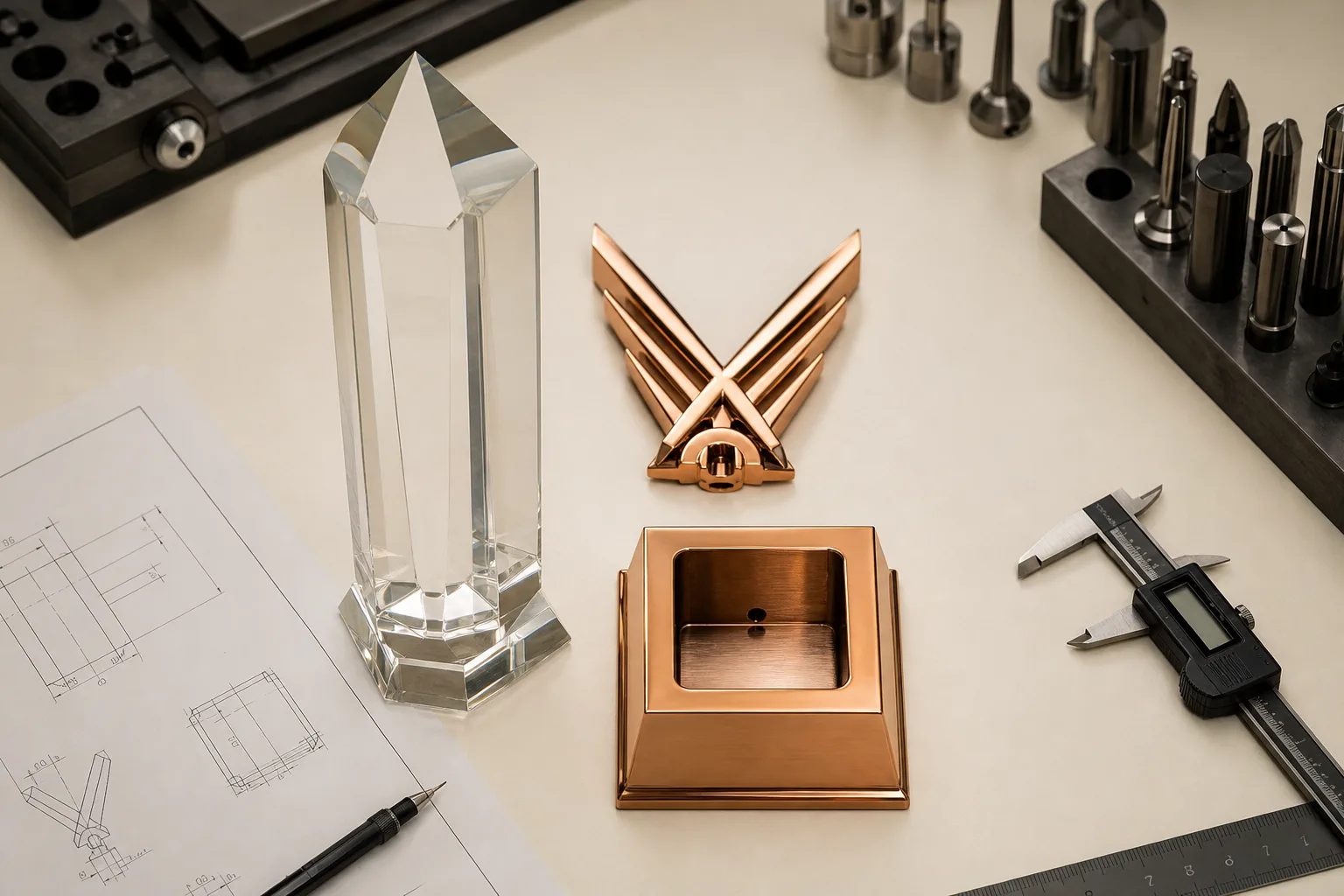
The crystal body and metal element must be mapped as parts of one assembled product. Designing the metal emblem separately can lead to poor proportions, an unclear mounting area or an orientation that does not match the trophy.
A useful component map identifies the following details:
- The crystal body shape and overall height, width and depth
- The intended front, side and rear viewing directions
- The location and available area for the metal component
- The proposed metal emblem, plate or decorative-part dimensions
- The relationship between the crystal body, metal part and base
- The final upright orientation of the assembled trophy
Provide a crystal-body reference with measured views rather than relying only on a front-facing image. If the interface cannot be understood from one drawing, include front, side and assembled views. Our engineering team reviews the proposed metal component and connection area before the production direction is confirmed.
| Component | Information to define | Why it matters |
|---|---|---|
| Crystal body | Shape, dimensions, viewing direction and base relationship | Sets the available space and overall award proportions |
| Metal component | Outline, size, relief, finish and color areas | Controls brand visibility and production-process selection |
| Interface area | Location, contact area and proposed orientation | Supports fit, alignment and connection review |
| Assembled award | Front, side and presentation views | Shows how all parts appear as one trophy |
Place Logos and Award Information Where They Remain Clear
Mixed-material trophies need a clear information hierarchy. Start by separating fixed program artwork from variable recipient information. Fixed content may include the company logo, event mark, program name or recurring award symbol. Variable content may include a recipient name, category, achievement level or date.
The metal component is often suited to information that benefits from relief, plating contrast, enamel color or a defined metal outline. Any information planned for the crystal surface needs its own location and size reference so it can be assessed as part of the complete layout. Crystal decoration methods are confirmed according to the selected body and project plan.
Do not scale every element equally. The main emblem or award name should remain recognizable at normal viewing distance, while supporting text should fit the available area without crowding the design. Small wording that looks clear on a large screen may not remain readable when reduced to the metal-part size.
If an order contains several names or award levels, provide a version list and mark which artwork stays fixed. This makes it easier to control variable information without changing the core trophy design.
Select the Metal Construction Around Shape and Relief
Gairun works with zinc alloy, brass, iron, stainless steel and aluminum for custom metal components. Available forming routes include die-casting, stamping, photo etching and hydraulic high-relief forming. The suitable combination depends on the artwork, component geometry, required depth, surface direction and final assembly plan.
For example, a sculpted emblem may require a different review from a flat nameplate with fine graphic lines. An irregular outer shape, deep relief or layered design can also change the forming recommendation. Not every material and process is suitable for every trophy, so the final route is selected after the design and interface have been assessed.
For an efficient engineering review, identify:
Our engineering review and design-for-manufacturing service checks these relationships before tooling or production proceeds.
01
Which areas should be raised, recessed or flat
02
Whether the design uses two-dimensional or three-dimensional detail
03
The required outer shape and any open areas
04
Which surfaces receive plating, color or printed graphics
05
How the metal part is positioned on the crystal body
Coordinate Metal Finish and Color with the Crystal Appearance
The metal finish should create a planned contrast with the specified crystal body. Clear, dark, tinted or visually complex crystal references can change how bright or dark metal appears in the assembled award. Review the finish against the complete trophy concept rather than choosing it from an isolated metal sample image.
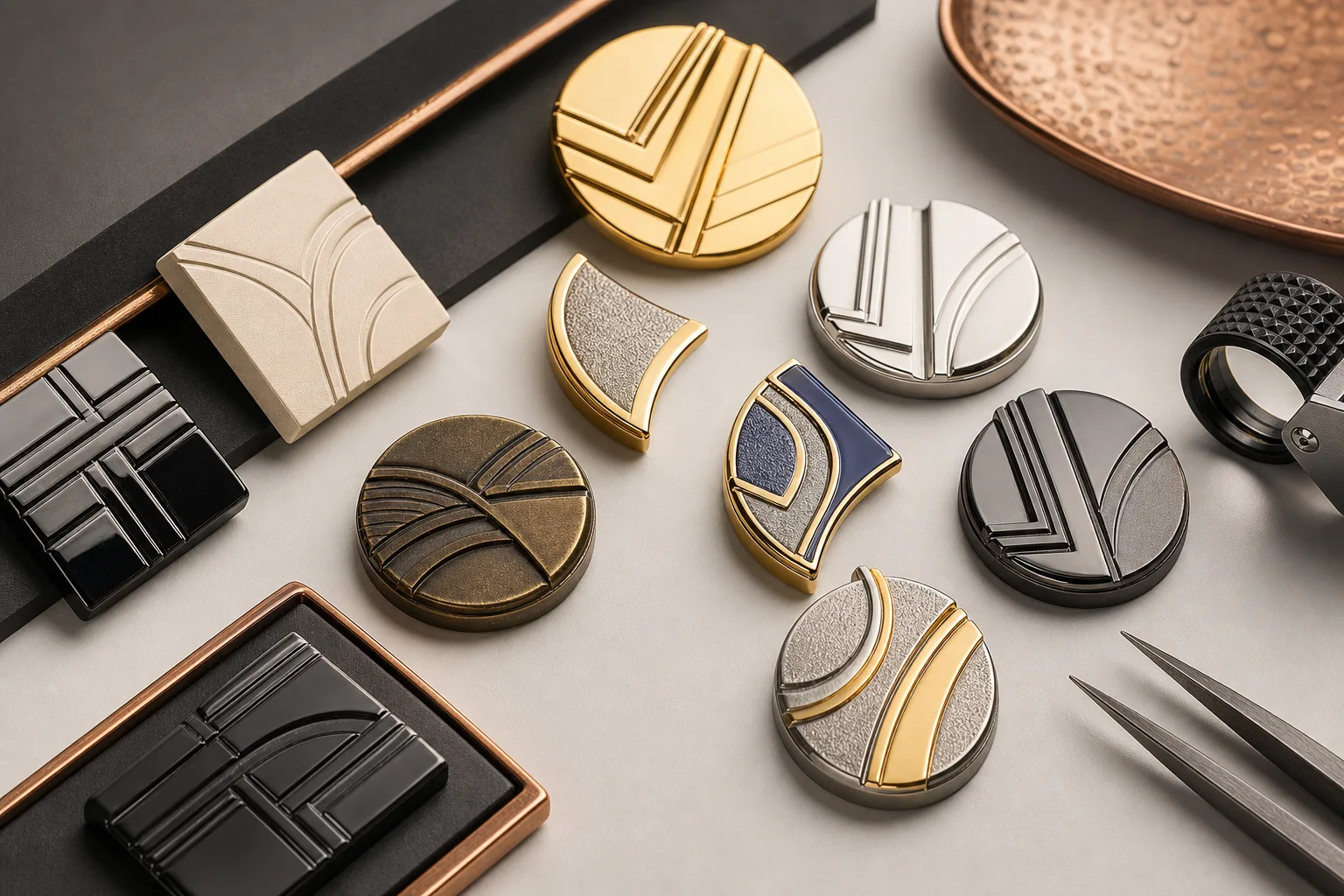
Available metal effects include gold, silver, nickel, black nickel, antique bronze, antique silver, dual plating, sandblasting and matte finishes. Decoration options include soft enamel, imitation hard enamel, screen printing, UV printing and clear epoxy coating. Each option is reviewed against the metal material, forming route and artwork.
Bright plating can make a metal emblem visually prominent against a clear body. Black nickel or matte effects can provide a darker graphic direction. Antique finishes can emphasize recessed and raised areas, while dual plating can separate two parts of a design. These are visual design directions, not universal combinations; feasibility depends on the proposed component.
Use color where it supports recognition. A corporate color may help identify the program, but too many small color areas can compete with the crystal and reduce clarity. Supply color references and indicate which metal lines must remain visible between adjacent areas.
Review Fit, Alignment and Orientation Before Tooling
The interface between crystal and metal is a key risk point. A metal component can have accurate artwork yet still look incorrect if it is oversized, off-center or angled against the crystal body. The contact area, component size and assembled viewing angle therefore need to be checked together.
The review should confirm that the proposed metal part follows the intended visual centerline, sits in the planned direction and does not conflict with the base or another trophy feature. Where a curved, angled or limited contact area is involved, measured side views and an assembled reference are important.
The connection method is project-specific. We do not assume an adhesive or fastening system from the artwork alone. Our engineering team reviews the proposed interface and confirms the connection direction after the crystal reference, metal dimensions and assembly requirements are available.
Approve the Artwork Proof and Inspect the Assembled Trophy
Gairun provides 2D and 3D design engineering support for the proofing workflow. The approval set should show the component dimensions, logo position, relief detail, plating direction, color areas and an assembled presentation view. This gives the buyer and production team a shared visual reference.
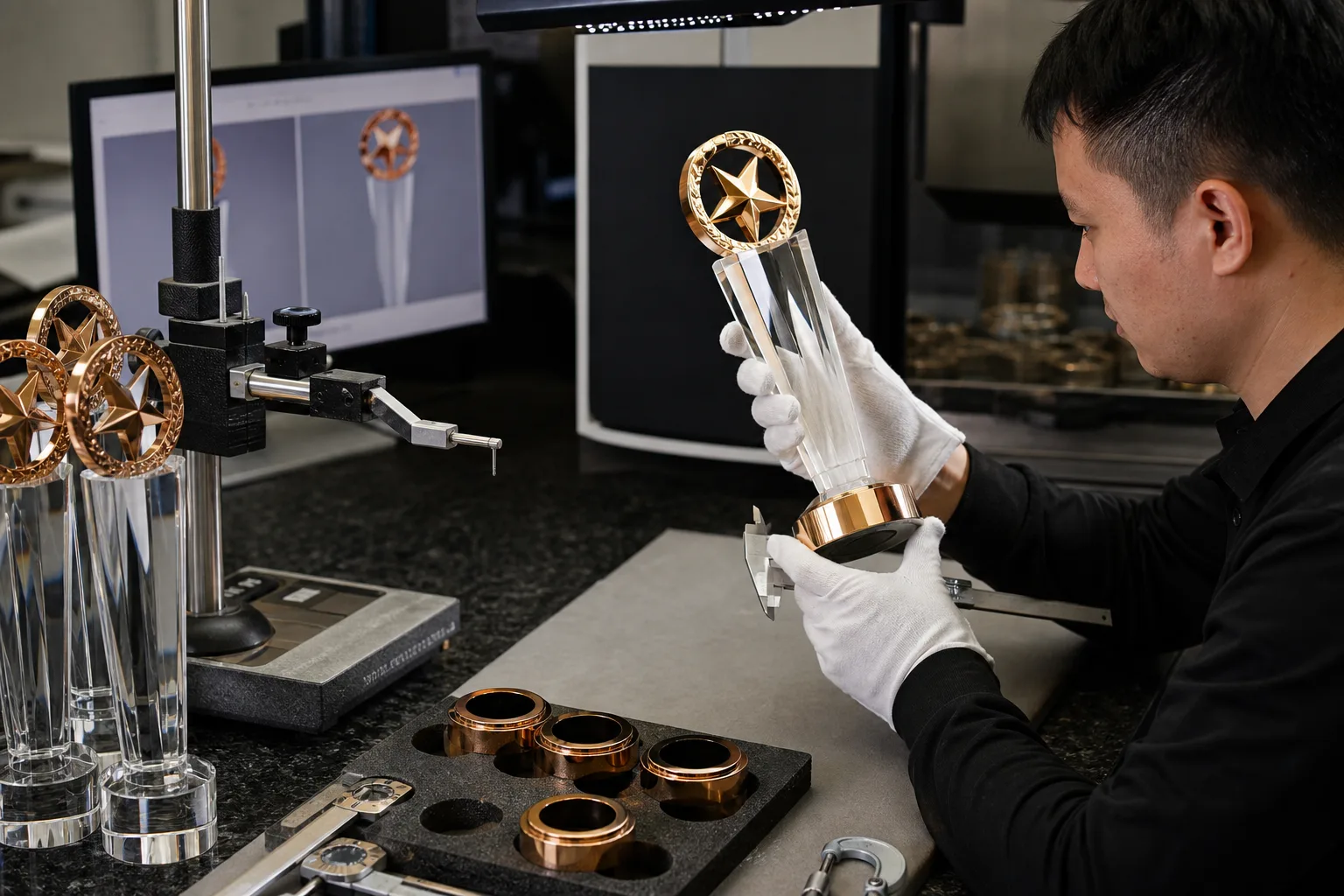
First-article inspection compares dimensions, thickness and relief details with the confirmed drawing. In-process checks for the metal part include burr inspection after forming, flatness review after polishing, plating color and adhesion checks, and checks for excess or missing color.
The assembled trophy should then be reviewed as a complete presentation item. Key checks include:
A metal component sample alone cannot show every mixed-material issue. The assembled view is needed to judge proportion, contrast, interface position and final presentation.
01
Confirm that the metal part matches the approved size and orientation.
02
Check the logo, award title and variable information for accuracy.
03
Review alignment from the main front and side viewing angles.
04
Compare plating, color and surface direction with the proof.
05
Inspect visible surfaces for scratches or other appearance defects.
06
Check component and accessory security where applicable.
Choose Protection and Prepare the Trophy Order Brief
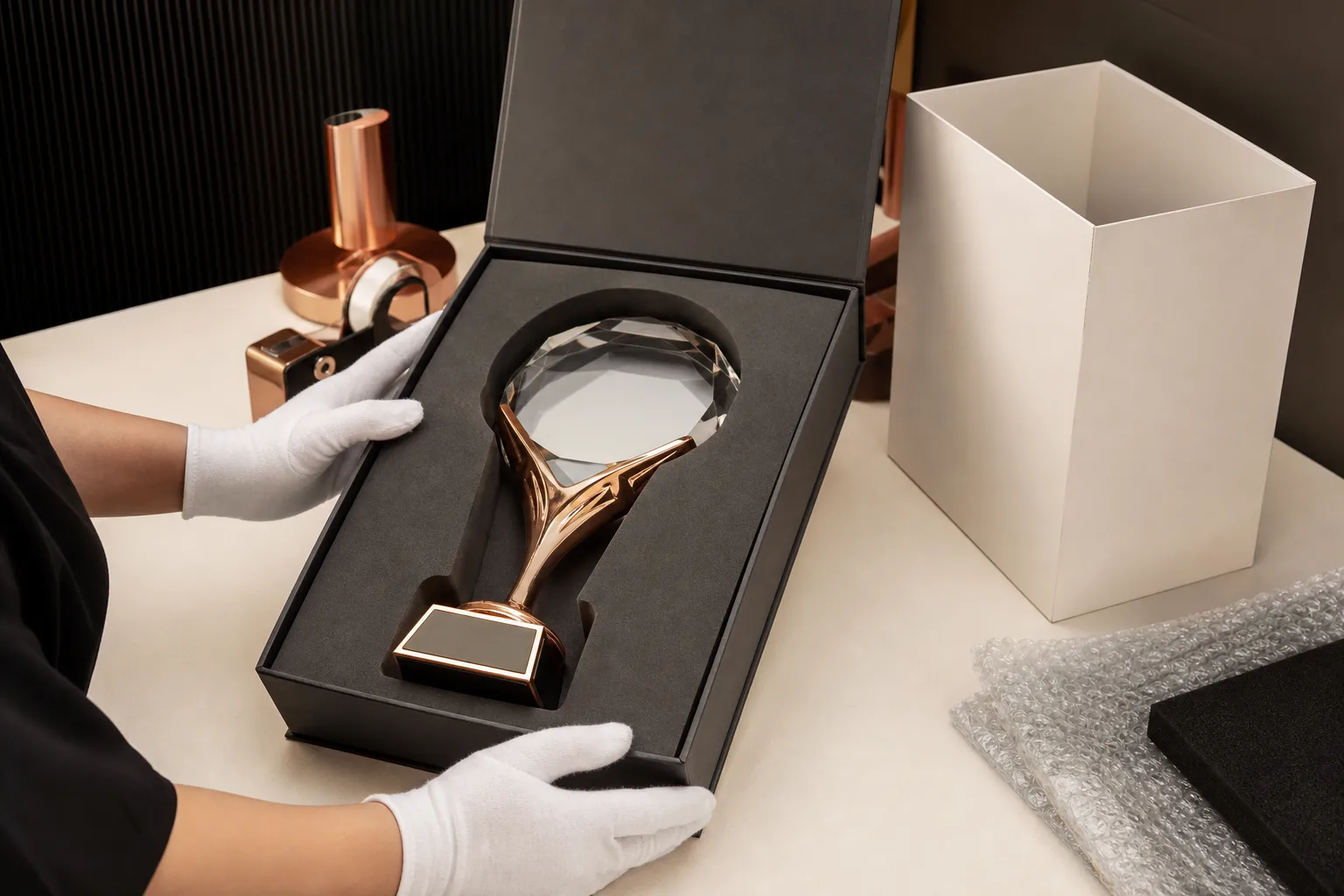
An assembled crystal and metal award needs packaging selected around its dimensions, contact points and presentation role. Gairun can review standard anti-scratch packing, individual OPP bags, bubble protection, velvet boxes, paper display boxes and plastic display boxes. Availability and fit depend on the size and structure of the trophy.
Protective packing may suit awards prepared for organized distribution, while a presentation box may be preferred for individual recognition. The internal fit should limit unwanted contact between the trophy and its packaging. If labels or recipient identification are needed, include them in the packaging brief.
For a project-specific quotation, provide the artwork, order quantity, overall trophy dimensions, crystal-body reference, metal-component location, preferred finish, color details, version list, packaging needs, destination and required schedule. You can also review our private-label and custom packaging options before submitting the final brief.
Frequently Asked Questions
Plan the Crystal, Metal and Presentation as One Award
Discuss a mixed-material trophy