
FACTORY-DIRECT OEM / ODM MANUFACTURING
How to Order Custom Metal Products from Gairun
Ordering a custom metal product is a controlled development process rather than a choice from a fixed catalog. The product format, artwork, dimensions, relief, finish, color method, attachments, packaging and delivery plan must be reviewed together before production can begin.
Gairun supports OEM and ODM orders for custom medals, challenge coins, lapel pins and badges, metal trophies and plaques, keychains and bottle openers. This guide explains how to order custom metal products from the first project brief through artwork approval, sampling, bulk production, inspection and international shipping.
If your product, quantity and main specifications are already defined, request a project-specific quotation. If you are still comparing formats, begin with the custom metal product range or return to the Buyer Resources hub.
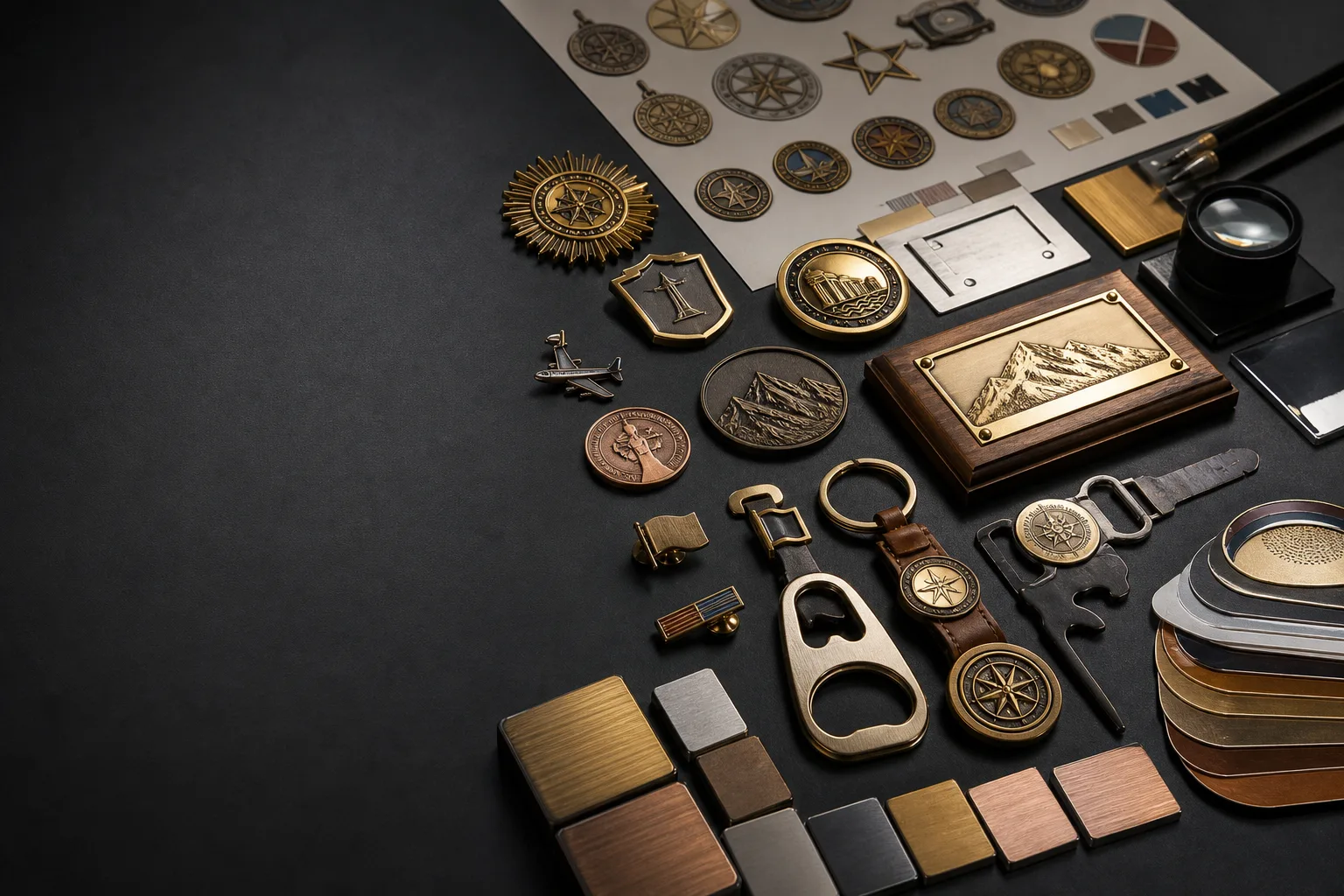
The Custom Metal Product Ordering Process at a Glance
A reliable order moves through a series of approval points. Each step answers a different question and creates the information required by the next stage.
Not every project needs the same amount of development. A straightforward repeat order may move quickly after file and specification confirmation. A new multi-part or high-relief design may require additional engineering, tooling or sample review.
01
Define the project
Identify the product, intended use, quantity, dimensions, versions, target date and delivery location.
02
Submit artwork and specifications
Send the strongest available vector file, PDF, drawing, reference image or labeled sketch.
03
Review the quotation
Confirm the quoted product construction, commercial scope, packaging assumptions and delivery term.
04
Approve the artwork
Check the 2D or 3D proof for shape, wording, dimensions, front and reverse details, color areas and attachments.
05
Complete engineering review
Resolve the material, forming method, relief, finish, color process and structural details before tooling.
06
Choose the sample route
Use an existing stock sample for general workmanship review or a custom sample for a design-specific physical approval.
07
Authorize bulk production
Confirm the approved reference, quantities by version and final packaging instructions.
08
Inspect, pack and ship
Complete the agreed quality checks, packing plan and international delivery arrangement.
Step 1: Prepare a Complete Project Brief
Begin with the commercial purpose of the order. A marathon medal, institutional challenge coin, recognition plaque and promotional keychain have different approval, presentation and distribution requirements. The intended use helps the factory review a suitable product structure without treating an early preference as a final technical instruction.
Include the following information in the first brief:
| Project detail | What to provide | Why it matters |
|---|---|---|
| Product and use | Closest product family and intended event, program, promotion or resale use | Defines the functional and presentation context |
| Quantity | Required quantity for each design or version | Separates tooling and production scope by design |
| Dimensions | Width, height, diameter and intended thickness when known | Connects the artwork to a physical product size |
| Design versions | List the wording, date, color, award level or artwork changes between versions | Prevents different SKUs from being treated as one design |
| Surface direction | Preferred metal color, relief, enamel, printing, texture or epoxy treatment | Provides a basis for process and finish review |
| Attachments | Ribbon, clutch, magnet, keyring, chain, stand or assembled component requirements | Defines how the metal body connects to the finished product |
| Packaging | Protective packing, individual bag, presentation box or private-label requirement | Adds the packing scope to the quotation and fit review |
| Schedule and destination | Required arrival date, country, city or postal code, and preferred trade term when known | Allows production and shipping to be assessed separately |
| Approval contacts | Identify who can approve artwork, samples and commercial changes | Creates one controlled decision route for the project |
If several designs belong to one program, provide a version list instead of relying on filenames alone. Different designs are assessed separately because tooling, setup and approval are tied to the individual design.
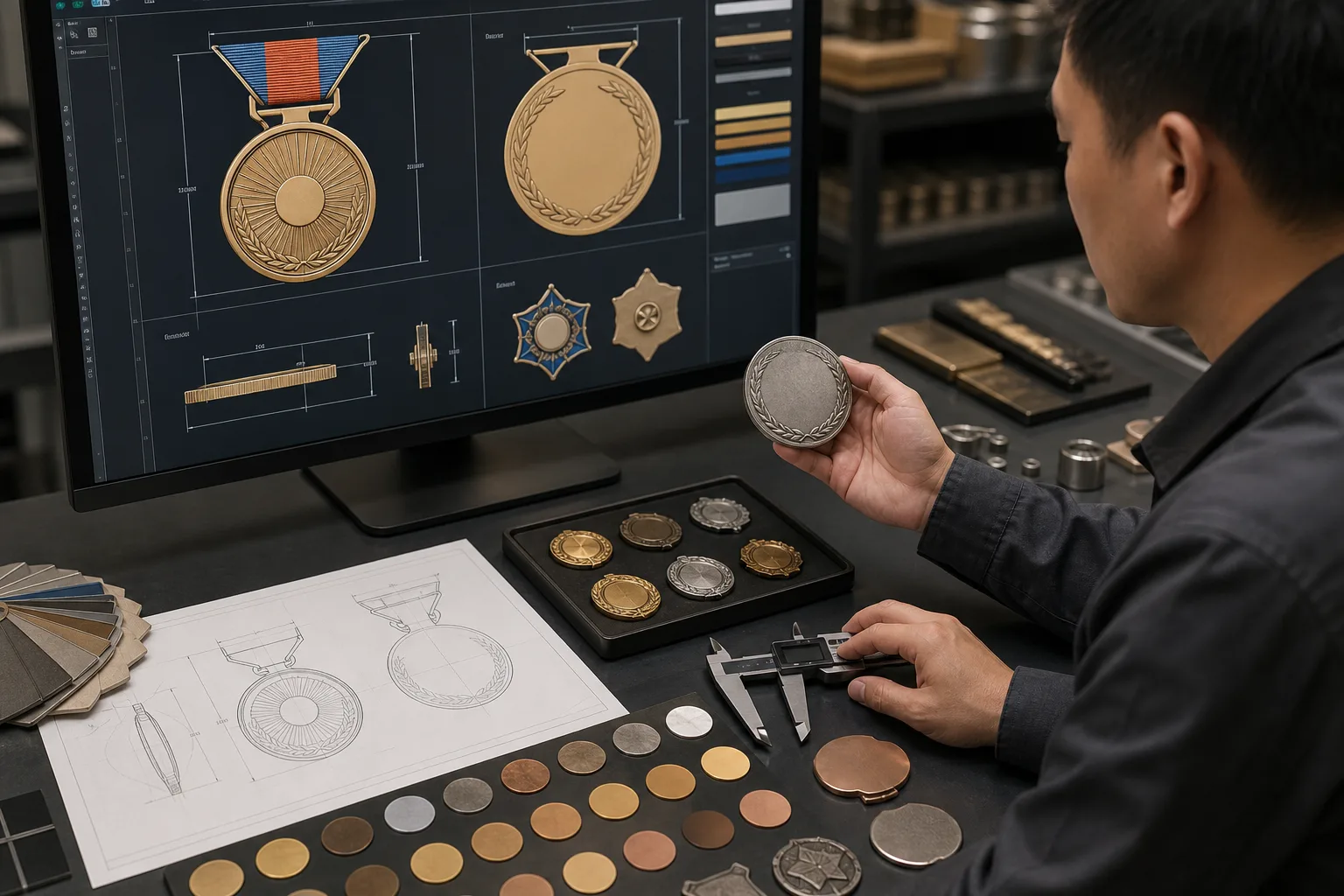
Step 2: Submit Artwork and Product Specifications
You can start with editable vector artwork, a PDF, a technical drawing, a clear reference image or a labeled hand-drawn concept. The first file does not need to be ready for mold making, but it must identify the intended shape, content and product layout clearly enough for review.
Mark exact text, dates, names and logo versions. Show front, reverse and separate component views when they apply. Add overall dimensions, intended thickness, attachment position, color references and any areas that must remain exposed metal. If a decision is still open, label it for review instead of leaving the factory to infer the requirement.
Use the artwork and file preparation guide to organize the submission. You can then upload artwork and specifications for a technical assessment, or attach the files to a quotation request when pricing, packaging and delivery also need to be reviewed.
Reference images can communicate an appearance or construction idea, but they do not replace a written specification. State which features should be followed and which features are only visual references.
Step 3: Review the Quotation and Confirm the Commercial Scope
A useful quotation must be based on a defined product scope. Review the product format, quantity, dimensions, design versions, forming route, finish, color method, attachment, packaging and delivery basis shown in the offer. If an item is not yet confirmed, keep it recorded as an open point rather than assuming it is included.
Gairun’s standard minimum order quantity is 100 pieces per design. A 50-piece trial order may be supported for selected products, subject to design and process review. Quantities for different designs should be stated separately even when the designs belong to the same product family.
| Quotation item | Confirmation question |
|---|---|
| Product construction | Does the quote describe the correct size, thickness, relief, front and reverse structure, and separate parts? |
| Tooling and sample | Are applicable tooling, custom sample and revision assumptions identified? |
| Finish and color | Are plating, antique or matte effects, enamel, printing and epoxy requirements recorded? |
| Quantity and versions | Is the quantity shown for every design, color version, award level or SKU? |
| Packaging | Does the quote include the correct protective or presentation packaging? |
| Delivery basis | Is the Incoterm, named place or port, destination and transport assumption clear? |
| Schedule | Are artwork, engineering, sampling, production and shipping treated as separate time stages? |
Gairun supports an initial RFQ response within 24 hours. The first reply may request missing information before price, feasibility or timing can be confirmed. A quotation is not a substitute for final artwork approval or engineering review.
Step 4: Approve the Artwork and Engineering Direction
Gairun’s 2D and 3D design team can prepare a free artwork proof and may provide it within 24 hours when the submitted concept is clear enough for design work. This timing applies to the visual proof, not to engineering approval, tooling, sampling, bulk production or delivery.
Check the proof as an approval record. Verify spelling, dates, logos, overall shape, dimensions, front and reverse orientation, raised and recessed areas, metal borders, color placement, attachments and the revision number. Return one consolidated set of comments and identify the authorized approver.
Artwork approval confirms what the product should show. The separate engineering review determines how that design can be produced. The review may assess zinc alloy die-casting, stamping or die-struck forming, photo etching or hydraulic high-relief forming together with the proposed metal, relief, finish, enamel, printing, epoxy and attachment structure.
Tooling should begin only after the required visual and technical points are approved. Any later change to dimensions, relief, wording, components or process may require the scope, proof, tooling or schedule to be reviewed again.
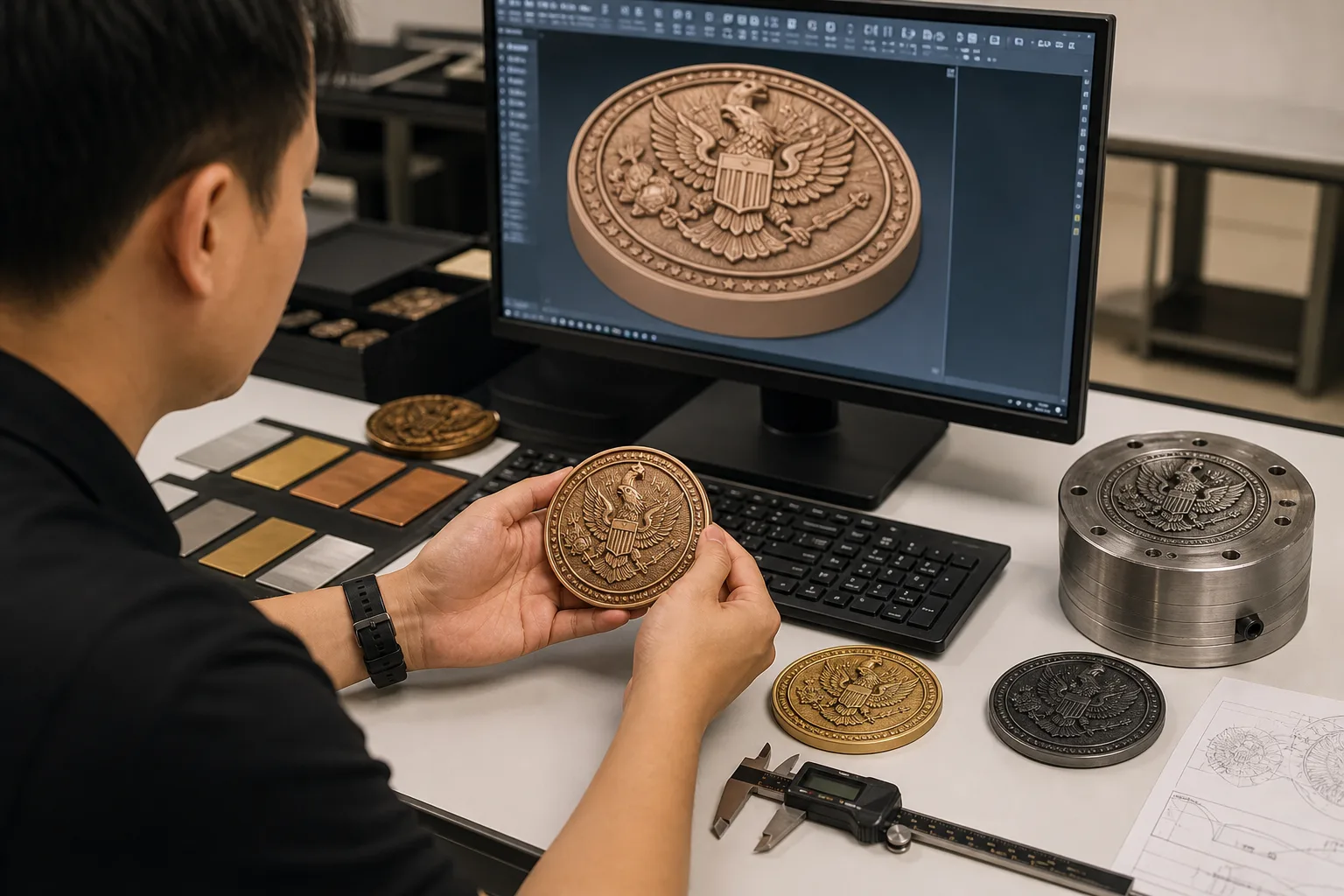
Step 5: Decide Whether You Need a Physical Sample
Choose the sample route according to the decision you need to make. An existing stock sample shows representative factory workmanship but does not reproduce your artwork. A custom sample is made for the reviewed project and can become the physical production reference after buyer approval.
| Sample route | Use it to review | Commercial and timing basis |
|---|---|---|
| Existing stock sample | General metal forming, relief, plating, enamel, printing, assembly or packaging workmanship | The available sample product is free; courier, freight or delivery cost is confirmed separately |
| Custom project sample | Your design, dimensions, finish, color, attachments and construction as a physical item | Project-specific charges are confirmed after review; custom sampling normally takes 7-10 working days |
Inspect a custom sample against the approved artwork and specification. Record any accepted differences or required corrections in writing. Sample approval must identify the exact version that authorizes bulk production.
Visit Custom Sampling and Prototyping for the full comparison, or request available stock samples when the immediate goal is supplier and workmanship evaluation.
Step 6: Authorize Bulk Production with a Controlled Reference
Before bulk production begins, confirm the final artwork revision, engineering decisions, approved sample when required, quantity by design, packaging specification and shipping basis. The purchase order and project record should use the same product name, version references and quantities.
Standard bulk production normally takes 15-20 working days. Expedited production may be supported, but feasibility depends on the design, process, quantity, approval progress and current production schedule. Shipping time is separate from production time.
Production timing should start from the agreed approval point, not from the date of the first inquiry. Delays can result when artwork comments remain open, design versions are not separated, packaging is added late, required attachments are undecided or a change affects tooling or the approved sample.
During production, project follow-up may include photo or video updates where appropriate. These updates support communication but do not replace the agreed inspection criteria or final release checks.
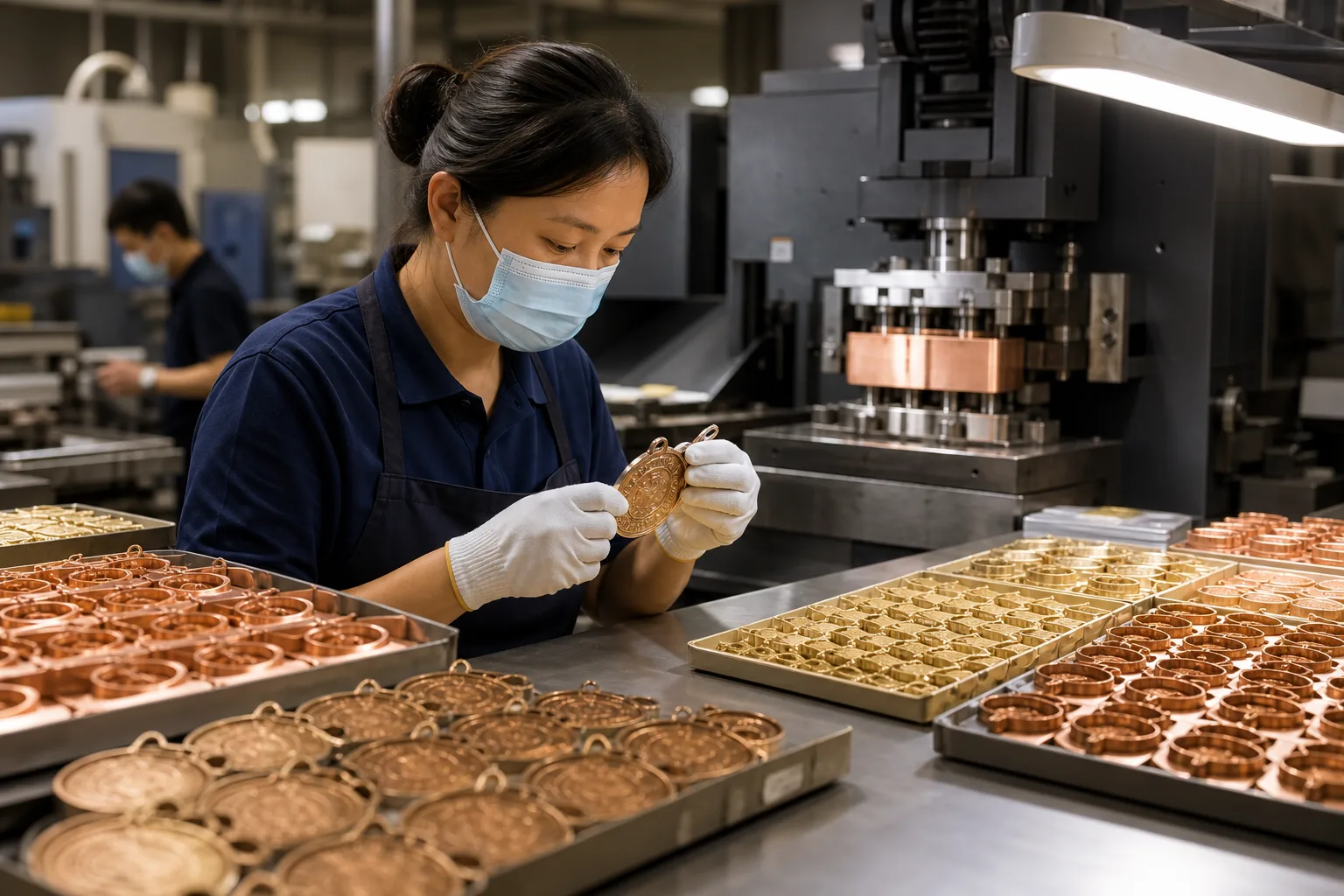
Step 7: Apply Inspection Criteria to the Actual Product
Quality requirements should be connected to the product design and its production stages. Gairun’s inspection process includes incoming material checks, first-article comparison, in-process checks and final inspection.
Available project-specific physical tests include plating adhesion, salt spray assessment and pull testing for medal ribbon connections. Test duration, force, reporting method and acceptance limits must be defined for the individual project; the name of a test alone does not create an acceptance standard.
Review the quality control and product testing process and include any buyer-defined tolerances, inspection records or approval requirements in the order brief.
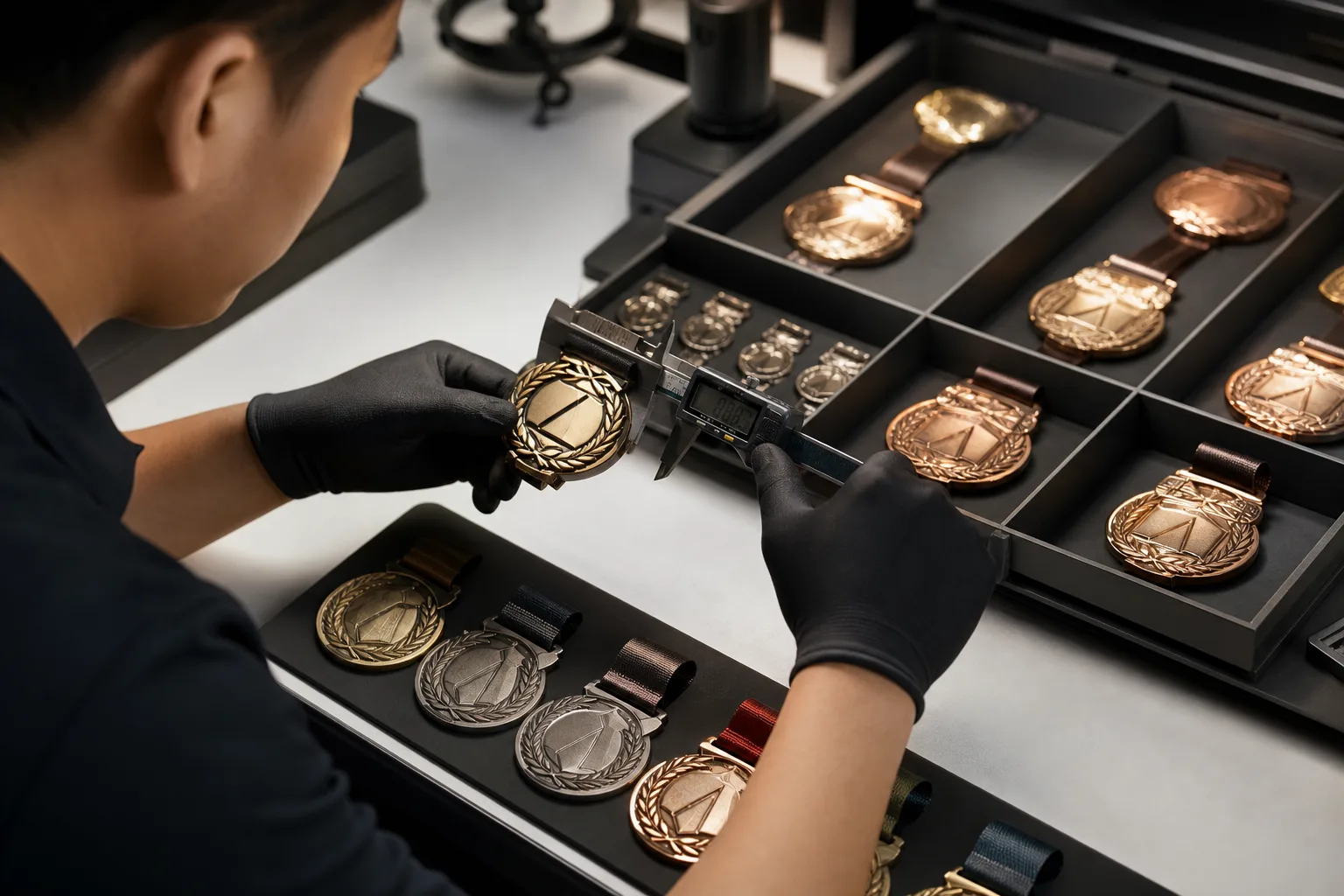
01
Incoming inspection
Reviews applicable raw metal inputs before production.
02
First-article inspection
Compares the initial molded or pressed part with the approved drawing for dimensions, thickness and relief detail.
03
In-process inspection
Checks relevant forming and finishing results such as burrs, flatness, plating color and adhesion, and missing or overflowing color.
04
Final inspection
Includes a 100% visual inspection for surface scratches and checks the security of applicable components such as medal ribbons, butterfly clutches and magnets.
Step 8: Confirm Packaging, Trade Terms and Shipping
Packaging must protect the specified product and support its intended presentation or distribution. Available directions include standard anti-scratch packing, individual OPP bags, bubble bags, velvet boxes, paper display boxes and plastic display boxes. Fit, inserts, branding positions and pack-out quantities are reviewed for the actual product.
Use the custom packaging guide to compare protective and presentation options. Private-label packaging should be specified before the final quotation and production authorization rather than added after the product is complete.
Gairun can review international express, air, sea and rail transport. Supported trade terms include EXW, FOB, CIF, DAP and DDP, subject to the shipment, route and destination. The selected term must include the exact named origin, port or destination.
Transport mode and Incoterm are separate decisions. FOB and CIF are used for sea or inland-waterway transport, while route-specific EXW, DAP or DDP arrangements divide responsibilities differently. DDP cannot be assumed for every country, product or consignee. See the shipping and trade terms guide or the international shipping service before comparing delivered quotations.
Prevent Common Ordering Delays
Many delays begin before production. Use the following controls to keep the order record clear:
If key decisions remain open, book a project consultation before submitting a final RFQ. A short technical discussion can identify which details must be resolved for quotation and which can remain options for later review.
State the quantity for each design instead of providing only a combined total.
Use one approved artwork revision and remove obsolete files from the active review set.
Confirm exact spelling, dates, names and logo versions before artwork approval.
Separate visual artwork approval from engineering and physical sample approval.
Resolve front, reverse, thickness, relief and attachment requirements before tooling.
Add packaging, private-label and insert requirements before the commercial scope is finalized.
Identify one authorized route for consolidated buyer feedback.
State the destination and required arrival date early, while keeping shipping time separate from production time.
Record any project-specific testing method and acceptance criteria instead of requesting a test by name only.
Frequently Asked Questions About Ordering Custom Metal Products
Start Your Custom Metal Product Order
If your files require a technical check before pricing, upload artwork and specifications. If you are still comparing product formats or approval routes, return to the Buyer Resources hub.