
FACTORY-DIRECT OEM / ODM MANUFACTURING
Custom Metal Product Buyer Resources for Better Order Planning
Gairun is an OEM and ODM metal crafts and custom awards manufacturer. We produce custom medals, challenge coins, pins, badges, trophies, plaques, keychains and bottle openers for business buyers.
These custom metal product buyer resources are designed for sourcing teams preparing artwork, specifications, budgets and delivery plans. Event organizers can use them to organize award requirements. Brand managers can define visual details and packaging. Procurement teams and distributors can compare materials, finishes and international trade terms before requesting pricing.
Start with the guide that matches your current decision. If you have not chosen a product format, review our custom metal products first. If your product, quantity and main specifications are already defined, you can proceed to a project-specific quotation.
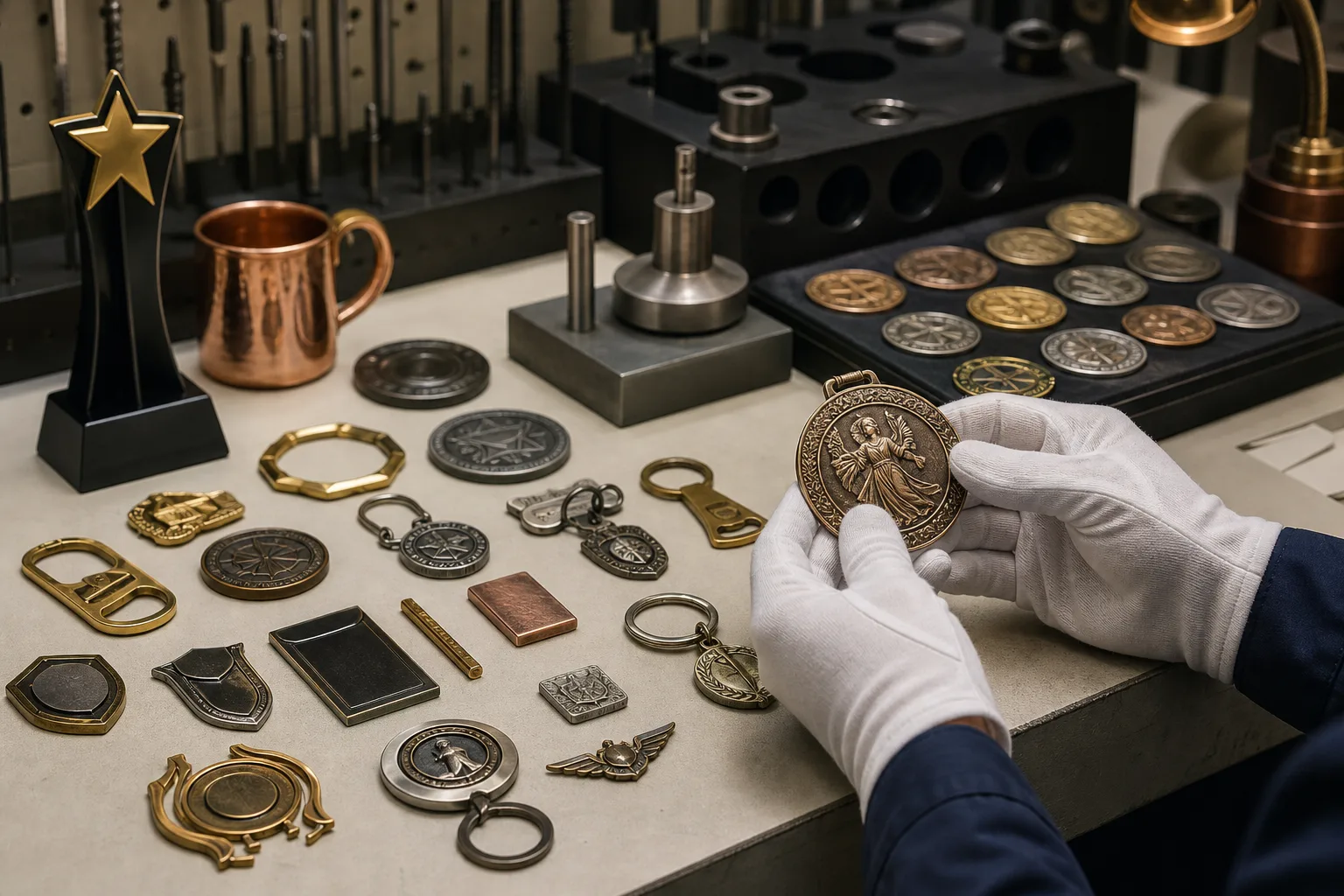
Find the Right Guide for Your Current Buying Decision
A complete custom metal product brief develops in stages. You first define the order scope and design content. You then consider the base metal, surface appearance, color process, packaging and delivery responsibilities.
You do not need to make every technical decision without factory review. However, a clear statement of your preferred result gives our team a stronger basis for checking feasibility and preparing options.
| Your current question | Information to prepare | Recommended resource |
|---|---|---|
| How does a custom order move forward? | Product type, quantity, dimensions, target schedule and approval needs | How to order custom metal products |
| What design files and notes are useful? | Artwork, text, dimensions, colors, front and back details, and attachments | Artwork and file preparation guide |
| Which base metal fits the design? | Shape, relief, forming route, surface goal and intended use | Metal materials comparison |
| Which metal appearance should I request? | Bright, dark, antique, two-tone, sandblasted or matte direction | Metal finish selection guide |
| Should the design use enamel or printing? | Desired surface feel, color areas, fine details and printed elements | Soft enamel versus imitation hard enamel |
| How should the products be packed? | Protection, presentation, display and distribution requirements | Custom packaging guide |
| Which shipping mode and trade term should I discuss? | Destination, schedule, transport preference and responsibility point | Shipping and trade terms guide |
Understand the Decisions Behind a Custom Metal Order
A custom order normally begins with requirement confirmation. The buyer and manufacturer need a shared record of the product format, dimensions, quantity, design versions, finish, color, attachments, packaging and destination.
The design then moves through artwork proofing and technical review. A custom sample may be used when the project requires physical evaluation before bulk production. Once the required approvals are in place, production follow-up, inspection and shipment planning can move against the agreed project details.
The full custom metal product ordering guide explains these decision points in sequence. Use it to identify who in your organization approves artwork, samples, commercial terms and shipment arrangements. Clear approval roles can prevent comments from different departments from creating conflicting instructions.
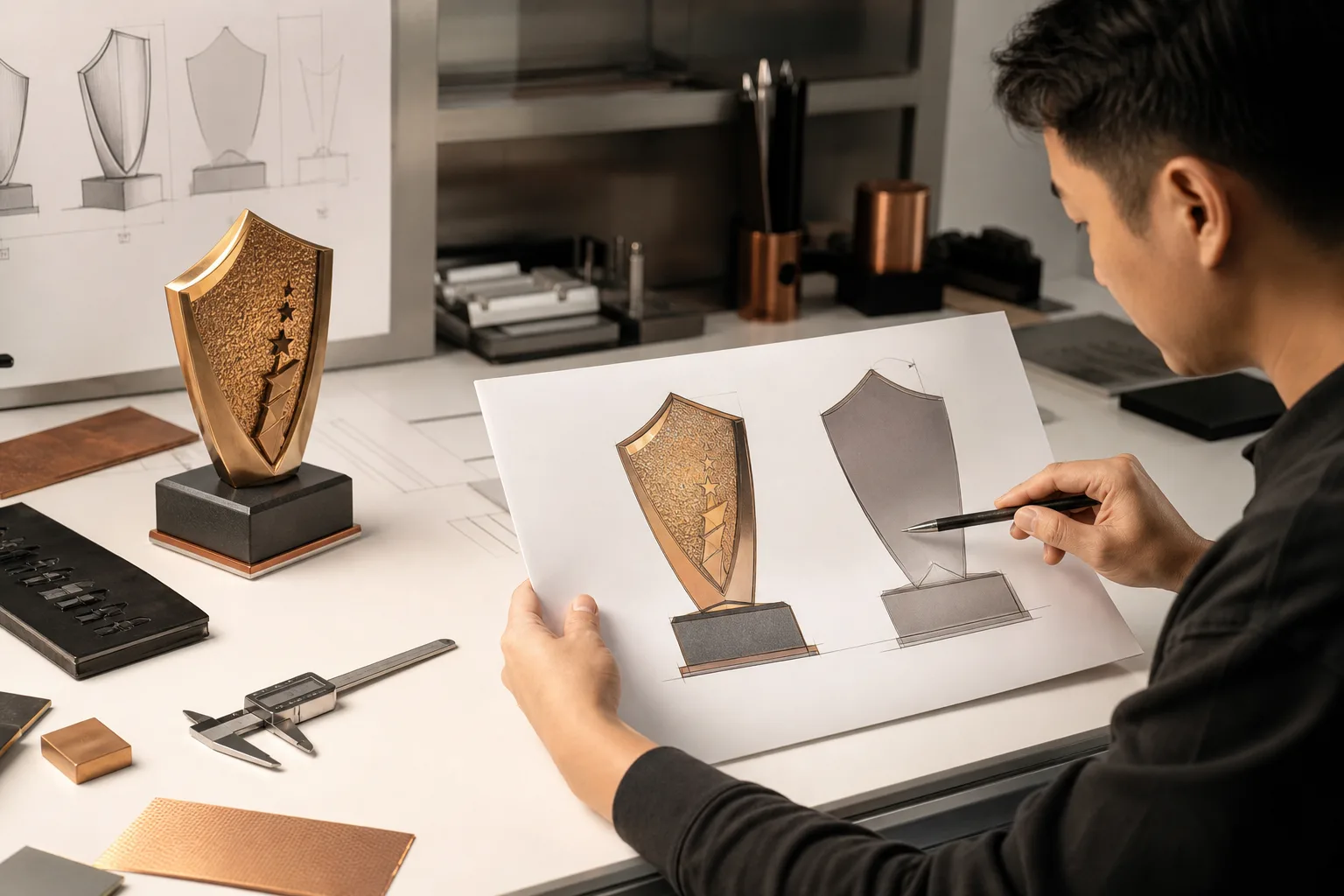
Build an Artwork Package That Can Be Reviewed
Artwork is more useful when it is supported by product information. Include the intended dimensions, front and back content, required wording, color references, attachments, quantity and preferred finish. Identify separate design versions clearly so that names, dates, award levels or regional variants are not treated as one design.
Gairun can begin a review from vector artwork, a PDF or a sketch. Our 2D and 3D design support can help translate the supplied concept into a visual proof. Buyer approval and the final pre-tooling engineering review remain separate steps in the project process.
Your design notes should distinguish required features from visual references. For example, state whether a dark area represents black enamel, dark plating or only shading in the concept image. Mark which text must remain editable and which elements are fixed brand assets.
See the artwork and file preparation guide for a detailed file checklist and guidance on dimensions, text, colors, components and design views.
Choose a Base Metal by Shape and Production Route
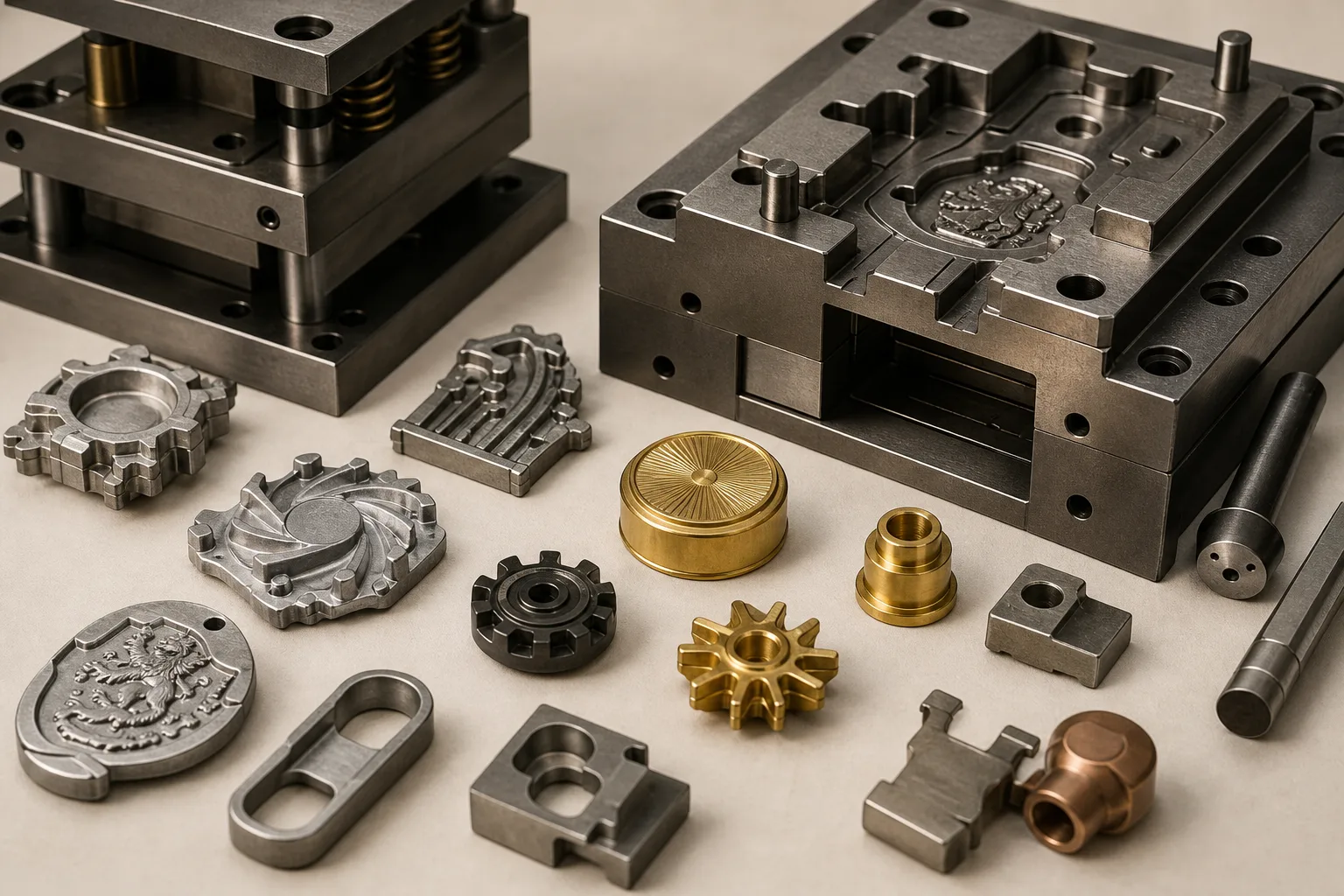
Metal selection should begin with the design rather than a general ranking. Product geometry, relief, forming method, surface appearance and intended use all affect which material should be reviewed.
Gairun works with zinc alloy, brass, iron, stainless steel and aluminum. These materials can support different product structures and forming routes, but the final choice depends on the specific artwork and construction.
- Zinc alloy: Review for die-cast shapes, formed details and dimensional structures.
- Brass and iron: Review for stamped or die-struck designs and defined metal-line artwork.
- Stainless steel and aluminum: Review when the product format, surface direction and forming requirements call for these metals.
Do not select a material based only on its name or appearance in a reference photograph. Confirm how the design will be formed, decorated and assembled. The metal materials comparison provides a fuller framework without assigning unsupported performance or cost rankings.
Describe the Metal Surface You Want Buyers to See
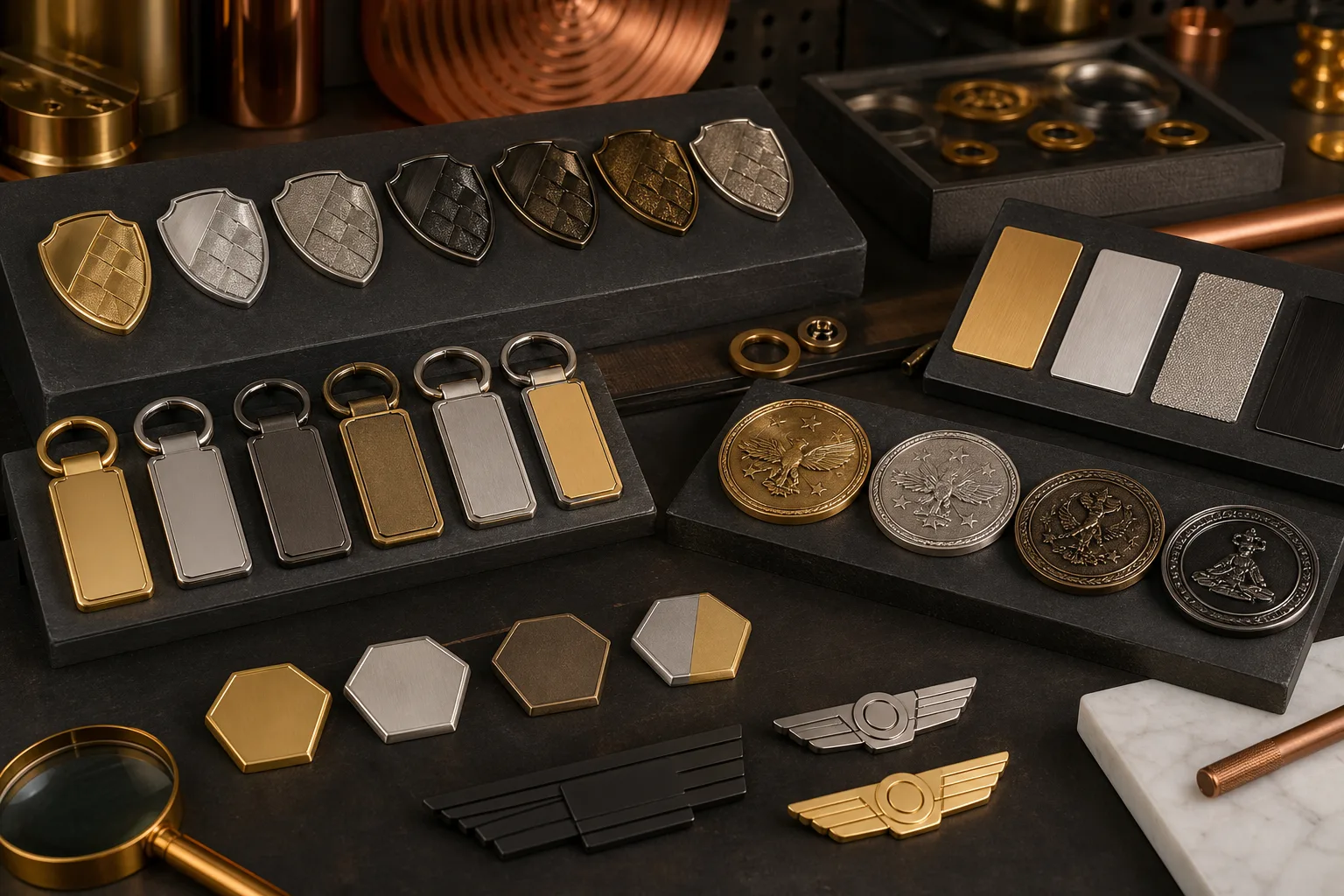
A finish specification should describe the visual result and where it appears. Bright plating options include gold, silver and nickel. Black nickel provides a darker metal direction. Antique bronze and antique silver create an aged surface effect, while dual plating uses two plating tones to separate selected design areas.
Sandblasting and matte finishing can reduce shine or create contrast between surfaces. Their suitability must be reviewed against the artwork, base metal and forming route. A finish that works on a broad field may not show the same way on narrow borders or complex relief.
When preparing a reference, label each surface instead of sending an image with no explanation. State which areas should be bright, dark, antique, sandblasted or matte. If you want two metal tones, mark the boundary between them. Use the metal finish selection guide to create a clear shortlist for review.
Select Enamel, Printing and Clear Epoxy by Artwork Style
Soft enamel and imitation hard enamel create different surfaces. Soft enamel leaves colored areas recessed below the surrounding metal borders, which makes the metal lines and surface depth easy to feel. Imitation hard enamel creates a smoother face with the color and metal areas brought closer to one level.
Screen printing and UV printing are separate options for artwork that depends on printed graphics. They may be reviewed for details that do not suit divided enamel fields. Clear epoxy coating can be added as a transparent layer over a decorated surface when that presentation is requested.
Compare these methods by the result you need:
- Surface feel: Choose between recessed color, a smoother enamel face or a printed surface.
- Artwork structure: Check whether the design has separated color fields, fine graphics or multi-tone printed detail.
- Metal borders: Confirm which lines must remain visible between enamel colors.
- Presentation: State whether a clear epoxy layer is part of the intended face.
Read the soft enamel versus imitation hard enamel guide for a direct comparison. Printed details and epoxy should be identified separately when you submit the design.
Separate Shipping Protection from Product Presentation
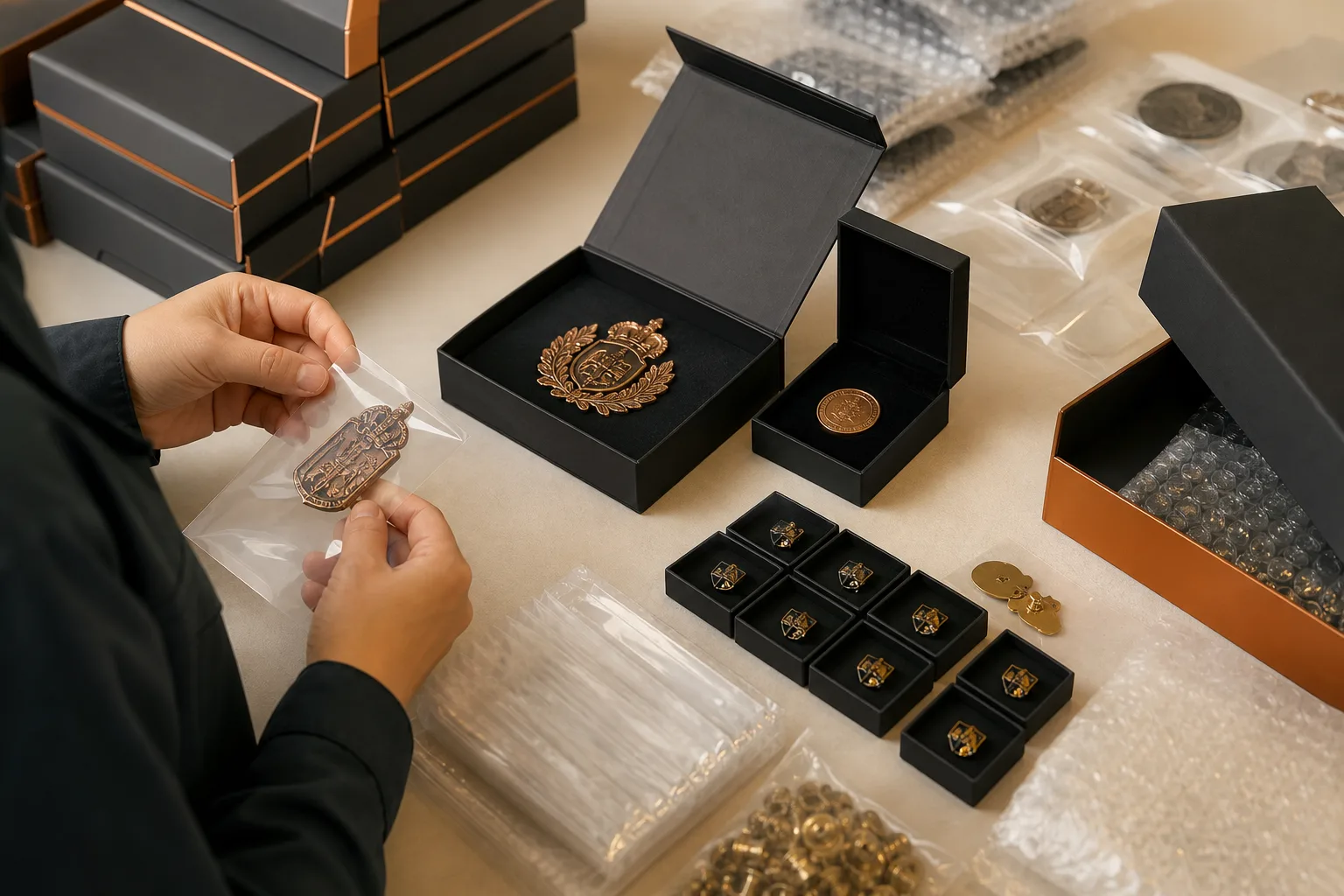
Packaging has two different jobs. Protective packing helps limit contact and surface damage during handling. Presentation packaging supports award delivery, gifting or product display. Some projects need only one function, while others require both.
Available choices include standard anti-scratch packing, individual OPP bags, bubble protection, velvet boxes, paper display boxes and plastic display boxes. The right option depends on the product format, distribution plan and desired presentation.
Include the packaging type and quantity basis in the quotation brief. Packaging dimensions and final suitability need to be coordinated with the product. See the custom packaging guide for a decision map based on protection, presentation and distribution.
Standard anti-scratch packing
A starting point for basic product separation and surface protection.
OPP bags
Individual packing for organized handling and distribution.
Bubble protection
Added contact and impact protection where the product or shipment plan requires it.
Velvet boxes
Presentation for awards, recognition items and gifts.
Paper display boxes
A presentation or display format that can be reviewed with the product.
Plastic display boxes
A visible display option for selected items.
Prepare Shipping Details and Trade Terms for Quotation
Shipping planning starts with the destination, required schedule, order scope and preferred level of delivery responsibility. Gairun can review international express, air, sea and rail transport. The appropriate mode depends on the finished shipment and destination, so a transport method should not be treated as confirmed before project review.
Supported trade terms include EXW, FOB, CIF, DDP and DAP. Each term assigns different cost, transport and handoff responsibilities between buyer and seller. State the exact term you want quoted rather than asking only for a shipping price. Port-based and destination-delivery quotations may cover different responsibilities and cannot be compared from the total alone.
The shipping and trade terms guide introduces each term and relates it to available transport modes. For quote preparation, provide:
- Product type and total quantity
- Dimensions and design-version breakdown
- Artwork or a clear concept file
- Material or production preference, if known
- Plating, surface, color and epoxy requirements
- Attachments and separate components
- Protective or presentation packaging
- Delivery destination and required schedule
- Preferred transport mode and trade term, if known
When these details are ready, submit them through our custom metal product quote request. Unknown technical details can be marked for review instead of being guessed.