
For custom awards and promotional products, zinc-alloy die casting is an initial route to consider for formed outlines, irregular bodies, or more dimensional relief. Stamping or die-struck forming is a useful starting point for designs built around raised and recessed metal areas. Neither choice follows from appearance alone: thickness, reverse-side structure, decoration, attachment, material, and use can change the recommendation. Gairun lists both forming methods, alongside Metal Stamping and Hydraulic Relief, and selects a route according to the product requirements.
Zinc Die Casting vs Stamping: Which Process Fits the Product?
Start with the structure you need. A three-dimensional body, an irregular silhouette, or relief that is integral to the part can make zinc-alloy die casting worth considering. A flatter composition with raised and recessed design areas can point toward stamping or die striking. These are starting directions, not universal process rules.
Die striking describes how the metal is formed; it is not a finish. Plating, enamel, printing, polishing, and matte treatment are separate decoration or surface decisions made around the formed body. For pins and badges, Gairun lists enamel pins, die-struck badges, zinc-alloy die-cast pins, photo-etched designs, and printed metal badges. These constructions are not interchangeable: shape, relief, text, color layout, and attachment affect the choice.
Before settling on a route, define the product’s front and back, thickness, edge, relief, material preference, color plan, and attachment area. Intended wear or handling matters too. A pin needs space for its rear attachment; a coin-like piece needs its faces, border, thickness, and edge considered as one structure. A method that appears suitable from the front artwork may not suit the complete part.
How Zinc Die Casting and Stamping Form Custom Metal Products
In zinc-alloy die casting, molten alloy is formed in a mold under pressure. The mold defines the part’s body and relief. Tooling must account for the shape and construction being made; it cannot simply be reused as stamping tooling.
Stamping presses sheet or blank metal with a tool and die to shape the material. In die-struck badge work, stamping forms raised and recessed design areas. A metal stamping process uses a press, tool, and die to shape sheet metal. The process description helps distinguish stamping from die casting, but it does not establish the right material, detail, or dimensions for a particular award.
Forming establishes the product’s base structure. Plating, enamel, epoxy, UV printing, laser marking, polishing, and matte treatment are later or complementary decisions. For example, raised borders and recessed color areas may shape the artwork plan, but the colors themselves do not define whether the body is stamped or cast.
Gairun describes mold-making and CNC engraving as part of tooling development, followed by trial forming and comparison of the first article with the approved drawing. Gairun also states that its equipment includes 88-ton and 160-ton zinc-alloy die-casting machines. Those figures describe stated equipment, not capacity, maximum part size, or suitability for a buyer’s design; Gairun advises reconfirming them for a formal supplier audit. Its broader Manufacturing Capabilities include methods that still need to be matched to the material and product structure.
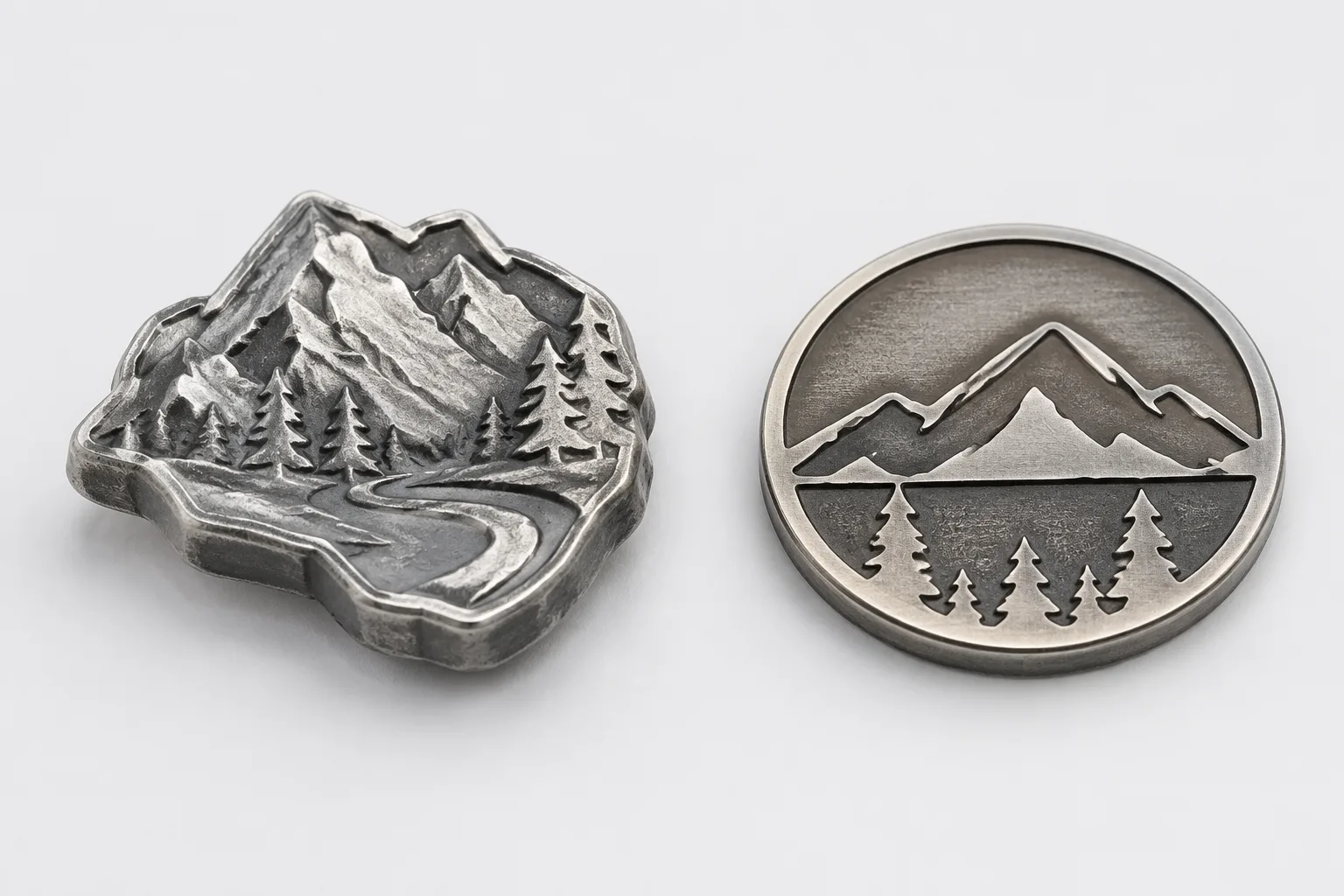
Shape, Relief, Edges, and Fine Detail: Die Cast vs Stamped Metal
Compare the complete form, not just the front image. A cast body may be considered when an irregular outline or integrated dimensional relief is central to the design. A stamped or die-struck part may be considered when a flatter metal layout relies on distinct raised borders and recessed fields. Actual feature transfer depends on artwork geometry and tooling; small marks should not be assumed to survive unchanged in either route.
Check broad raised areas, narrow lines, openings, edge orientation, and the reverse side. A thin-looking front may still need a particular thickness or back structure. For a coin-like product, front-to-back alignment, border continuity, and edge orientation are linked decisions. For a die-cast pin, define the geometry, thickness, rear attachment area, and decoration plan before tooling.
Example 1: Imagine a collectible badge with an irregular silhouette, a recessed background, and a dimensional emblem. Zinc-alloy die casting is an initial route to consider because the outline and depth are part of the body. If the back must be very flat or the relief is minimal, that preference may change.
Example 2: Imagine a thin-looking rectangular promotional mark with a clear raised border and broad recessed color fields. Stamping or die striking is an initial route to consider for this pressure-formed layout. If the buyer needs a deeper body or integrated irregular features, another route may be more appropriate. Both examples are hypothetical, not customer cases.
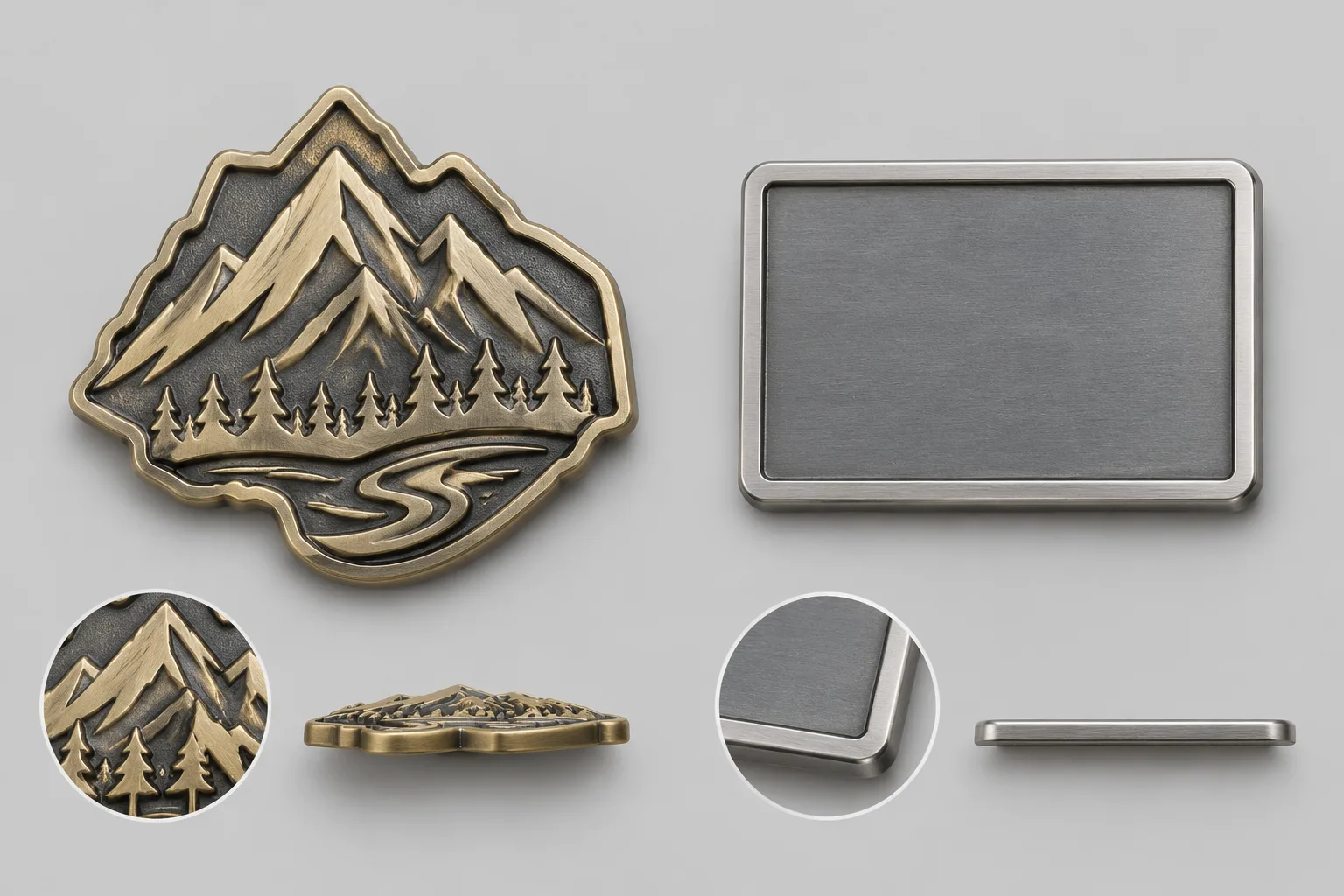
Material, Tooling, and Decoration Considerations
Material and forming method need to be considered together. Gairun lists zinc alloy, brass, iron, stainless steel, and aluminum for custom products, but that does not mean every metal suits both routes or every design. Geometry, relief, decoration, and intended use shape the selection. Do not assume a zinc-alloy cast body and a stamped sheet part will use the same material, thickness, or finish.
Give the supplier artwork at intended scale, front and reverse views, thickness, relief direction, borders, openings, attachment positions, and any alignment requirements. Gairun’s pre-tooling engineering review may cover these features, along with color areas, component positions, and the proposed production method. This is where a preferred route can be weighed against the full construction rather than selected from an isolated image.
Decoration needs planning before tooling. Enamel, epoxy, UV printing, laser marking, polishing, and plating can interact with borders, small text, and attachment clearance. Gairun lists sandblasting and matte finishing for reducing shine or creating contrast. The intended texture and gloss need a defined specification or approved sample; a process name alone does not set the final appearance.
For a die-struck badge, stamping forms the raised and recessed design; color, plating, or printing can be considered afterward. For either route, decide where metal should remain visible and where color or print belongs. That makes it easier to identify conflicts, such as a narrow color boundary crossing a raised border.
Buyer Decision Matrix for Awards, Badges, and Promotional Products
Use the visible design and actual use to frame the first process conversation. The table gives a direction to discuss, not a final specification.
| Observable input | Practical implication | Initial decision | What to confirm |
|---|---|---|---|
| Irregular silhouette or dimensional body | Part outline and depth are central to the construction. | Consider zinc-alloy die casting. | Thickness, reverse shape, relief, and attachment area. |
| Mostly flat layout with raised and recessed artwork | Design reads as formed metal lines and fields. | Consider stamping or die striking. | Material, feature scale, and intended relief. |
| Very fine text or small marks | Fine features may not transfer as drawn. | Do not choose from artwork alone. | Artwork scale, tooling feedback, and sample appearance. |
| Defined edge or complex reverse | Edge, border, and back affect the whole part. | Compare complete constructions. | Front-to-back alignment, edge direction, and attachment clearance. |
| Fixed material preference | Not every material is suited to every forming route. | Match material and method together. | Specific metal, thickness, finish, and intended use. |
| Color, plating, or print planned | Decoration can conflict with borders or small details. | Plan decoration alongside forming. | Color boundaries, gloss, texture, and acceptance sample. |
| Wearable attachment or functional load | Back structure or load-bearing area affects construction. | Prioritize the use condition. | Attachment position, fabric or load context, and validation. |
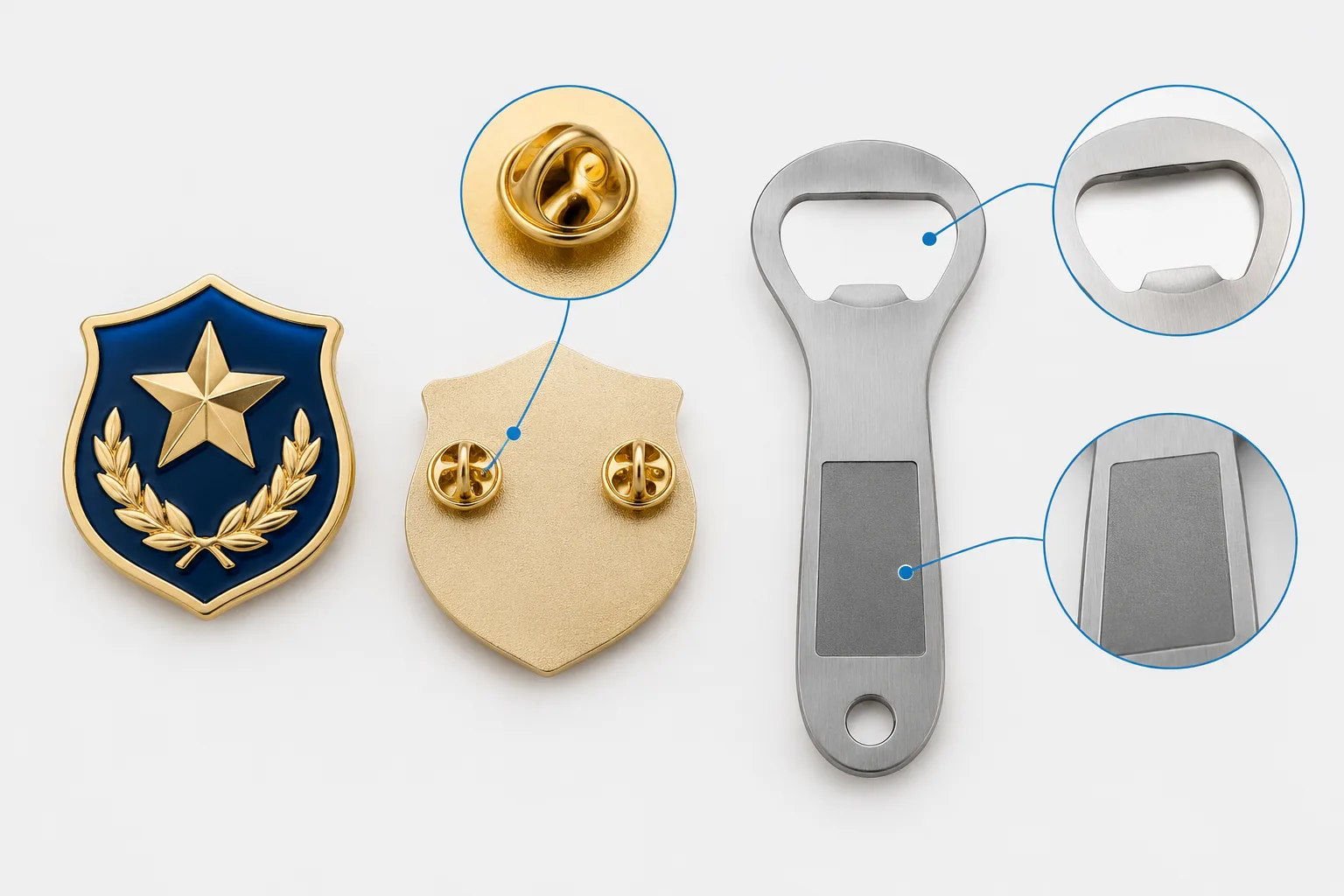
Uniform or service badge example: For this scenario, guidance lists an overall size of 25–45 mm and body thickness of 1.5–2.5 mm, with zinc alloy, brass, or stainless steel as materials to consider. These are scenario values, not universal specifications. Double-pin butterfly backs, screw posts, or magnetic backs depend on fabric thickness, wearing direction, badge weight, and surface construction. Consider puncture risk with pin attachments and medical-device and child-ingestion risks with magnetic attachments. Confirm the actual attachment and wear stability for the intended use.
Promotional bottle-opener example: For a branded hand-held opener, scenario guidance lists 70–110 × 25–45 mm and body thickness of 2–4.5 mm, with stainless steel as the primary material to consider. A zinc-alloy body with a stainless-steel functional component is another construction to discuss. These dimensions are not universal specifications. Keep the logo area separate from the load-bearing opening, and define checks for opening cycles, cleaning exposure, print wear, and grip.
From Artwork to Approved Sample: A Practical Selection and Validation Process
- Send the brief. Include product type, quantity, dimensions, artwork, variants, material preference, finish, color treatment, attachment, packaging, destination, and required schedule. Mark the forming method as a preference if undecided.
- Resolve construction. Supply front and back views, thickness, relief, borders, edge, openings, attachment positions, and functional areas. Gairun can begin artwork review from vector files, a usable PDF, or a hand-drawn concept; the file is not automatically production-ready.
- Choose a route against the design. Compare the shape, material, relief, decoration, and use. Record unresolved trade-offs before tooling rather than assuming the preferred method will fit.
- Approve production artwork. Gairun states that tooling begins after relevant production artwork is reviewed and accepted. Artwork approval is separate from commercial terms, testing, packaging approval, and shipment approval.
- Use a sample when selected. A custom sample shows the proposed appearance and construction. Its approval is a separate step from authorization for bulk production.
- Agree inspection criteria. Gairun states that its in-process checks include burr inspection after forming and flatness checks after polishing. Define the acceptance criteria for appearance, color, attachment retention, or functional validation for the order; the stated checks do not set universal tolerances.
- Match packaging to the product. A wearable badge may use an individual bag or uniform accessory box; a promotional bottle opener may use a paper sleeve or individual bag. Confirm the chosen pack with the product and use case.
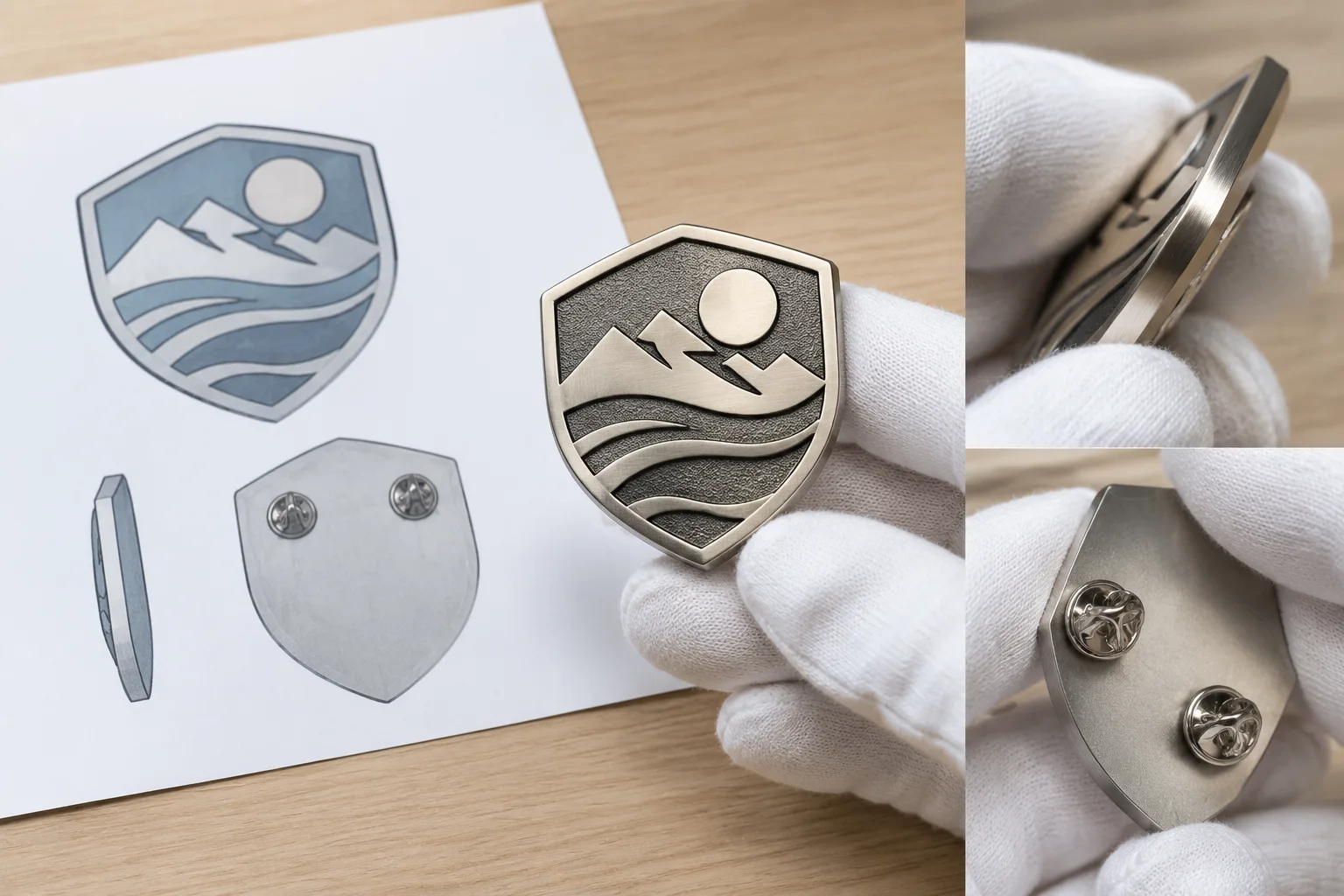
What to Send for an Engineering Review and Quote
For a useful process recommendation, send vector artwork, a usable PDF, or a hand-drawn concept with dimensions, wording, color references, front and back instructions, attachment details, and product format. Add quantity, design variants, material preference, finish, color treatment, packaging, destination, and schedule. If the process is undecided, ask for a comparison of die casting and stamping or die striking against the geometry and decoration plan.
For wearable products, describe the fabric or mounting context, wearing direction, attachment preference, approximate weight expectation, and any puncture or magnetic-risk constraints. For a functional promotional product, state use frequency, cleaning environment, load-bearing areas, logo location, and required validation. Ask for the proposed process, drawing or proof, tooling implications, sample plan, and acceptance criteria.
Gairun is a Shenzhen-based OEM and ODM manufacturer of custom metal awards and promotional products. Under its OEM model, production follows a buyer-supplied design or specification, with engineering review and buyer approval still required. Gairun may support a 50-piece trial order for selected products, subject to design, process, and project review; this is not a universal minimum.
Frequently Asked Questions
Is zinc die casting better than stamping for custom awards and promotional products?
Neither is universally better. Consider die casting first for a formed outline, irregular body, or dimensional relief; consider stamping or die striking for a pressure-formed layout with raised and recessed areas. Material, reverse structure, decoration, and use can change that direction.
What is the difference between die cast and stamped metal, and how is die striking different?
Die casting forms molten alloy in a mold under pressure. Stamping presses sheet or blank metal with tooling. Die striking is a stamping-based forming method used to create raised and recessed design areas; it is not a surface finish.
Which process is better for an irregular outline or dimensional relief on a custom badge or pin?
Zinc-alloy die casting is an initial route to consider for those features. The complete geometry, thickness, back, attachment area, and decoration plan still determine whether it suits the badge.
Can the same artwork be used for both zinc die casting and stamping?
The same concept may inform either route, but production artwork may need changes. Relief direction, feature size, thickness, borders, and reverse construction differ, so do not assume a file transfers unchanged.
What information should a buyer provide before choosing the forming method?
Send product type, dimensions, artwork, front and back requirements, material preference, decoration, attachment, quantity, and intended use. For functional items, include the load-bearing area and required validation; for wearable items, include mounting context.
Should a custom sample be approved before tooling or bulk production?
Tooling follows review and acceptance of relevant production artwork. When a custom sample is selected, it helps assess proposed appearance and construction. Sample approval and authorization for bulk production are separate decisions.