
A digital proof checks visual intent; a custom sample lets you examine a physical item made for your design; a first article checks an initial production result against the approved drawing; and a golden sample is a retained physical reference for comparison. These are separate product proof stages, not interchangeable names for one approval. Before requesting a sample or authorizing production, use How to Order Custom Metal Products to help organize the information your supplier needs.
The distinction matters because each reference answers a different question. Artwork approval does not settle physical construction, and approval of one first article does not automatically approve later changes. Buyers get clearer decisions when the approval record states what was examined, which version was used, who approved it, and what the approval allows next.
Digital Proof, Custom Sample, First Article, and Golden Sample: The Direct Difference
A digital proof is a visual representation of the proposed design. It can show wording, layout, front and back artwork, color areas, borders, and attachment positions when those details are supplied. It is useful for agreeing what the item should look like before tooling, but it does not establish actual dimensions, relief depth, finish, construction, or production capability. A proofing overview from GlobalVision on pre-press proofs also treats a proof as a point for checking visible content, not as a substitute for inspecting a manufactured object.
A custom sample is a physical item made for the buyer’s artwork. It helps assess proposed appearance and construction in three dimensions: for example, how a relief reads, how a surface treatment appears, or how components and an attachment fit together. Sample approval is not, by itself, authorization for bulk production. Gairun’s stated process keeps these steps distinct: a custom sample supports review of buyer-specific appearance and construction, while bulk-production authorization remains a separate decision.
A first article is the initial physical article produced after tooling and trial forming. Gairun describes comparing it with the approved 1:1 drawing for dimensions, thickness, and relief detail where applicable. This checks the initial result against defined requirements; the drawing and order records still need to state the required tolerances. A golden sample is a buyer-approved physical reference retained for later comparison. The term is not universal, so define in writing what it represents and how it will be controlled.
In short, the first article is an initial production result to check; the golden sample is a retained reference to compare against. A custom sample is buyer-specific physical evidence, while a digital proof is a visual representation. Use “approved reference sample” only when both parties agree which characteristics it represents. The approval stages described in Gairun’s service path keep requirements, artwork, engineering, sampling when selected, production, and shipment preparation as distinct control points. Not every order requires a custom sample or a golden sample.
What Each Approval Reference Can and Cannot Prove
Match the evidence to the question. A digital proof can help catch an incorrect logo position, spelling, color placement, front-to-back mismatch, or misplaced attachment. It cannot show how thick the metal feels, whether a raised feature has the intended depth, whether an edge is acceptable, or how an attachment fits in the finished object. A screen image also cannot establish plating adhesion or functional performance.
A custom sample adds physical evidence for the proposed design. Buyers can judge the overall appearance, construction, component relationships, surface treatment, and selected attachment arrangement. But a sample only represents the configuration and route actually made. If production later changes the artwork, material, finish, tooling, or component arrangement, the earlier approval may not cover the changed result.
A first article connects the physical item to the approved drawing and the acceptance criteria agreed for the order. For Gairun’s described first-article check, the comparison covers dimensions, thickness, and relief detail against the approved 1:1 drawing; the buyer should separately specify tolerances and any additional checks. Gairun also describes process checks such as burr inspection and flatness checks where relevant to the work. These descriptions do not establish a universal test plan or acceptance limit.
A retained golden sample gives production and procurement teams a tangible comparison point. It is useful for judging visible and physical characteristics that are difficult to communicate in a short written description. It does not replace the drawing, written finish requirements, test criteria, or approval records. If color, plating adhesion, attachment security, packaging fit, or functional performance matters, identify the relevant acceptance criteria or test evidence separately.
For decorated metal products, the artwork and approved proof should identify where colors belong. Gairun states that colored parts are checked for overflow and insufficient color; this is a process description, not a numerical color tolerance. Gairun’s Quality Control and Product Testing information can help buyers frame inspection questions. For plating, specify the required appearance and any applicable acceptance method rather than assuming a sample establishes an unstated standard. See also common plating defects buyers should record.
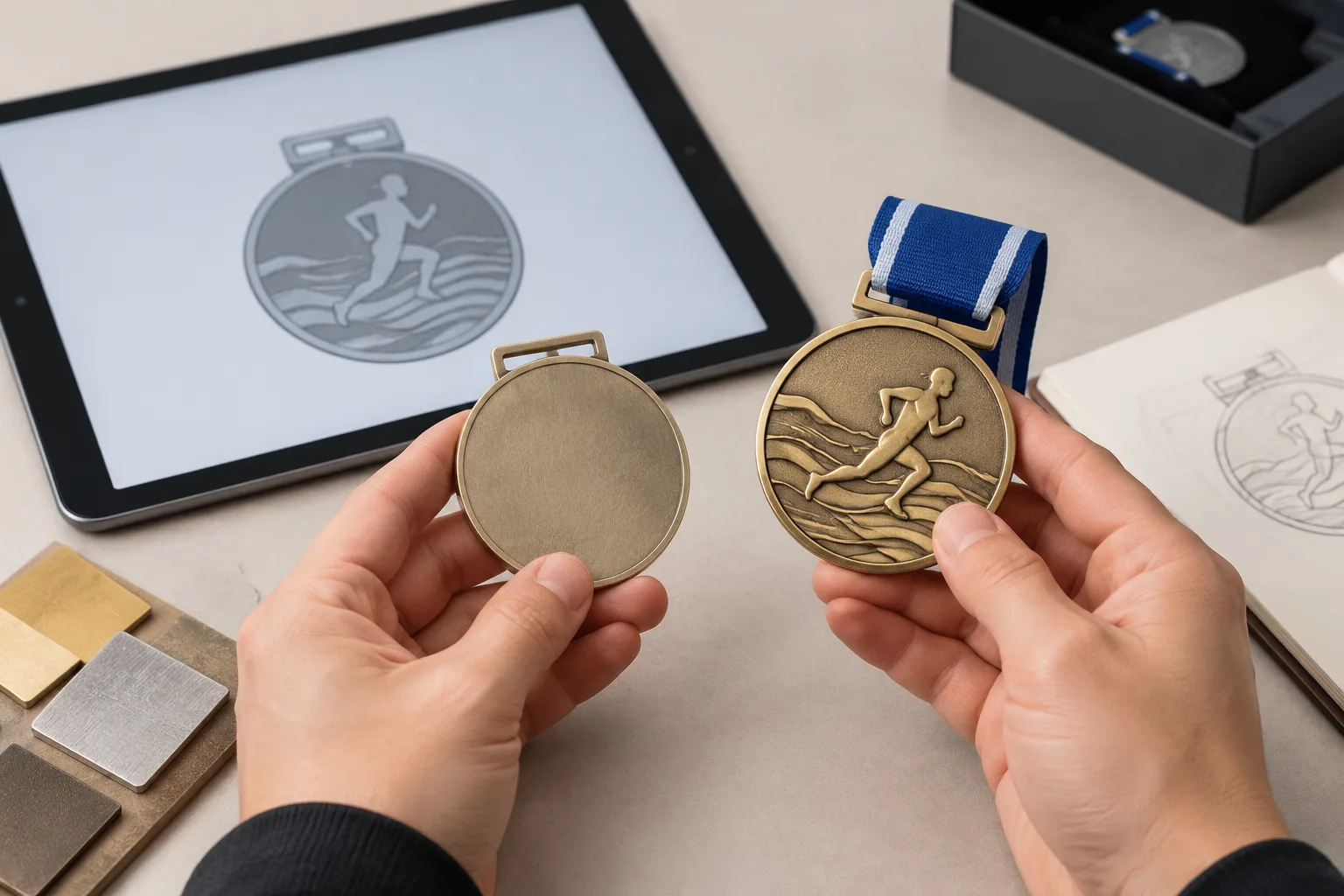
Which Stage Authorizes Which Decision?
Set the approval sequence before work begins. Start with the brief: product type, quantity, dimensions, artwork, variants, finish, color treatment, attachments, packaging, destination, and required schedule. Gairun’s pre-tooling engineering review may cover dimensions, thickness, relief, metal borders, color areas, attachments, component positions, and proposed production method. The applicable checks depend on the product structure and artwork.
Next, approve the digital proof for visual intent. Gairun states that tooling begins only after relevant production artwork has been reviewed and accepted. That approval controls the artwork reference; it does not approve commercial terms, testing, packaging, or shipment arrangements. If you need help preparing visual input, see Artwork Design and Proofing. Supply front and back views, wording, dimensions, color references, and attachment details when available.
Choose a custom sample when a physical examination of your specific design will answer an important question about appearance or construction. Then use first-article inspection if the initial production result must be checked against the approved drawing and order criteria before continued production. Decide whether a golden sample will be retained, what it represents, and who controls it. These gates can be combined or omitted according to the order’s requirements; do not treat any one approval as blanket release.
At each gate, record the product code, artwork and drawing versions, date, approver, supplier reference, accepted deviations, and decision. Name the person authorized to approve artwork, a sample, a first article, and production release. Gairun’s service path can include project coordination across proof approval, sampling, production progress, and shipment follow-up; confirm the communication plan for the order.
Comparison Table: Choose the Reference That Matches the Risk
| Reference stage | Observable input or trigger | What it can verify | Practical implication | Initial decision | What still requires confirmation |
|---|---|---|---|---|---|
| Digital proof | Artwork, wording, dimensions, color areas, and views | Visible layout, text, logo position, color placement, and intended direction | Resolve artwork differences before tooling or sampling | Accept visual intent; proceed to the agreed next step | Physical dimensions, construction, finish, attachment fit, and applicable tolerances |
| Custom sample | A physical item made for the buyer’s artwork | Proposed appearance, construction, surface treatment, components, and selected attachment | Judge characteristics that a screen image cannot show | Accept or request changes to the sampled configuration | Whether production will use the same approved configuration; bulk release and later changes |
| First article | Initial production article and approved 1:1 drawing | Whether the initial result matches defined drawing and order criteria | Identify discrepancies before continued production when required | Accept, reject, or document a deviation against stated criteria | Unstated tolerances, ongoing consistency, and final packaging requirements |
| Golden sample | Buyer-approved physical reference with matching records | Later physical items against the characteristics the reference represents | Give teams a controlled comparison point for repeat or continuing production | Retain and use as an approved reference | Changed artwork, material, tooling, finish, attachments, packaging, or tests |
This is a working buyer framework, not universal supplier terminology. Align the stage names with the supplier’s quality procedure and your own release rules. A first article is meaningful only against a drawing and criteria; a retained sample is useful only when its scope and current version are clear.

Two Buyer Examples: How the Initial Recommendation Can Change
Example 1: Hypothetical enamel badge. The supplied artwork has a simple front logo, defined color areas, a visible metal border, and one fixed attachment. Begin with a digital proof to settle wording, layout, color placement, and attachment position. If the buyer needs to judge the real surface and construction, request a custom sample. A first article becomes more important when the tooling, relief dimensions, or other drawing details are acceptance-critical. For repeat production, the buyer may retain an agreed golden sample.
The recommendation changes if the badge adds fine relief, multiple components, an unusual attachment, or a finish that is difficult to judge on screen. Those details increase the value of physical inspection and clearly defined first-article criteria. Whether a sample or first article is appropriate depends on which risk the buyer needs to control, not simply on the product name.
Example 2: Hypothetical medal. The brief shows front and back artwork, raised relief, a ribbon attachment, and a special surface finish. Use the digital proof to agree on the artwork direction, then consider a custom sample to judge the buyer-specific construction and appearance. If dimensions, thickness, relief, or attachment requirements must be checked on the initial production result, define those requirements for first-article comparison before continued production.
The decision may change if the design becomes a one-piece medal without moving or connected components. Gairun describes a one-piece medal as a fixed main body suited to designs that do not need such components. That does not remove the need to specify front and back artwork, dimensions, relief direction, openings, and attachment details. The drawing and intended use determine which checks matter. Gairun states that relevant attachments, such as medal ribbons, are checked for secure fitting during final inspection; no pull-force value or attachment-life rating should be inferred.
How to Control, Store, and Reapprove the Approved Reference
Label a retained physical reference with the product code, artwork revision, drawing revision, material and finish, date, approval status, approver, and any accepted deviation. Keep it with the matching digital artwork, 1:1 drawing, finish description, relevant packaging specification, and approval record. A retained reference is most useful when another person can identify its version and understand what it is intended to represent.
Photographs help teams identify a sample and compare visible details, but they cannot fully capture surface feel, relief, fit, or construction. Keep obsolete samples clearly marked as superseded; separate them from current references so procurement, production, inspection, and distributors do not select an outdated version by mistake.
Consider reapproval when a change could affect the accepted result. Triggers can include artwork, dimensions, thickness, relief, material, tooling, plating, color treatment, attachment, packaging, intended use, or production method. Record the change, who accepted it, and whether a new sample or first article is needed. For a repeat order, compare the current files and production reference with the retained approved version rather than assuming an earlier approval covers changed requirements.
For wholesalers and distributors, controlled files, product versions, repeat-order references, and private-label packaging requirements help prevent outdated logos, dates, or specifications from carrying into a new order. Treat packaging as part of the approved configuration when it affects fit, protection, presentation, or buyer acceptance. Compliance requirements may also vary with product, material, finish, attachment, packaging, intended use, and destination; request current order-specific evidence when applicable.
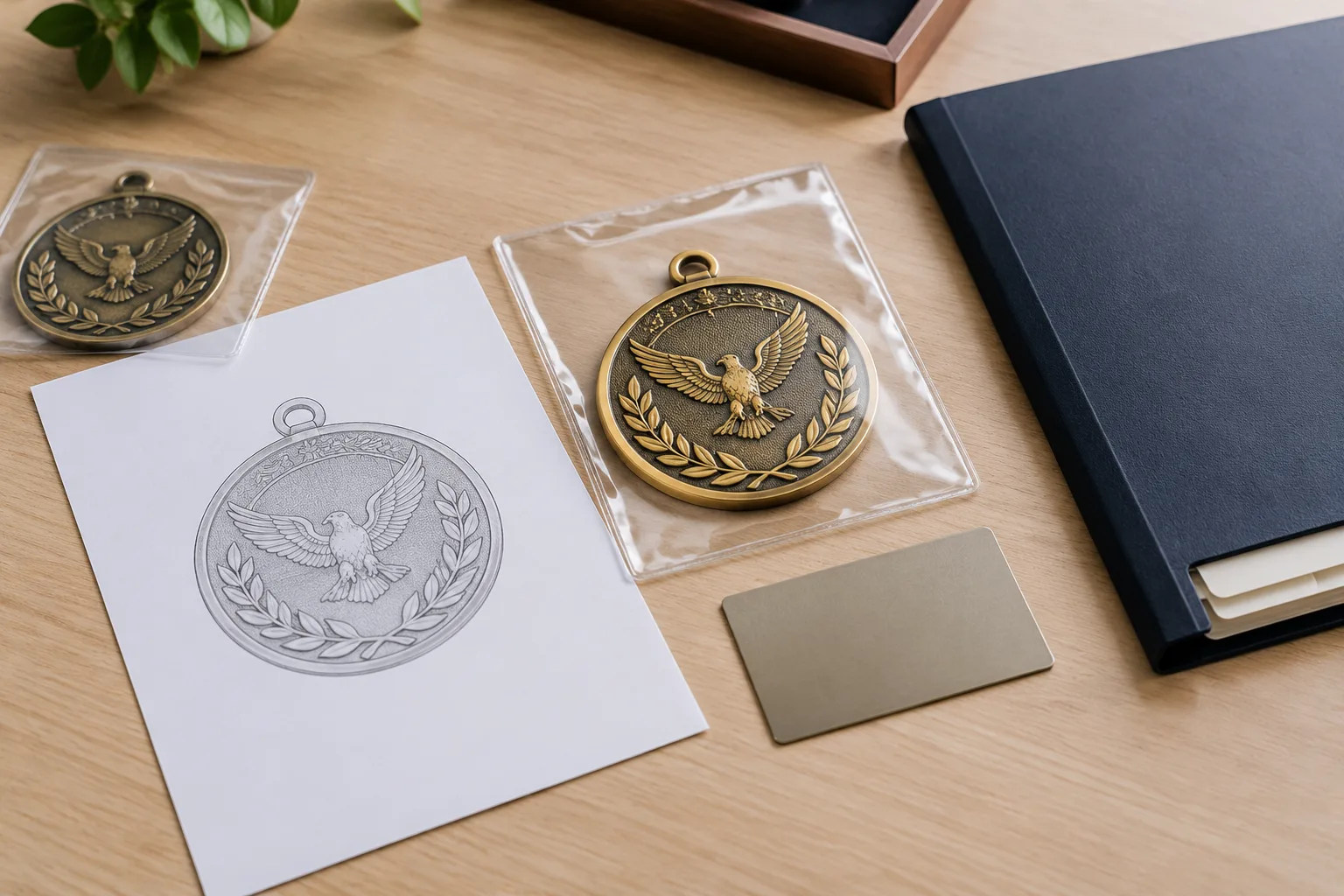
Buyer Checklist for the RFQ and Final Approval Record
Make the requested controls explicit in the RFQ and approval record. A useful request tells the supplier what evidence you need and what each approval allows. Gairun’s RFQ guidance recommends including product type, quantity, dimensions, artwork, variants, finish, color treatment, attachments, packaging, destination, and required schedule. Supply what is known and mark unresolved technical choices for discussion; an incomplete brief is not final production approval.
- State whether you require a digital proof, custom sample, first article, golden sample, or a defined combination.
- Provide artwork, wording, dimensions, front and back views, color references, finish, relief direction, attachment details, packaging requirements, destination, quantity, and schedule when known.
- Separate visual acceptance from dimensional, finish-related, functional, packaging, and compliance criteria. Give tolerances or test requirements when they matter.
- Name the people authorized to approve artwork, the sample, the first article, and production release.
- Ask how each physical reference will be labeled, stored, photographed, compared, and marked as superseded.
- Record whether the custom sample represents the intended production route and which changes trigger reapproval.
- Keep production time separate from shipping time. Approval timing, packaging, destination, transport mode, and customs arrangements can affect the delivered date.
Before release, assemble the current RFQ, approved drawing, artwork version, sample record if applicable, first-article findings if required, finish and packaging specifications, deviation record, and written production-release decision. This gives both buyer and supplier a usable trail when the product moves into production or returns as a repeat order. For event-focused sourcing context, see Event and Recognition Planning.
FAQ
Is a golden sample the same as a first article?
No. A first article is an initial production article checked against defined requirements. A golden sample is a retained, buyer-approved physical reference for comparison. A first article may later be selected as the reference, but the roles should be documented separately.
Can a digital proof replace a custom sample?
Only when the decision is limited to visible artwork and layout. A digital proof cannot establish physical construction, surface feel, relief, attachment fit, or finish as experienced on the item.
What does a custom sample prove that a first article does not?
A custom sample lets the buyer examine the proposed physical appearance and construction of their specific design. A first article checks an initial production result against the approved drawing and stated criteria. The sample does not automatically establish production consistency.
When should a buyer require first-article approval before bulk production?
Require it when your quality plan or buyer-supplier agreement calls for checking the initial production result before continued production, especially when drawing dimensions, thickness, relief, or other defined requirements are critical.
What changes require a new golden sample or reapproval?
Reapproval may be needed when a change can affect the accepted result—for example, artwork, material, tooling, finish, color treatment, attachment, dimensions, or packaging. Record the change and decide whether a new sample or first article is necessary.
How should an approved reference sample be labeled and stored for repeat orders?
Identify its product and artwork versions, drawing revision, material and finish, approval date, approver, and accepted deviations. Store it with the matching files and approval record, and clearly mark superseded samples.