
To approve metal plating color responsibly, use photos to confirm location, artwork alignment, relief visibility, and obvious defects. Use a physical finish reference to judge the actual tone, warmth, gloss, matte contrast, and antique depth. This distinction matters when comparing gold, silver, nickel, black nickel, antique bronze, or antique silver. A useful starting point is Bright vs Antique Metal Finishes: Which One Shows Relief More Clearly?, because relief and finish are closely connected.
A photograph records an appearance under particular lighting and camera conditions. It does not fully reproduce how a plated surface looks when handled under ordinary viewing conditions. In metal awards, badges, pins, and other promotional products, reflections, recesses, exposed borders, and adjacent finishes can all affect the judgment.
The most reliable approval hierarchy is simple: use accepted artwork for design placement, an approved physical reference for color and surface judgment, and controlled photos for progress and defect communication. Sample approval should also remain separate from authorization for bulk production.
Use Photos for Process Visibility and Physical Samples for Color Approval
Photos are useful because they show whether the finish appears on the intended areas. They can also reveal obvious scratches, missing decoration, unclear relief, damaged edges, or a mismatch between the photographed part and the submitted artwork. These are valuable production-control questions.
They answer a different question from color approval. A physical finish reference lets the buyer judge whether a surface feels warm or cool, bright or subdued, glossy or matte, and whether an antique treatment creates the intended contrast. It also shows the relationship between plated areas and exposed metal borders without relying on a screen.
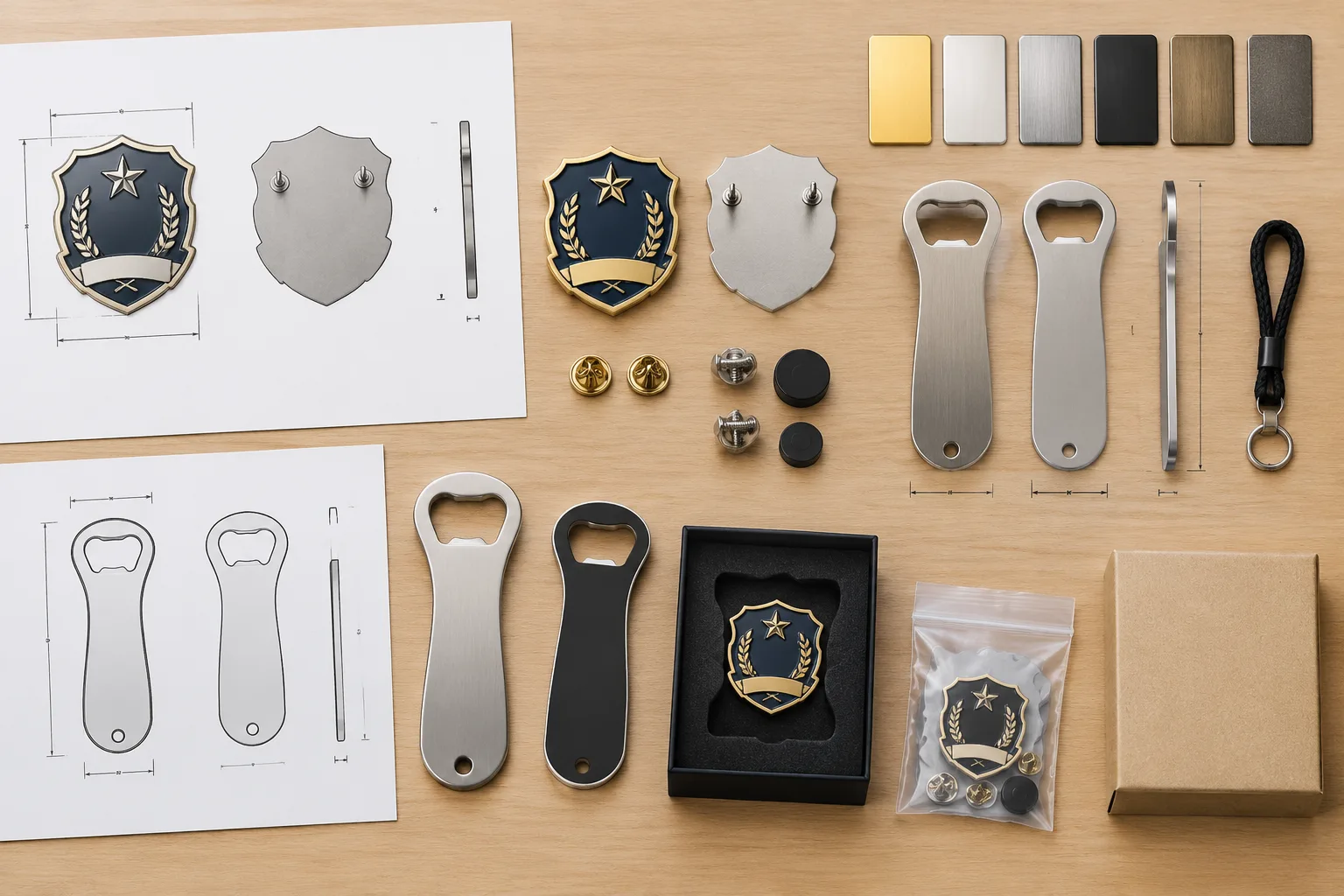
Gairun lists gold, silver, nickel, black nickel, antique bronze, and antique silver as plating directions. The final tone and feasibility must be coordinated with the artwork, base metal, relief, and exposed metal areas. A custom sample made from buyer-specific artwork can help assess both appearance and construction, but its approval does not cover later unapproved changes.
| Observable input | Practical implication | Initial decision | Still requires confirmation |
|---|---|---|---|
| Finish appears on the intended raised border and exposed areas | The image can support a location and artwork check | Use the photo for process visibility | Actual color, gloss, and surface feel |
| Fine scratches or damaged areas are visible from several angles | The image may identify an obvious surface issue | Request clarification or corrective action | Extent of the issue and acceptance decision |
| Gold and silver areas appear different in a two-tone design | The image can show whether the boundary is present | Use it to check separation | Physical contrast and final tone |
| Antique recesses look dark in one photograph | Shadow may exaggerate the apparent depth or darkness | Do not approve color from that image alone | Physical reference under controlled viewing |
| Photo matches the approved artwork and 1:1 construction drawing | It supports design and assembly communication | Record the image against the correct revision | Bulk-production authorization and quality criteria |
For electroplated products, accurate color references help prevent communication problems because geometry and measurement conditions can affect color comparison. The electroplating color-reference research supports treating a reference as a controlled quality input rather than treating an uncontrolled image as the standard.
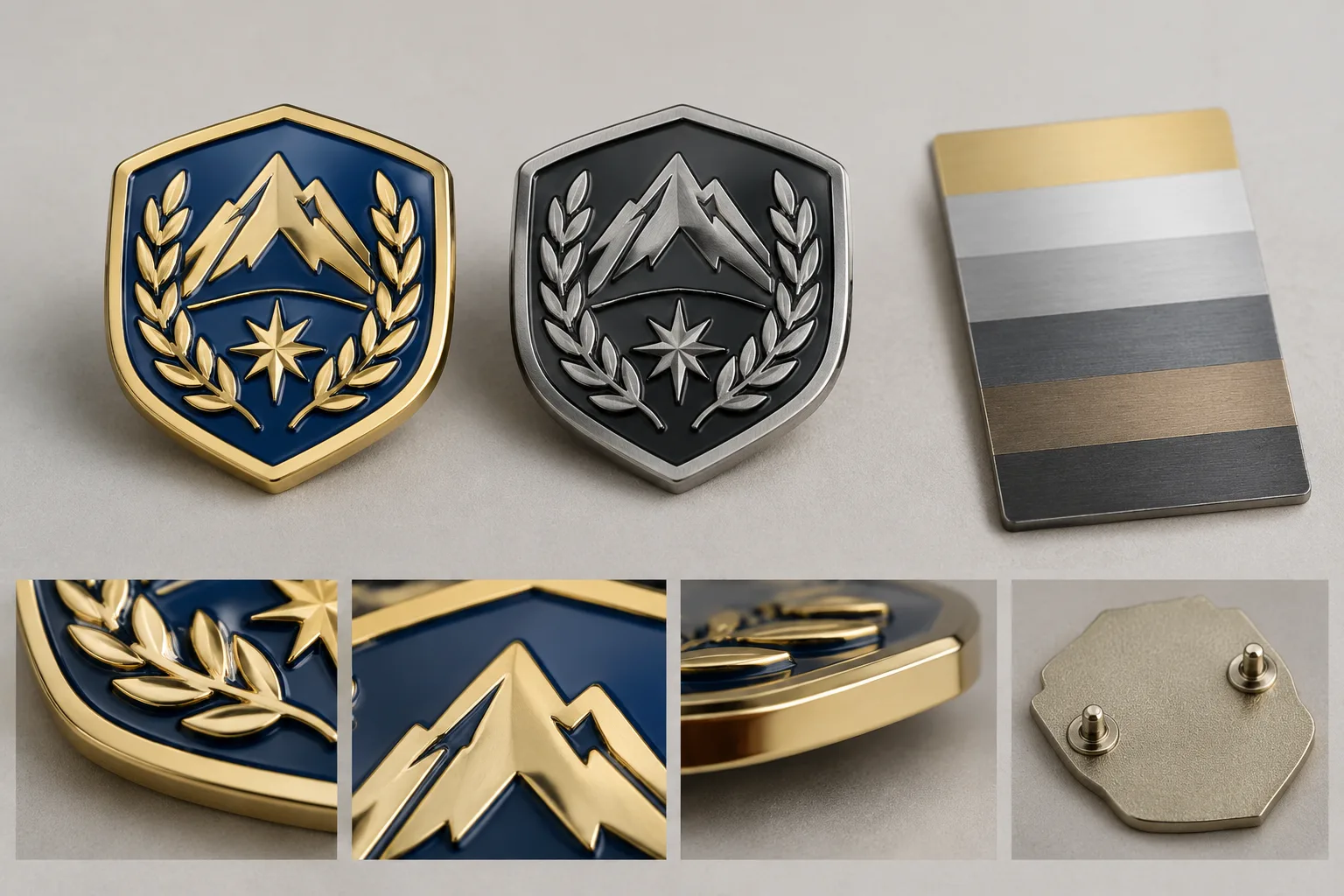
What Lighting and Photography Can Distort
Light direction can brighten one edge and darken another. The color temperature of the light can make a finish appear warmer or cooler. Exposure can remove surface detail from bright nickel or gold, while a dark background can make black nickel appear more uniform than it is.
Reflections create another problem. A reflective surface may mirror the room, camera, or background instead of showing only its own finish. Matte or sandblasted areas can appear darker and less saturated than polished areas beside them. Gairun lists sandblasting and matte finishing as options for reducing shine or creating contrast, but the exact texture or gloss level needs an approved sample or written specification.
Camera white balance, monitor settings, image compression, and editing can shift the displayed result. A phone image can be useful for location or progress communication, but it should not become the color standard. A supplier should identify the finish name, sample status, viewing or lighting conditions when available, and the purpose of the image.
Antique finishes need extra care. Shadows in recessed areas may exaggerate dark contrast, while direct light may hide it. In a dual-plated design, adjacent tones can also change how each other appears. Dual plating uses two plating appearances within one design, so the artwork must show clear boundaries between the intended tones.
For physical comparison, visual assessment should be performed against an agreed reference under suitable viewing conditions. Technical guidance from Konica Minolta on evaluating sample color and appearance supports combining controlled visual comparison with the application’s actual color standard.
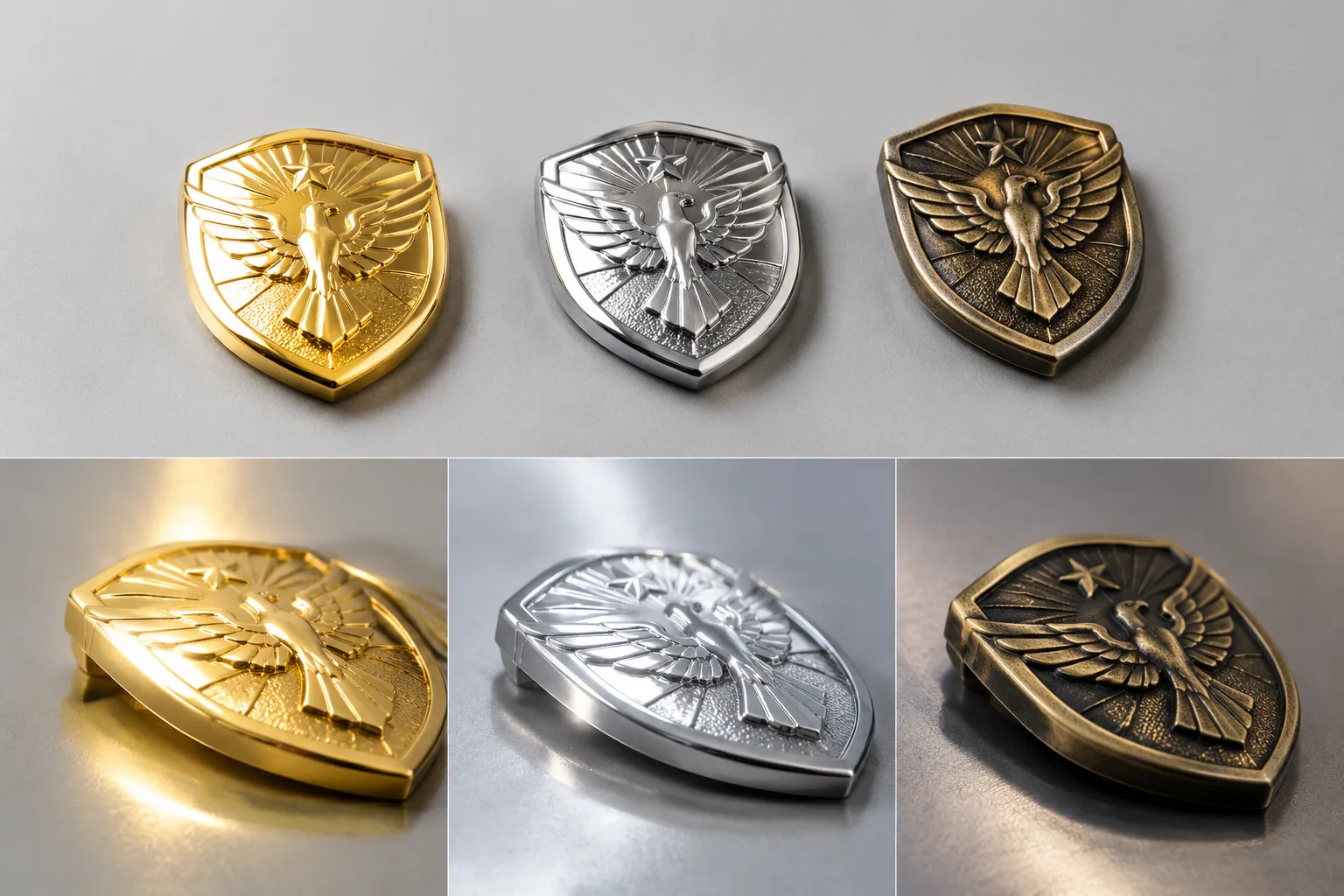
When a Physical Finish Reference Is Required
Request a physical reference when finish is central to a brand identity, when two plating tones must remain distinct, when antique recesses carry important detail, or when a repeat order must match an earlier approved product. A photograph can support communication, but it should not replace the retained reference for these decisions.
Different sample types answer different questions:
- Buyer-supplied reference: Shows the finish direction the buyer wants repeated. Confirm whether the material, surface, age, and construction are comparable to the new product.
- Stock sample: Demonstrates general workmanship, a possible finish direction, construction, or packaging. It does not prove the appearance of the buyer’s custom artwork. Availability and delivery cost require confirmation.
- Custom sample: Shows the proposed appearance and construction using buyer-specific artwork. Gairun states that custom sampling normally takes 7–10 working days, but actual timing depends on artwork approval, tooling, shipment, and design complexity.
A stock finish sample may show a useful general direction, yet the same finish can look different on another shape, relief pattern, base metal, or exposed-border layout. For a uniform badge, judge the finish on the intended construction. Record the material, relief, attachment, wearing orientation, and weight requirements separately because these details affect the complete part.
Gairun’s existing stock samples are intended to demonstrate general workmanship, finishes, construction, or packaging rather than the buyer’s custom design. A custom sample is more relevant to a buyer-specific appearance, but sample approval remains a separate step from bulk-production authorization.
Match the Finish Decision to Artwork, Relief, and Base Metal
Do not approve plating in isolation. Check the raised and recessed features, relief depth, border width, base metal, exposed areas, and decoration boundaries first. Gairun’s pre-tooling engineering review may cover dimensions, thickness, relief, metal borders, color areas, attachments, component positions, and the proposed production method. The exact checklist depends on the product structure and artwork.
Gairun lists zinc alloy, brass, iron, stainless steel, and aluminum as processable base metals. This list does not create a universal ranking for appearance, strength, cost, or corrosion performance. The selected metal and forming route should be confirmed with the actual design.
Example 1: A simple raised emblem with one exposed metal tone and broad borders is initially easier to judge from a physical reference. The reference shows the overall tone and how the raised surface catches light. The variable that could change the recommendation is the final relief and surface treatment; a matte area or deeper recess may require a different comparison.
Example 2: A two-tone badge with silver borders and a black nickel interior may initially suit dual plating because the artwork provides two clearly separated areas. If the boundaries are narrow, irregular, or ambiguous, the artwork may need revision or another finish plan. The variable that could change the decision is the width and definition of the plating boundaries.
Keep plating separate from decorative color. Soft enamel leaves colored areas recessed below raised metal borders, while imitation hard enamel brings color and metal areas closer to one level. UV printing serves artwork requiring printed detail or multiple tones. Approval of a color field does not automatically approve the plating color around it.
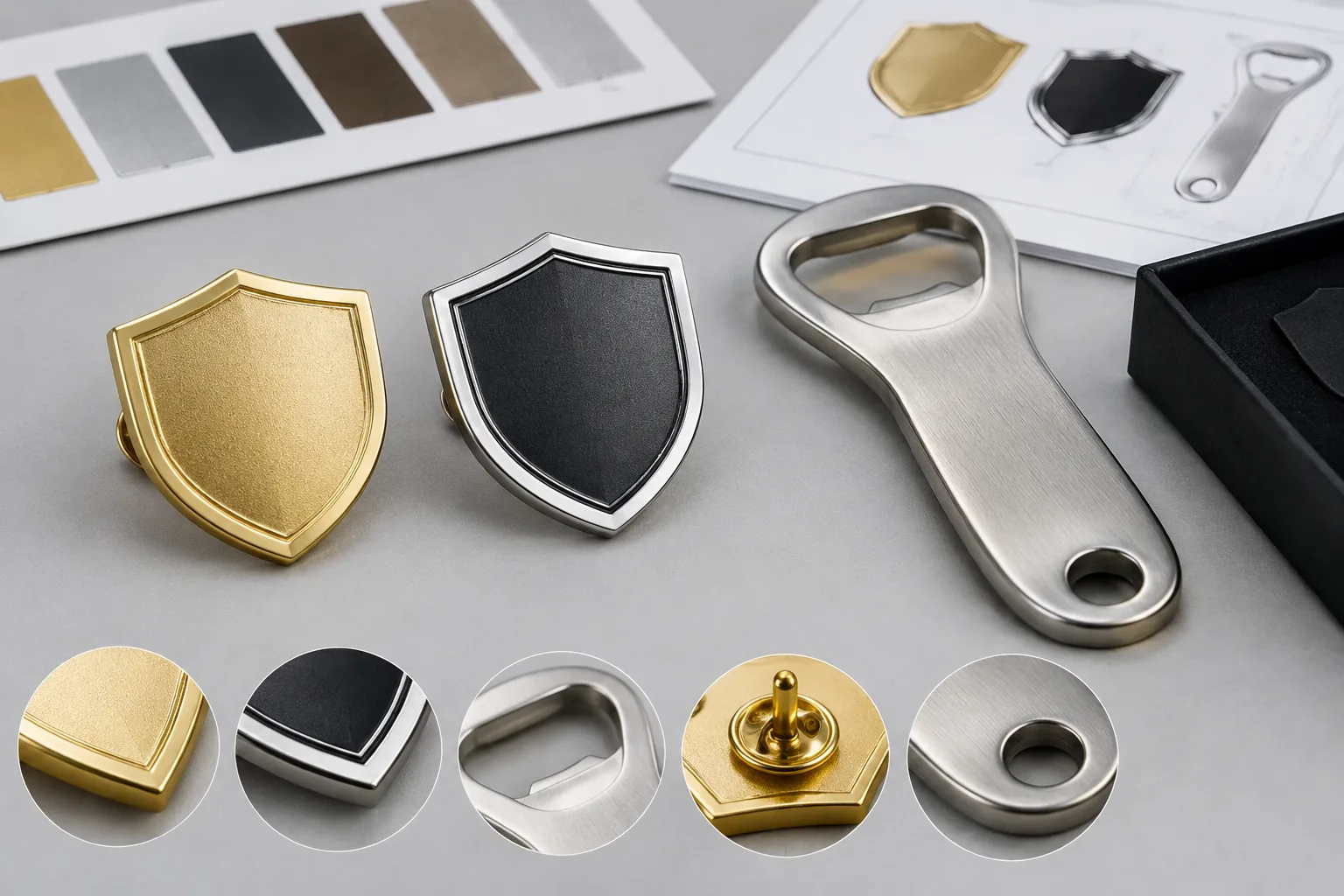
Create a Controlled Approval Record Before Tooling and Sampling
A controlled record turns subjective color language into a repeatable purchasing process. Begin with the accepted artwork and identify the product type, base metal, plating direction, exposed metal areas, colored areas, relief, dimensions, and attachment details relevant to the finish decision.
Give the physical reference a unique name or revision. Photograph it from consistent angles, with the finish name and revision visible where practical. Record the approval owner, date, viewing notes, and whether each image is for color, construction, progress, or defect communication.
Keep these decisions separate:
- Artwork and design placement
- Finish appearance and surface reference
- Construction, dimensions, relief, and attachment
- Sample approval
- Authorization for bulk production
Tooling begins only after the relevant production artwork has been reviewed and accepted. Gairun describes its service path as requirements intake, artwork and engineering review, sample planning when selected, production coordination, packaging, and shipment preparation. Not every order requires a custom sample, so the selected approval route should be stated in the purchasing record.
For repeat programs, retain the physical reference and control product versions, dates, logos, finish descriptions, and private-label requirements. This is particularly important for wholesalers and distributors managing several product families. A current order should still be checked against the retained reference before production coordination.
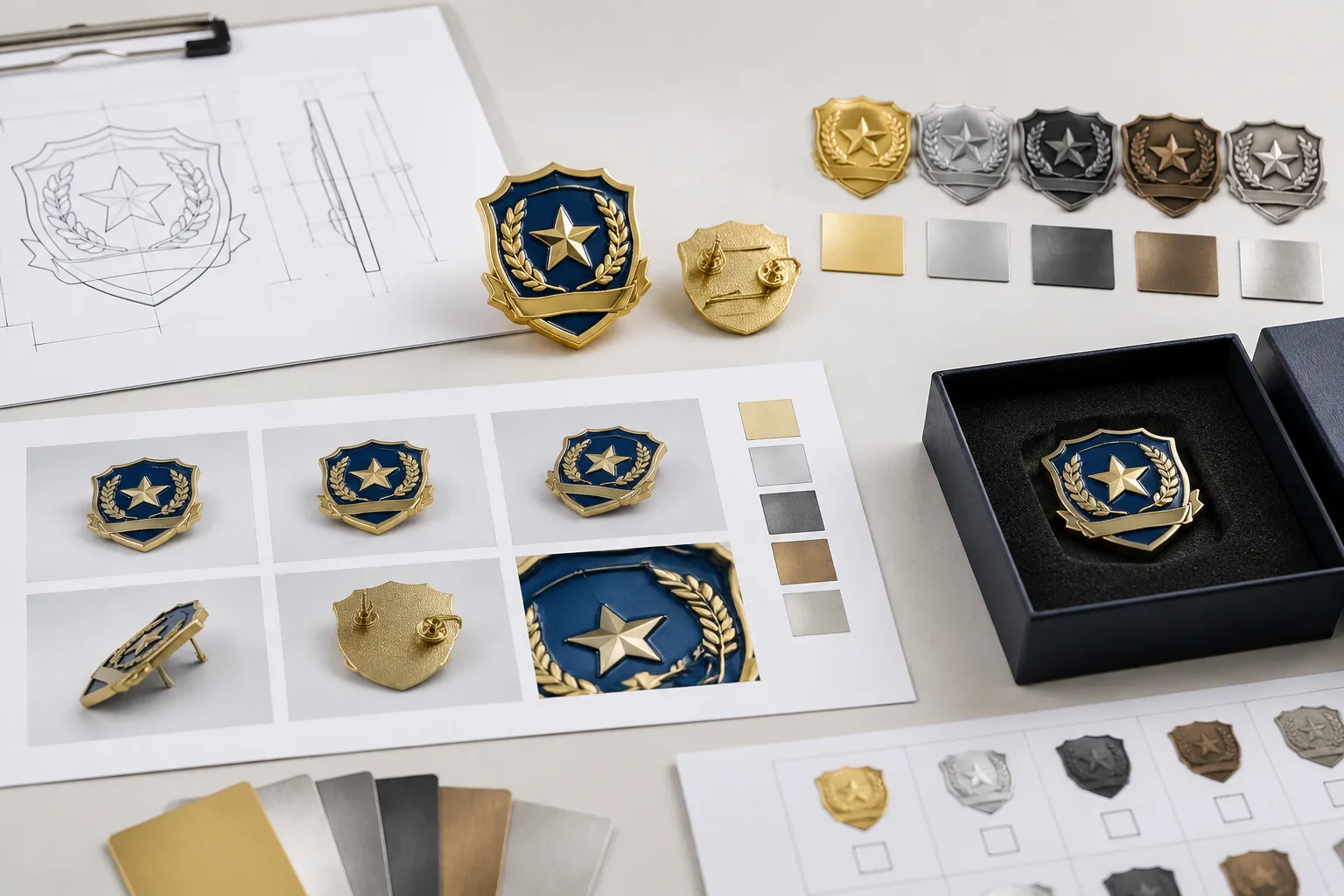
Define Acceptable Finish Variation Without Inventing a Universal Tolerance
Most buyers do not need vague language such as “make it the same.” They need observable acceptance points. Define the finish family, relative lightness or darkness, warm or cool cast, gloss or matte appearance, antique contrast, plating boundaries, and visible surface defects.
Separate acceptable batch variation from unacceptable changes. A changed finish family, missing plating, obvious contamination, color overflow, or damaged surface should not be treated as ordinary variation. The acceptance decision should refer to the retained reference and the agreed viewing method.
Gairun states that plated parts are checked for color difference and plating adhesion. It also states that colored parts are checked for color overflow and insufficient color. These are process descriptions, not universal numerical tolerances or defect-free guarantees.
Where formal verification is needed, define the test method, sample quantity, limits, duration, reporting format, and acceptance authority before production. Gairun lists cross-hatch tape testing for plating adhesion and salt-spray testing for oxidation and corrosion resistance as available tests. The method, limits, duration, sampling, and acceptance criteria require confirmation for the order.
Gairun also states that finished products receive a 100% visual inspection for surface scratches. Treat this as a stated inspection process, not as a promise that every unit will be free of every defect or laboratory tested.
Send a Finish-Ready RFQ and Approval Checklist
A finish-ready RFQ gives the supplier enough information to identify open decisions before sampling or tooling. Gairun recommends including the following:
- Product type, quantity, dimensions, and design variants
- Artwork, wording, front and back instructions, and intended product format
- Desired plating direction and any exposed metal areas
- Colored areas, decoration method, and base-metal preference
- Relief, border, attachment, and wearing-orientation details when relevant
- Packaging requirements, destination, and required schedule
- Buyer-supplied finish references, prior approved revisions, and reference photos
State the decision you are asking for. A stock sample request, custom sample request, photo proof, finish approval, and production approval are different actions. Ask the supplier to identify what the submitted image demonstrates and what still requires physical confirmation.
A practical specification block can use this format:
- Finish direction: Gold, silver, nickel, black nickel, antique bronze, or antique silver; final tone to be confirmed against the reference.
- Surface: Bright, matte, sandblasted, or another agreed treatment; exact gloss or texture to be confirmed.
- Construction: Base metal, relief, exposed borders, colored areas, dimensions, and attachment.
- Reference: Sample name, revision, approval date, viewing notes, and comparison photos.
- Acceptance: Finish-family limits, visible-defect categories, inspection method, escalation path, and final approval owner.
For repeat orders, retain the approved reference with the purchase and quality records. You can also use How to Order Custom Metal Products for the broader request structure, Upload Artwork and Specifications when sending files, and Soft Enamel Pins when the design combines plating with recessed color fields.
FAQ
Can a photo be used to approve metal plating color?
A photo can support artwork placement, finish location, relief visibility, progress communication, and obvious-defect checks. It should not be the sole color standard when tone, gloss, antique contrast, or repeat-order matching matters. Use an approved physical reference for those judgments.
When should I request a physical plating sample instead of relying on a photo?
Request one when finish is a key brand requirement, when two tones must remain distinct, when antique recesses are important, or when a previous finish must be repeated. A custom sample is the most relevant option for buyer-specific artwork and construction.
What information should appear on an approved finish reference sample?
Record the finish name, product and material, artwork revision, sample status, sample revision, approval date, approver, viewing notes, and any relevant relief, exposed-area, or surface-treatment details. Keep comparison photos linked to the same reference.
How should buyers define acceptable metal finish color variation?
Define the finish family, relative lightness or darkness, warm or cool cast, gloss or matte appearance, antique contrast, plating boundaries, and visible defect categories. Add the viewing method and escalation route. Do not use a universal numerical tolerance unless it has been agreed for the order.
Does approval of a plating sample approve bulk production automatically?
No. Sample approval confirms the proposed sample appearance and construction. Artwork, finish, construction, testing, packaging, and bulk-production authorization should remain identifiable approval points.
How should gold, silver, nickel, black nickel, and antique finishes be compared remotely?
Use consistent photos to check location, boundaries, relief, and obvious defects. Compare color and surface judgment against a physical reference under controlled viewing conditions. Record the finish name, sample revision, material, relief, and exposed areas before making the final decision.